

Meer over het boek
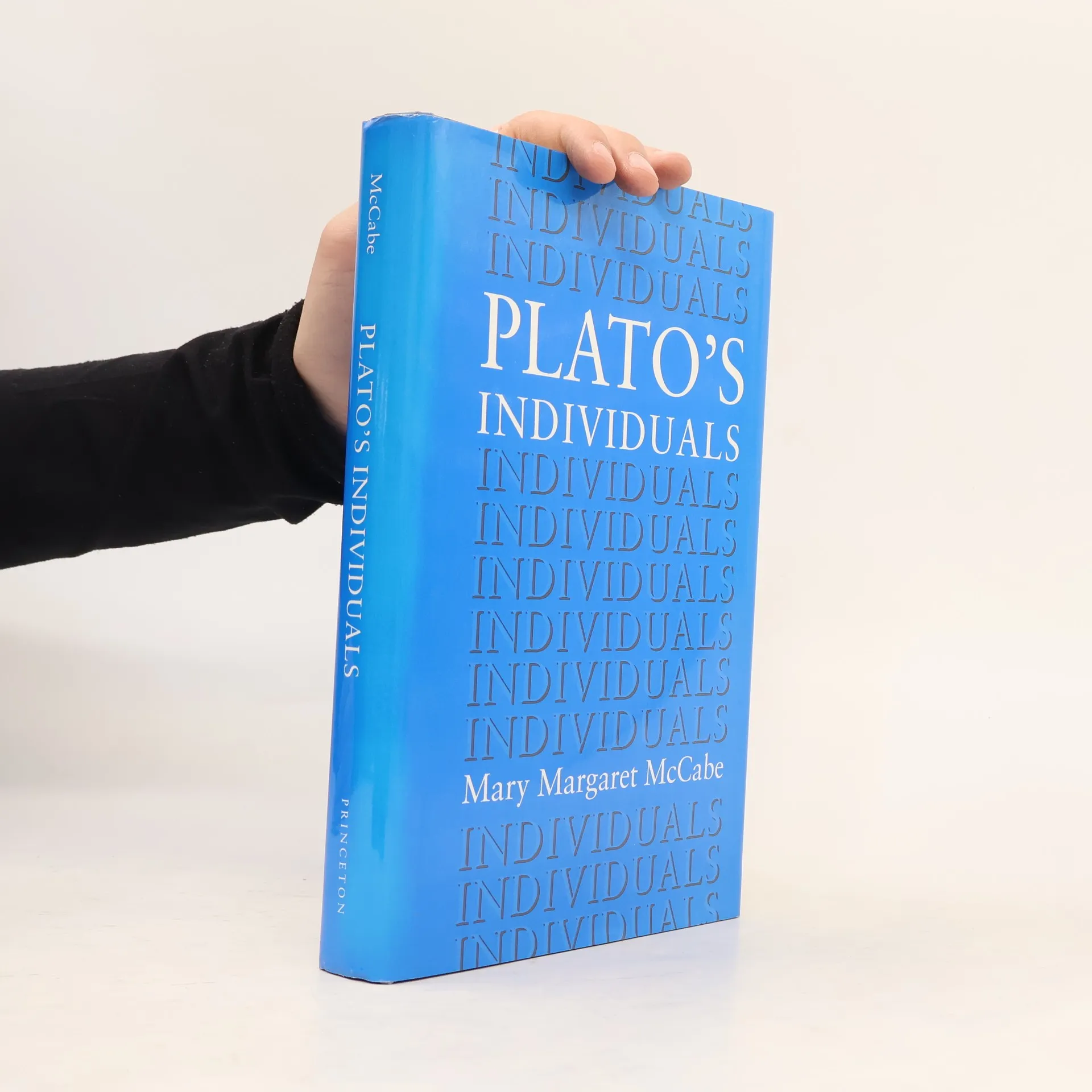
Mary Margaret McCabe challenges the belief that Aristotle was the first to systematically discuss individuation, asserting that Plato was deeply engaged with what constitutes an individual and approached the issue in a fundamentally different manner. She examines the significance of individuation in Plato's work, from the *Parmenides* to the *Politicus*, offering a fresh perspective on his later metaphysics. Traditionally, Plato is viewed as contrasting the particulars of the sensible world with transcendent forms, which is thought to be central to his metaphysical framework. McCabe disputes this interpretation, arguing that Plato's focus on individuals reveals a tension between complex individuals and simpler ones. In dialogues like the *Theaetetus* and the *Timaeus*, Plato raises questions about individuation but does not provide definitive answers. Later, in the *Sophist*, *Philebus*, and *Politicus*, he develops what McCabe terms the mesh of identity, which attempts to explain how individuals relate to one another. However, this concept does not adequately clarify how individuals achieve unity or coherence. McCabe posits that individuation may be absolute, prompting a reevaluation of philosophy's longstanding dependence on Aristotle's conclusions.
Een boek kopen
Plato's Individuals, Mary Margaret McCabe
- Taal

- Jaar van publicatie
- 1994
- Bindwijze
- (Hardcover)
Betaalmethoden
Nog niemand heeft beoordeeld.
- Titel
- Plato's Individuals
- Taal
- Engels
- Auteurs
- Mary Margaret McCabe
- Uitgever
- Princeton University Press
- Jaar van publicatie
- 1994
- Formaat
- Hardcover
- Aantal pagina's
- 339
- ISBN10
- 0691073511
- ISBN13
- 9780691073514
- Reeks
- Categorieën
- Aantekening
- Mary Margaret McCabe challenges the belief that Aristotle was the first to systematically discuss individuation, asserting that Plato was deeply engaged with what constitutes an individual and approached the issue in a fundamentally different manner. She examines the significance of individuation in Plato's work, from the *Parmenides* to the *Politicus*, offering a fresh perspective on his later metaphysics. Traditionally, Plato is viewed as contrasting the particulars of the sensible world with transcendent forms, which is thought to be central to his metaphysical framework. McCabe disputes this interpretation, arguing that Plato's focus on individuals reveals a tension between complex individuals and simpler ones. In dialogues like the *Theaetetus* and the *Timaeus*, Plato raises questions about individuation but does not provide definitive answers. Later, in the *Sophist*, *Philebus*, and *Politicus*, he develops what McCabe terms the mesh of identity, which attempts to explain how individuals relate to one another. However, this concept does not adequately clarify how individuals achieve unity or coherence. McCabe posits that individuation may be absolute, prompting a reevaluation of philosophy's longstanding dependence on Aristotle's conclusions.