

Meer over het boek
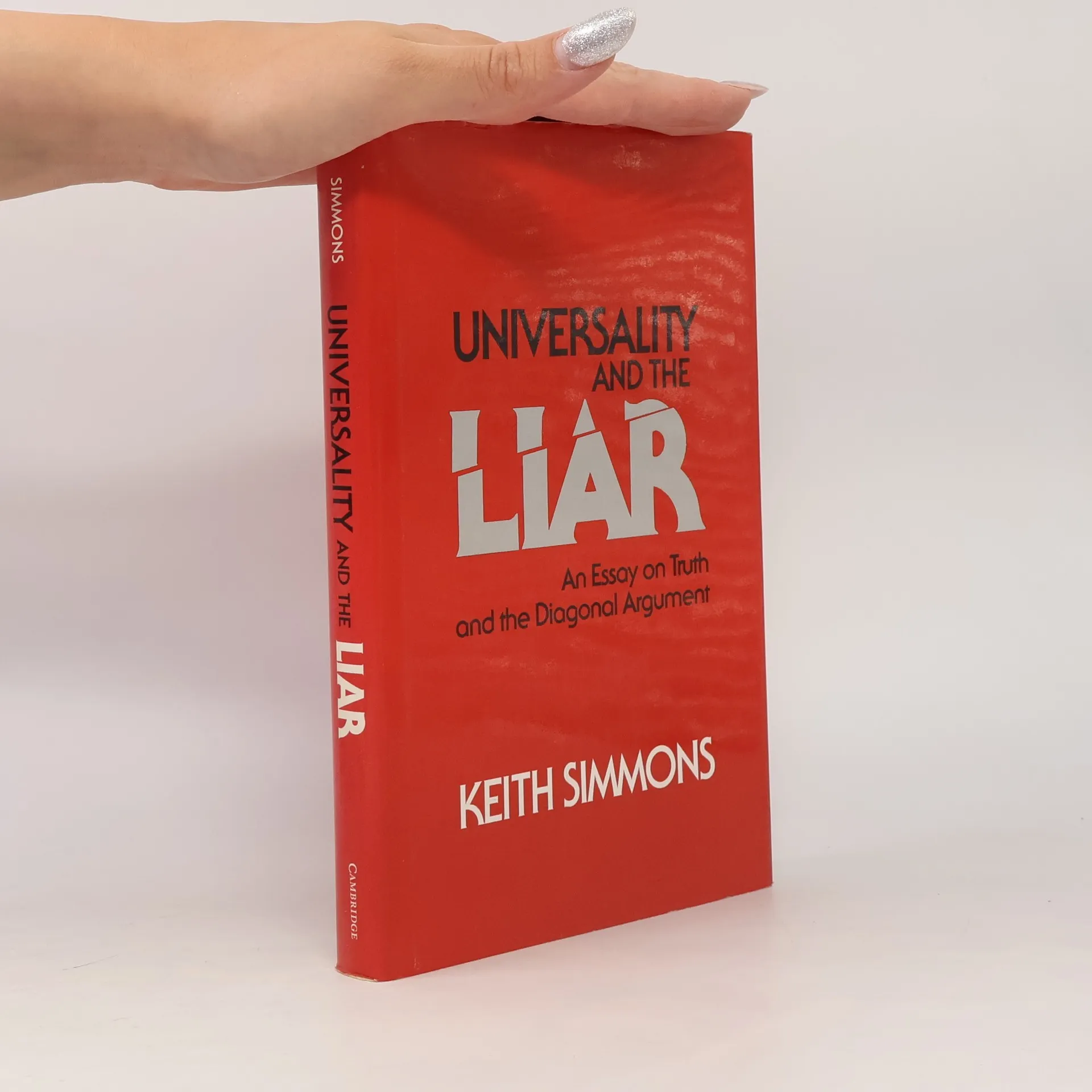
This book is about one of the most baffling of all paradoxes--the famous Liar paradox. Suppose we say: "We are lying now." Then if we are lying, we are telling the truth; and if we are telling the truth we are lying. This paradox is more than an intriguing puzzle, since it involves the concept of truth. Thus any coherent theory of truth must deal with the Liar. Keith Simmons discusses the solutions proposed by medieval philosophers and offers his own solutions and in the process assesses other contemporary attempts to solve the paradox. Unlike such attempts, Simmons' "singularity" solution does not abandon classical semantics and does not appeal to the kind of hierarchical view found in Barwise's and Etchemendy's The Liar. Moreover, Simmons' solution resolves the vexing problem of semantic universality--the problem of whether there are semantic concepts beyond the expressive reach of a natural language such as English.
Een boek kopen
Universality and the Liar, Keith Simmons
- Taal

- Jaar van publicatie
- 1993
- Bindwijze
- (Hardcover)
Betaalmethoden
Nog niemand heeft beoordeeld.
- Titel
- Universality and the Liar
- Ondertitel
- An Essay on Truth and the Diagonal Argument
- Taal
- Engels
- Auteurs
- Keith Simmons
- Uitgever
- Cambridge University Press
- Jaar van publicatie
- 1993
- Formaat
- Hardcover
- Aantal pagina's
- 229
- ISBN10
- 0521430690
- ISBN13
- 9780521430692
- Reeks
- Categorieën
- Aantekening
- This book is about one of the most baffling of all paradoxes--the famous Liar paradox. Suppose we say: "We are lying now." Then if we are lying, we are telling the truth; and if we are telling the truth we are lying. This paradox is more than an intriguing puzzle, since it involves the concept of truth. Thus any coherent theory of truth must deal with the Liar. Keith Simmons discusses the solutions proposed by medieval philosophers and offers his own solutions and in the process assesses other contemporary attempts to solve the paradox. Unlike such attempts, Simmons' "singularity" solution does not abandon classical semantics and does not appeal to the kind of hierarchical view found in Barwise's and Etchemendy's The Liar. Moreover, Simmons' solution resolves the vexing problem of semantic universality--the problem of whether there are semantic concepts beyond the expressive reach of a natural language such as English.