

Meer over het boek
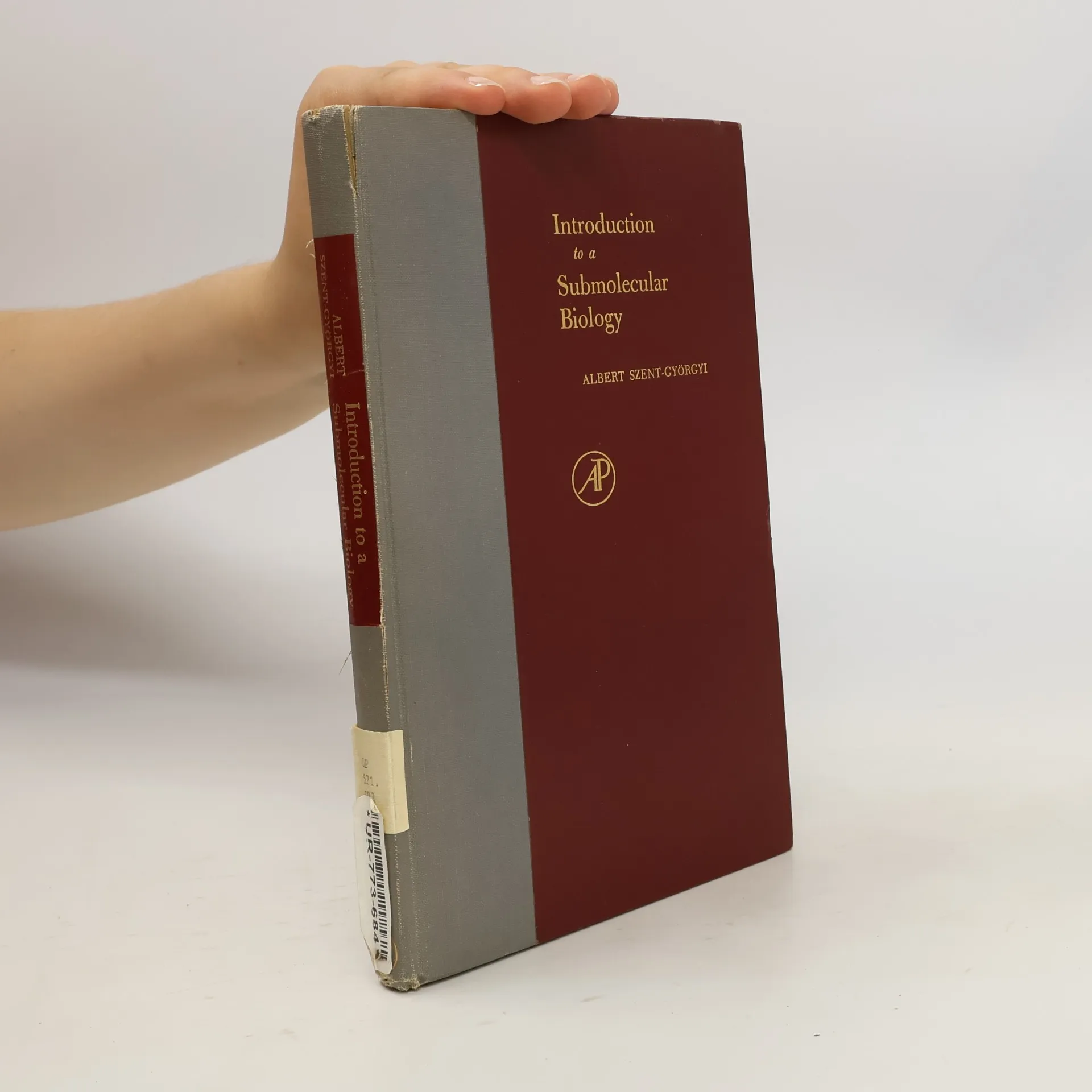
Introduction to a Submolecular Biology focuses on the study of the electronic interactions of biological molecules. This book discusses the energy cycle of life, units and measures, electronic mobility, and problems of charge transfer. The three examples of charge transfer—quinone-hydroquinone, riboflavine (FMN) and serotonin, and cortisone I2 are elaborated. This text deliberates the problems and approaches on the mechanism of drug action, adenosine triphosphate (ATP), chemistry of the thymus gland, and living state. Brief remarks on water, ions, and metachromasia are also included. Other topics covered include the redox potentials, ionization potentials and electron affinities, orbital energies, electromagnetic coupling resonance transfer of energy, and semiconduction. This publication is a good source for biochemists, biologists, and specialists aiming to acquire basic knowledge of submolecular biology.
Een boek kopen
Introduction to a Submolecular Biology, Albert Szent-Gyorgyi
- Taal

- Jaar van publicatie
- 2012
- Bindwijze
- (Hardcover)
Betaalmethoden
Nog niemand heeft beoordeeld.
- Titel
- Introduction to a Submolecular Biology
- Taal
- Engels
- Auteurs
- Albert Szent-Gyorgyi
- Uitgever
- Elsevier
- Jaar van publicatie
- 2012
- Formaat
- Hardcover
- Aantal pagina's
- 153
- ISBN10
- 0323161014
- ISBN13
- 9780323161015
- Reeks
- Categorieën
- Aantekening
- Introduction to a Submolecular Biology focuses on the study of the electronic interactions of biological molecules. This book discusses the energy cycle of life, units and measures, electronic mobility, and problems of charge transfer. The three examples of charge transfer—quinone-hydroquinone, riboflavine (FMN) and serotonin, and cortisone I2 are elaborated. This text deliberates the problems and approaches on the mechanism of drug action, adenosine triphosphate (ATP), chemistry of the thymus gland, and living state. Brief remarks on water, ions, and metachromasia are also included. Other topics covered include the redox potentials, ionization potentials and electron affinities, orbital energies, electromagnetic coupling resonance transfer of energy, and semiconduction. This publication is a good source for biochemists, biologists, and specialists aiming to acquire basic knowledge of submolecular biology.