



Meer over het boek
Human thinking is one of the most complex phenomena evolved to date, with a wide range of definitions. Some encompass nearly all cognitive processes, while others restrict it to language-based or formal reasoning. We adopt a "medium-sized" definition, viewing thinking as all operations through which cognitive agents connect mental content to gain new insights. Mental content serves as both a prerequisite and substrate for thinking operations. The largely unconscious processes of perceptual object stabilization, categorization, emotional evaluation, and memory retrieval generate this mental content, making them essential for thinking. In distinguishing terms, "thinking" is narrower than "cognition" but broader than "reasoning." Thus, thinking is a subset of cognitive processes, while reasoning is a subset of thinking. This definition also includes nonexplicit, intuitive, and associative processes of linking mental content. Importantly, thinking is not dependent on language; many animals, particularly mammals, exhibit early forms of thinking.
Een boek kopen
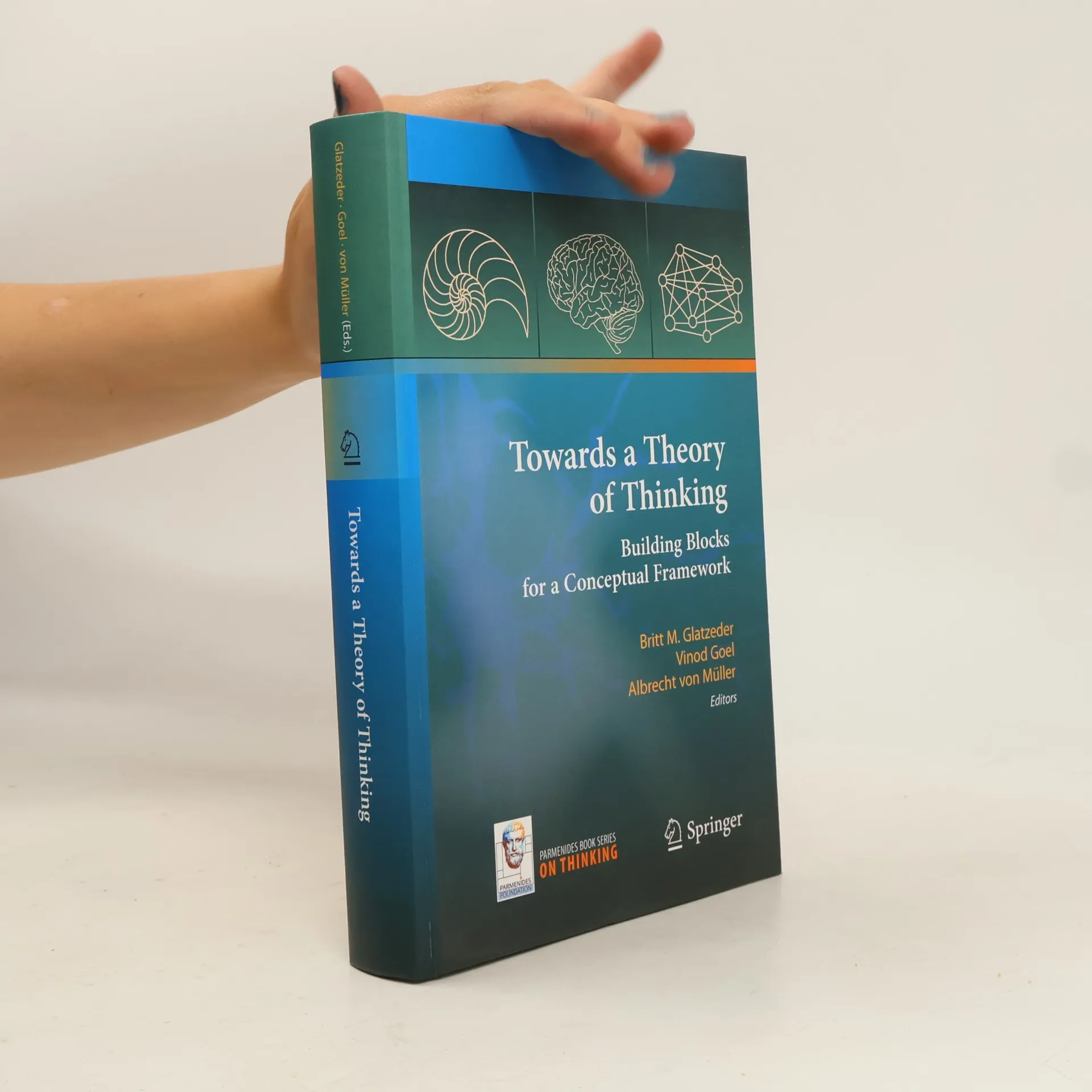
Parmenides Book Series On Thinking: Towards a Theory of Thinking, Britt M. Glatzeder, Vinod Goel, Albrecht A. C. von Müller
- Taal

- Jaar van publicatie
- 2010
- Bindwijze
- (Hardcover)
Betaalmethoden
Nog niemand heeft beoordeeld.
- Titel
- Parmenides Book Series On Thinking: Towards a Theory of Thinking
- Ondertitel
- Building Blocks for a Conceptual Framework
- Taal
- Engels
- Uitgever
- Springer
- Jaar van publicatie
- 2010
- Formaat
- Hardcover
- Aantal pagina's
- 394
- ISBN10
- 3642031285
- ISBN13
- 9783642031281
- Reeks
- Tags
- Psychologische thema’s, Wetenschap, Duitsland, Geneeskunde, Emoties, Neurowetenschap, Neurologie, Denken, Menselijke Geest, Probleemoplossing, Neuropsychologie
- Aantekening
- Human thinking is one of the most complex phenomena evolved to date, with a wide range of definitions. Some encompass nearly all cognitive processes, while others restrict it to language-based or formal reasoning. We adopt a "medium-sized" definition, viewing thinking as all operations through which cognitive agents connect mental content to gain new insights. Mental content serves as both a prerequisite and substrate for thinking operations. The largely unconscious processes of perceptual object stabilization, categorization, emotional evaluation, and memory retrieval generate this mental content, making them essential for thinking. In distinguishing terms, "thinking" is narrower than "cognition" but broader than "reasoning." Thus, thinking is a subset of cognitive processes, while reasoning is a subset of thinking. This definition also includes nonexplicit, intuitive, and associative processes of linking mental content. Importantly, thinking is not dependent on language; many animals, particularly mammals, exhibit early forms of thinking.