


Meer over het boek
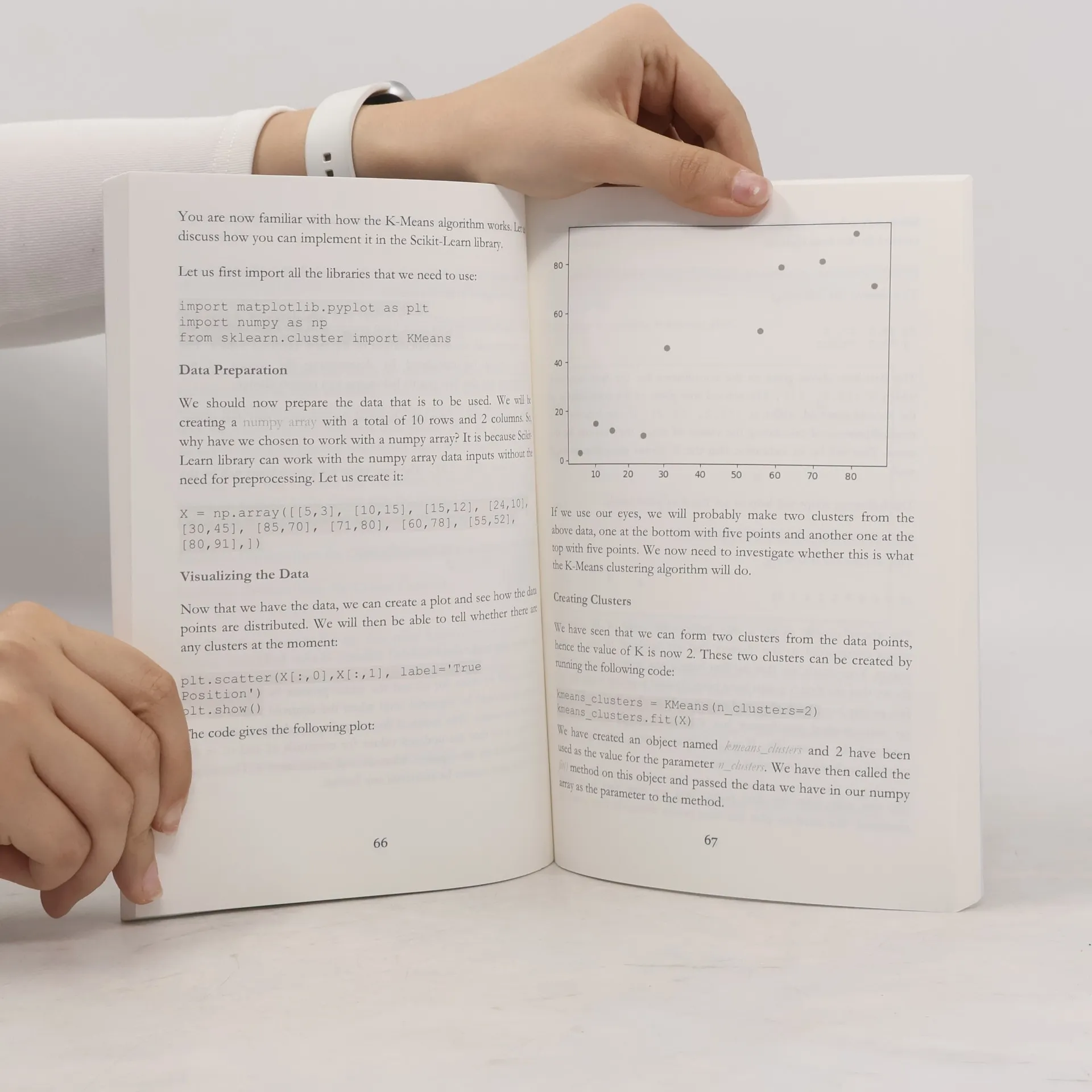
<b>You want to learn Machine Learning and Deep Learning with Python, Scikit-Learn, Tenserflow...and you don't know how to start? You don't need a big boring and expensive textbook. This book is the best one for everyone. Order your book Now!!</b>Here are the reasons: The author has explored everything about machine learning and deep learning right from the basics. A simple language has been used. Many examples have been given, both theoretically and programmatically. Screenshots showing program outputs have been added. The book is written chronologically, in a step-by-step manner.<b>Book Objectives: </b>The Aims and Objectives of the Book: To help you understand the basics of machine learning and deep learning. Understand the various categoriesof machine learning algorithms. To help you understand how different machine learning algorithms work. You will learn how to implement various machine learning algorithms programmatically in Python. To help you learn how to use Scikit-Learn and TensorFlow Libraries in Python. To help you know how to analyze data programmatically to extract patterns, trends, and relationships between variables. <b>Who this Book is for?</b>Here are the target readers for this book: Anybody who is a complete beginner to machine learning in Python. Anybody who needs to advance their programming skills in Python for machine learning programming and deep learning. Professionals in data science. Professors, lecturers or tutors who are looking to find better ways to explain machine learning to their students in the simplest and easiest way. Students and academicians, especially those focusing on neural networks, machine learning, and deep learning. <b>What do you need for this Book? </b>You are required to have installed the following on your computer: Python 3.X Numpy Pandas Matplotlib The Author guides you on how to install the rest of the Python libraries that are required for machine learning and deep learning. <b> What is inside the book: </b> Getting Started Environment Setup Using Scikit-Learn Linear Regression with Scikit-Learn k-Nearest Neighbors Algorithm K-Means Clustering Support Vector Machines Neural Networks with Scikit-learn Random Forest Algorithm Using TensorFlow Recurrent Neural Networks with TensorFlow Linear Classifier This book will teach you machine learning classifiers using scikit-learn and tenserflow . The book provides a great overview of functions you can use to build a support vector machine, decision tree, perceptron, and k-nearest neighbors. Thanks of this book you will be able to set up a learning pipeline that handles input and output data, pre-processes it, selects meaningful features, and applies a classifier on it. This book offers a lot of insight into machine learning for both beginners, as well as for professionals, who already use some machine learning techniques. Concepts and the background of these concepts are explained clearly in this tutorial.
Een boek kopen
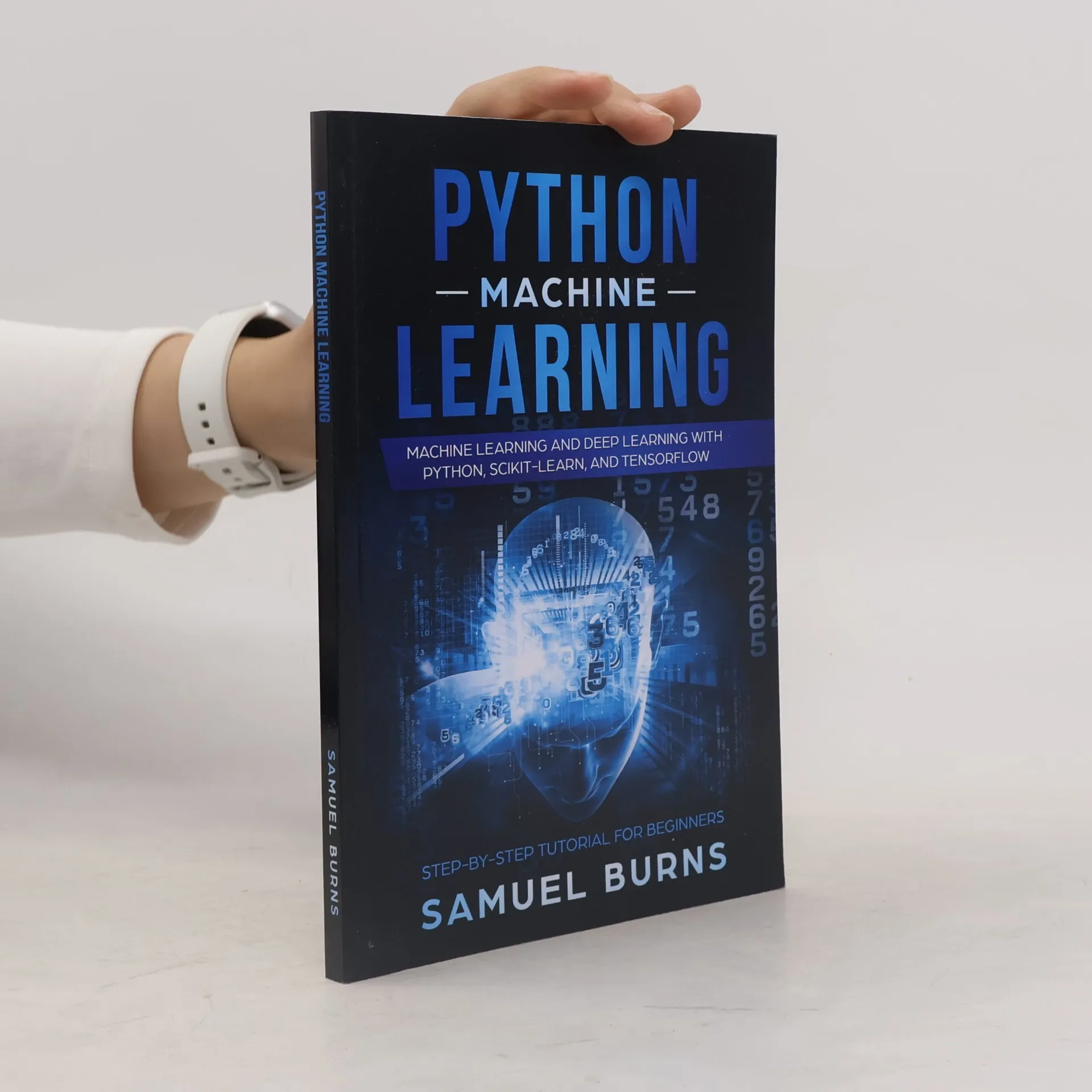
Python Machine Learning, Samuel Burns
- Taal

- Jaar van publicatie
- 2019
- Bindwijze
- (Paperback),
- Staat van het boek
- Zeer goed
- Prijs
- € 14,39
Betaalmethoden
Nog niemand heeft beoordeeld.
- Titel
- Python Machine Learning
- Ondertitel
- Machine Learning and Deep Learning with Python, scikit-learn, and TensorFlow - Step-by-Step Tutorial for Beginners
- Taal
- Engels
- Auteurs
- Samuel Burns
- Uitgever
- END OF LINE CLEARANCE BOOK
- Jaar van publicatie
- 2019
- Formaat
- Paperback
- Aantal pagina's
- 146
- ISBN10
- 1793175853
- ISBN13
- 9781793175854
- Reeks
- Aantekening
- <b>You want to learn Machine Learning and Deep Learning with Python, Scikit-Learn, Tenserflow...and you don't know how to start? You don't need a big boring and expensive textbook. This book is the best one for everyone. Order your book Now!!</b>Here are the reasons: The author has explored everything about machine learning and deep learning right from the basics. A simple language has been used. Many examples have been given, both theoretically and programmatically. Screenshots showing program outputs have been added. The book is written chronologically, in a step-by-step manner.<b>Book Objectives: </b>The Aims and Objectives of the Book: To help you understand the basics of machine learning and deep learning. Understand the various categoriesof machine learning algorithms. To help you understand how different machine learning algorithms work. You will learn how to implement various machine learning algorithms programmatically in Python. To help you learn how to use Scikit-Learn and TensorFlow Libraries in Python. To help you know how to analyze data programmatically to extract patterns, trends, and relationships between variables. <b>Who this Book is for?</b>Here are the target readers for this book: Anybody who is a complete beginner to machine learning in Python. Anybody who needs to advance their programming skills in Python for machine learning programming and deep learning. Professionals in data science. Professors, lecturers or tutors who are looking to find better ways to explain machine learning to their students in the simplest and easiest way. Students and academicians, especially those focusing on neural networks, machine learning, and deep learning. <b>What do you need for this Book? </b>You are required to have installed the following on your computer: Python 3.X Numpy Pandas Matplotlib The Author guides you on how to install the rest of the Python libraries that are required for machine learning and deep learning. <b> What is inside the book: </b> Getting Started Environment Setup Using Scikit-Learn Linear Regression with Scikit-Learn k-Nearest Neighbors Algorithm K-Means Clustering Support Vector Machines Neural Networks with Scikit-learn Random Forest Algorithm Using TensorFlow Recurrent Neural Networks with TensorFlow Linear Classifier This book will teach you machine learning classifiers using scikit-learn and tenserflow . The book provides a great overview of functions you can use to build a support vector machine, decision tree, perceptron, and k-nearest neighbors. Thanks of this book you will be able to set up a learning pipeline that handles input and output data, pre-processes it, selects meaningful features, and applies a classifier on it. This book offers a lot of insight into machine learning for both beginners, as well as for professionals, who already use some machine learning techniques. Concepts and the background of these concepts are explained clearly in this tutorial.