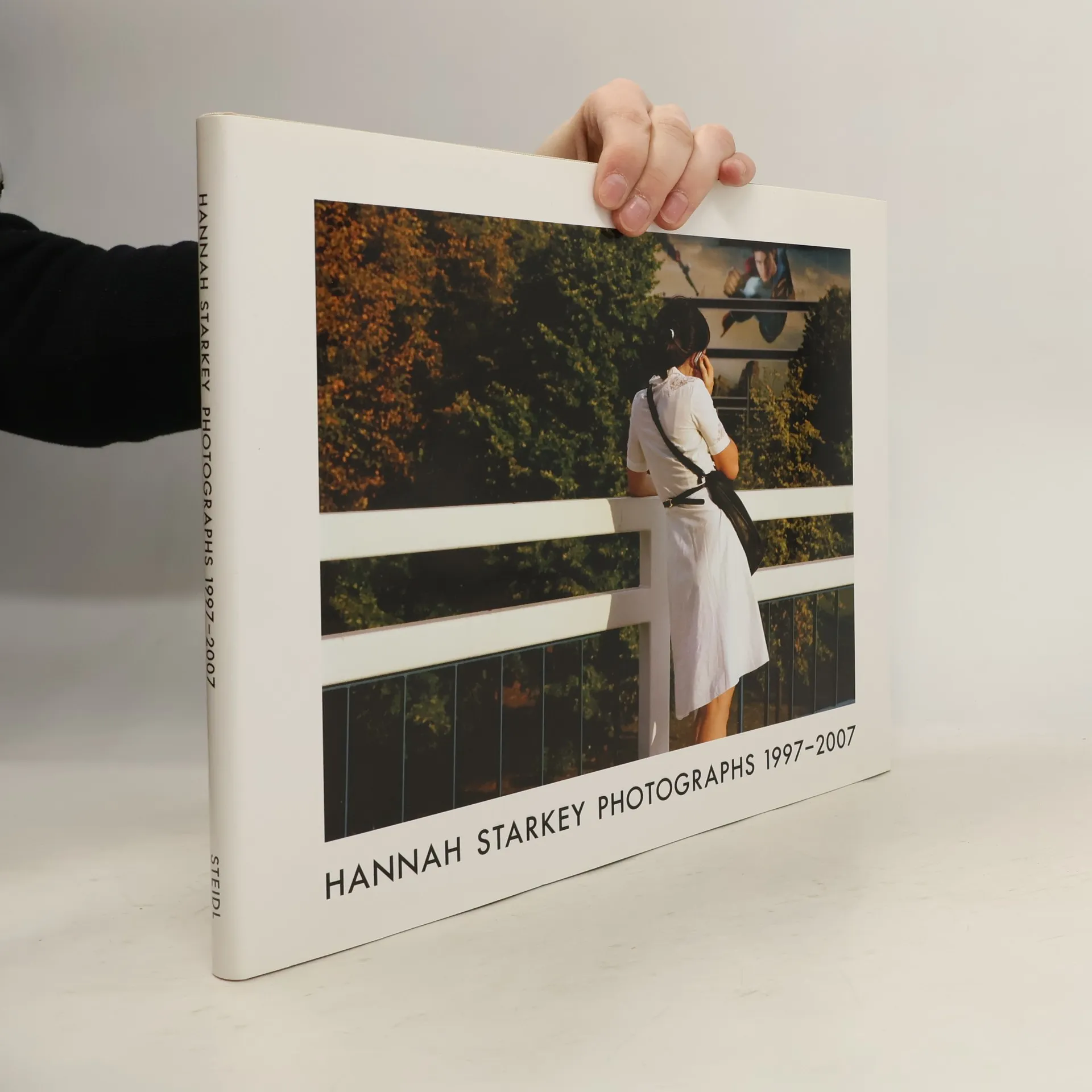
Since 1997, Hannah Starkey had produced a series of photographic meditations on contemporary life. This book covers ten years' work.
Iwona Blazwick Boeken


This is the catalogue of Tate Modern's first major exhibition, due to open in February 2001. The modern city provides the social, aesthetic, historical and political framework within which to explore the arts and ideas of the 20th century. The book focuses on nine cities across the world, which, at specific moments in the 20th century, have all acted as cauldrons of innovation to visual culture. It examines a multitude of artistic practices including architecture, design, film, performance art, philosophy, poetry, literature, and music, as well as painting, photography, and sculpture. Among the cities considered is Paris (1905-1915), as the centre of an international avant-garde where Cubist masterpieces evolved in parallel with dance and literature generated by the habitues of cafes or garrets; 1920s Moscow, where Russian Contructivism focused art, architecture, design, and cinema into a grand utopian vision; post-colonial Lagos, where "high life" music provided the ambience for artists and intellectuals to create a cultural ferment; and Tokyo in the 1970s, where conceptual and performance-based strategies and New Wave cinema flourished.
Tate Modern
- 16bladzijden
- 1 uur lezen
A brief and lively guide to the Tate Modern, using an unusual fold-out format that aims to maximize the impact of the images and clearly highlight different displays.
Tate Modern, the Handbook
- 256bladzijden
- 9 uur lezen
Celebrating the opening of the new Tate at Bankside, London, this book introduces readers to the building, the collection and the new approach to modern and contemporary art. The gallery presents 20th-century art through four classic themes: the nude, landscape, still life and history painting.
This publication explores the intersection of art, ecology, and community through the works of Spanish artist Cristina Iglesias. Her sculptures and installations, crafted from various materials and often incorporating water, invite contemplation and discussion on art's social and ecological impact in diverse environments.
Katharina Fritsch
- 128bladzijden
- 5 uur lezen
At 12 x 17 inches, this giant monograph with an excellent bright green cover is a pleasure to hold and behold. It features Fritsch's most recent graphic and sculptural work, silhouetted on the page and in installation shots at Matthew Marks Gallery, New York. As essayist Bice Curiger writes, "It's almost mental Rococco."
“The apparition of these faces in the crowd; petals on a wet, black bough.” ― Ezra PoundPound’s celebrated haiku powerfully evokes the situation of the individual in the personalities suspended in a moment within the life of the city. The Whitechapel Gallery, London and Castello di Rivoli in Turin, Italy organized Faces in the Crowd as an exploration of this condition of modernity seen in realist art, especially art of the human face and form. The exhibition and its catalog trace a history of avant-garde figuration from a new perspective.Taking Manet’s The Masked Ball at the Opera as its starting point, the book focuses on his contemporaries such as Degas and then moves through the twentieth century to artists of today. Some artworks represent a dramatic rupture with the past proposing radical and innovative modern forms and structures. Others picture modern life or its impact on our inner selves. Others consider art as an agent for further social change. All the works include critical and bibliographical entries, plus a selection of extracts from historical documents and artists writings from the 19th-century to today. Taken together this art fully illuminates its theme in which representations of the human figure are seen as expressions of modernity.Exhibition The Whitechapel Art Gallery, LondonDecember 3, 2004 — February 28, 2005Castello di Rivoli, TurinApril 4, 2005 — July 10, 2005
Hatton, Brian, Lucan, Jacques, Blazwick, Iwona
Rodney Graham
- 120bladzijden
- 5 uur lezen