
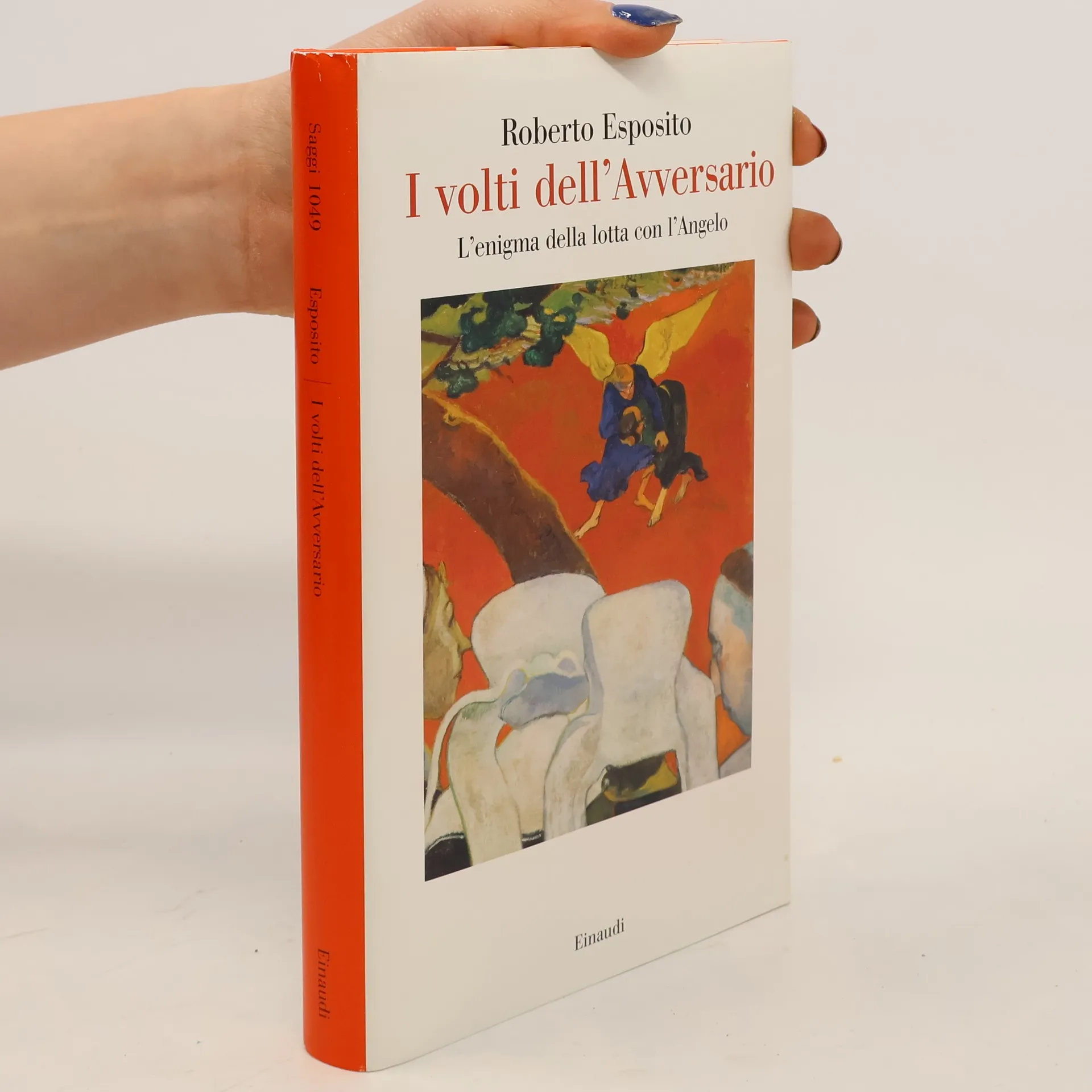



Roberto Esposito is een vooraanstaand Italiaans filosoof wiens werk zich verdiept in theoretische filosofie en politieke theorie. Zijn uitgebreide academische bijdragen omvatten sleutelrollen binnen toonaangevende Italiaanse en internationale instellingen, waarmee hij de discussie in zijn vakgebieden vormgeeft. Esposito behandelt complexe vraagstukken van politiek denken en draagt door zijn redactionele en publicatie-inspanningen bij aan de ontwikkeling van deze disciplines. Zijn invloed is duidelijk merkbaar in zijn pogingen om politieke en juridische lexicons te definiëren en te begrijpen, evenals in zijn rol als filosofisch consultant voor belangrijke uitgeverijen.
Exploring the historical foundations of political theology, this book examines the interplay between Roman and Christian ideas about the individual, highlighting how these concepts create exclusionary dynamics that unify by division. It advocates for a shift towards a more impersonal and universally accessible understanding of thought, offering a path to dismantle the oppressive frameworks that have emerged from these traditions.
The pandemic has brought into sharp relief the fundamental relationship between institution and human life: at the very moment when the virus was threatening to destroy life, human beings called upon institutions - on governments, on health systems, on new norms of behavior - to combat the virus and preserve life. Drawing on this and other examples, Roberto Esposito argues that institutions and human life are not opposed to one another but rather two sides of a single figure that, together, delineate the vital character of institutions and the instituting power of life. What else is life, after all, if not a continuous institution, a capacity for self-regeneration along new and unexplored paths? No human life is reducible to pure survival, to "bare life." There is always a point at which life reaches out beyond primary needs, entering into the realm of desires and choices, passions and projects, and at that point human life becomes instituted: it becomes part of the web of relations that constitute social, political, and cultural life.
This new book by the Italian philosopher Roberto Esposito addresses the profound crisis of contemporary politics and examines some of the philosophical approaches that have been used to try to understand and go beyond this crisis. Two approaches have been particularly influential – one indebted to the thought of Martin Heidegger, the other indebted to Gilles Deleuze. While opposed in their political thrust and orientation, both approaches remain trapped within the political ontology that has framed our conceptual language for some time. In order to move beyond this political ontology, Esposito turns to a third approach that he characterizes as ‘instituting thought’. Indebted to the work of the French political philosopher Claude Lefort, this third approach recognizes that the road to reconstructing a productive relation between ontology and politics, one that is both realistic and innovative, lies in instituting praxis. Building on this insight, Esposito conceptualizes social being as neither univocal nor plurivocal but as cross-cut by the dual semantics of political conflict. This new book by one of the most original European philosophers writing today will be of great interest to students and scholars in philosophy, social and political theory and the humanities generally.
Roberto Esposito, a prominent figure in theoretical philosophy, explores complex themes in his works, including biopolitics and political theology. His notable publications, such as "Bios: Biopolitics and Philosophy" and "Two: The Machine of Political Theology and the Place of Thought," delve into the intersections of philosophy, politics, and the human condition. Esposito's academic contributions reflect a deep engagement with contemporary philosophical debates, making his insights crucial for understanding modern political thought.
In this thought-provoking work, philosopher Roberto Esposito explores the intertwining of politics and negation, analyzing its evolution through thinkers like Schmitt and Freud. He critiques fundamental political concepts and advocates for an affirmative philosophy that reconsiders negation through the lens of difference and opposition, addressing contemporary challenges.
In Zeiten von Pandemie und Klimawandel, da die Weltbevölkerung von volatilen Nationalregierungen und transnationalen Konzernen nur auf sehr unzuverlässige Weise repräsentiert und geschützt wird, müsste Institutionen eigentlich eine bedeutende Rolle zukommen. Zu allem Überfluss aber scheint alles Institutionelle an seinen eigenen, schon lange diagnostizierten Unzulänglichkeiten zu laborieren und eher Teil des Problems zu sein, als zur Lösung der vielfältigen Menschheitsherausforderungen beitragen zu können.In seinem neuesten Buch geht Roberto Esposito dem bedrohlich schwindenden Vertrauen in das Wesen von Institutionen auf den Grund und plädiert für eine radikale Revision der Auffassung, wonach scheinbar starre Institutionen und soziale Bewegungen in notwendigem Widerstreit zueinander stünden. Vielmehr gilt es, das Verhältnis von Leben und Politik gänzlich neu zu denken und mit einem affirmativen Blick auf die Kraft des Instituierens die daraus neu erwachsenden Handlungsmöglichkeiten zu erschließen.