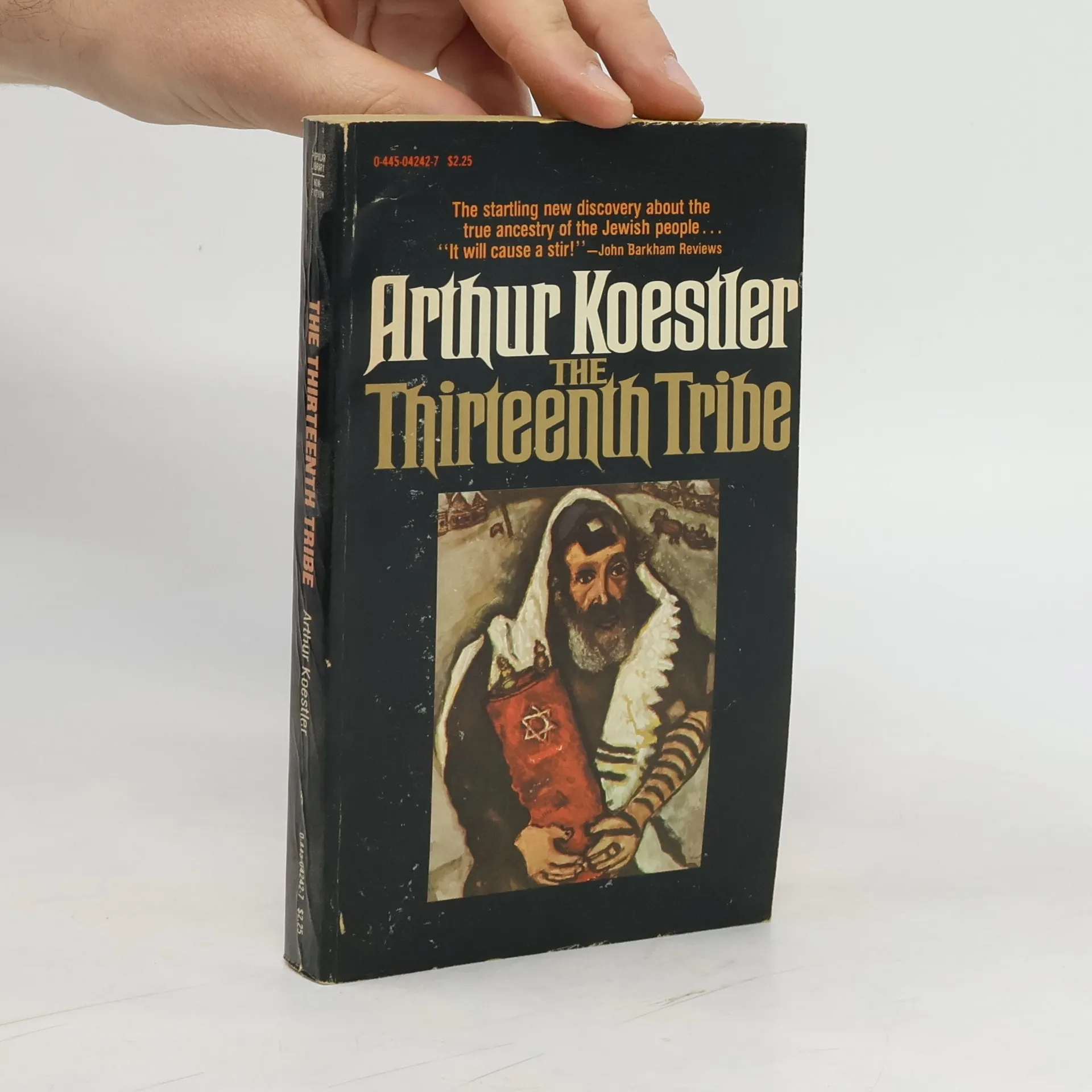
This book traces the history of the ancient Khazar Empire, a major but almost forgotten power in Eastern Europe, which in the Dark Ages became converted to Judaism. Khazaria was finally wiped out by the forces of Genghis Khan, but evidence indicates that the Khazars themselves migrated to Poland and formed the cradle of Western Jewry. To the general reader the Khazars, who flourished from the 7th to 11th century, may seem infinitely remote today. Yet they have a close and unexpected bearing on our world, which emerges as Koestler recounts the fascinating history of the ancient Khazar Empire. At about the time that Charlemagne was Emperor in the West. The Khazars' sway extended from the Black Sea to the Caspian, from the Caucasus to the Volga, and they were instrumental in stopping the Muslim onslaught against Byzantium, the eastern jaw of the gigantic pincer movement that in the West swept across northern Africa and into Spain. Thereafter the Khazars found themselves in a precarious position between the two major world powers: the Eastern Roman Empire in Byzantium and the triumphant followers of Mohammed. As Koestler points out, the Khazars were the Third World of their day. They chose a surprising method of resisting both the Western pressure to become Christian and the Eastern to adopt Islam. Rejecting both, they converted to Judaism. Mr. Koestler speculates about the ultimate faith of the Khazars and their impact on the racial composition and social heritage of modern Jewry. He produces detailed research to support a theory which could make the term 'anti-Semitism' become void of meaning

Arthur Koestler Boeken
Arthur Koestler was een productief schrijver van essays, romans en autobiografieën. Zijn vroege carrière lag in de journalistiek, en hij werd later bekend om zijn ingewikkelde essays en romans die vaak complexe politieke en filosofische ideeën onderzochten. Voortbouwend op zijn ervaringen, verdiepte hij zich in thema's als geloof, verraad en de zoektocht naar betekenis in turbulente tijden. Zijn werk wordt gekenmerkt door een scherp intellect en een krachtige vertelstijl.


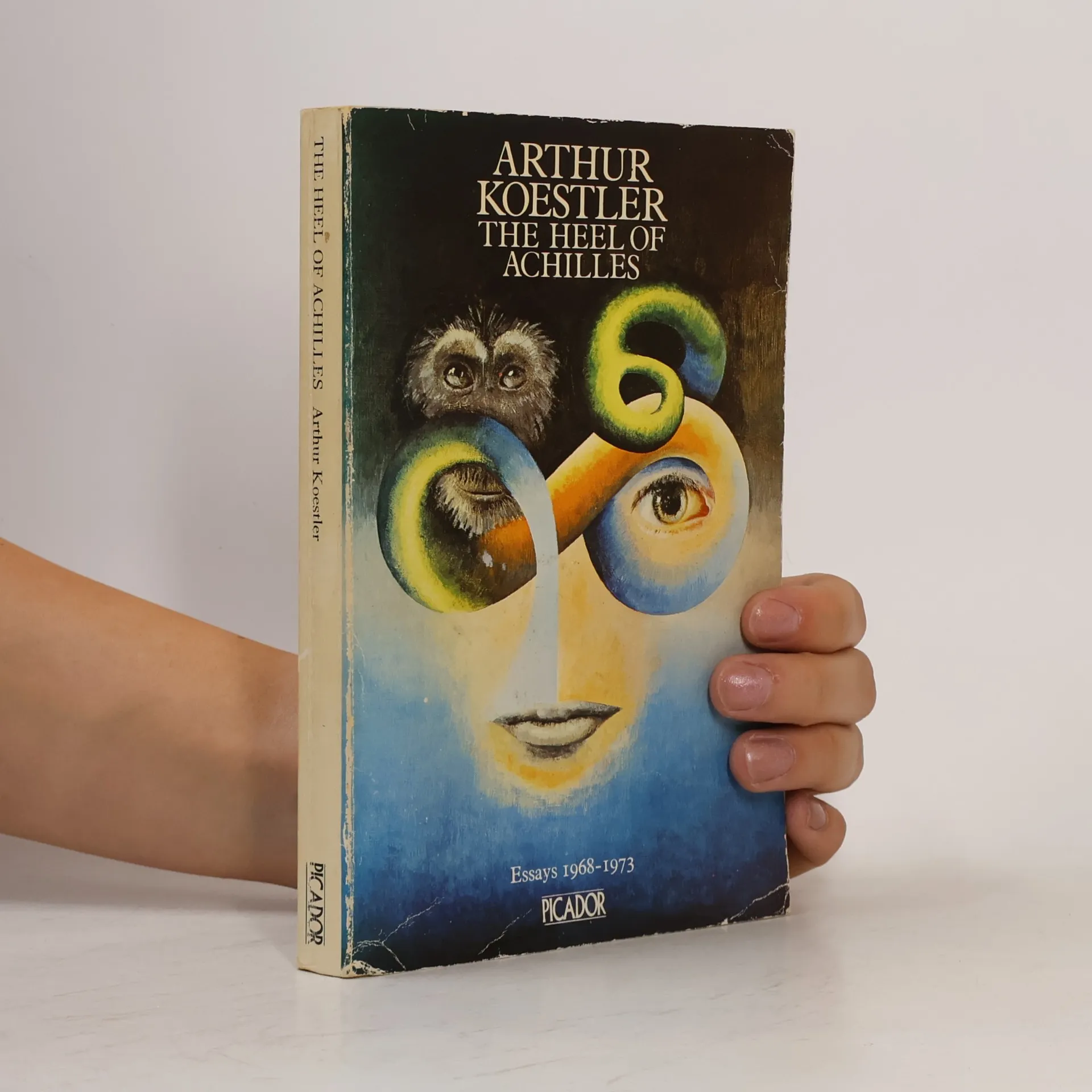
The Heel of Achilles
- 256bladzijden
- 9 uur lezen
In this penetrating selection of essays and reviews, Arthur Koestler roves from Indian politics to the paranormal, from materialism to mysticism. Whether he is addressing a learned society on education or psychiatry, discussing ESP, reporting the Fischer-Spassky chess championship or taking a step into the 1980s, Koestler is always controversial, forthright and stimulating — above all, compulsively readable. [Taken from the back cover]
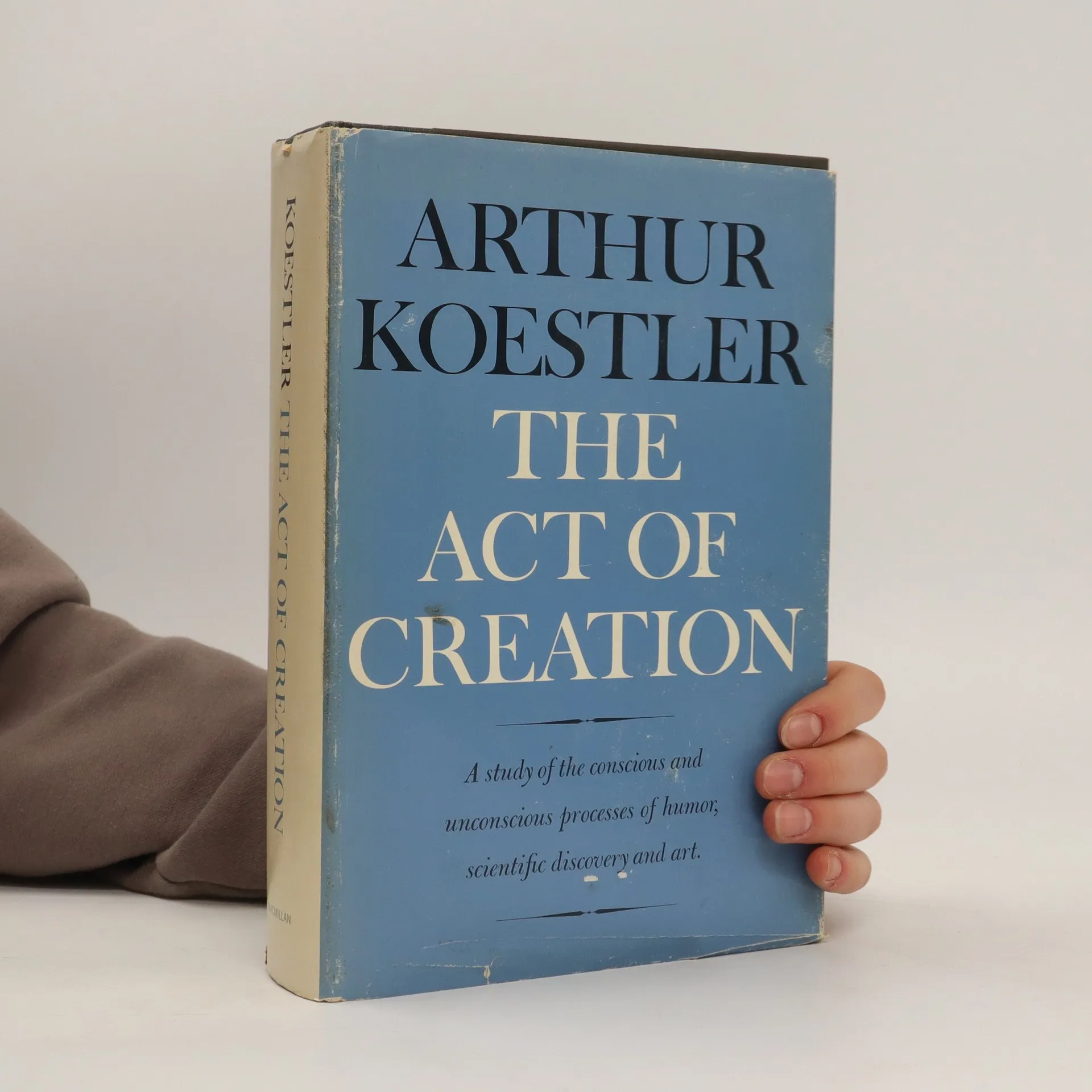
The Act of Creation
- 752bladzijden
- 27 uur lezen
The author examines the idea that we are at our most creative when rational thought is suspended-for example, in dreams and trancelike states.
Promise and Fulfilment - Palestine 1917-1949
- 356bladzijden
- 13 uur lezen
The book explores the historical foundations of the State of Israel through a unique lens, emphasizing the influence of irrational forces and emotional biases alongside traditional politico-economic factors. It is divided into three parts: "Background," which surveys key developments; "Close-up," focusing on specific events; and "Perspective," offering broader insights. The author aims to provide a balanced view by highlighting psychological elements in history, presenting a "psycho-somatic" understanding of this significant modern episode.
In The Sleepwalkers and The Act of Creation Arthur Koestler provided pioneering studies of scientific discovery and artistic inspiration, the twin pinnacles of human achievement. The Ghost in the Machine looks at the dark side of the coin: our terrible urge to self-destruction... Could the human species be a gigantic evolutionary mistake? To answer that startling question Koestler examines how experts on evolution and psychology all too often write about people with an 'antiquated slot-machine model based on the naively mechanistic world-view of the nineteenth century. His brilliant polemic helped to instigate a major revolution in the life sciences, yet its 'glimpses of an alternative world-view' form only the background to an even more challenging analysis of the human predicament. Perhaps, he suggests, we are a species in which ancient and recent brain structures - or reason and emotion - are not fully co-ordinated. Such in-built deficiencies may explain the paranoia, violence and insanity that are central strands of human history. And however disturbing we find such issues, Koestler contends, it is only when we face our limitations head-on that we can hope to find a remedy.
Fictional portrayal of the nightmare politics of our time. Its hero is an aging revolutionary, imprisoned and psychologically tortured by the Party to which he has dedicated his life. As the pressure to confess preposterous crimes increases, he re-lives a career that embodies the terrible ironies and human betrayals of a totalitarian movement masking itself as an instrument of deliverance
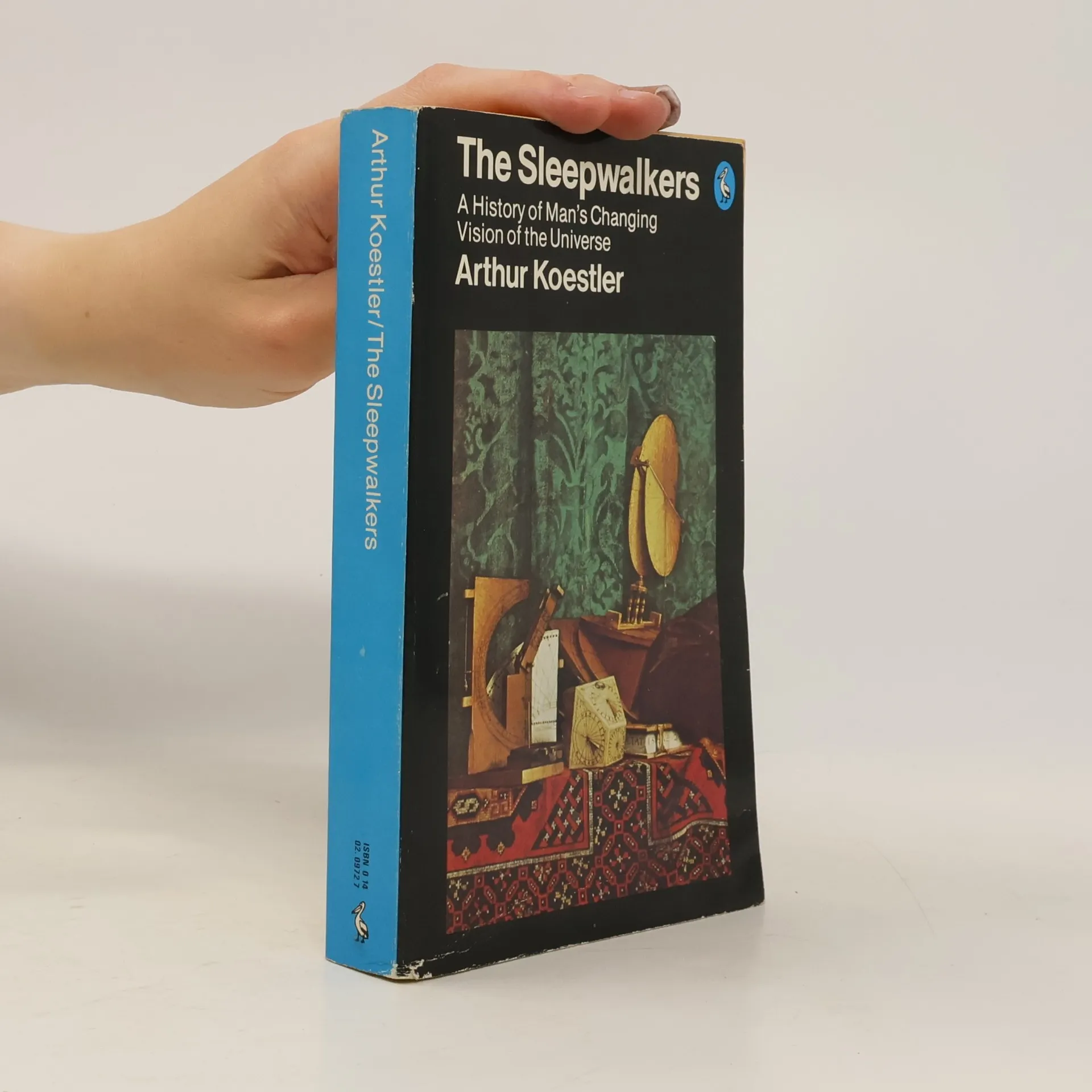
The Sleepwalkers
- 592bladzijden
- 21 uur lezen
Arthur Koestler's extraordinary history of humanity's changing vision of the universe In this masterly synthesis, Arthur Koestler cuts through the sterile distinction between 'sciences' and 'humanities' to bring to life the whole history of cosmology from the Babylonians to Newton. He shows how the tragic split between science and religion arose and how, in particular, the modern world-view replaced the medieval world-view in the scientific revolution of the seventeenth century. He also provides vivid and judicious pen-portraits of a string of great scientists and makes clear the role that political bias and unconscious prejudice played in their creativity.
The author examines recent developments in parapsychological research and explains their implications for physicists