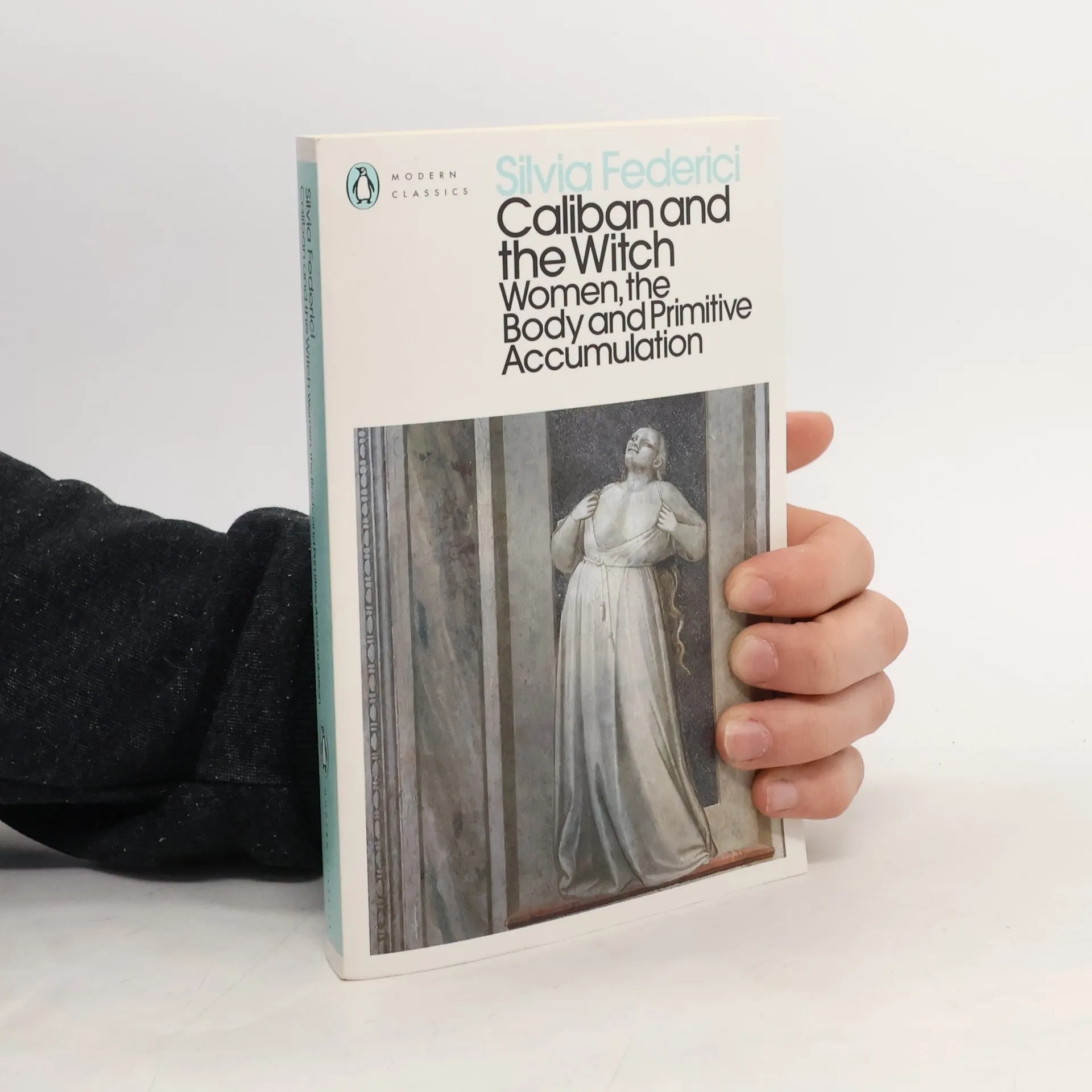
A cult classic since its publication in the early years of this century, Caliban and the Witch is Silvia Federici's history of the body in the transition to capitalism. Moving from the peasant revolts of the late Middle Ages through the European witch-hunts, the rise of scientific rationalism and the colonisation of the Americas, it gives a panoramic account of the often horrific violence with which the unruly human material of pre-capitalist societies was transformed into a set of predictable and controllable mechanisms. It is a study of indigenous traditions crushed, of the enclosure of women's reproductive powers within the nuclear family, and of how our modern world was forged in blood.
Silvia Federici Boeken
Silvia Federici is een vooraanstaand geleerde en activist, geworteld in de radicale autonomistische feministische marxistische traditie. Haar werk onderzoekt kritisch de historische ontwikkeling van het kapitalisme en stelt dat het wordt gekenmerkt door een continu proces van 'primitieve accumulatie' door middel van onteigening. Federici verbindt deze economische dynamiek op unieke wijze met de historische onderwerping van vrouwen, hun onbetaalde reproductieve en huishoudelijke arbeid, en de toe-eigening van gemeenschappelijke hulpbronnen. Haar analyses bieden een kader om te begrijpen hoe hedendaagse mondiale instellingen cycli van privatisering en onteigening in stand houden, wat neerkomt op een nieuwe fase van 'enclosures'.


Collects 35 years of essays on feminism, as well as critiques of capitalism, in a book that looks at elder care, labor, sex and reproduction and more. Original.
Patriarchy Of The Wage
- 144bladzijden
- 6 uur lezen
In Patriarchy of the Wage, Silvia Federici, best-selling author and the most important Marxist feminist of our time, asks why Marx and the Marxist tradition were so crucial in their denunciation of capitalism's exploitation of human labor and blind to women's work and struggle on the terrain of social reproduction. Why was Marx unable to anticipate the profound transformations in the proletarian family that took place at the turn of the nineteenth century creating a new patriarchal regime? In this fiery collection of penetrating essays published here for the first time, Federici carefully examines these questions and in the process has provided an expansive redefinition of work, class, and class-gender relations. Seeking to delineate the specific character of capitalist "patriarchalism," this magnificently original approach also highlights Marx's and the Marxist tradition's problematic view of industrial production and the State in the struggle for human liberation. Federici's lucid argument that most reproductive work is irreducible to automation is a powerful reminder of the poverty of the revolutionary imagination that consigns to the world of machines the creation of the material conditions for a communist society.
Re-enchanting The World
- 256bladzijden
- 9 uur lezen
An edited collection Silvia Federici's work, spanning over twenty years, in which she provides a detailed history and critique of the politics of the commons from a feminist perspective. In her clear and combative voice, Federici provides readers with an analysis of some of the key issues and debates in contemporary thinking on this subject. Drawing on rich historical research, she maps the connections between the previous forms of enclosure that occurred with the birth of capitalism and the destruction of the commons and the 'new enclosures' at the heart of the present phase of global capitalist accumulation.
All Of Me
- 240bladzijden
- 9 uur lezen
Through personal essays and interviews about what it is like to live as a woman (cis + trans) in the modern world, All of Me includes vulnerable, painful truths and bold inspiration. This anthology is for anyone looking to find inspiration in radical activism, creativity, healing, and more. It covers topics of social and economic justice, creativity, racism, transgender perspectives, sexuality, sex work, addiction and recovery, reproductive rights, assault, relationship dynamics, families, fitting and not fitting in, radical self-care, witchcraft, and more.
For Health Autonomy: Horizons of Care Beyond Austerity--Reflections from Greece
- 144bladzijden
- 6 uur lezen
The present way of life is a war against our bodies. Can we build the infrastructure to heal ourselves and transform the societal conditions that continue to mentally and physically harm us?
Witches, witch-hunting, and women
- 120bladzijden
- 5 uur lezen
Silvia Federici argues that, no less than the witch hunts in sixteenth and seventeenth century, the new war on women is a structural element of the new forms of capitalist accumulation. These processes are founded on the destruction of people's most basic means of reproduction. Like at the dawn of capitalism, what we discover behind today's violence against women are processes of enclosure, land dispossession, and the remoulding of women's reproductive activities and subjectivity. As well as an investigation into the causes of this new violence, the book is also a feminist call to arms.
Beyond the Periphery of the Skin
- 160bladzijden
- 6 uur lezen
More than ever, the 'body' is today at the centre of radical and institutional politics. Feminist, antiracist, trans and ecological movementsall look at the body as a ground of confrontation with the state and a vehicle for transformative social practices. Concurrently, the body has become a signifier for the reproduction crisis the neoliberal turn in capitalist development has generated and for the international surge in institutional repression and public violence. Here, Silvia Federici examines these complex processes, placing them in the context of the history of the capitalist transformation of the body into a work-machine.
Witch-hunting, past and present, and the fear of the power of women
- 32bladzijden
- 2 uur lezen
Wie konnte es dazu kommen, dass in Europa vom 15. bis zum 18. Jahrhundert Tausende von Frauen der Hexerei beschuldigt, grausam gefoltert und ermordet wurden? Diese Frage führt Silvia Federici zu einer Neubetrachtung der Entstehung des Kapitalismus sowie des Ausmaßes an Zerstörung von Sozial- und Geschlechterbeziehungen, auf dem diese Entwicklung basierte. Neben der weiblichen Sexualität stellten die Fähigkeiten von Frauen als Heilerinnen, Naturheilkundige, Hebammen, Erzeugerinnen von Liebestränken bei der Ersetzung einer magischen Auffassung vom menschlichen Körper durch eine »rationale«, die ihn zu ausbeutbarer Arbeitskraft umformte, eine Bedrohung dar. Um diese auszumerzen wurde mit den Hexenverfolgungen ein »Terrorregime« über alle Frauen errichtet, aus dem ein neues Modell von Weiblichkeit hervorging: geschlechtslos, untergeordnet, beschränkt auf den Bereich reproduktiver Tätigkeiten.
Eine Zeit der Krisen und der weltweiten Ausdehnung kapitalistischer Verhältnisse verlangt geradezu danach, das Marx’sche Werk aus einer feministischen Perspektive neu zu denken. Silvia Federici, die bedeutendste marxistische Feministin der Gegenwart, geht der Frage nach, warum Marx und die marxistische Tradition in ihrer Kritik der Ausbeutung menschlicher Arbeit im Kapitalismus so unnachgiebig sein konnten, während sie gegenüber der Arbeit und den Kämpfen von Frauen in der Reproduktion blind waren. Und warum war Marx nicht in der Lage, die tiefgreifenden Veränderungen, die proletarische Familien erfuhren und ein neues – kapitalistisches – patriarchales Regime schufen, zu begreifen? In ihren Essays, die hier zum ersten Mal auf Deutsch veröffentlicht werden, liefert sie eine umfangreiche Neubestimmung von Arbeit, Klasse und den Geschlechterverhältnissen. Die Bedeutung der reproduktiven Arbeit in den Blick zu nehmen dient aber nicht nur der Kritik der marxistischen Tradition, sondern drückt auch ihr stürmisches Verlangen nach einem neuen, einem anderen Kommunismus aus.
Reproduktion in der Krise
- 154bladzijden
- 6 uur lezen
Travail gratuit et grèves féministes
- 120bladzijden
- 5 uur lezen
Le 14 juin 2019 a eu lieu, en Suisse, la deuxième grève nationale des femmes. Ces quatre textes s'inscrivent dans ce contexte. L'invisibilisation du travail reproductif et gratuit fournit par les femmes est une des raisons de la colère qui s'exprime aujourd'hui. Les quatre textes regroupés dans cet ouvrage mettent en lumière l'enjeu de ce travail pour les luttes féministes actuelles. Quels sont les usages de la grève hors du travail marchand ? Comment mener une grève du travail domestique, du travail gratuit ou du travail du sexe ? Une grève permet-elle de valoriser/visibiliser ce travail tout en le contestant ? Peut-on lutter contre le patriarcat sans lutter contre le capitalisme ?
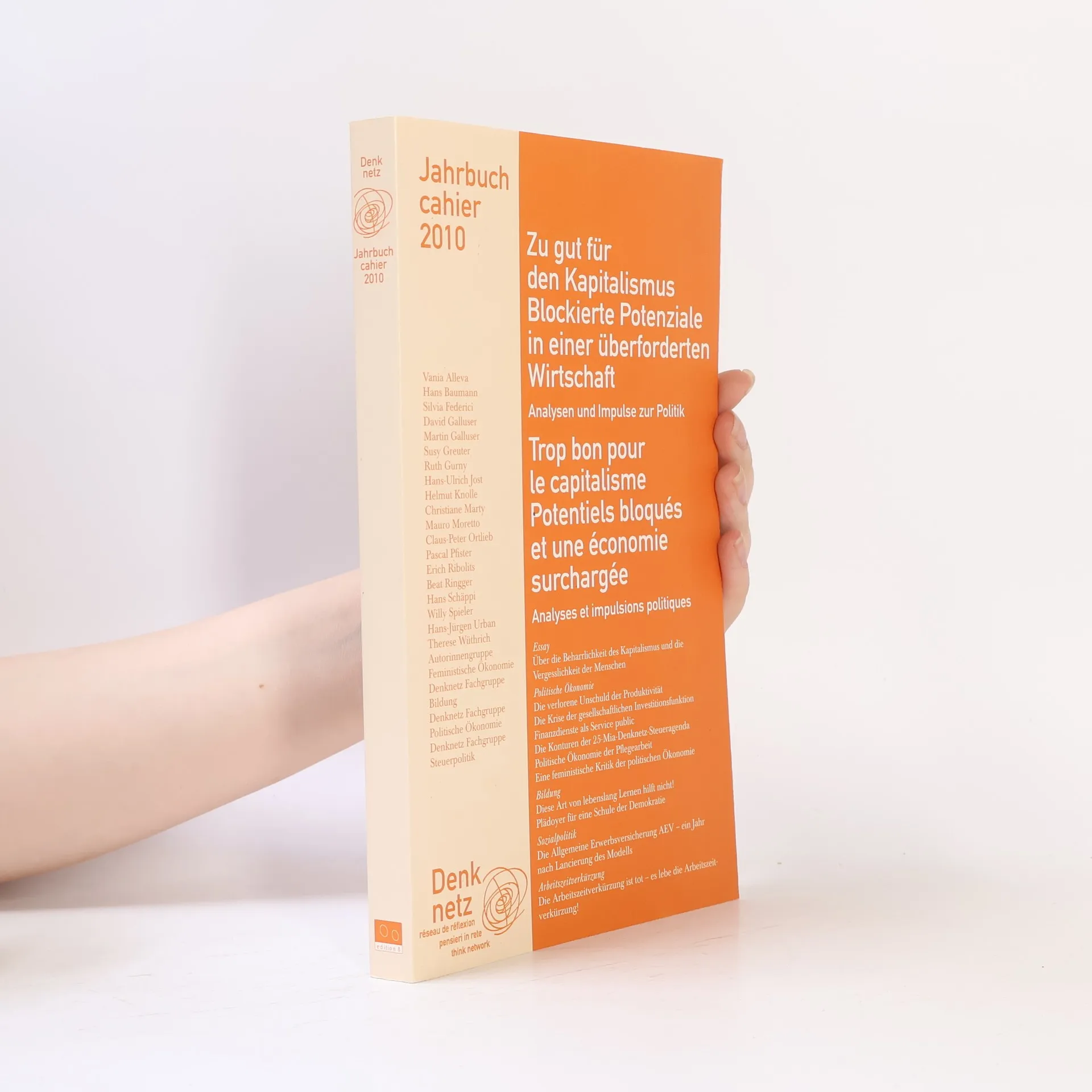
Jahrbuch cahier 2010: Zu gut für den Kapitalismus
Blockierte Potenziale in einer überforderten Wirtschaft
- 224bladzijden
- 8 uur lezen
Kaliban a čarodějnice
- 392bladzijden
- 14 uur lezen