
Koop 10 boeken voor 10 € hier!
Bookbot

Terence Tao

    17 juli 1975

    Terry Tao is een wiskundige wiens onderzoek uiteenlopende gebieden omvat, waaronder harmonische analyse, partiële differentiaalvergelijkingen en getaltheorie. Zijn werk duikt in de ingewikkelde structuren en patronen binnen de wiskunde, op zoek naar fundamentele principes. Tao's bijdragen hebben ons begrip van complexe wiskundige landschappen aanzienlijk vooruitgeholpen. Zijn toewijding aan het verkennen van de theoretische grondslagen van de wiskunde blijkt uit zijn productieve en impactvolle onderzoek.

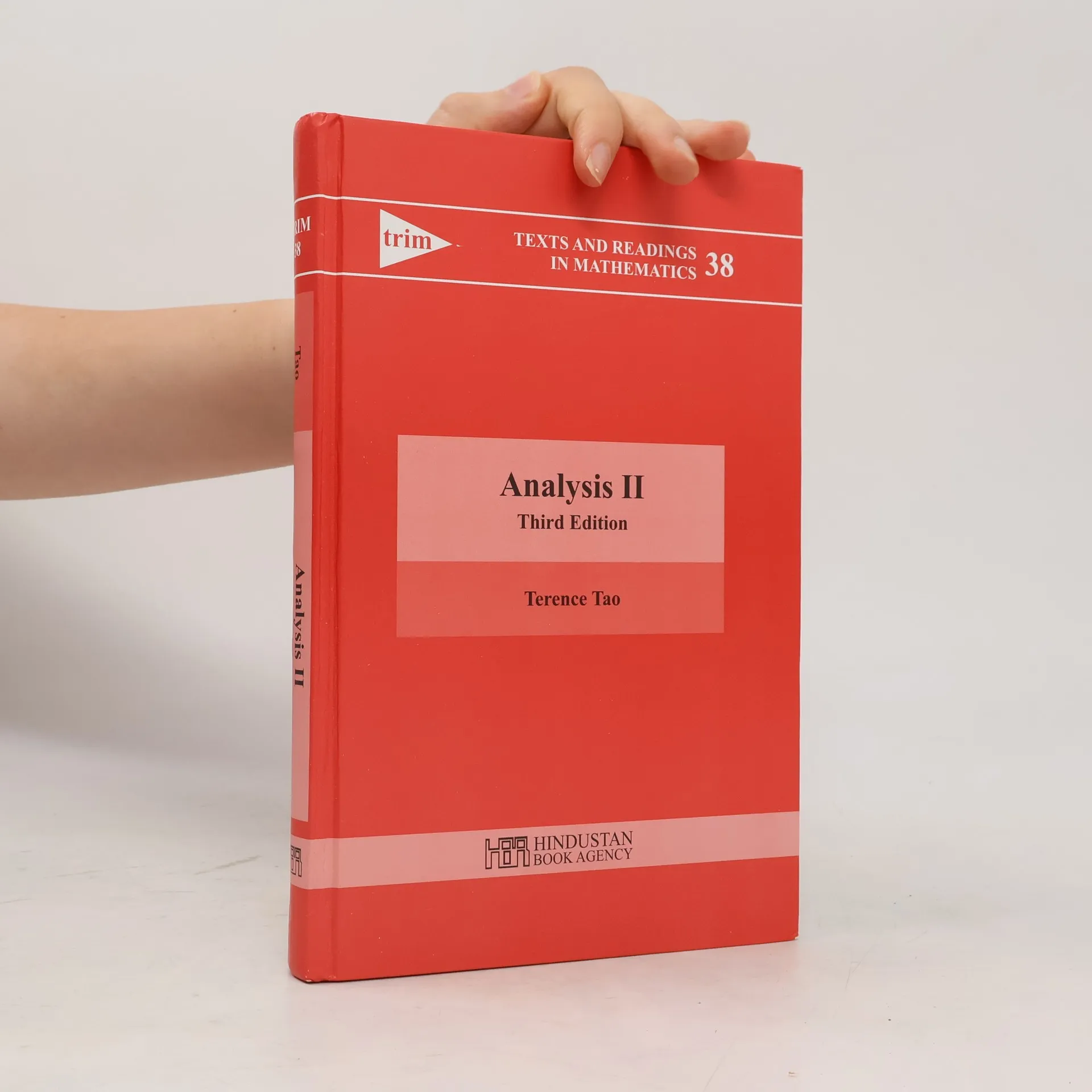
    Analysis II
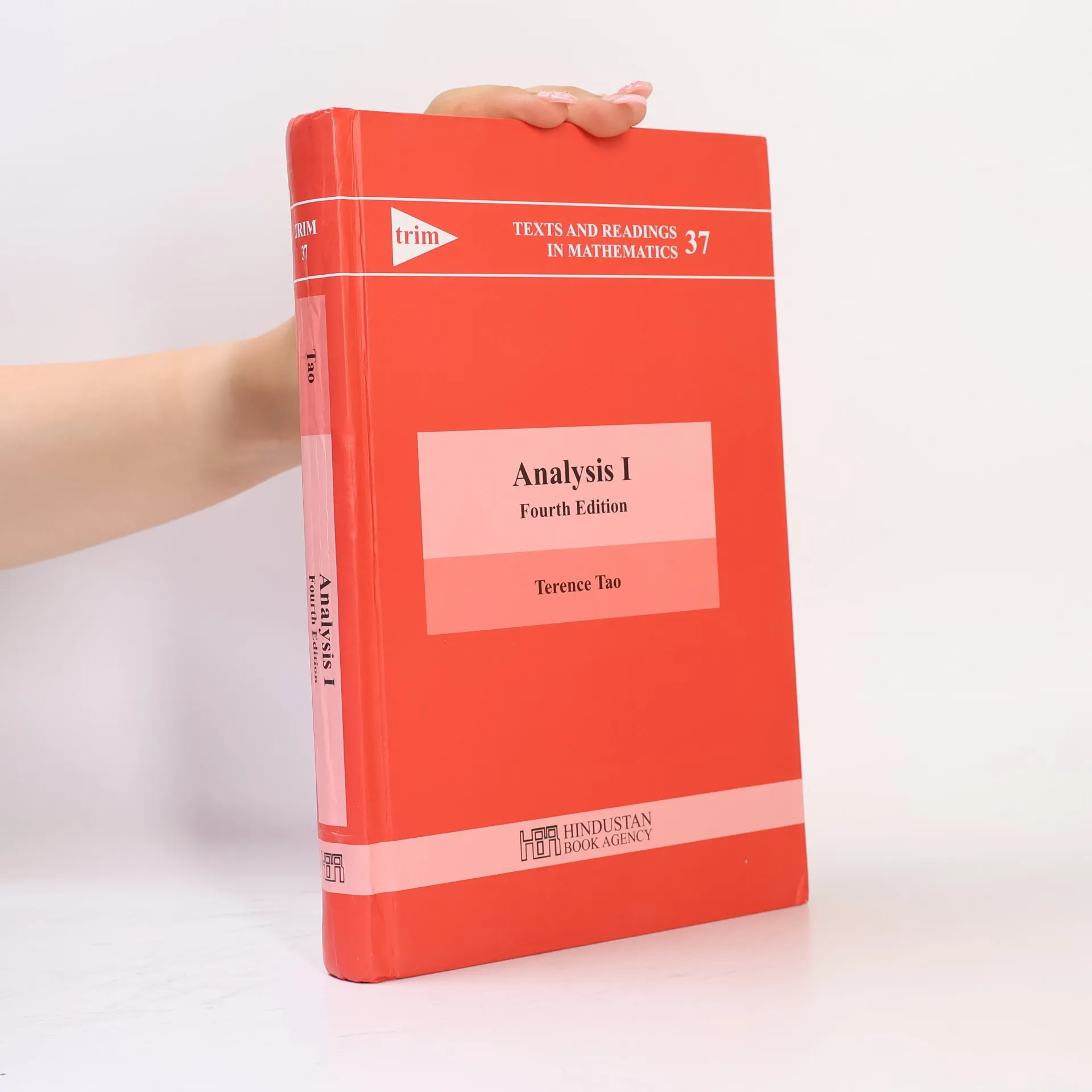
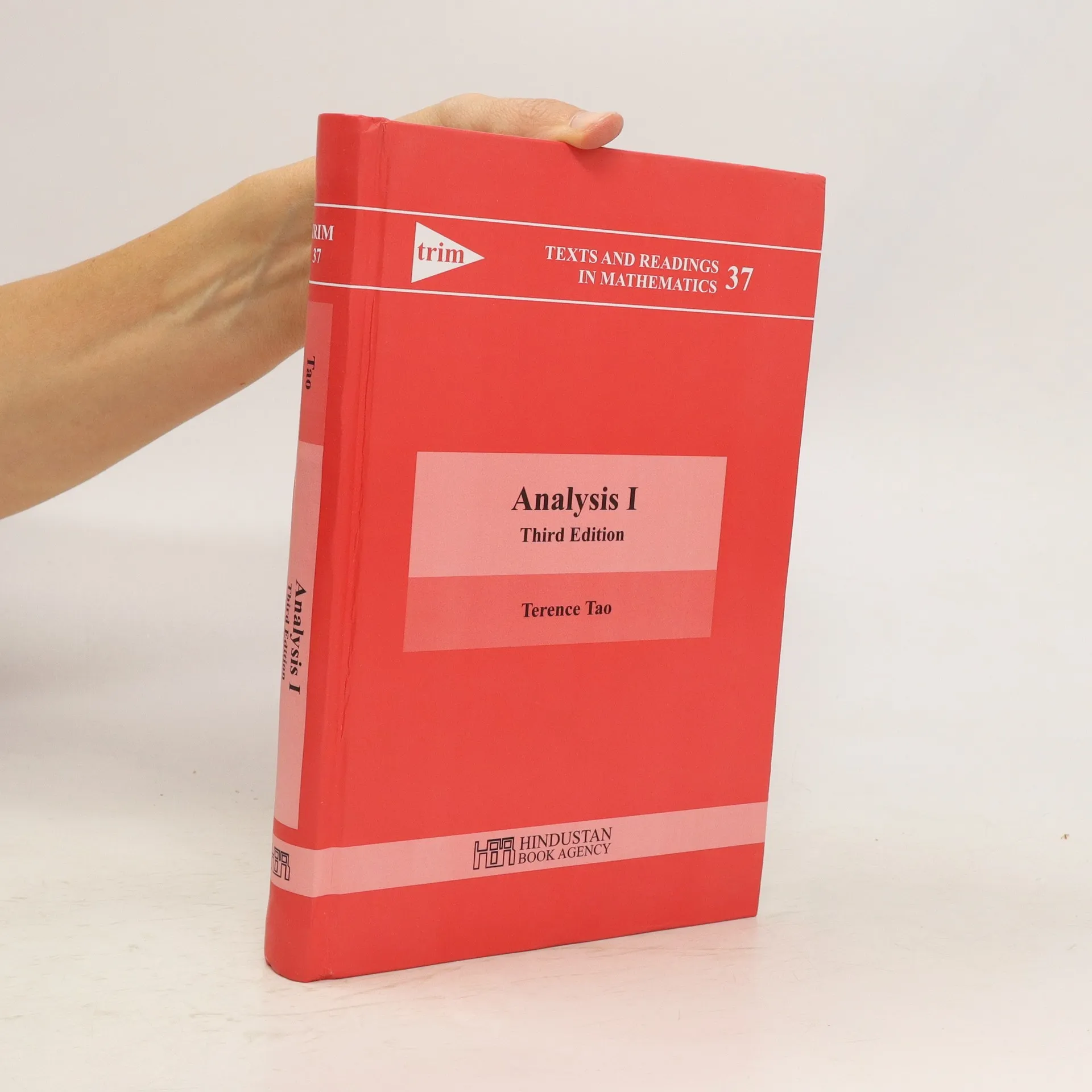
    Analysis I
    • Analysis I

      • 347bladzijden
      • 13 uur lezen
      4,7(21)Tarief

      This is part one of a two-volume book on real analysis and is intended for senior undergraduate students of mathematics who have already been exposed to calculus. The emphasis is on rigour and foundations of analysis. Beginning with the construction of the number systems and set theory, the book discusses the basics of analysis (limits, series, continuity, differentiation, Riemann integration), through to power series, several variable calculus and Fourier analysis, and then finally the Lebesgue integral. These are almost entirely set in the concrete setting of the real line and Euclidean spaces, although there is some material on abstract metric and topological spaces. The book also has appendices on mathematical logic and the decimal system. The entire text (omitting some less central topics) can be taught in two quarters of 25–30 lectures each. The course material is deeply intertwined with the exercises, as it is intended that the student actively learn the material (and practice thinking and writing rigorously) by proving several of the key results in the theory.

      Analysis I
    • Analysis II

      • 218bladzijden
      • 8 uur lezen
      4,6(12)Tarief

      This is part two of a two-volume book on real analysis and is intended for senior undergraduate students of mathematics who have already been exposed to calculus. The emphasis is on rigour and foundations of analysis. Beginning with the construction of the number systems and set theory, the book discusses the basics of analysis (limits, series, continuity, differentiation, Riemann integration), through to power series, several variable calculus and Fourier analysis, and then finally the Lebesgue integral. These are almost entirely set in the concrete setting of the real line and Euclidean spaces, although there is some material on abstract metric and topological spaces. The book also has appendices on mathematical logic and the decimal system. The entire text (omitting some less central topics) can be taught in two quarters of 25–30 lectures each. The course material is deeply intertwined with the exercises, as it is intended that the student actively learn the material (and practice thinking and writing rigorously) by proving several of the key results in the theory.

      Analysis II