
Koop 10 boeken voor 10 € hier!
Bookbot

Raymond M. Smullyan

    25 mei 1919 – 6 februari 2017
    Raymond M. Smullyan
    Satan, Cantor & Infinity. Mind-Boggling Puzzles
    The Riddle of Scheherazade and Other Amazing Puzzles
    Games for Your Mind
    Set Theory and the Continuum Problem
    To Mock a Mockingbird: and Other Logic Puzzles
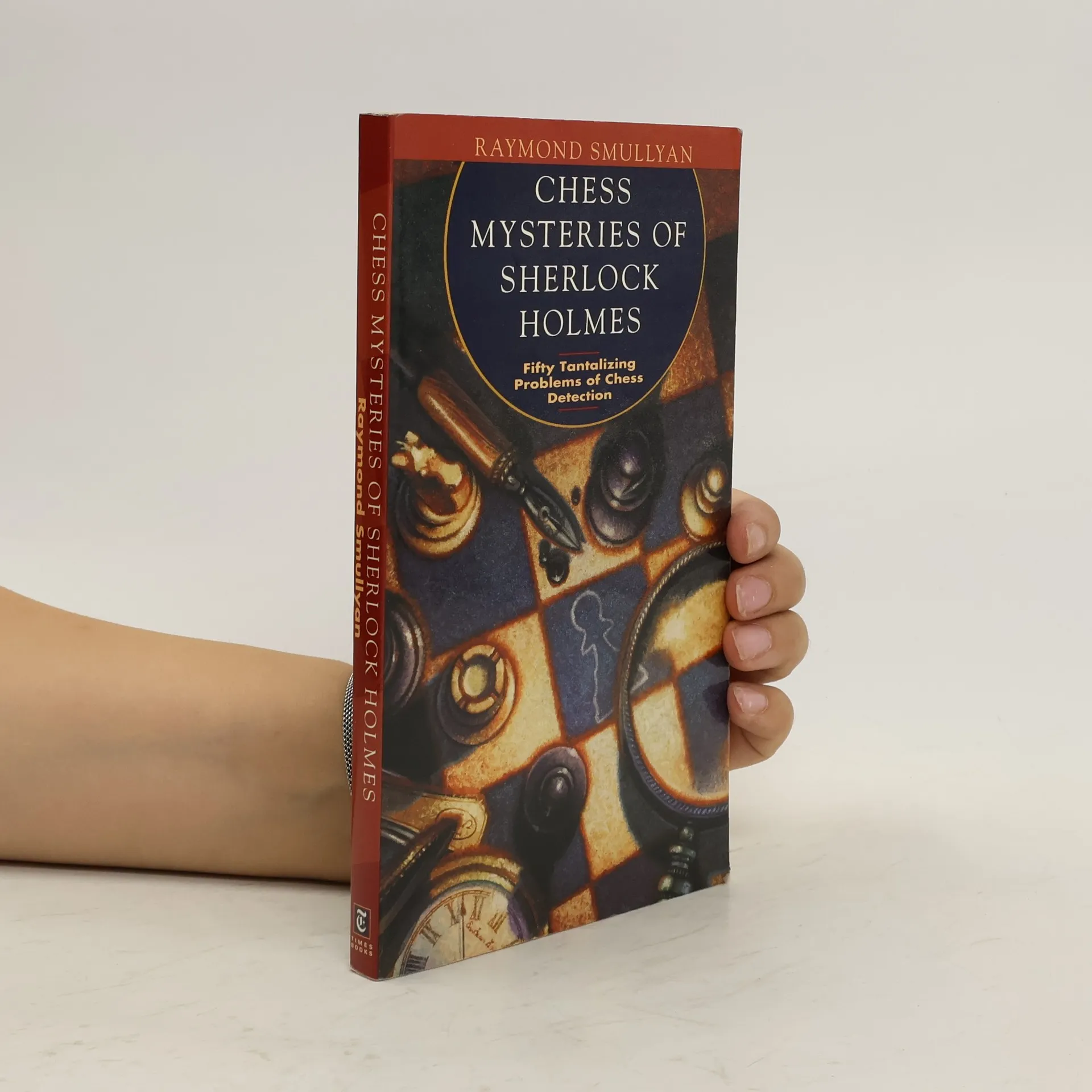
    Chess Mysteries of Sherlock Holmes
    • Here -- from philosopher/logician/puzzlemaker Raymond Smullyan -- are fifty elegant, witty, and altogether unique "chess mysteries." In each problem the solver has to deduce certain events in a game's past. For On what square was the White queen captured? or, Is the White queen promoted or original?Since these problems involve the same sort of logical reasoning that lies at the core of the Sherlock Holmes stories, Raymond Smullyan has aptly set each one within its own Holmes-Watson dialogue. In each case Holmes, by his remarkable powers of deduction, is able to demonstrate to his awed admirers precisely what must have happened, move by move, at the "scene of the crime" -- the chess table. For what the missing piece is; what square it should be on; whether or not either side can castle.In the second half, through a series of progressively more difficult (self-contained) chess problems, Holmes, with the reader's help, solves a mystery and a double murder -- perpetrated, of course, by Moriarty. And at the end of the book are ten bonus problems from Moriarty himself (four of them composed before the age of nine!).Chess Mysteries of Sherlock Holmes is Smullyan's challenging and witty romp through the royal game.

      Chess Mysteries of Sherlock Holmes
    • In this entertaining and challenging collection of logic puzzles, Raymond Smullyan-author of Forever Undecided-continues to delight and astonish us with his gift for making available, in the thoroughly pleasurable form of puzzles, some of the most important mathematical thinking of our time. schovat popis

      To Mock a Mockingbird: and Other Logic Puzzles
    • A lucid, elegant, and complete survey of set theory, this three-part treatment explores axiomatic set theory, the consistency of the continuum hypothesis, and forcing and independence results. 1996 edition.

      Set Theory and the Continuum Problem
    • "Games for Your Mind explores the history and future of logic puzzles while enabling you to test your skill against a variety of puzzles yourself."--Amazon.com

      Games for Your Mind
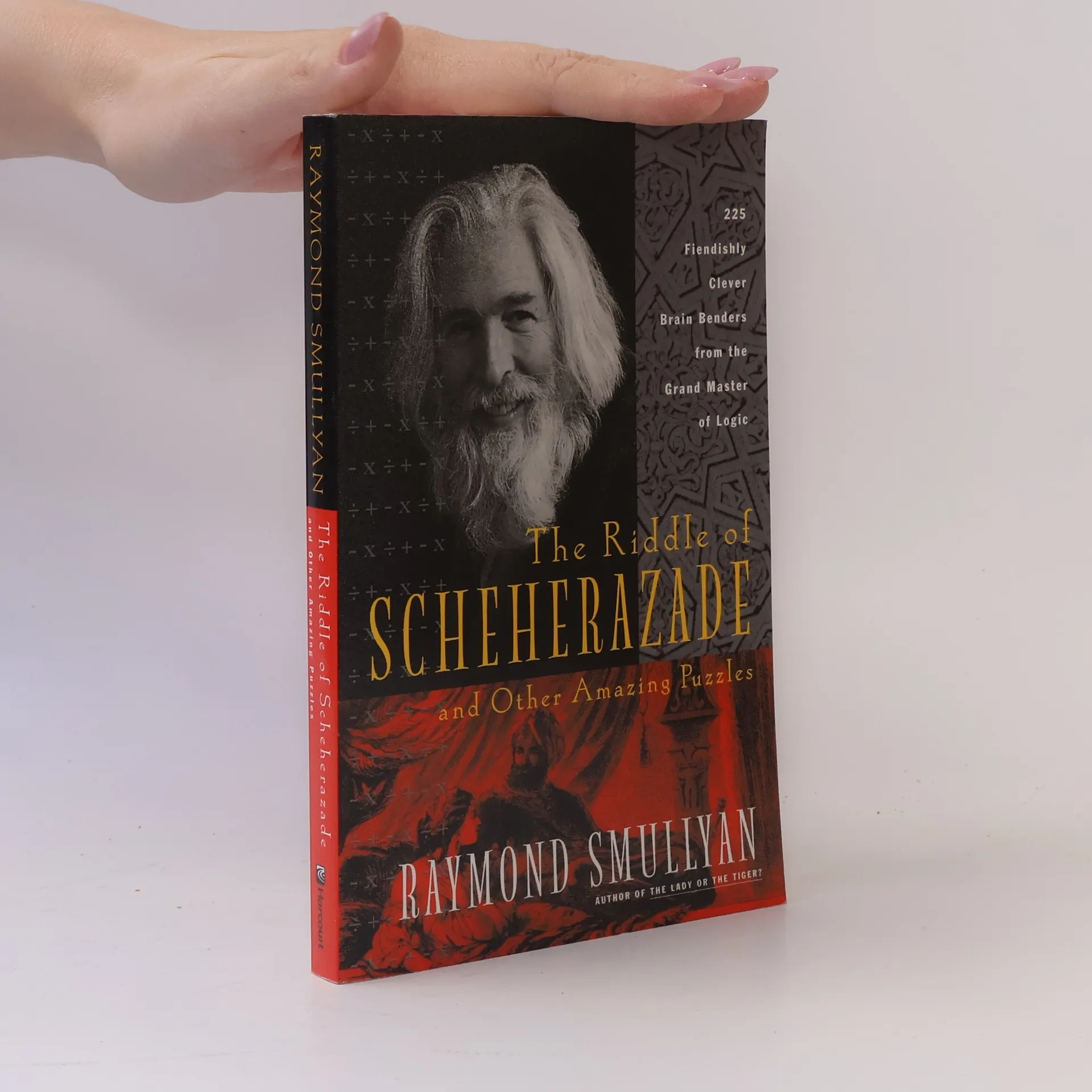
    • “The most entertaining logician and set theorist who ever lived” (Martin Gardner) gives us an encore to The Lady or the Tiger?-a fiendishly clever, utterly captivating new collection of 225 brainteasers, puzzles, and paradoxes.

      The Riddle of Scheherazade and Other Amazing Puzzles
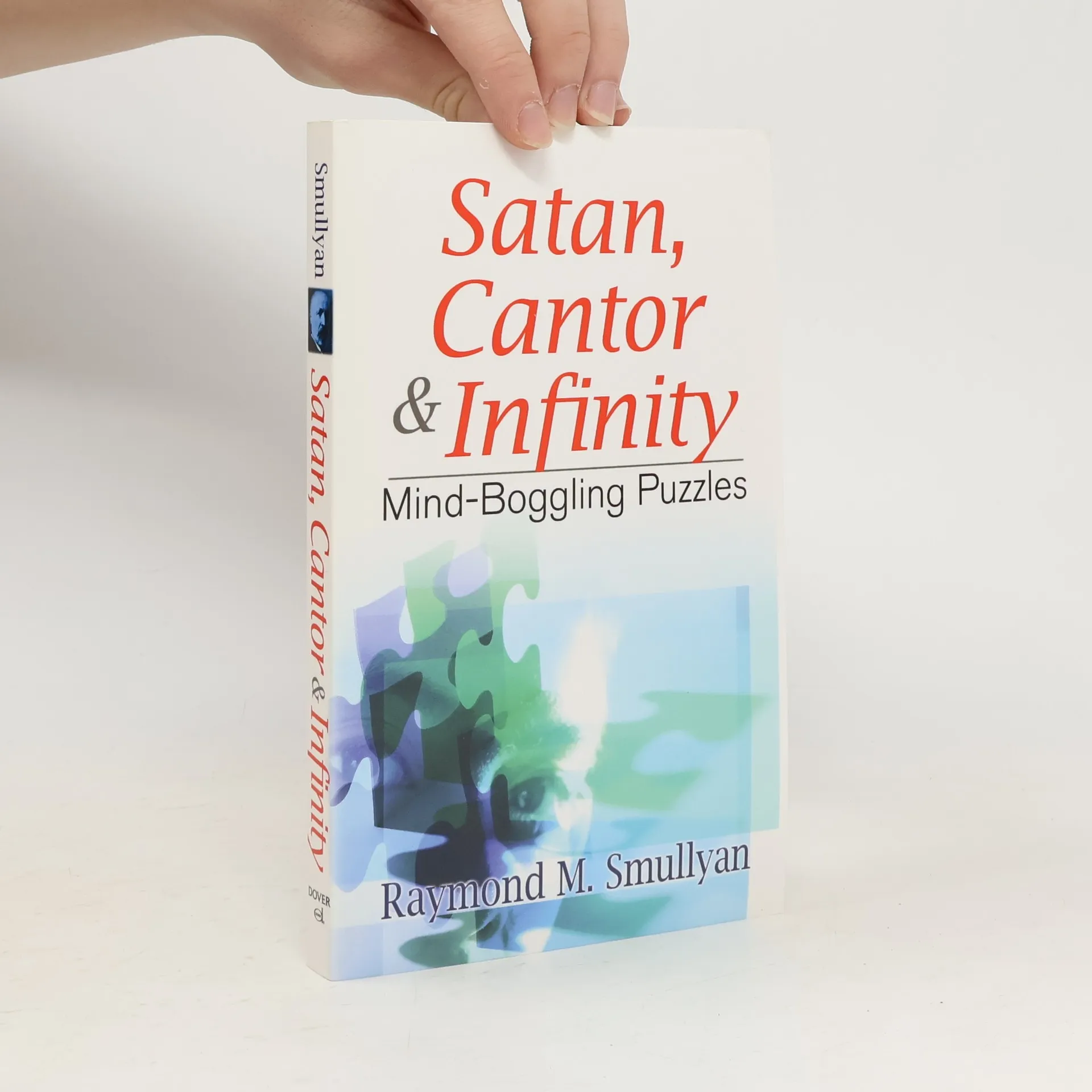
    • Honorable knights, lying knaves, and other fanciful characters populate this unusual survey of the principles underlying the works of Georg Cantor. Created by a renowned mathematician, these engaging puzzles apply logical precepts to issues of infinity, probability, time, and change. They require a strong mathematics background and feature complete solutions.

      Satan, Cantor & Infinity. Mind-Boggling Puzzles
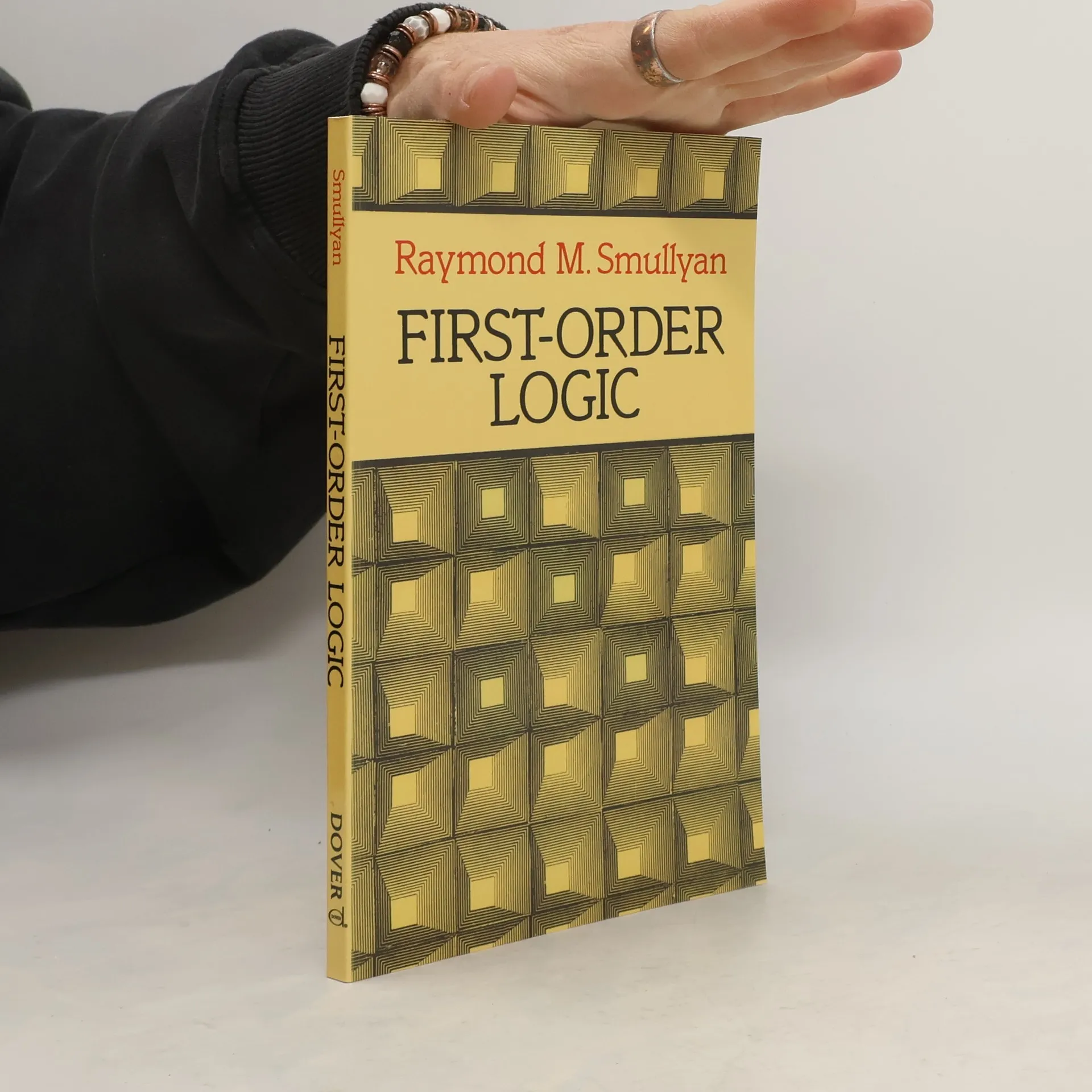
    • This completely self-contained study, widely considered the best book in the field, is intended to serve both as an introduction to quantification theory and as an exposition of new results and techniques in "analytic" or "cut-free" methods. Impressed by the simplicity and mathematical elegance of the tableau point of view, the author focuses on it here.After preliminary material on tress (necessary for the tableau method), Part I deals with propositional logic from the viewpoint of analytic tableaux, covering such topics as formulas or propositional logic, Boolean valuations and truth sets, the method of tableaux and compactness.Part II covers first-order logic, offering detailed treatment of such matters as first-order analytic tableaux, analytic consistency, quantification theory, magic sets, and analytic versus synthetic consistency properties.Part III continues coverage of first-order logic. Among the topics discussed are Gentzen systems, elimination theorems, prenex tableaux, symmetric completeness theorems, and system linear reasoning.Raymond M. Smullyan is a well-known logician and inventor of mathematical and logical puzzles. In this book he has written a stimulating and challenging exposition of first-order logic that will be welcomed by logicians, mathematicians, and anyone interested in the field.

      First-order Logic
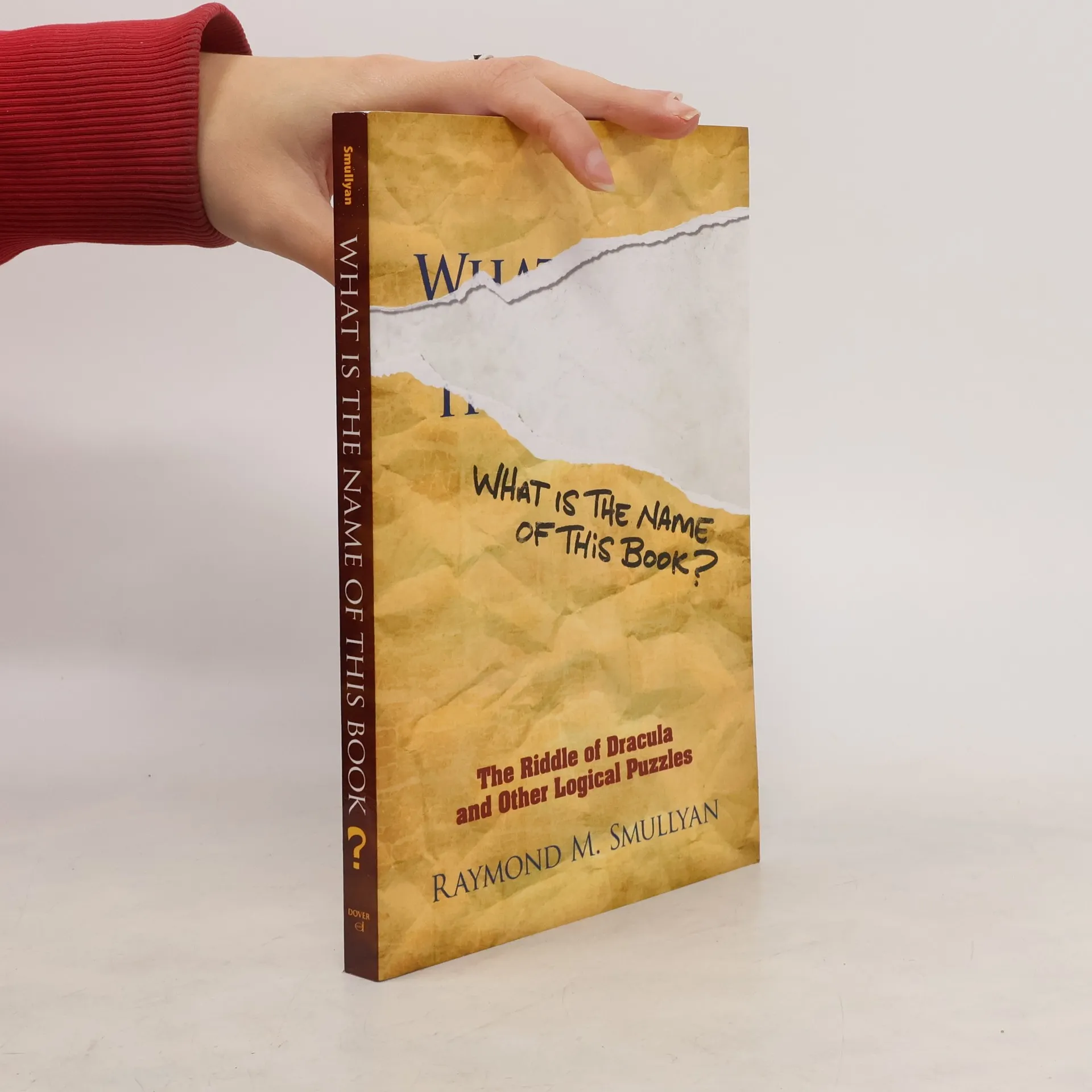
    • A celebrated mathematician presents more than 200 increasingly complex problems that delve into Gödel's undecidability theorem and other examples of the deepest paradoxes of logic and set theory. Solutions.

      What is the Name of This Book?
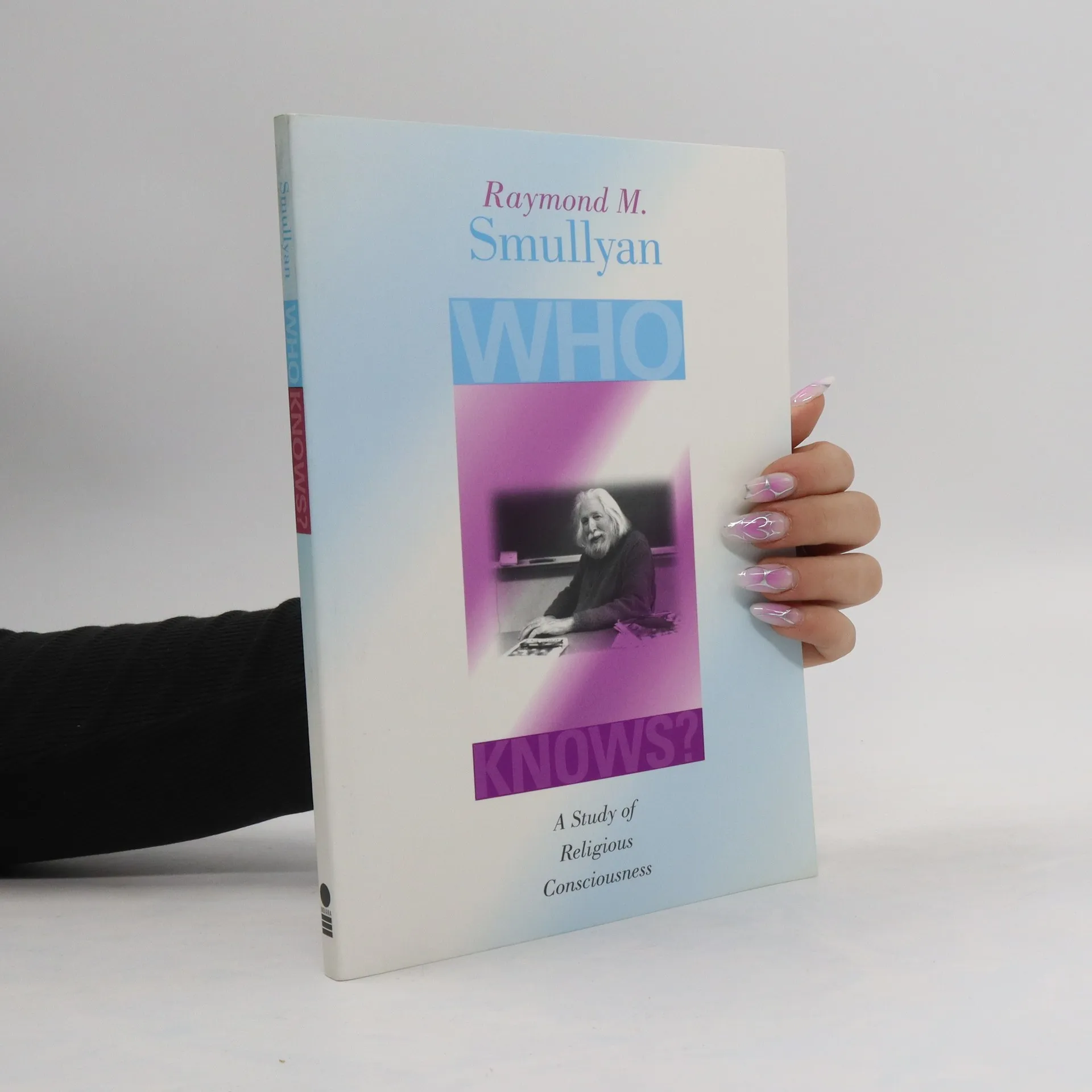
    • Who Knows?

      • 142bladzijden
      • 5 uur lezen
      4,0(69)Tarief

      Is there really a God, and if so, what is God actually like? Is there an afterlife, and if so, is there such a thing as eternal punishment for unrepentant sinners, as many orthodox Christians and Muslims believe? And is it really true that our unconscious minds are connected to a higher spiritual reality, and if so, could this higher spiritual reality be the very same thing that religionists call "God"? In his latest book, Raymond M. Smullyan invites the reader to explore some beautiful and some horrible ideas related to religious and mystical thought. In Part One, Smullyan uses the writings on religion by fellow polymath Martin Gardner as the starting point for some inspired ideas about religion and belief. Part Two focuses on the doctrine of Hell and its justification, with Smullyan presenting powerful arguments on both sides of the controversy. "If God asked you to vote on the retention or abolition of Hell," he asks, "how would you vote?" Smullyan has posed this question to many believers and received some surprising answers. In the last part of his treasurable triptych, Smullyan takes up the "beautiful and inspiring" ideas of Richard Bucke and Edward Carpenter on Cosmic Consciousness. Readers will delight in Smullyan's observations on religion and in his clear-eyed presentation of many new and startling ideas about this most wonderful product of human consciousness.

      Who Knows?