
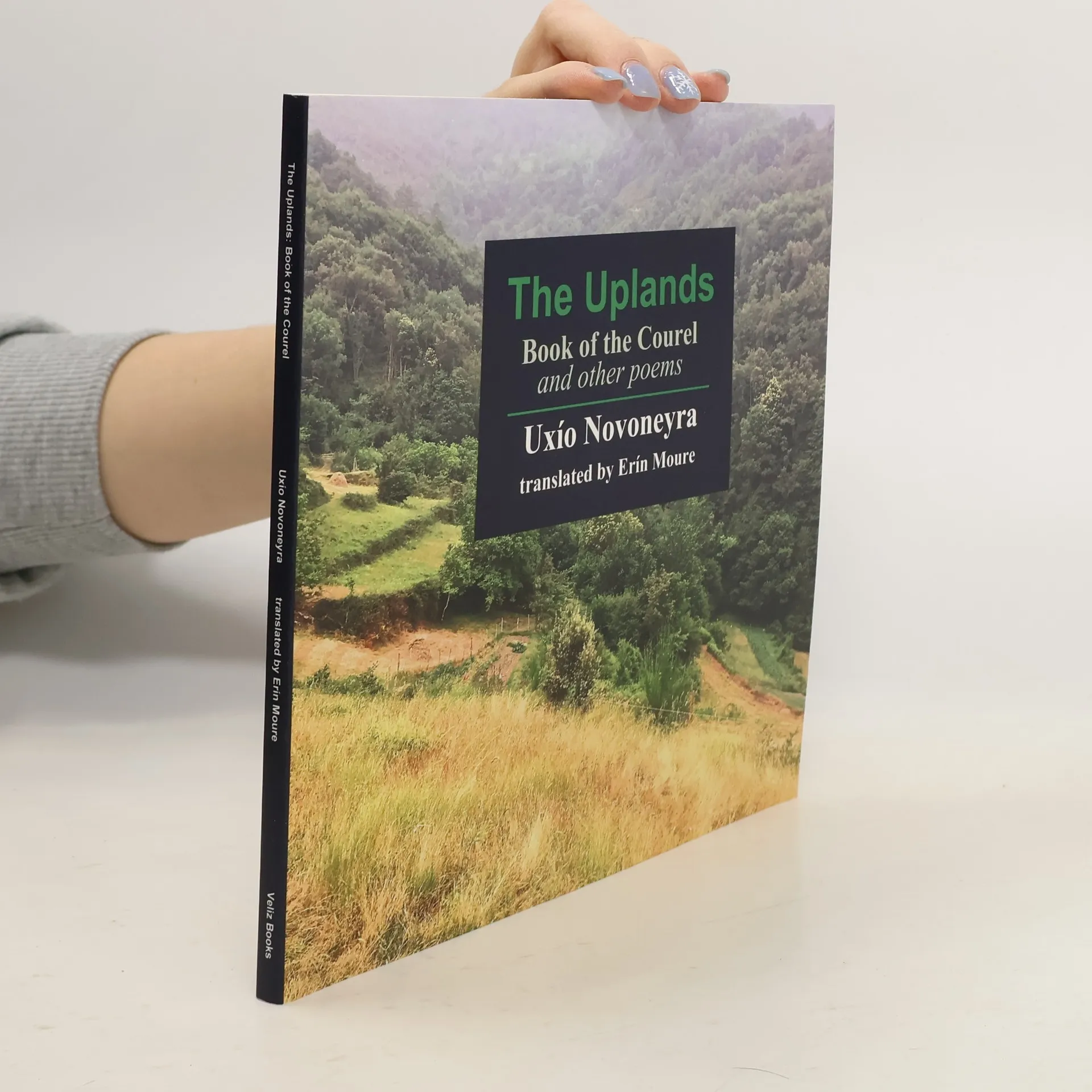
Poetry. Environmental Studies. THE UPLANDS: BOOK OF THE COUREL AND OTHER POEMS by the great Galician poet Uxío Novoneyra, translated by Erín Moure. Novoneyra is a poet and man of the land, and stands with Lorca as a poetic visionary of 20th century Spain. He was devoted to his region, the mountainous Courel, to its variant of Galician and to its names and ways, as well as to Galician culture as a whole, to the expression of all minority cultures and to freedom from imperialism, war, and economic expansionism. His oeuvre--rich in sound, syllable, silence and gesture--reveals him as an eco-poet before the concept existed. Os Eidos [THE UPLANDS], first published in 1955 and still in print today, is his monumental work.
Erin Moure Boeken
Erín Moure is een grensoverschrijdende dichteres en vertaler wiens werk grenzen overstijgt. Haar schrijven duikt in de complexiteit van de menselijke ervaring, waarbij ze vaak thema's als vertaling, herinnering en taal onderzoekt. Zowel in haar poëzie als in haar proza probeert Moure conventionele opvattingen over literaire vorm te doorbreken en tegelijkertijd de mogelijkheden van de taal zelf uit te breiden.


What is breath for? What is archive? Why write a poem, instead of... something else? Theophylline is a work of poetry motivated by asthma, seeking poetry's futurity in a queer and female heritage. Moure crosses a border to engage the poetry of three American modernists--Muriel Rukeyser, Elizabeth Bishop, and Angelina Weld Grimké--as a translator might enter work to translate it. But what if that work is already in English? Moure listens to rhythms, punctuation, conditions of production and reception, and finds migration patterns, queeritude, mother mimory, wars, silence, constraints on breath, and social bias played out in terms of race and/or class. Moving from present to past to a future in the unwritten; querying borders, jarred by intrusions from alter ego Elisa Sampedrín, Theophylline finishes with poems informed by pandemic walks and human aging that include two translations: from Rosalía de Castro, pre-modernist poet who wrote in Galician calling on women to speak, and from César Vallejo, the twentieth century Peruvian whose poetics shattered the colonial (Spanish) tongue.
Religion and World Politics provides a short, accessible, and practical introduction to how we can understand the place of religion in world politics in a more comprehensive, contextually relevant way.