
Levering voor Kerstmis kan nog 1 uur en 40 minuten
Bookbot

Paul Wilmott

    8 november 1959

    Paul Wilmott is een vooraanstaand figuur in de kwantitatieve financiën, erkend voor zijn uitgebreide werk op het gebied van onderzoek, consulting en onderwijs. Zijn bijdragen richten zich voornamelijk op de complexe analyse van risico's en derivaten, waardoor hij een autoriteit op dit gebied is geworden. Via zijn invloedrijke publicaties en digitale platforms vormt en betrekt hij actief de gemeenschap van kwantitatieve analisten. Zijn diepgaande expertise en praktische inzichten bevorderen de discipline van de wiskundige financiën aanzienlijk.

    Grundkurs Machine Learning
    The Mathematics of Finance for High Schoolers
    The Mathematics of Financial Derivatives
    Frequently Asked Questions in Quantitative Finance
    Paul Wilmott on Quantitative Finance 1-3
    • 2023

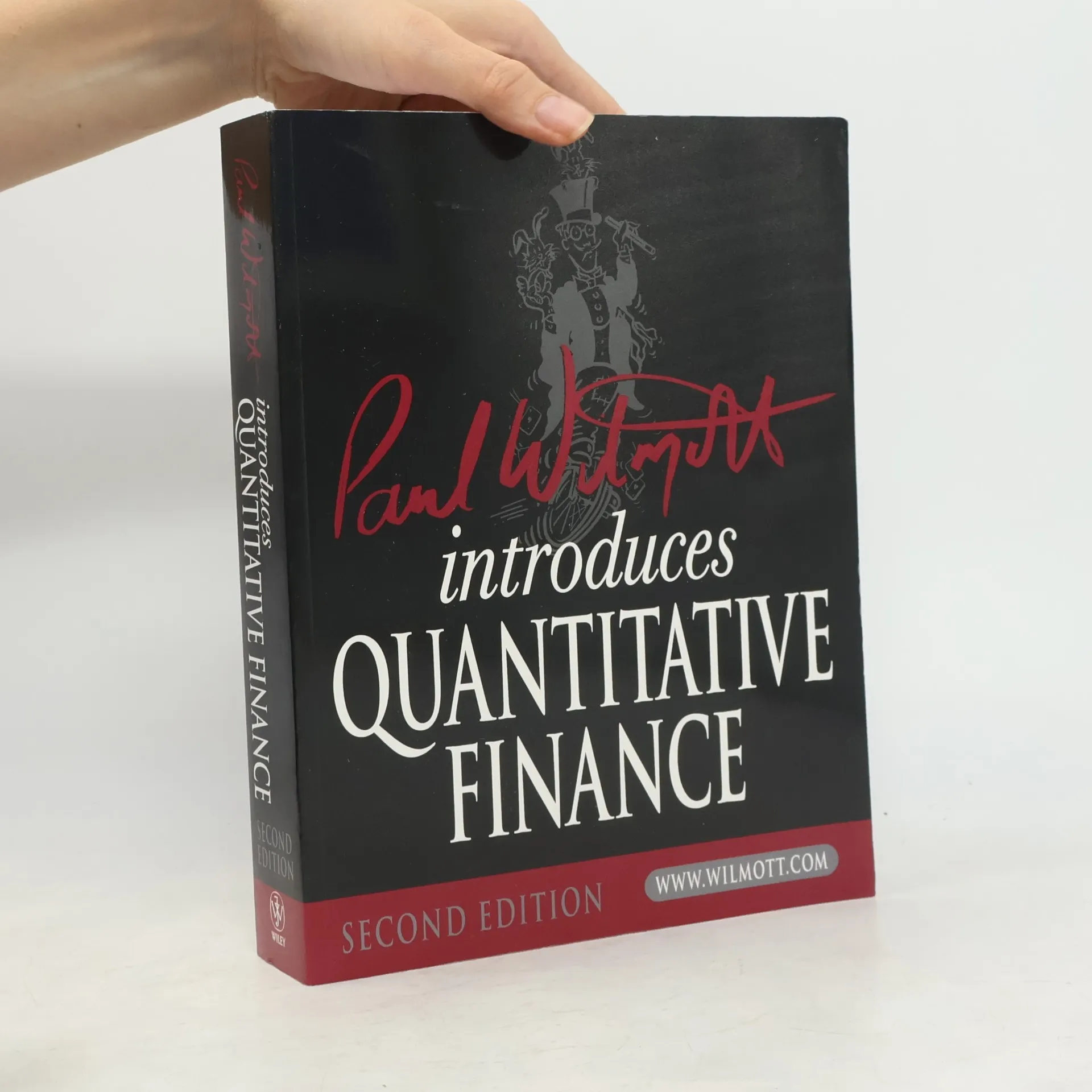
      The book offers an introduction to mathematical finance, focusing on advanced mathematical concepts used in banks and hedge funds. It covers essential topics such as valuing complex financial instruments, asset allocation, and risk management. Unlike basic financial math, this text delves into the quantitative methods that underpin modern finance, making it suitable for those interested in the intricacies of financial engineering and the mathematical principles that drive the industry.

      The Mathematics of Finance for High Schoolers
    • 2020

      Grundkurs Machine Learning

      Aus der Buchreihe »Informatik verstehen«. Ideal zum Selbststudium

      Maschinelles Lernen – alle Grundlagen! Paul Wilmott ist für seine erhellende und unterhaltsame Darstellung angewandter Mathematik bekannt. Von der linearen Regression bis zu Neuronalen Netzwerken führt er Sie durch alle Verfahren, und zwar komplett Software-unabhängig. Der Vorteil dabei: Jeder Schritt ist schwarz auf weiß zu sehen, kein Framework kann etwas „verstecken“, es geht immer um die Sache selbst. Mit vielen Beispielen, Grafiken und Schritt-für-Schritt-Kästen. Für alle, die wirklich verstehen wollen, wie Maschinen lernen. Aus dem Inhalt: Lineare Regression k-Nearest Neighbors Naive Bayes-Klassifikatoren k-Means-Algorithmus Support Vector Machines Logistische Regression Selbstorganisierende Karten Entscheidungsbäume Reinforcement Learning Neuronale Netze

      Grundkurs Machine Learning
    • 2009

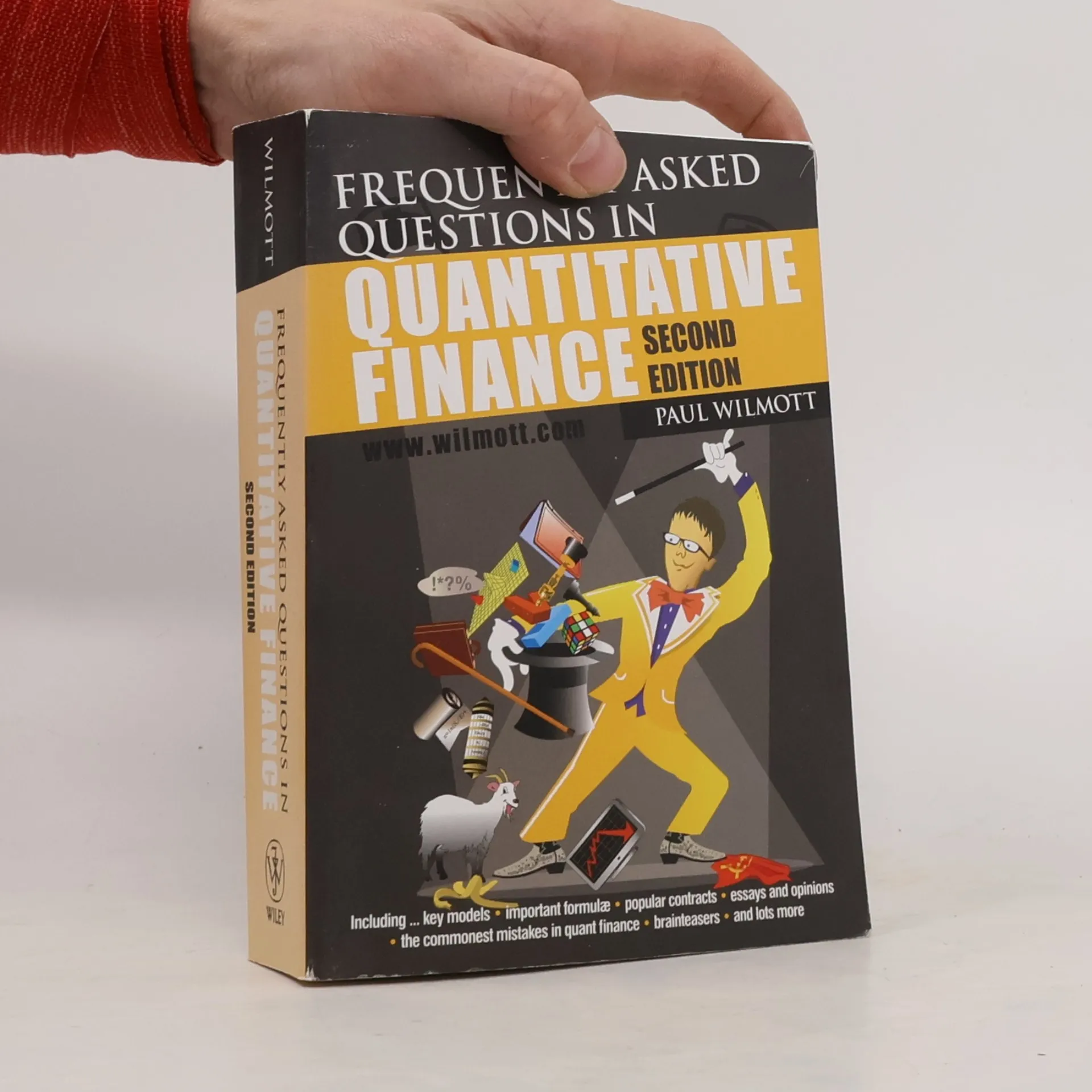
      Getting agreement between finance theory and practice is crucial, especially with the derivatives market now vastly exceeding the underlying world economy. Derivatives have evolved from tools for managing financial risks to a dominant force in finance, placing significant responsibility on professionals in the field. In this second edition of Frequently Asked Questions in Quantitative Finance, the aim is to elevate quantitative finance from oversimplification while avoiding excessive complexity. The book advocates for a balanced approach, where models are both robust and comprehensible. It features essential FAQs and answers that bridge theory and practice, including multiple derivations of Black-Scholes, popular models, equations, formulae, and probability distributions. Additionally, it includes critical essays, brainteasers, and a section on common quant mistakes—knowledge that could save trillions of dollars. The content is designed to engage readers and highlight the fascinating aspects of this vital subject. Readers are encouraged to join discussions on wilmott.com to further explore these topics. The book encompasses key models, important formulae, a history of quantitative finance, and much more, making it a valuable resource for anyone in the industry.

      Frequently Asked Questions in Quantitative Finance
    • 2006

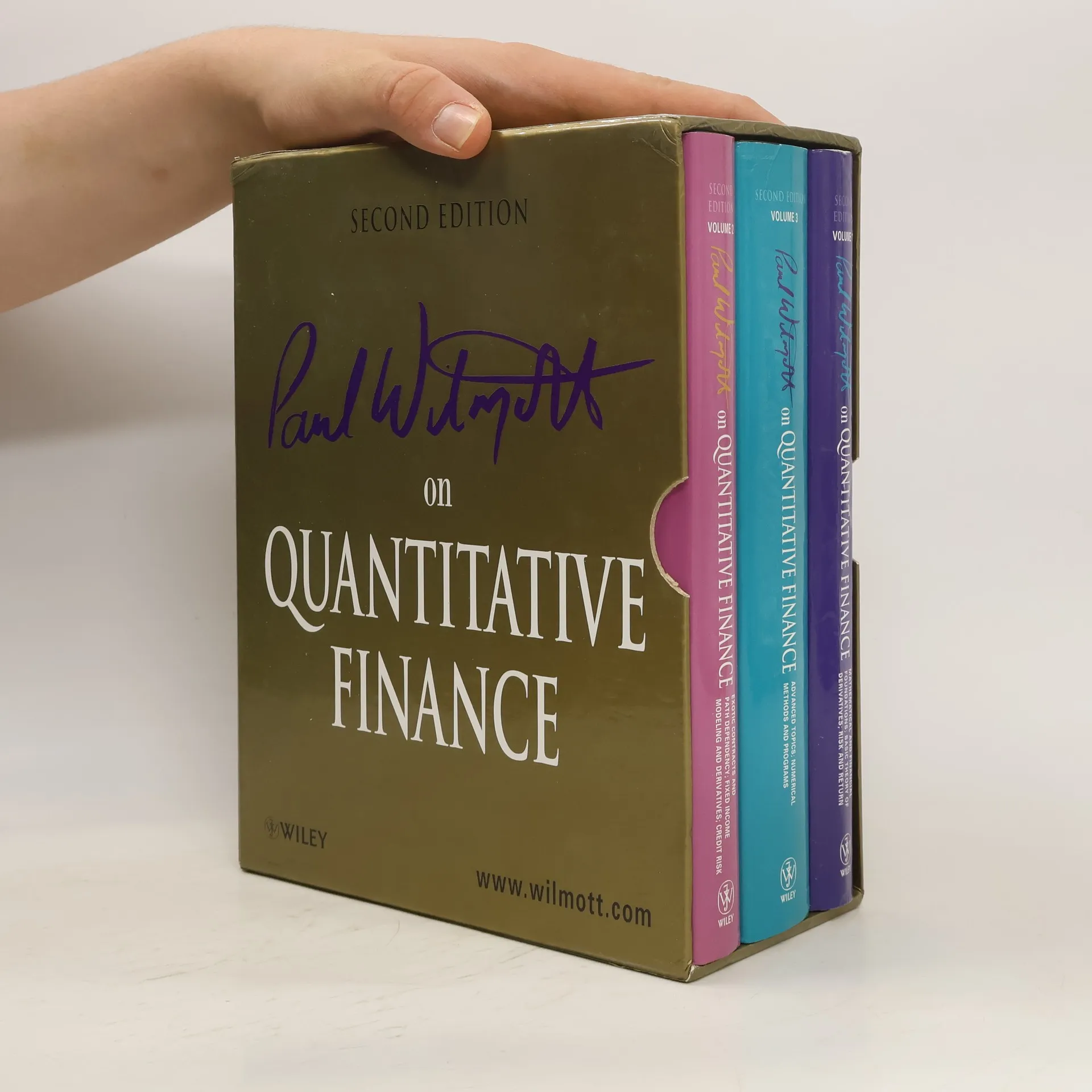
      The new edition of this finance classic serves as a comprehensive reference on both traditional and new derivatives and financial engineering techniques. Explaining finance in an accessible manner, Wilmott covers all the current financial theories in quantitative finance and makes them easy to understand and implement.

      Paul Wilmott on Quantitative Finance 1-3
    • 1995

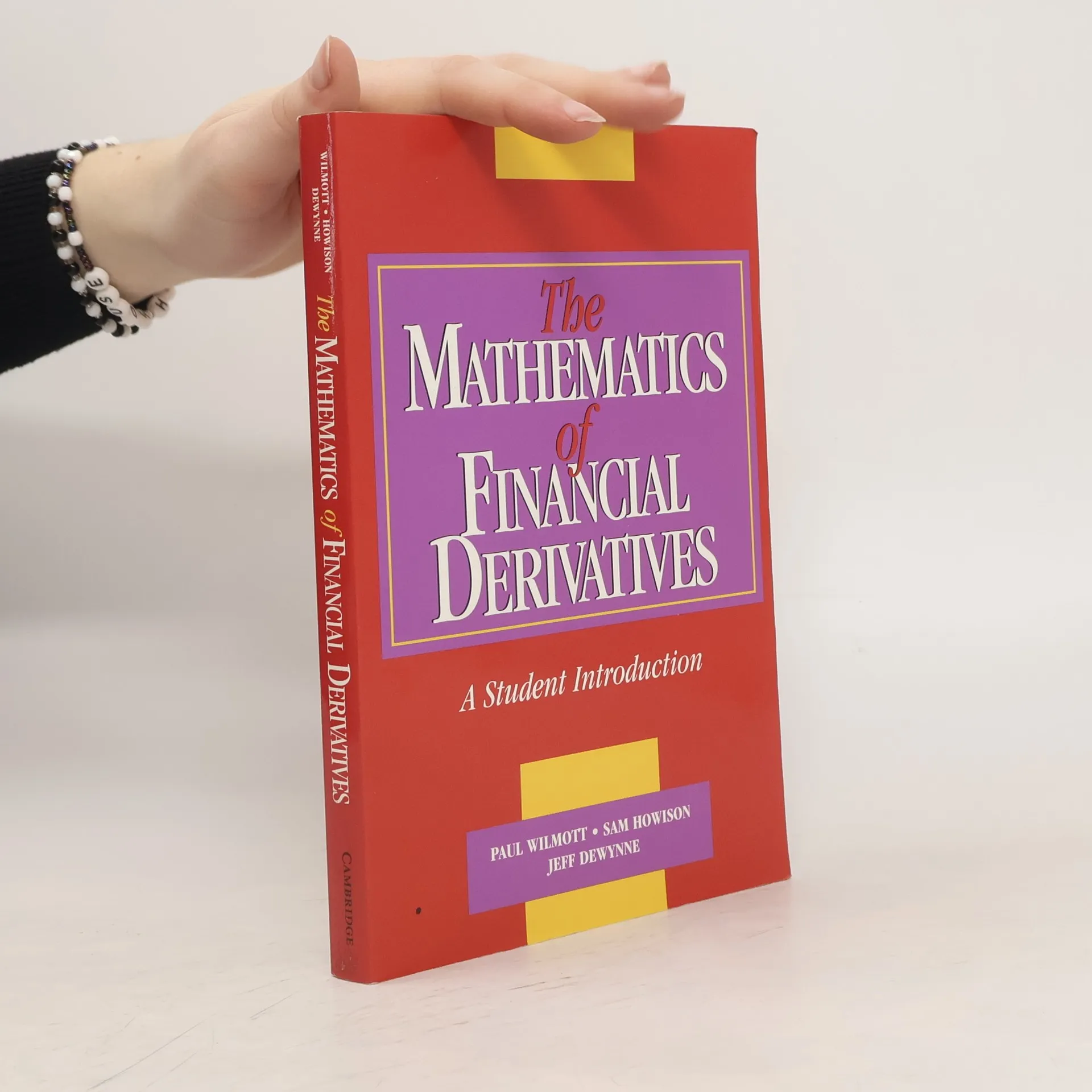
      Finance is one of the fastest growing areas in the modern banking and corporate world. This, together with the sophistication of modern financial products, provides a rapidly growing impetus for new mathematical models and modern mathematical methods. Indeed, the area is an expanding source for novel and relevant "real-world" mathematics. In this book, the authors describe the modeling of financial derivative products from an applied mathematician's viewpoint, from modeling to analysis to elementary computation. The authors present a unified approach to modeling derivative products as partial differential equations, using numerical solutions where appropriate. The authors assume some mathematical background, but provide clear explanations for material beyond elementary calculus, probability, and algebra. This volume will become the standard introduction for advanced undergraduate students to this exciting new field.

      The Mathematics of Financial Derivatives