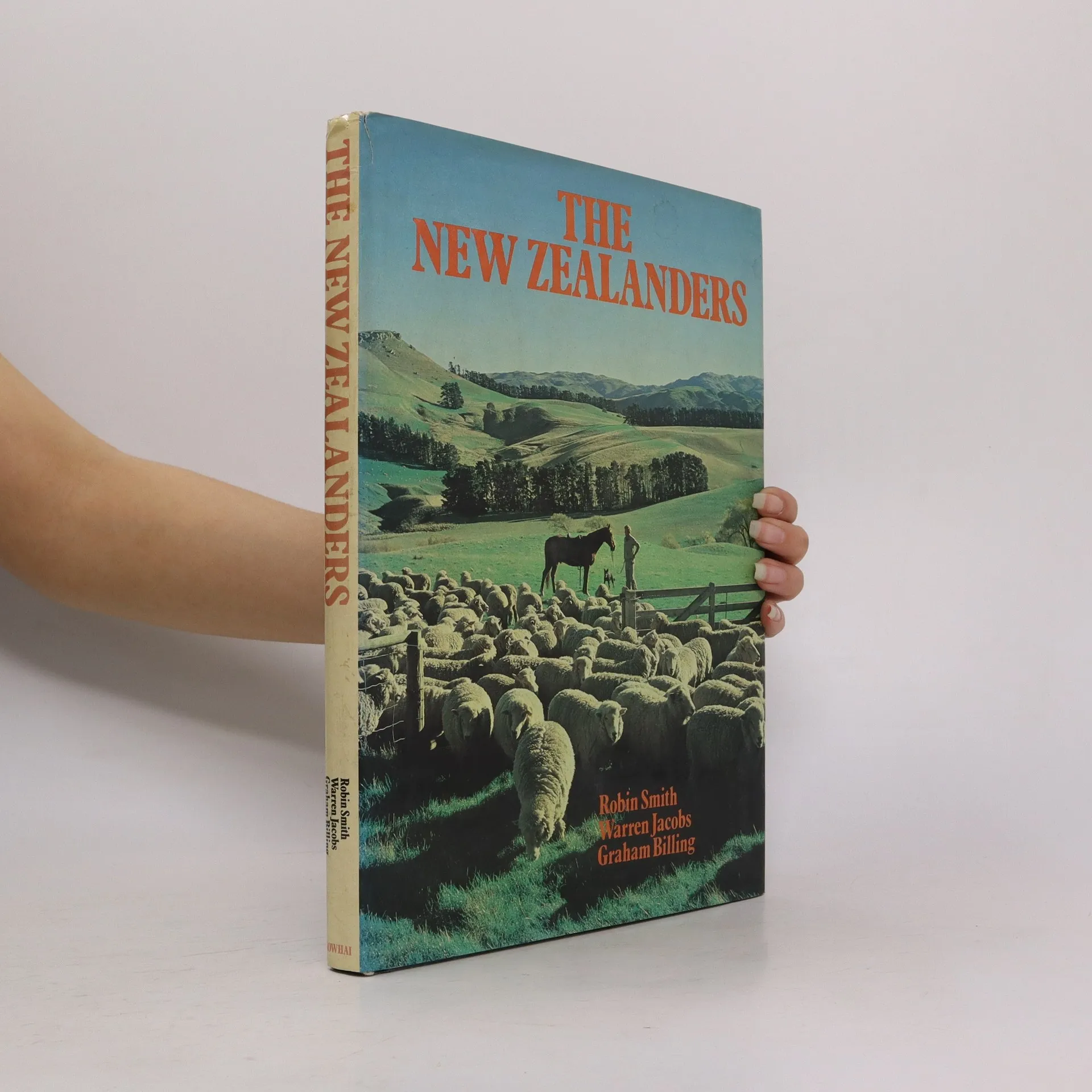
The New Zealanders
- 186bladzijden
- 7 uur lezen
Book by Stone, Douglas M


Graham Billing was een Nieuw-Zeelandse romanschrijver wiens werken worden gekenmerkt door onderscheidende intelligentie en adembenemende reikwijdte. Zijn schrijven verkent vaak diepgaande, bijna bijbelse thema's met een unieke verhalende stijl. Voortbouwend op een achtergrond in de journalistiek en de zeevaart, brengt hij een rijke perspectief in zijn verhalen, waardoor lezers worden ondergedompeld in volledig gerealiseerde werelden. Zijn literaire bijdragen worden gedefinieerd door de diepte en breedte van zijn romans, die een blijvende indruk hebben achtergelaten op het literaire landschap.

Book by Stone, Douglas M
Among the many technical innovations that were introduced after World War II, none left as strong an impression on the public as the atom bombs that destroyed two Japanese cities in August 1945. People spoke of the atomic age that had now begun, as if this technological innovation would, all by itself, shape a new world. The atomic age was described as one that might soon end in the destruction of human civilization, but from the beginning, utopian images were attached to it as well. Nuclear technology offered the promise of applications in medicine, agriculture, and engineering, and nuclear power could theoretically provide an unlimited supply of energy. This book demonstrates and explains how the popular media represented nuclear power, in its military and non-military forms. It focuses on the first two decades of the atomic age, when national governments, military strategists, scientists, and the public attempted to come to terms with a technology that so drastically seemed to change the prospects for the future. Popular magazines, comics, newspapers, public exhibitions from across the world are examined to compare representations of nuclear power in different countries and to trace divergences, convergences, and exchanges.