Koop 10 boeken voor 10 € hier!
Bookbot

David J. Hand

    30 juni 1950

    David J. Hand is een vooraanstaand wiskundige en statisticus wiens werk zich verdiept in classificatie, data mining en de fundamenten van statistiek. Zijn onderzoek, toegepast op gebieden als psychologie en de kredietsector voor detailhandel, richt zich op het begrijpen van datacomplexiteit en het identificeren van onverwachte verschijnselen. Hands unieke vermogen om theoretische wiskunde te verbinden met praktische toepassingen heeft zijn talrijke publicaties gevormd, en zijn benadering van gegevens blijft zijn brede onderzoeksinteresses beïnvloeden.

    From GDP to Sustainable Wellbeing
    Artificial Intelligence and Psychiatry
    Measurement: A Very Short Introduction
    The Improbability Principle
    Dark Data
    Pattern detection and discovery
    • Pattern detection and discovery

      • 227bladzijden
      • 8 uur lezen
      3,0(1)Tarief

      The growth of large electronic databases has spurred interest in methods for uncovering structures within them, commonly referred to as data mining. A key aspect of this field focuses on identifying and detecting anomalous, interesting, or valuable records, known as patterns. Examples include detecting fraud in credit-card transactions, identifying coincident purchases in supermarkets, analyzing significant nucleotide sequences in genetics, and recognizing characteristic traces in EEG records. While tools for pattern detection have been developed within the data mining community, they have also emerged in various other research fields, often without recognizing the shared underlying problems. Each discipline has its own extensive and rapidly growing literature, making it challenging to stay updated across multiple areas, especially when they use unfamiliar technical language. Consequently, valuable opportunities may be missed as discoveries made in one field do not transfer to others. This can lead to the rediscovery of breakthroughs or prolonged periods before solutions are found, resulting in wasted effort and lost opportunities.

      Pattern detection and discovery
    • Dark Data

      • 344bladzijden
      • 13 uur lezen
      3,7(14)Tarief

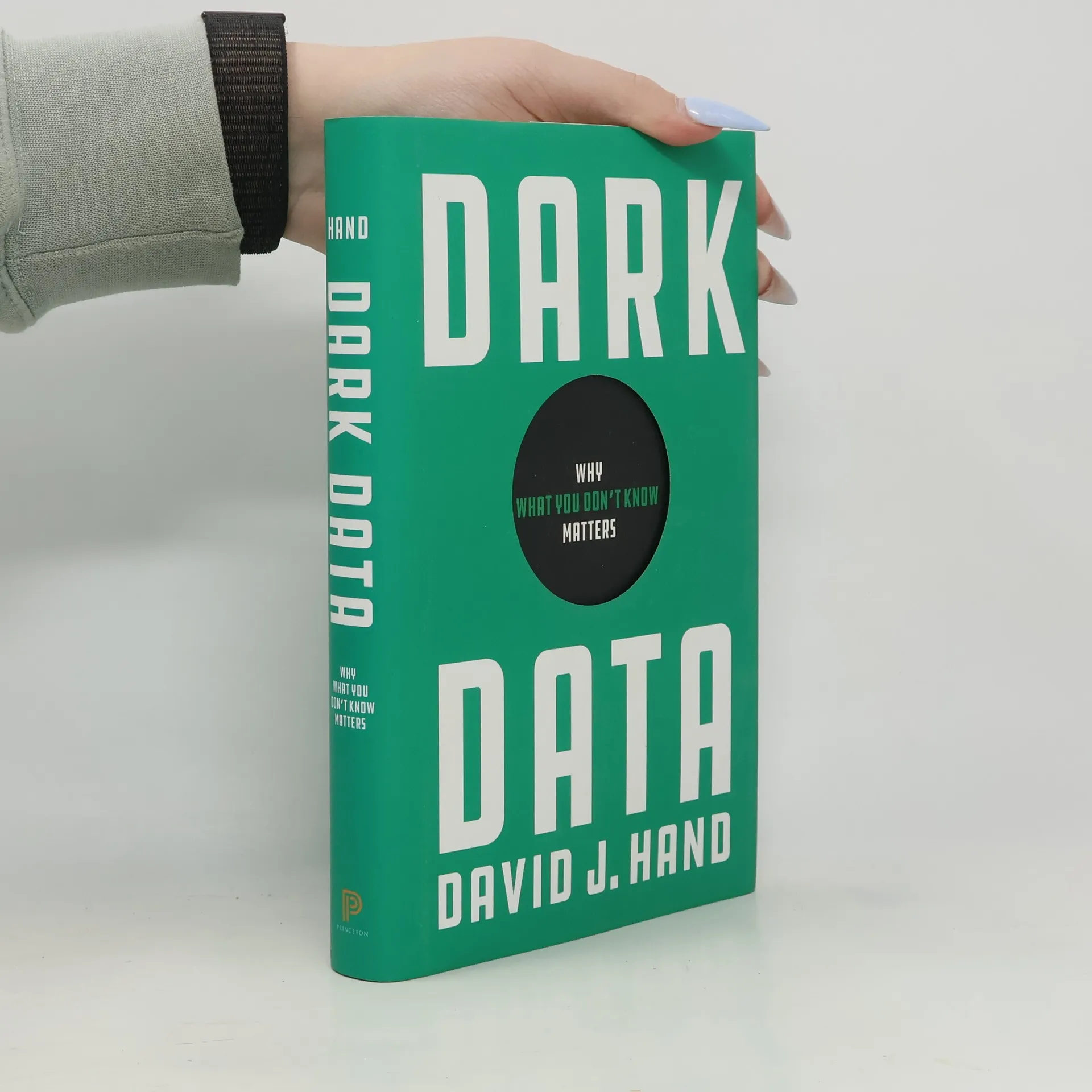
      "Data describe and represent the world. However, no matter how big they may be, data sets don't - indeed cannot - capture everything. Data are measurements - and, as such, they represent only what has been measured. They don't necessarily capture all the information that is relevant to the questions we may want to ask. If we do not take into account what may be missing/unknown in the data we have, we may find ourselves unwittingly asking questions that our data cannot actually address, come to mistaken conclusions, and make disastrous decisions. In this book, David Hand looks at the ubiquitous phenomenon of "missing data." He calls this "dark data" (making a comparison to "dark matter" - i.e., matter in the universe that we know is there, but which is invisible to direct measurement). He reveals how we can detect when data is missing, the types of settings in which missing data are likely to be found, and what to do about it. It can arise for many reasons, which themselves may not be obvious - for example, asymmetric information in wars; time delays in financial trading; dropouts in clinical trials; deliberate selection to enhance apparent performance in hospitals, policing, and schools; etc. What becomes clear is that measuring and collecting more and more data (big data) will not necessarily lead us to better understanding or to better decisions. We need to be vigilant to what is missing or unknown in our data, so that we can try to control for it. How do we do that? We can be alert to the causes of dark data, design better data-collection strategies that sidestep some of these causes - and, we can ask better questions of our data, which will lead us to deeper insights and better decisions"-- Provided by publisher

      Dark Data
    • The Improbability Principle

      • 288bladzijden
      • 11 uur lezen
      3,8(1324)Tarief

      "An eye-opening and engrossing look at rare moments, why they occur, and how they shape our world. In this book, the renowned statistician David J. Hand unveils his groundbreaking argument that extraordinarily rare events are in fact commonplace. Weaving together fascinating new ways to think about chance, Hand highlights his "law of near enough, " the "look elsewhere effect, " and more, doing for probability what Newton's laws of motion did for mechanics. Through humorous and engaging tales of two-time lottery winners, gambling gone wrong, and bizarre coincidences that we can't quite fathom, Hand argues that extremely unlikely events must happen, and no mystical or supernatural explanation is necessary to understand why. Hand's investigation, grounded in statistics and brought to life with fascinating anecdotes, finally explains "unexplainable" events such as unexpectedly bumping into a friend in a foreign country and coming across an unfamiliar word twice in one day. Along the way, we learn what the Bible and Shakespeare have in common, just how to win the lottery, why financial crashes are par for the course, and why lightning does strike the same place (and the same person) more than once. As Hand makes clear, we can rest assured that we'll experience a "miracle" roughly once per month. An irresistible adventure into the laws behind chance moments, the book transforms how we think about business decisions, everyday encounters, serendipity, and luck"-- Provided by publisher

      The Improbability Principle
    • 3,6(47)Tarief

      This Very Short Introduction explores the concept of measurement, its mathematical underpinnings, and its wide range of application from the sciences and social sciences to economics and commerce

      Measurement: A Very Short Introduction
    • Focusing on the intersection of psychiatry and artificial intelligence, this book equips psychiatrists with essential knowledge of AI methods and concepts. It aims to enhance understanding of how AI can be integrated into psychiatric practices, facilitating improved patient care and treatment approaches.

      Artificial Intelligence and Psychiatry
    • From GDP to Sustainable Wellbeing

      Changing Statistics or Changing Lives?

      • 163bladzijden
      • 6 uur lezen

      This book is about the function and use of official statistics. It welcomes the aspiration for official statistics to be an indispensable element in the information system of a democratic society, serving the government, the economy and the public with data about the economic, demographic, social and environmental situation. The book identifies the political role of official statisticians, who decided what gets measured as well as how it is measured. While thousands of official statistics are published every year, and some are quoted by politicians, used by policy-makers or reported in the media, the authors observe that, in the main, official statistics do not feature much in everyday lives of people and businesses. The book concludes with suggestions for more that should be done, especially in the context of improving wellbeing and helping meet the worldwide set of sustainable development goals set for 2030.

      From GDP to Sustainable Wellbeing
    • Die Macht des Unwahrscheinlichen

      Warum Zufälle, Wunder und unglaubliche Dinge jeden Tag passieren

      4,0(1)Tarief

      Glückspilze, die mehrfach im Lotto gewinnen, Unglücksraben, die wiederholt der Blitz trifft, extreme Krisen an den Finanzmärkten aus vermeintlich heiterem Himmel: Außerordentlich unwahrscheinliche Dinge - Wunder im positiven, Katastrophen im negativen Sinne - geschehen immer wieder. Die Frage ist nur: Warum? Und: Wie? Lieben Sie Geschichten über bestürzende Zufälle und außerordentlich seltene Ereignisse? Dann sollten Sie genauso zu diesem Buch greifen, wie wenn Sie endlich eine seriöse Methode kennenlernen möchten, Ihre Chance auf einen Lottogewinn zu erhöhen. So anschaulich wie vergnüglich weiht David Hand uns in die Macht des Unwahrscheinlichen und seine physikalischen, statistischen und psychologischen Gesetze ein. Kommen diese zusammen, ist die Wirkung verblüffend. Dann können wir uns darauf gefasst machen, dass das Unvorstellbare eintritt. Jeden Tag.

      Die Macht des Unwahrscheinlichen
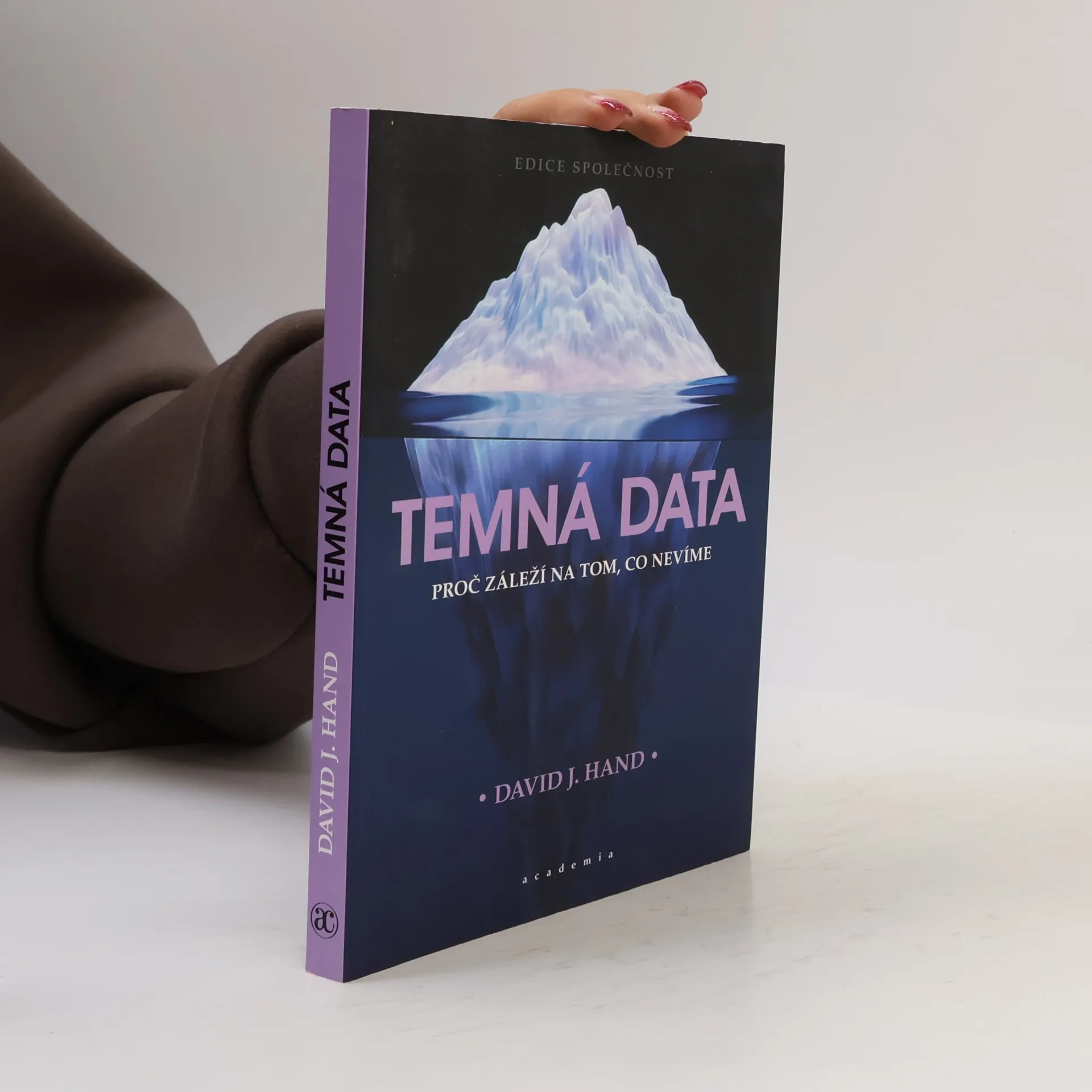
    • V éře velkých dat je snadné podlehnout dojmu, že máme všechny informace, které k správnému rozhodování potřebujeme. Ve skutečnosti však nejsou data, která máme, nikdy úplná. Stejně jako většina vesmíru sestává z temné hmoty, neviditelné a přesto přítomné, je vesmír informací plný temných dat, která k vlastní škodě přehlížíme. Kniha zkoumá množství způsobů, kterými nás mohou chybějící data zaslepit vůči skutečnosti a vést nás k závěrům a skutkům, jež jsou pomýlené, nebezpečné, ba dokonce katastrofální. Učí nás nejen jak se mít na pozoru před problémy, které představuje to, co nevíme, ale také jak využít temných dat k vlastní výhodě tím, že budeme lépe chápat to, o čem se rozhodujeme. Dnes se na základě dat rozhodujeme všichni. David Hand nám ukazuje, jak se pokud možno nerozhodovat špatně.

      Temná data : proč záleží na tom, co nevíme