
Kip S. Thorne Volgorde van de boeken
Deze auteur duikt in de fascinerende en complexe concepten van het universum en onthult de diepe mysteries van zwarte gaten en tijdvervormingen. Zijn werk verdiept zich in de theoretische natuurkunde en maakt ingewikkelde wetenschappelijke ideeën toegankelijk voor een breder publiek door middel van meeslepende verhalen. Hij gebruikt zijn expertise in theoretische natuurkunde om de grenzen van ons begrip van de werkelijkheid te verkennen, en begeleidt lezers op een ontdekkingsreis die zowel leerzaam als tot nadenken stemmend is. Zijn stijl kenmerkt zich door duidelijkheid en het vermogen om schijnbaar ontoegankelijke onderwerpen te vertalen naar begrijpelijke en boeiende vertellingen.


- 2021
- 2014
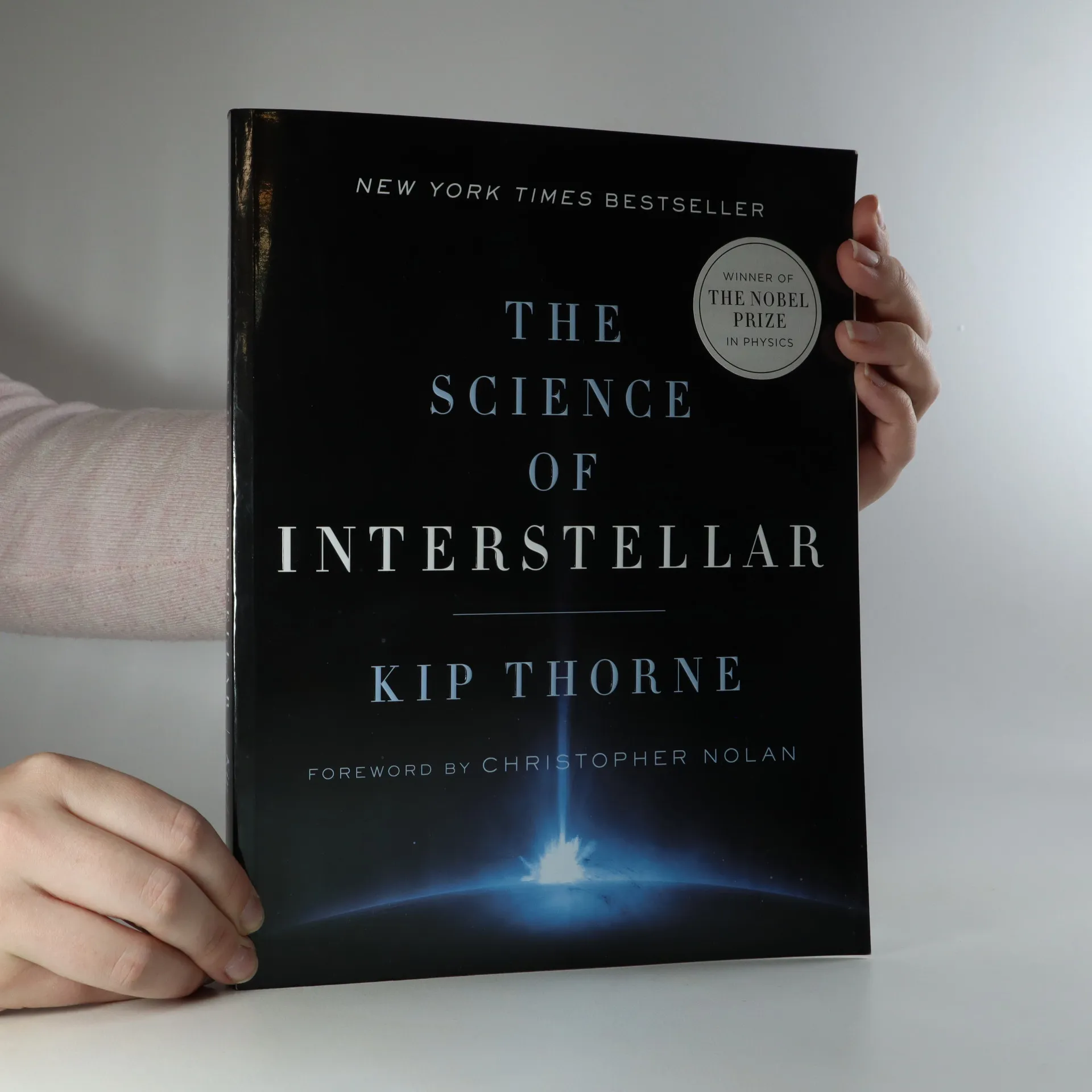
A journey through the otherworldly science behind Christopher Nolan’s highly anticipated film, Interstellar, from executive producer and theoretical physicist Kip Thorne. Interstellar, from acclaimed filmmaker Christopher Nolan, takes us on a fantastic voyage far beyond our solar system. Yet in The Science of Interstellar, Kip Thorne, the physicist who assisted Nolan on the scientific aspects ofInterstellar, shows us that the movie’s jaw-dropping events and stunning, never-before-attempted visuals are grounded in real science. Thorne shares his experiences working as the science adviser on the film and then moves on to the science itself. In chapters on wormholes, black holes, interstellar travel, and much more, Thorne’s scientific insights—many of them triggered during the actual scripting and shooting of Interstellar—describe the physical laws that govern our universe and the truly astounding phenomena that those laws make possible.
- 2009
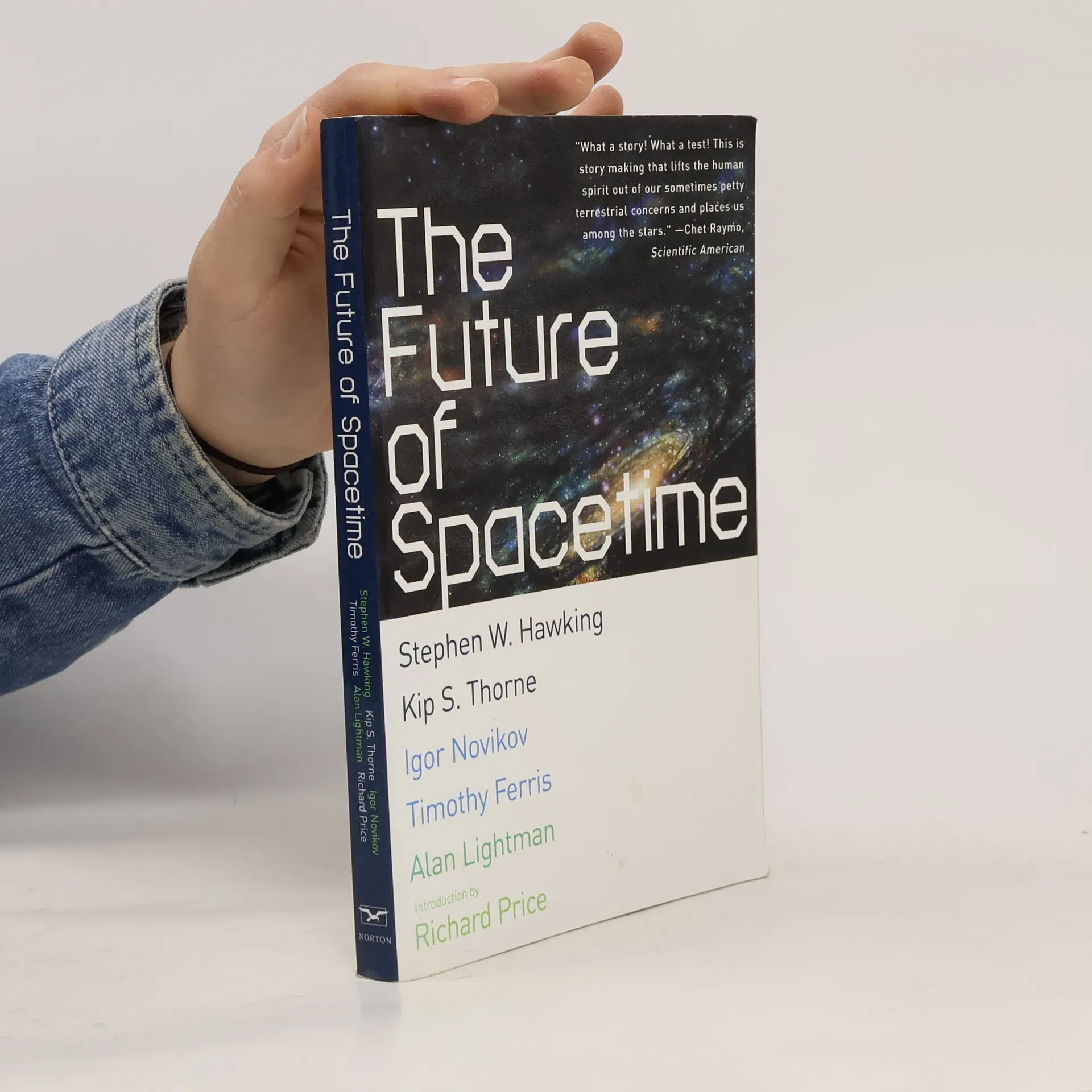
Budoucnost prostoročasu
- 175bladzijden
- 7 uur lezen
Krátký úvod do historie fyzikálních teorií spojených s prostoročasem od Richarda Price, teoretika z oddělení fyziky na University of Utah, připravuje jeviště pro vědecká objasnění a myšlenky známých vědců. Igor Novikov, ředitel Centra pro teoretickou astrofyziku v dánském NORDITA, pojednává o cestování v čase a objasňuje, jak se vyhnout paradoxům při cestování do minulosti. Stephen Hawking, profesor matematiky v Cambridge a jeden z nejznámějších vědců na světě, ukazuje, proč je takové cestování nemožné. Kip Thorne se pokouší cestovat do budoucnosti za pomoci astronomie gravitačních vln. Poslední dva eseje se poněkud odlišují od ostatních, protože nepodávají vědecká vysvětlení. Timothy Ferris, vynikající novinář a popularizátor vědy, vypráví, jak je nezbytné a zároveň obtížné popularizovat vědu. Alan Lightman, přední fyzik se zálibou v psaní, má zkušenost s vědeckou i uměleckou tvorbou, je oprávněn ve svém eseji srovnávat tyto dva rozdílné typy kreativity.
- 1994
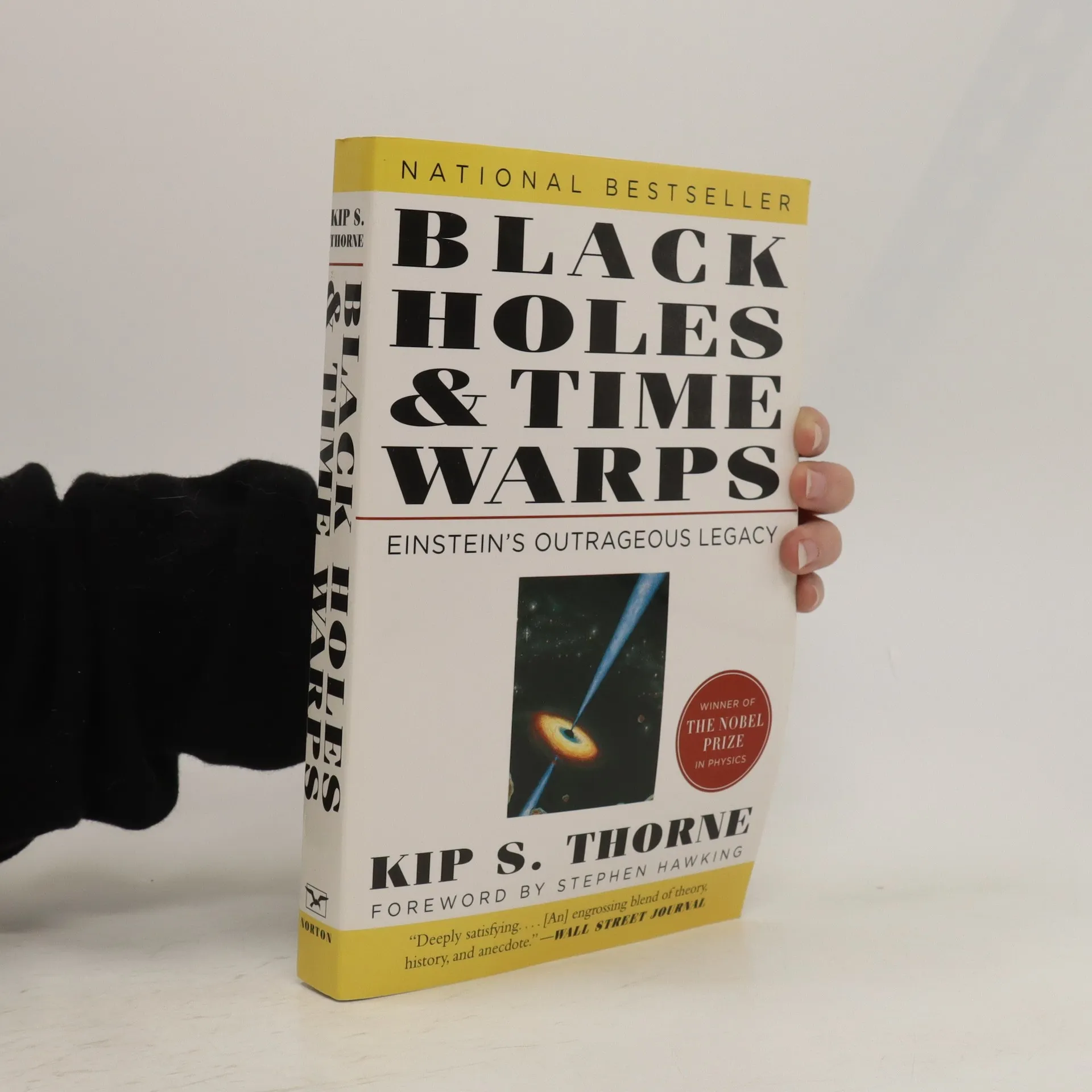
Black Holes and Time Warps
- 619bladzijden
- 22 uur lezen
Winner of the 2017 Nobel Prize in Physics, this work delves into the complexities of Albert Einstein's general theory of relativity, which has intrigued some of the brightest minds since its inception in 1915. The text explores extraordinary phenomena such as black holes, where nothing can escape; wormholes, which connect distant regions of space; singularities, where time and space behave unpredictably; gravitational waves that reveal cosmic events; and the concept of time machines. Kip Thorne, alongside notable theorists like Stephen Hawking and Roger Penrose, has actively pursued answers to these profound questions. In this expertly crafted narrative, Dr. Thorne, a Nobel Prize-winning physicist and Emeritus Professor at Caltech, weaves together a rich tapestry of scientific history and insights. He guides readers through interconnected themes, ultimately addressing the fundamental principles governing our universe and the rationale behind physicists' beliefs. This work offers a more accessible and leisurely exploration compared to Stephen Hawking's A Brief History of Time, enriched by a compelling historical and human context. It has also received the Phi Beta Kappa Award in Science.
- 1973
Gravitation
- 1279bladzijden
- 45 uur lezen
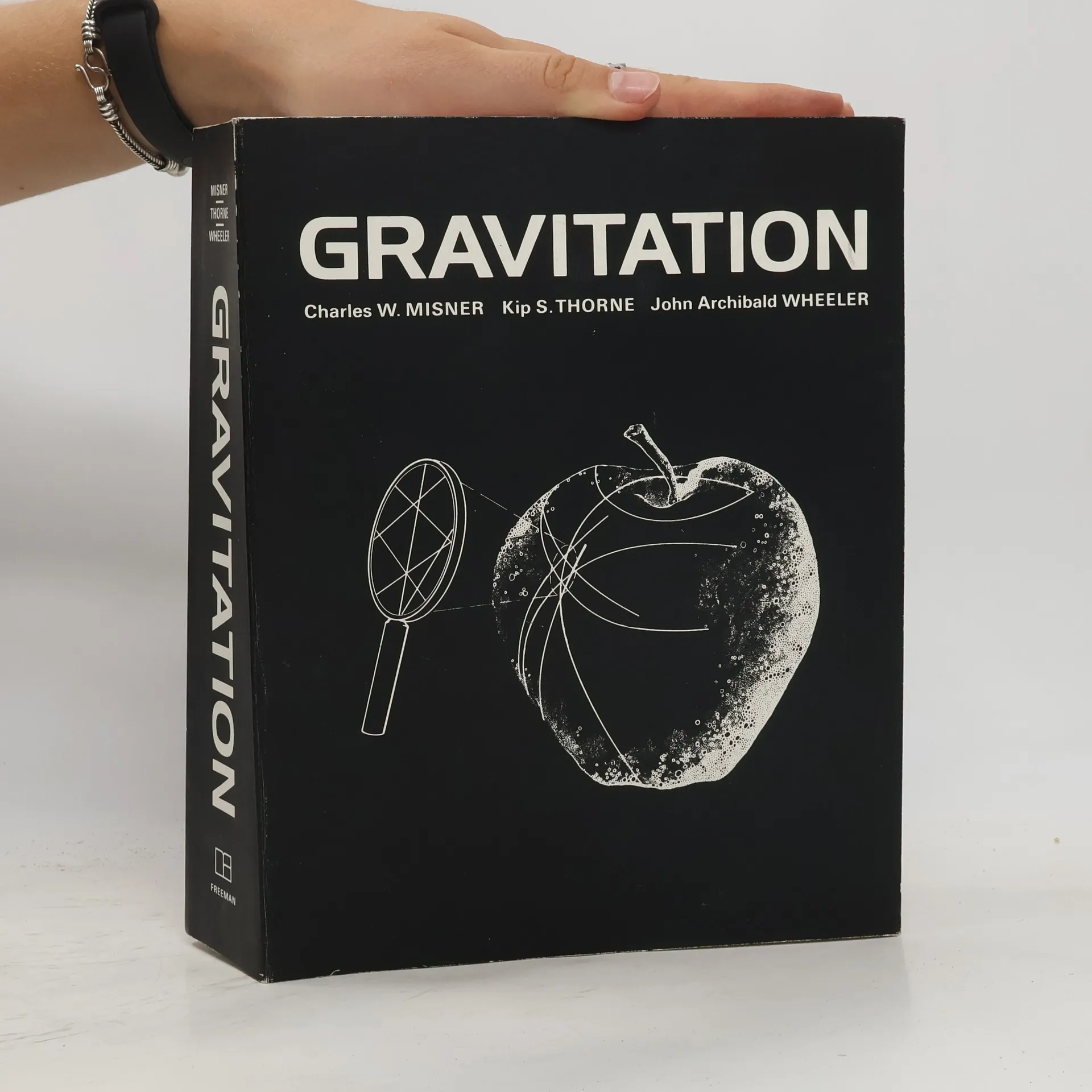
This landmark text offers a rigorous full-year graduate level course on gravitation physics, teaching students • Grasp the laws of physics in flat spacetime• Predict orders of magnitude• Calculate using the principal tools of modern geometry• Predict all levels of precision• Understand Einstein's geometric framework for physics• Explore applications, including pulsars and neutron stars, cosmology, the Schwarzschild geometry and gravitational collapse, and gravitational waves• Probe experimental tests of Einstein's theory• Tackle advanced topics such as superspace and quantum geometrodynamicsThe book offers a unique, alternating two-track pathway through the • In many chapters, material focusing on basic physical ideas is designated asTrack 1 . These sections together make an appropriate one-term advanced/graduate level course (mathematical vector analysis and simple partial-differential equations). The book is printed to make it easy for readers to identify these sections.• The remaining Track 2 material provides a wealth of advanced topics instructors can draw from to flesh out a two-term course, with Track 1 sections serving as prerequisites.