
With more than 200 additional entries, the revised and expanded second edition of one the world's most important books on demonology is now available in paperback. Ever since the publication of the original book more than ten years ago, author M. Belanger has been collecting material for this expanded edition. Filled with additional new articles, spirits, demons, appendices, and art, the bestsellingDictionary of Demonsis now an even more comprehensive resource. You will discover an expanded introduction, extended articles, an update to the Decans of the Zodiac, additional entries, and dozens of new illustrations. The Dictionary of Demons: Revised and Expandedincludes more than 1,700 demons as well as short articles on demonology and a wealth of illustrations, making it one of the most valuable reference works in the field. Previous editions: First Edition (Out of Print): 9780738723068 Second Edition Limited-Edition Hardcover: 9780738765365
Paul Bélanger Boeken


Of Love
- 90bladzijden
- 4 uur lezen
With echoes of Jacques Brault, Simone Weil, Baudelaire and Petrarch, in Of Love, Paul Bélanger continues his poetic quest for the sources of spiritual ecstasy. In this body of song, the quest includes a series of distinct women as representatives of the Muse: an exciting black woman; a woman met in a poignant one-time encounter; a medley of women with "a variety of skins," who speak "the strangest of languages"; a lady for whom he lives out an epistolary passion; and finally a woman who is dying.
New Patterns of Adult Learning
- 276bladzijden
- 10 uur lezen
In post-industrial societies some workers will have stable, good jobs in knowledge and learning-intensive workplaces, while many others will be underemployed or locked into a series of precarious, low-skill jobs in the periphery of the economy. In such a society, inclusions and exclusions in economics and social life are bound to correspond closely to inclusions and exclusions in adult education and training. With the transition toward the post-industrial society increasingly complete, the challenge to reduce the exclusive tendencies in adult education and training, and to make learning a common, continuous and even universal experience is becoming more urgent than ever. The design of successful intervention strategies will depend crucially on the knowledge base of adult education, especially improved insights into the factors that are associated with participation and non-participation. By improving that knowledge base that this volume, which reports on a six-country comparative investigation of the patterns of adult education participation, seeks to make a contribution to policy and research.
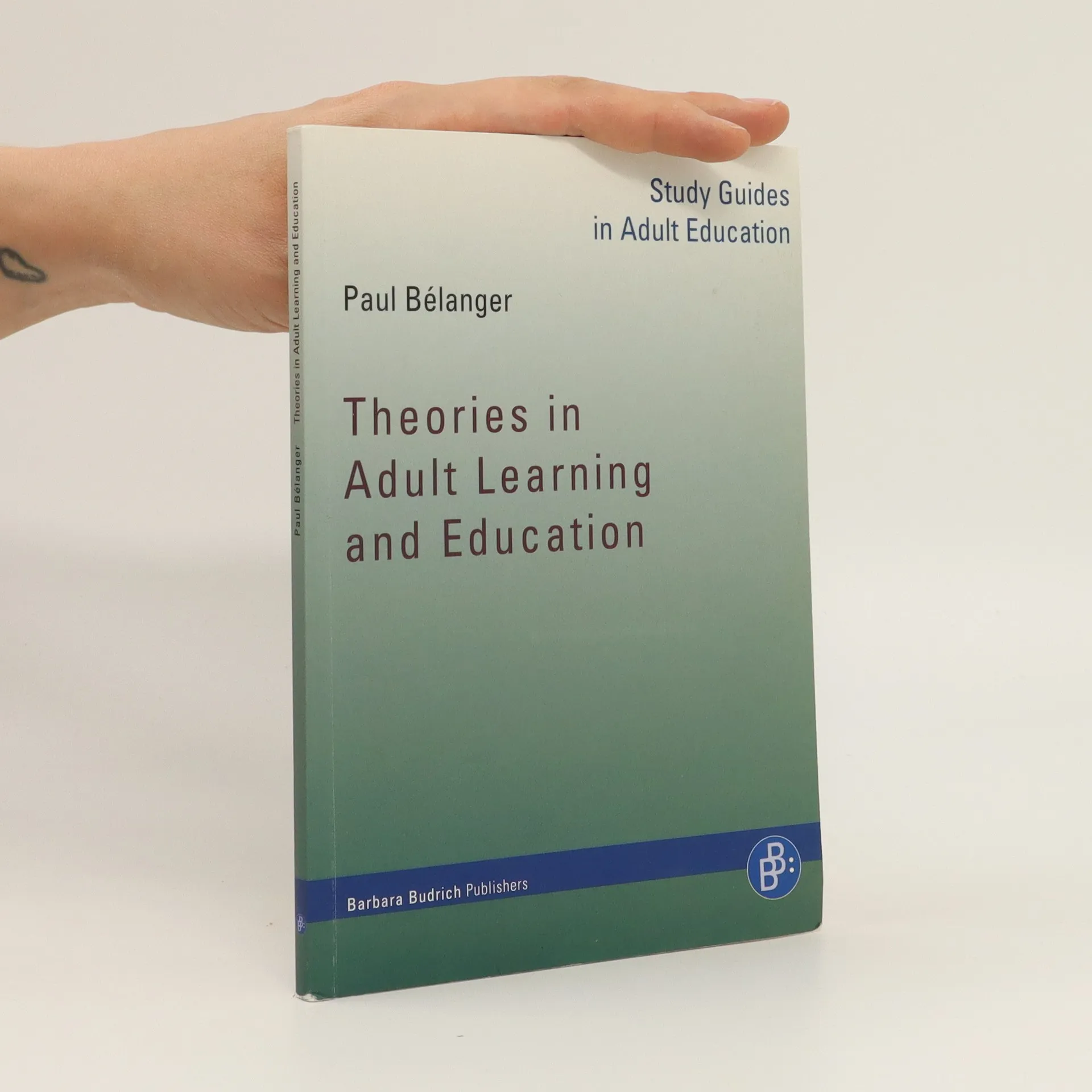
Adult Learning and Education The graduate student guide in adult education explores theories of adult learning and adult education participation. It provides a frame of reference for understanding the development of a rapidly evolving field and for enhancing knowledge and competencies in this professional domain. The publication is divided into two sections: a section on adult learning theories and a section on adult education participation theories. If Adult Learning and Education (ALE) is now a recognised professional field, the theoretical perspectives, underlying practices and policies draw on a variety of academic disciplines. Various theories of learning and of adult education participation shape the practice and the “engineering” of adult learning. In the first section, this study guide provides a review of the most important learning theories, including behaviourist, cognitive, and constructivist approaches, their modern development, as well as specific developments in adult education theory. The second section examines the psychological and sociological theoretical backgrounds of adult education participation in order to understand the factors at work in participation patterns along the adult life course and between different social contexts. Observing the relativity of social reproduction allows to identify the conditions and variables that need to be addressed in order to alter prevailing trends.