

Koop 10 boeken voor 10 € hier!
Bookbot

Walter Kaufmann-Bühler

  • John Mercator
19 januari 1924 – 15 april 2021
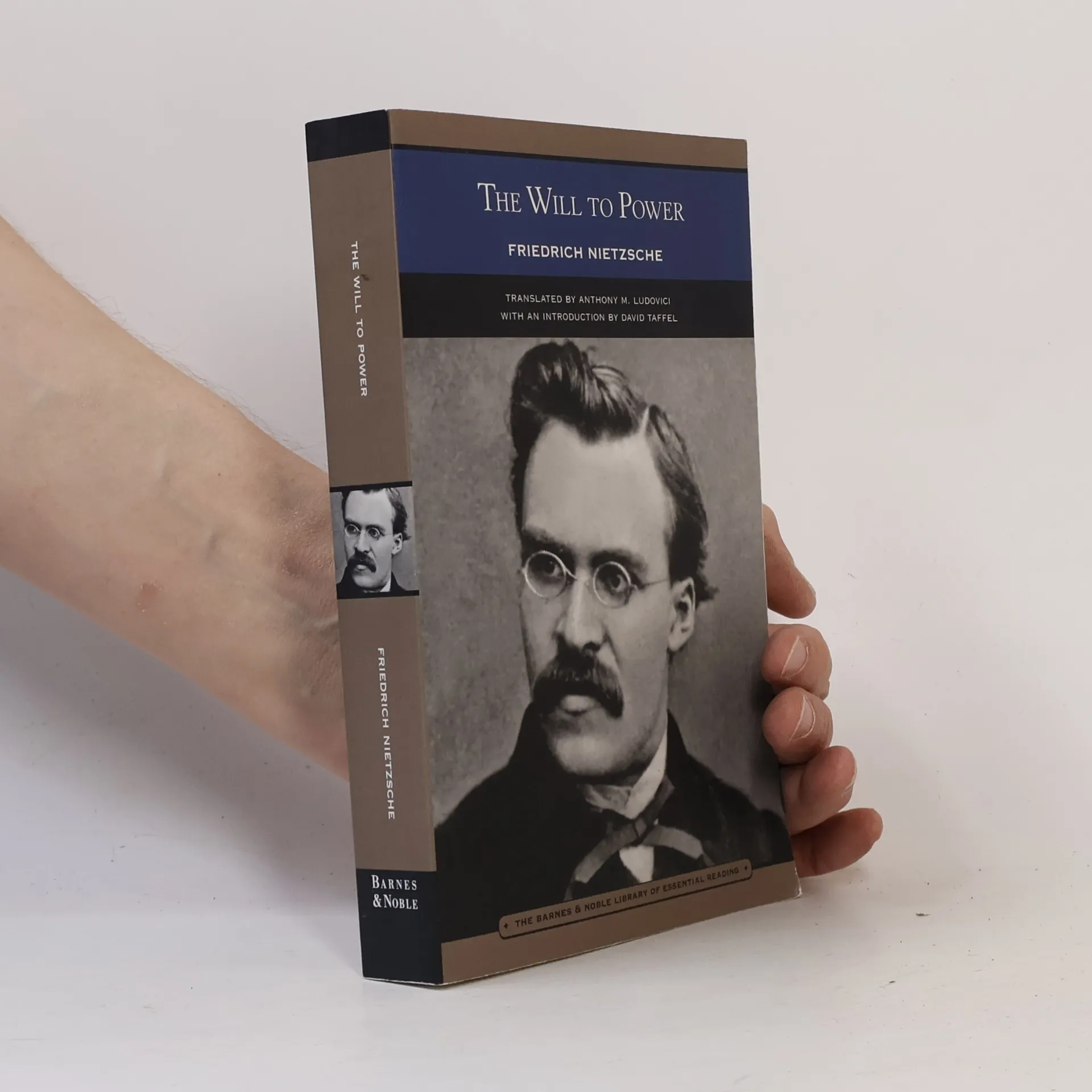
The Will to Power
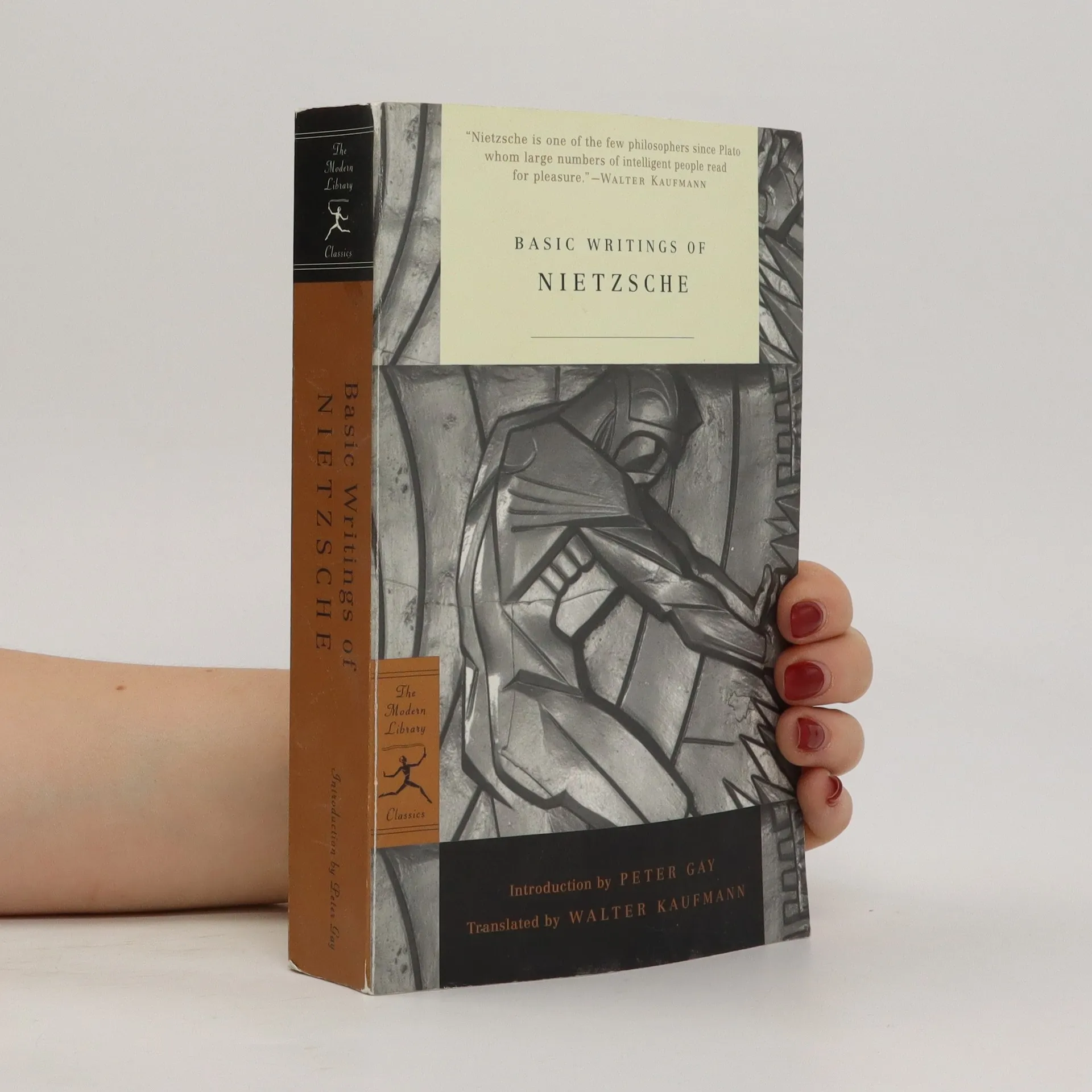
Basic writings of Nietzsche
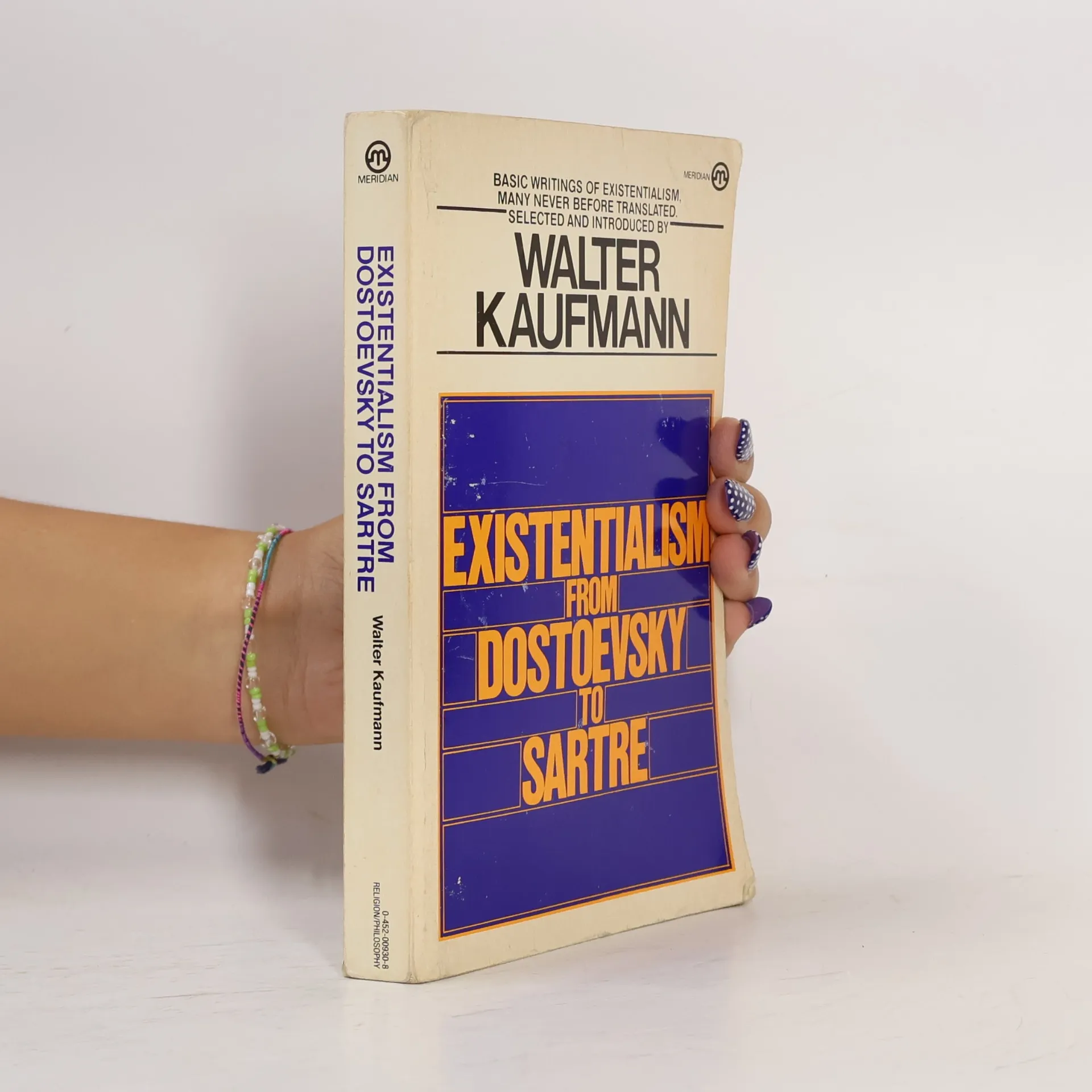
Existentialism from Dostoevsky to Sartre
The birth of tragedy and The case of Wagner
The Portable Nietzsche
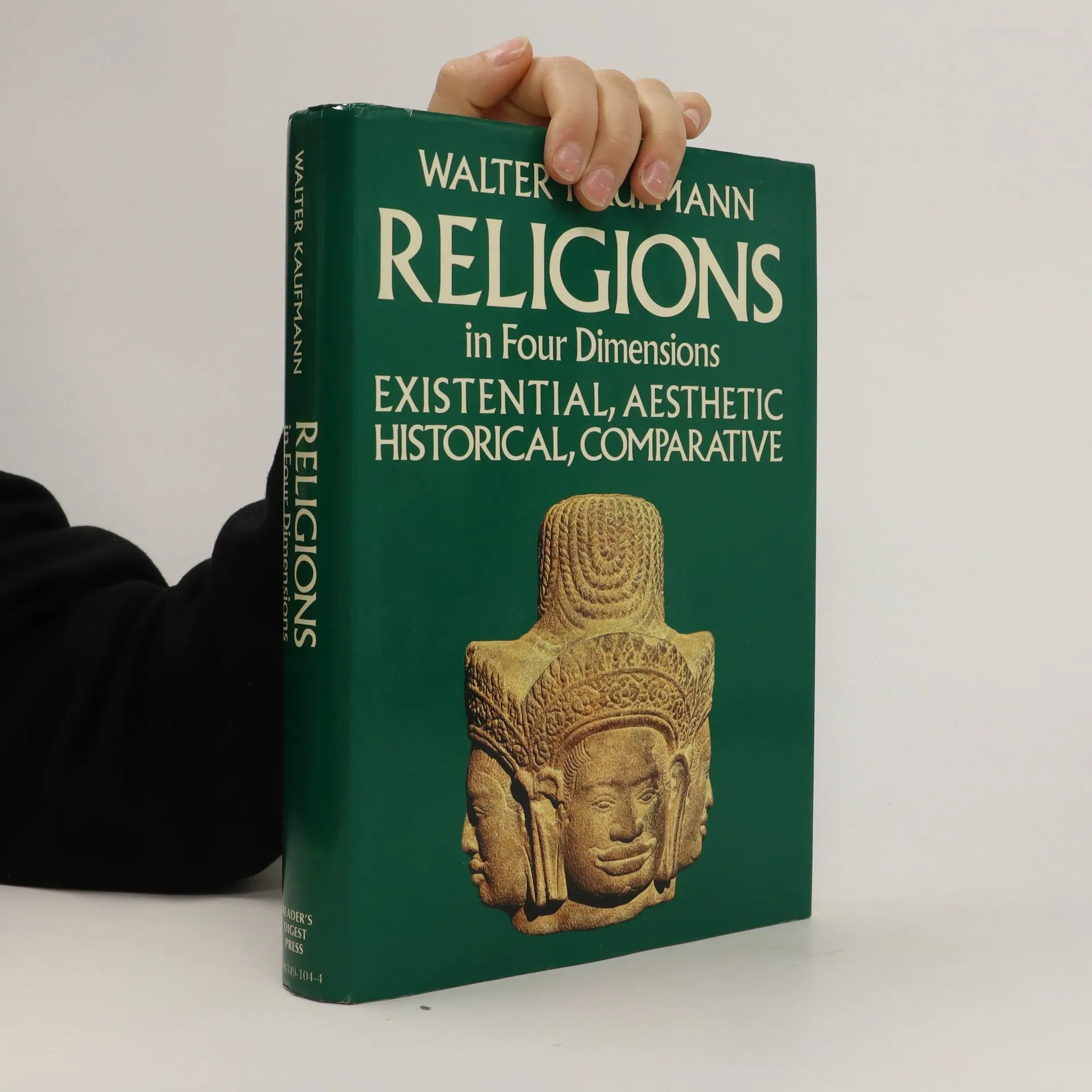
Religions in four dimensions : existential and aesthetic, historical and comparative
  • Well produced, copiously illustrated scholarly tome covering all major world religions. Well over 200 illustrations including 183 in color, photos by the author. Includes a bibliography. Prologue Ancient Israel Ancient Iran The Jews since Jeremiah: exile & return The New Testament Post-Biblical Christianity Muhammad & the Koran Islam after Muhammad Ancient India Hinduism: caste, the Gita & Gandhi The third face of India Jainism, Sikhism, Buddhism From Ceylon to Japan Judaism, Christianity, Islam & the arts Hinduism, Jainism, Buddhism & the arts Epilogue: Landscape & religion Acknowledgment Note on the Translations Note on Transliteration Bibliography Index Notes on the Pictures Chronology
    Religions in four dimensions : existential and aesthetic, historical and comparative
  • The Portable Nietzsche

    • 692bladzijden
    • 25 uur lezen
    4,2(9016)Tarief

    The works of Friedrich Nietzsche have fascinated readers around the world ever since the publication of his first book more than a hundred years ago. As Walter Kaufmann, one of the world's leading authorities on Nietzsche, notes in his introduction, "Few writers in any age were so full of ideas," and few writers have been so consistently misinterpreted. The Portable Nietzsche includes Kaufmann's definitive translations of the complete and unabridged texts of Nietzsche's four major works: Twilight of the Idols, The Antichrist, Nietzsche Contra Wagner and Thus Spoke Zarathustra. In addition, Kaufmann brings together selections from his other books, notes, and letters, to give a full picture of Nietzsche's development, versatility, and inexhaustibly. "In this volume, one may very conveniently have a rich review of one of the most sensitive, passionate, and misunderstood writers in Western, or any, literature." -Newsweek

    The Portable Nietzsche
  • The Birth of Tragedy (1872) was Nietzsche's 1st book. Its youthful faults were exposed by him in the brilliant 'Attempt at a Self-Criticism' which he added to the new edition of 1886. But the book, whatever its excesses, remains one of the most relevant statements on tragedy ever penned. It exploded the conception of Greek culture that was prevalent down thru the Victorian era. It sounded themes developed in the 20th century by classicists, existentialists, psychoanalysts & others. The Case of Wagner (1888) was one his last books & his wittiest. In attitude & style it's diametrically opposed to The Birth of Tragedy. Both works transcend their ostensible subjects & deal with art & culture, as well as the problems of the modern age generally. Each book in itself gives us an inadequate idea of its author; together, they furnish a striking image of Nietzsche's thought. The distinguished new translations by Walter Kaufmann superbly reflect in English Nietzsche's idiom & the vitality of his style. Kaufmann has also furnished running footnote commentaries, relevant passages from Nietzsche's correspondence, a bibliography, &, for the 1st time in any edition, an extensive index to each book.

    The birth of tragedy and The case of Wagner
  • 4,1(5394)Tarief

    One of the foremost resources on existentialism from renowned philosopher, poet, and Nietzsche translator Walter Kaufmann—a must-read for philosophers, both armchair and professional. Existentialism from Dostoevsky to Sartre provides basic writings of Dostoevsky, Kierkegaard, Nietzsche, Rilke, Kafka, Ortega, Jaspers, Heidegger, Sartre, and Camus, including some not previously translated, along with an invaluable introductory essay by Walter Kaufmann.

    Existentialism from Dostoevsky to Sartre
  • Introduction by Peter Gay Translated and edited by Walter Kaufmann Commentary by Martin Heidegger, Albert Camus, and Gilles Deleuze One hundred years after his death, Friedrich Nietzsche remains the most influential philosopher of the modern era. Basic Writings of Nietzsche gathers the complete texts of five of Nietzsche’s most important works, from his first book to his last: The Birth of Tragedy, Beyond Good and Evil, On the Genealogy of Morals, The Case of Wagner, and Ecce Homo. Edited and translated by the great Nietzsche scholar Walter Kaufmann, this volume also features seventy-five aphorisms, selections from Nietzsche’s correspondence, and variants from drafts for Ecce Homo. It is a definitive guide to the full range of Nietzsche’s thought. Includes a Modern Library Reading Group Guide

    Basic writings of Nietzsche
  • The Will to Power

    • 688bladzijden
    • 25 uur lezen
    4,1(9638)Tarief

    New to Penguin Classics, The Will to Power contains some of Nietzsche's most fascinating and combative writings on nihilism, metaphysics and the future of Europe. Assembled by Nietzsche's sister after his death, The Will to Power is a collection of the philosopher's reflections and theories taken from his unpublished notebooks. Covering topics such as nihilism, Christianity, morality, and the famous will to power, the book was controversially presented as Nietzsche's all-but-completed magnum opus containing his philosophical system. Including some of his most interesting metaphysical and epistemological thoughts, as well as some of his most disturbing ethical and political comments, the book would prove to have a significant influence on Nietzsche's contentious reception in the twentieth century. For more than seventy years, Penguin has been the leading publisher of classic literature in the English-speaking world. With more than 1,700 titles, Penguin Classics represents a global bookshelf of the best works throughout history and across genres and disciplines. Readers trust the series to provide authoritative texts enhanced by introductions and notes by distinguished scholars and contemporary authors, as well as up-to-date translations by award-winning translators.

    The Will to Power
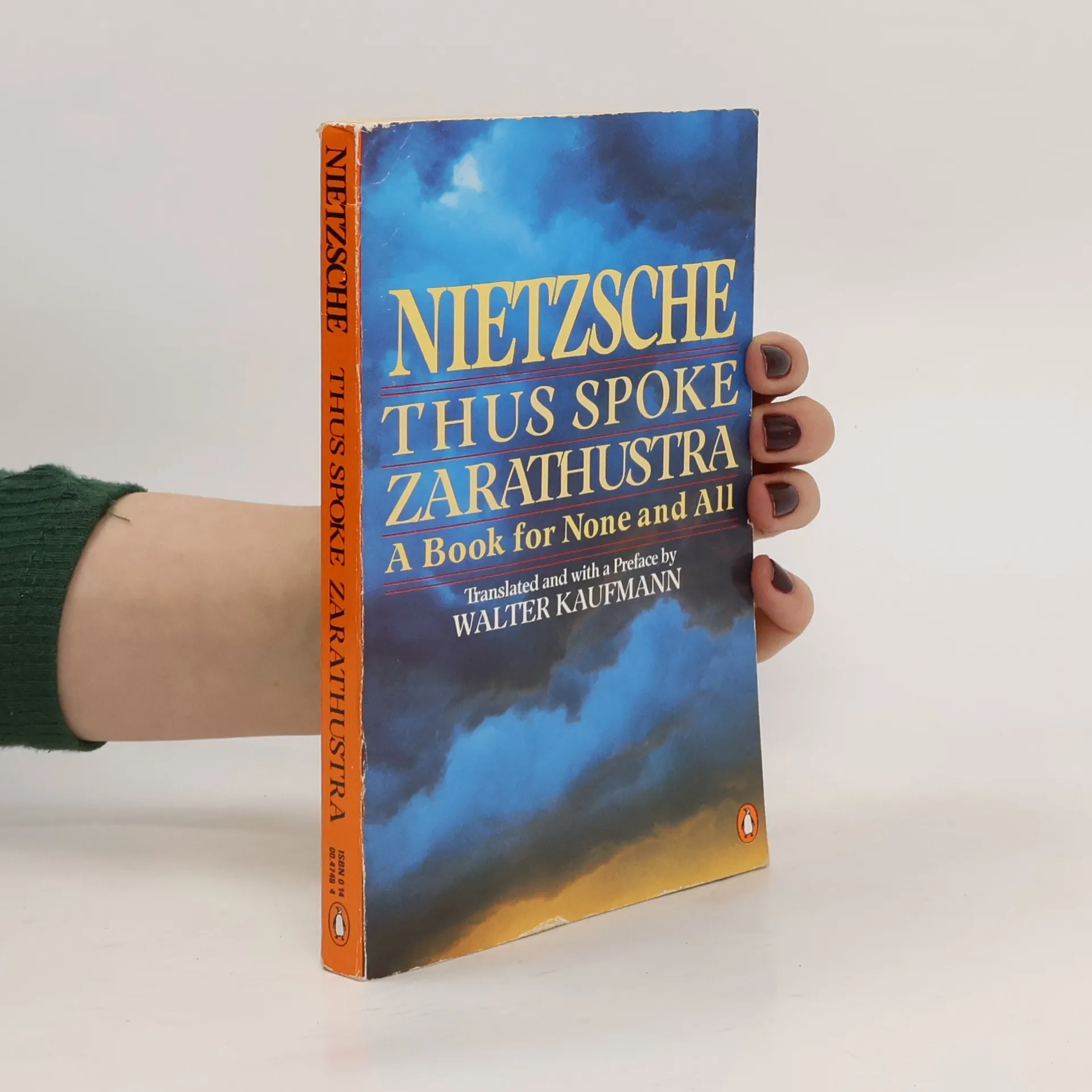
  • Friedrich Nietzsche's most accessible and influential philosophical work, misquoted, misrepresented, brilliantly original and enormously influential Nietzsche was one of the most revolutionary and subversive thinkers in Western philosophy, and Thus Spoke Zarathustra remains his most famous and influential work. It describes how the ancient Persian prophet Zarathustra descends from his solitude in the mountains to tell the world that God is dead and that the Superman, the human embodiment of divinity, is his successor. Nietzsche's utterance 'God is dead', his insistence that the meaning of life is to be found in purely human terms, and his doctrine of the Superman and the will to power were all later seized upon and unrecognisably twisted by, among others, Nazi intellectuals. With blazing intensity and poetic brilliance, Nietzsche argues that the meaning of existence is not to be found in religious pieties or meek submission to authority, but in an all-powerful life force: passionate, chaotic and free.

    Thus spoke Zarathustra : a book for all and none