South Pacific Air War Volume Four chronicles aerial warfare in the South
Pacific in the critical period between 19 June and 8 September 1942. It can be
read alone or as a continuation of the first three volumes that spanned the
first six months of the Pacific War, culminating in the Battle of the Coral
Sea.
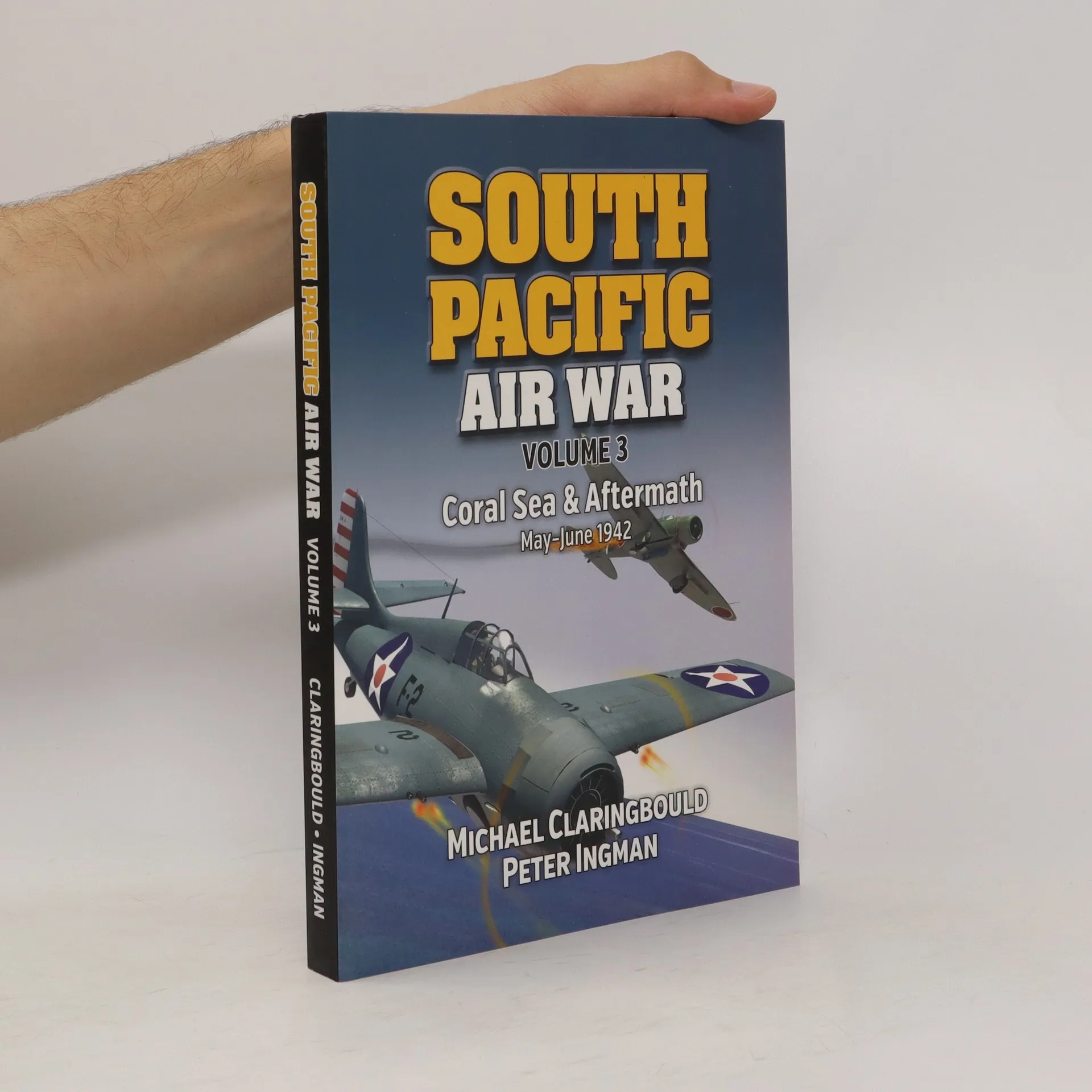
This third volume details aerial warfare in the South Pacific during May and June 1942, focusing on the Battle of the Coral Sea. It can be enjoyed independently or as part of a trilogy covering the first half of the Pacific War. In early May, Japan initiated Operation MO to capture Tulagi and Port Moresby, leading to a historic clash between opposing fleet carriers. The battle resulted in the loss of the USS Lexington and the withdrawal of the USS Yorktown. While traditionally viewed as an Allied victory that thwarted Japan's plans for Port Moresby, the authors argue that Japan's invasion capacity remained largely intact, and postponing the invasion was a significant miscalculation. Following the Coral Sea battle, a fierce aerial campaign ensued between land-based air forces, resembling a slugfest between Lae and Port Moresby, just an hour apart by air. The Allies launched offensives with B-17, B-25, and B-26 bombers from Australia, while P-39 Airacobra fighters defended Port Moresby, suffering heavy losses. Japanese forces, utilizing Betty and Nell bombers, targeted Moresby and its harbor, protected by the skilled Zero fighters of the Tainan Kokutai. This campaign is presented in unprecedented detail, combining Allied and Japanese accounts. The authors, Michael Claringbould and Peter Ingman, bring unique expertise to this critical chapter of military history.
Pacific Profiles Volume 11 covers the P-40 Warhawk series, which served with a
dozen USAAF Fifth and Thirteenth Air Force fighter and reconnaissance
squadrons, service units, combat replacement pools and other miscellaneous
units.
Pacific Profiles Volume 12 covers the P-51 and F-6 Mustang series which served
in New Guinea, the Philippines and then the Japanese islands, serving with a
total of ten USAAF Fifth Air Force fighter and reconnaissance squadrons, and
also with New Guinea’s Combat Replacement Training Centre.
Conveys detailed stories of aerial warfare in the Solomons theatre, chosen
because both Japanese and Allied records can be matched for an accurate
accounting.
Whilst the F4U Corsair eventually proved to be a superior fighter in Pacific operations, its introduction into combat in this theatre initially demonstrated its weaknesses. Indeed, the 'Saint Valentine's Day Massacre' debacle showcased exemplary Zero-sen fighter tactics, and American losses were of sufficient magnitude that further daylight missions toward Bougainville were discontinued until Allied fighter tactics could be improved. As a result, for the next two months the Corsair's combat results were much subdued. Indeed, the F4U only became a superb fighter when both its pilots and their commanders worked out how to deploy the gull-wing design effectively. Optimum circumstances for effective engagement did not always occur, and the Zero-sen remained effective against the Corsair until February 1944 in the South Pacific, after which all IJNAF fighter units vacated Rabaul. This book closely examines these two different fighters in the Solomons/Rabaul theatre, and the unique geographic conditions which shaped their deployment and effectiveness. It contains rare photographs and digital artwork that accurately showcases and aligns combats of both types in-theatre with unprecedented accuracy. Both sides vastly over-claimed. With full access to IJNAF and US Navy/US Marine Corps records, these numbers will be presented accurately
Pacific Profiles Volume 10 covers the P-47D Thunderbolt which flew combat
missions in the New Guinea theatre until mid-1945, serving with a total of
eleven Fifth Air Force USAAF combat squadrons, Fifth Fighter Command and the
Combat Replacement Training Center.
The Pacific Profiles series presents the most accurate WWII profiles of
aircraft which served in the South Pacific theatre. Volume Six covers a dozen
USAAF Fifth and Thirteenth Air Force squadrons which operated the Bell P-39
and P-400 Airacobra from April 1942 until March 1944.