
Bookbot

Jordan Abel

    The Place of Scraps
    Un/inhabited
    Empty Spaces
    Un/Inhabited
    • Un/Inhabited

      • 240bladzijden
      • 9 uur lezen
      5,0(1)Tarief

      This art book uniquely blends typographic design with poetic-erasure techniques to explore intricate themes of race within Western pulp novels. The second edition has been revised by the author, enhancing its critical examination of these complex issues through a creative lens.

      Un/Inhabited
    • A hypnotic and mystifying exploration of land and legacy, exploring what it means to be an intergenerational, Indigenous survivor of Residential Schools

      Empty Spaces
    • Un/inhabited

      • 240bladzijden
      • 9 uur lezen

      Award-winning Nisga’a poet Jordan Abel’s second collection of poetry, Un/inhabited , maps the terrain of the public domain to create a layered investigation of the interconnections between language and land. Abel constructed the book’s source text by compiling in their entirety ninety-one western novels found on the website Project Gutenberg, an online archive of works whose copyright has expired. Using his word processor’s Ctrl-F function, he searched the compilation for words that relate to the political and social aspects of land, territory, and ownership. Each search query represents a study in context (How was this word deployed? What surrounded it? What is left over once that word is removed?) accumulating toward a representation of the public domain as a discoverable and inhabitable body of land. Featuring a text by independent curator Kathleen Ritter – the first piece of scholarship on Abel’s work – Un/inhabited reminds us of the power of language as material and invites us to reflect on what is present in the empty space when we see nothing.

      Un/inhabited
    • The Place of Scraps

      • 288bladzijden
      • 11 uur lezen

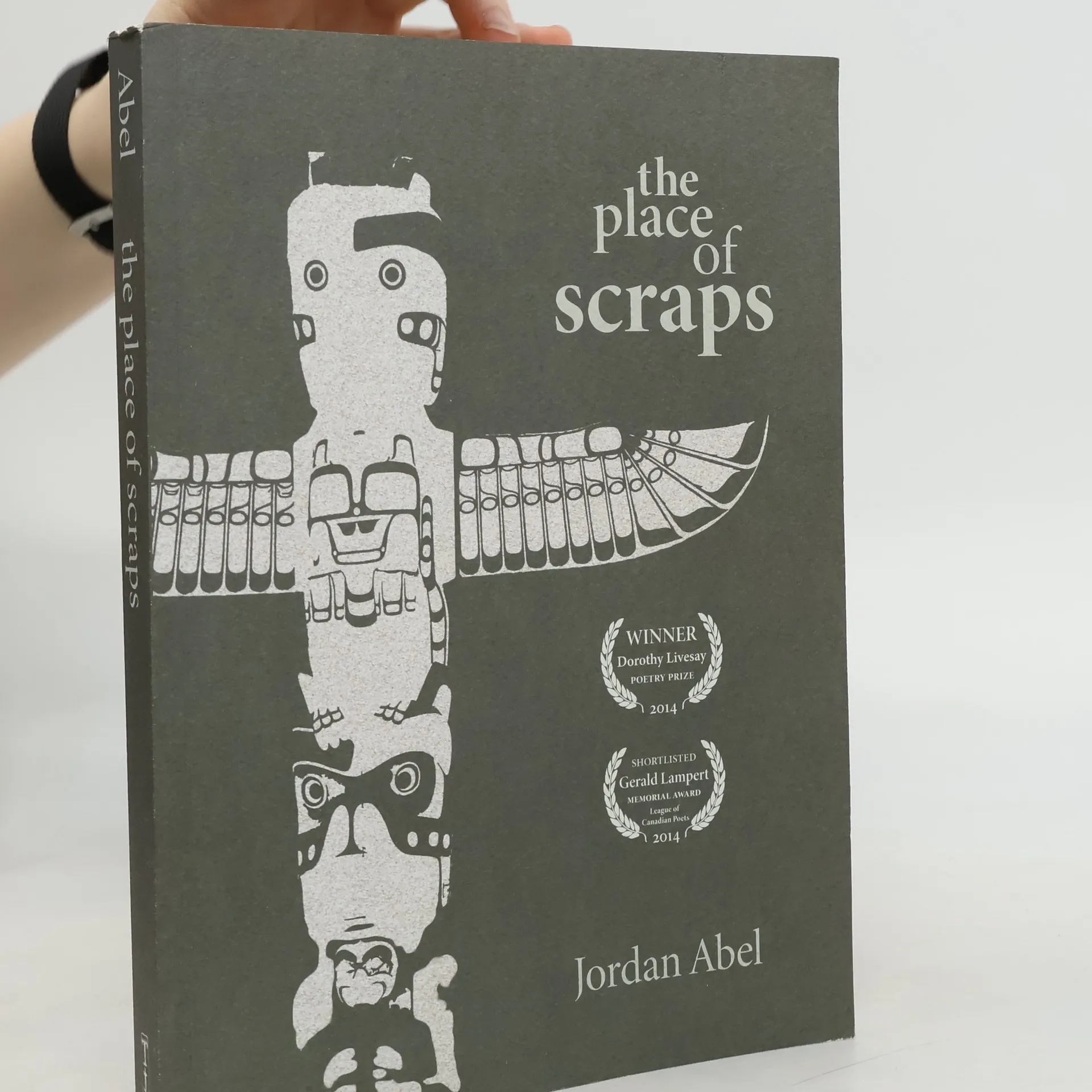
      The Place of Scraps centers on Marius Barbeau, an early-twentieth-century ethnographer who studied First Nations cultures in the Pacific Northwest, including the Nisga’a Nation. Barbeau believed these cultures were on the brink of extinction and felt compelled to preserve them. However, his preservation methods involved purchasing totem poles and potlatch items from struggling communities, which he then sold to museums. Ironically, while aiming to protect these cultures, he contributed to their dismantling. Inspired by Barbeau’s work, particularly his book Totem Poles, Jordan Abel delves into the complex relationship between First Nations cultures and ethnography. His poems shed light on Barbeau’s intentions while also addressing the consequences of his actions. Utilizing erasure techniques, Abel creates new interpretations of Barbeau’s writing, revealing fresh perspectives and recontextualizing each word, letter, and punctuation mark. As he engages deeply with Barbeau’s text, Abel discovers a surprising connection to the ethnographer, prompting a reflection on cultural preservation and the impact of historical narratives.

      The Place of Scraps