

In the UK, every week three women are killed by their partners. Over half the women killed by men are killed by a current or ex-partner. On average domestic abuse victims are assaulted 68 times before calling the police. There is a domestic violence epidemic happening right now, yet as a society we still turn a blind eye to it. In a culture that has normalised misogyny, we determinedly cling to the belief that domestic violence is a private matter in which both parties bear some responsibility. Even our legal system legitimises the idea that people who hurt or kill their partners have snapped and lost control, committed a 'crime of passion'. But domestic violence has a clear pattern. Jealousy. Controlling behaviour. Stalking. Verbal abuse. A history of violence. Specialising in homicide, stalking and coercive control, internationally renowned forensic criminologist and former police officer Jane Monckton-Smith has spent decades researching domestic violence cases that have ended in homicide. From her research she developed an 8-stage timeline which has revolutionised the approach to predicting homicide in domestic abuse cases. Part case study, part social commentary and part memoir of a woman dealing with domestic homicide, In Control shows that there are clear signs when a relationship is about to turn violent - we've just been trained not to see them.
Jane Monckton Smith Volgorde van de boeken (chronologisch)
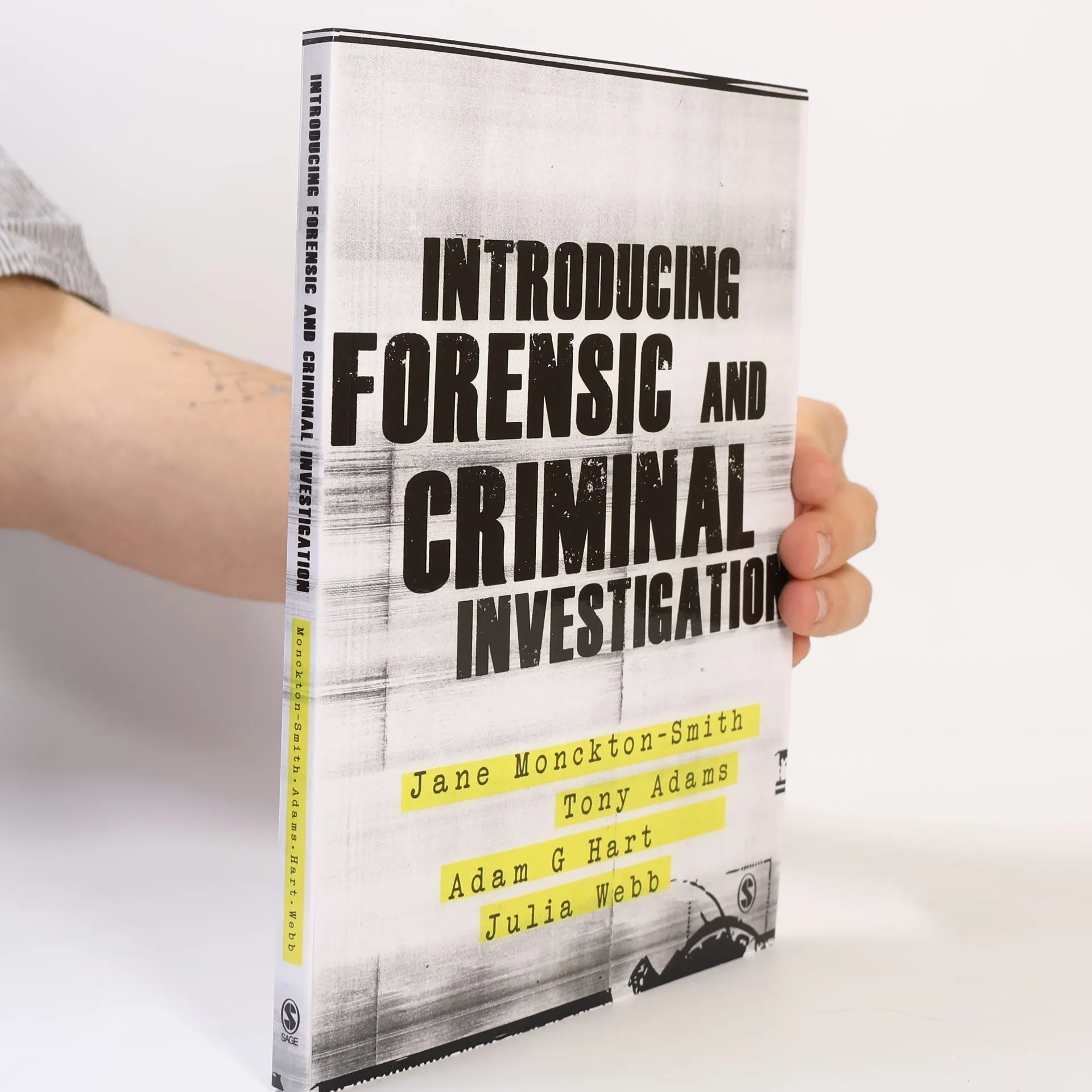

Introducing Forensic and Criminal Investigation
- 232bladzijden
- 9 uur lezen
This book is a lucid and practical guide to understanding the core skills and issues involved in the criminal investigation process. Guiding students through a mock criminal investigation, each chapter introduces a layer of the crime scene and an investigative activity to allow students to develop a true comprehension of how forensic and criminal investigation takes place. Drawing on multiple disciplines and perspectives, the book promotes a critical awareness and practical comprehension of the intersections between criminology, criminal investigation, and forensic science and uses active learning strategies to help students build their knowledge and ensure that the veracity of evidence and decision making is made clear. The book is organised around the three key strategic phases in a criminal investigation: Instigation and Initial Response; The Investigation and Case Management, and each strategic phase of the investigative process is discussed to ensure the processes and responsibilities are relayed in a logical and practical structure. Alongside this practical approach theoretical perspectives and academic research are laid bare for students. Targeted at undergraduate students studying forensic and criminal investigation on criminology and policing course, this book is the perfect balance of practical and theoretical learning.