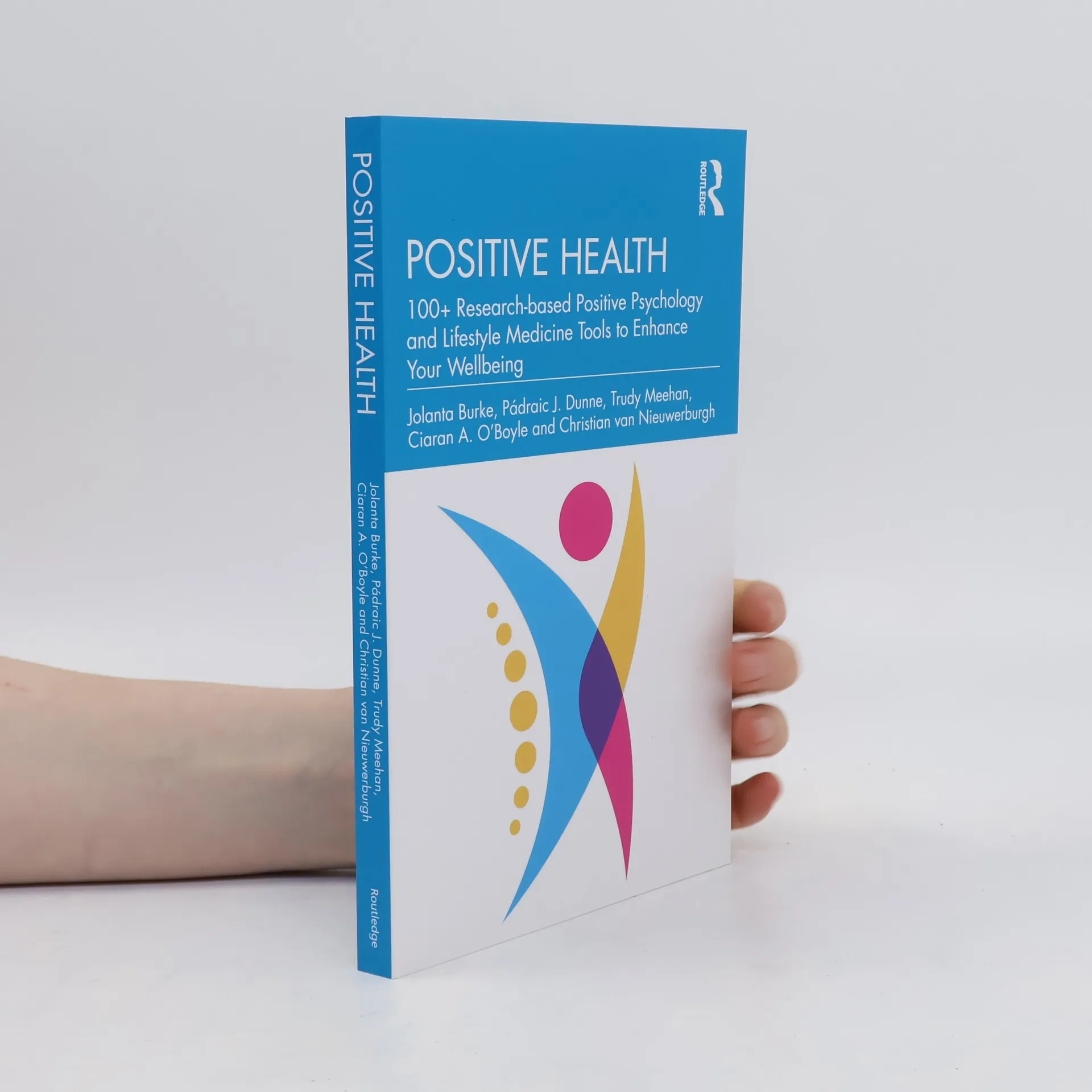
This comprehensive compendium offers a wealth of evidence-based tools that can boost both physical and mental wellbeing throughout the lifespan. Filled with over 100 activities to help you live a good life, this book is the first of its kind to integrate the latest research from the fields of positive psychology and lifestyle medicine.
This introductory book provides a comprehensive guide to Positive Health, emphasizing the integration of body and mind. It merges lifestyle medicine—focusing on healthy eating, sleep hygiene, and physical activity—with positive psychology, exploring cognitive, arts-based, and positive affect tools to understand health psychology, physiology, and behavior. The text combines theoretical insights with practical interventions, illustrated through case studies, mind maps, and infographics. It includes exercises designed to apply key research findings to improve personal well-being, encouraging readers to make positive changes in their thinking, attitudes, and behaviors, as well as in their environments. Key topics include social determinants of health and the role of meaning in well-being. This resource is essential for introductory courses on Positive Health and serves as supplementary reading for positive psychology or well-being courses. It is also valuable for healthcare professionals and policymakers.
This is an essential guide for all teaching professionals to help them make an informed decision about what wellbeing programmes and initiatives they should select in their schools and why. It provides teachers and school leaders with all necessary knowledge to help identify what they should be looking for in wellbeing programmes, how they should be evaluating its effectiveness and who should be delivering it for them. It presents a suite of components and evidence-based interventions that teachers can pick-and-choose for their school community. For the first time, practitioners are not being sold a specific programme but instead presented with what is known about wellbeing in order to empower them to make their own decisions that best suit their community. It goes behind the scenes and reveals the secrets used by researchers and experts, including practical advice, recommendations and the author's own ground-breaking research study involving 3,000 students. Its unique pick-and-mix process demystifies programme creation, simplifies it and makes its building blocks available to the masses. This accessible, evidence-based guide suggests a whole-school approach with specific interventions that can be used to successfully improve the wellbeing of teachers and students, making it an invaluable resource and must-read for all teaching professionals.

Undertaking Capstone Projects in Education provides students with all of the information required to successfully design and complete a capstone project. Guiding the reader in a step-by-step process, this book covers how to create a question, select a topic of interest, and apply the best possible design solutions. Structured in a way that will help readers build their skills, chapters explore all aspects of the capstone project from the inception of the idea, to laying the foundations, designing the project, analysing the data, and presenting the findings. Filled with examples and written in a friendly and collaborative style, this key guide uses simple language and easy-to-understand examples to unpack complex research issues. This book is essential reading for students and anyone interested in undertaking a capstone project in the field of education.
This book aims to help leaders become the best versions of themselves, achieve
extraordinary results and help their team accomplish the same. Packed with
research and practical advice from real-life positive leaders, it offers an
extensive look into both what high-performance leadership is, and how it can
be achieved.
Co-authored by the lead developer of the original lifestyle medicine
competencies, this book suggests positive health expansions for each
competency, outlines specific questions that drive personal reflection for
change and positive clinical interactions, and describes the step-by-step
approach in case studies.