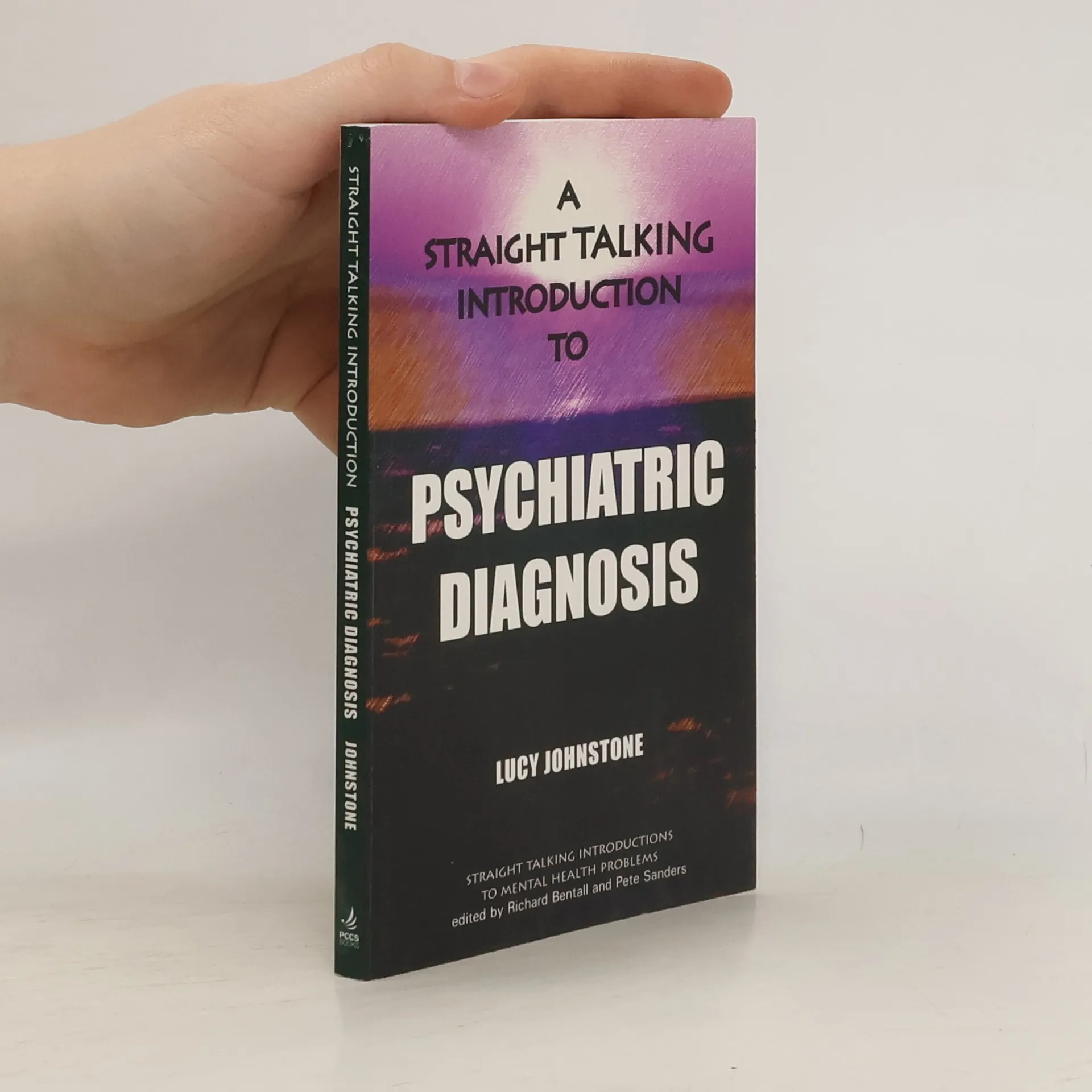
Do you need your psychiatric diagnosis? This book will help you decide. In
this second, updated edition of her best-selling title, Lucy Johnstone
revisits the revolution that is underway in mental health. Challenging the
evidence for the diagnostic model, we need to change the question from 'What's
wrong with you?' to 'What's happened to you?'.
Offering a critical perspective on the daily operations of psychiatry, this book explores the dynamics between practitioners and patients. It delves into the complexities of mental health treatment, highlighting the experiences of those who navigate the psychiatric system. By examining the roles of both users and providers, it challenges conventional views and encourages a reevaluation of psychiatric practices and their implications for mental health care.
The Power Threat Meaning Framework offers a fresh perspective on understanding human distress and behavior, moving away from traditional psychiatric diagnoses. Co-produced with service users, it emphasizes the impact of power dynamics and the threats they pose to individuals. This framework addresses how society's messages can exacerbate feelings of shame and isolation, reframing what are often labeled as 'symptoms' into understandable responses to life's challenges. It is applicable to everyone, not just those in mental health or criminal justice systems.
Towards the identification of patterns in emotional distress, unusual experiences and troubled or troubling behaviour, as an alternative to functional psychiatric diagnosis
414bladzijden
15 uur lezen
Focusing on the interplay of power and personal experiences, the Power Threat Meaning Framework offers a fresh lens on distress and troubling behaviors, moving away from conventional psychiatric diagnoses. Developed with service users, it emphasizes the impact of power dynamics and societal messages on individuals' lives. By exploring how threats from power influence responses often labeled as 'symptoms,' the Framework encourages deeper understanding and compassion for those navigating difficult experiences, inviting reflection on personal and collective narratives of suffering.
The current mainstream way of describing psychological and emotional distress
assumes it is the result of medical illnesses that need diagnosing and
treating. This book summarises the Power Threat Meaning Framework as an
alternative to psychiatric diagnosis - an alternative that asks not 'What's
wrong with you?' but 'What's happened to you?'
Do you still need your psychiatric diagnosis? This book will help you decide. A revolution is underway in mental health, as even the authors of diagnostic manuals acknowledge that psychiatric diagnoses lack solid evidence. Consequently, individuals should not be compelled to accept these labels. With many mental health professionals questioning the validity of diagnoses and advocating for a better system, service users and caregivers deserve the same opportunity. This book emphasizes choice, providing essential information for individuals to make informed decisions and explore alternatives if they wish.
Rigorously researched and powerfully argued, the book empowers readers with knowledge and resources often absent in statutory care, enabling informed choices. Eleanor Longden from the Psychosis Research Group at the University of Liverpool highlights its value. Lucy Johnstone emphasizes that understanding personal experiences fosters hope and recovery, as she deconstructs psychiatric diagnosis and incorporates personal stories as evidence. Dirk Corstens, a psychiatrist and Chair of Intervoice, praises the book’s message. Gail A. Hornstein, a psychology professor at Mount Holyoke College, describes it as a balanced and clear introduction to the realities of psychiatric diagnosis and the viable alternatives available for those in distress.