

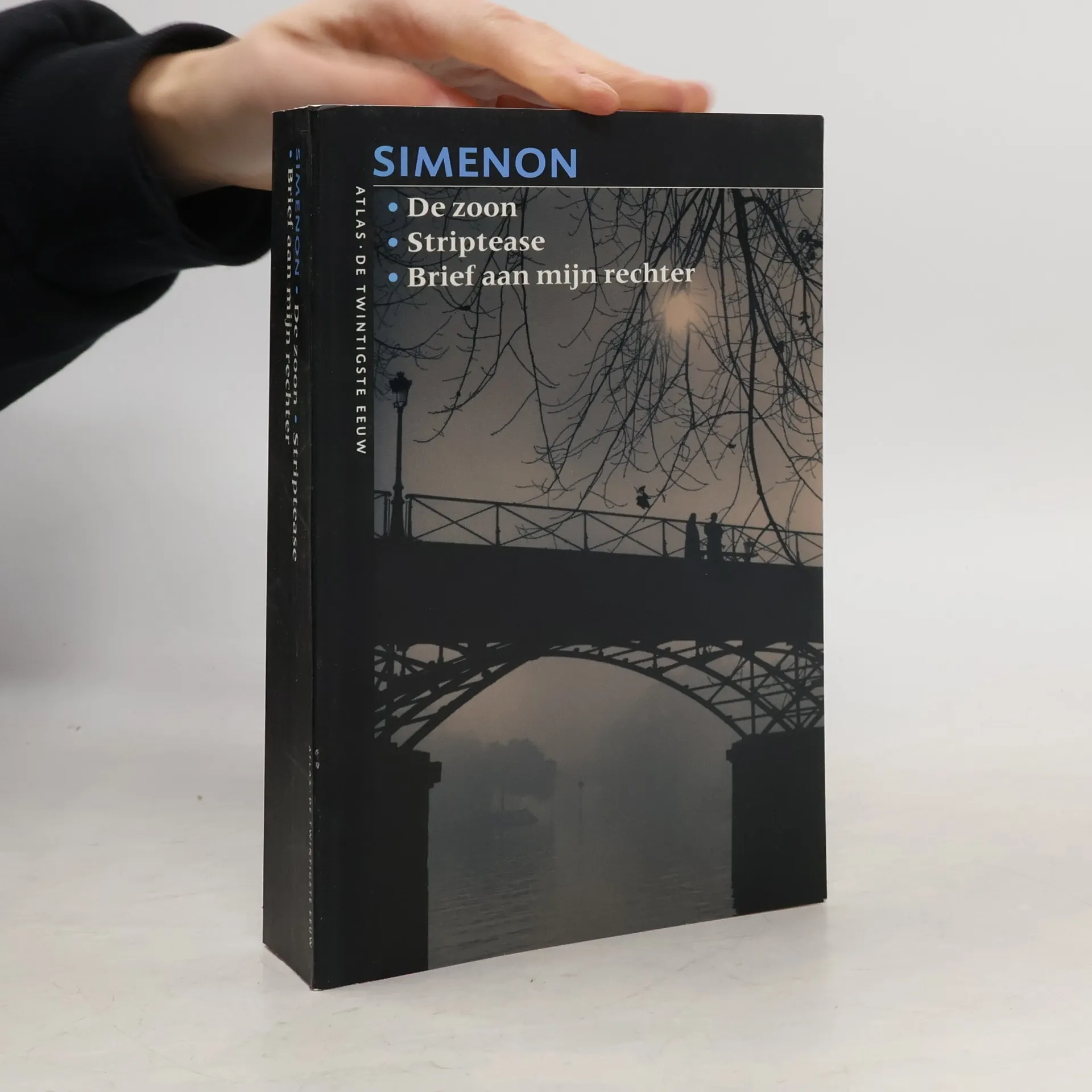
Atlas de Twintigste Eeuw: De zoon, Striptease & Brief aan mijn rechter
- 479bladzijden
- 17 uur lezen
In deze omnibus zijn drie van zijn psychologische romans opgenomen.
Georges Simenon, een meester in spannende proza, stond bekend om zijn buitengewone productiviteit en zijn scherpe vermogen om de complexiteit van de menselijke psyche te vatten. Zijn omvangrijke oeuvre, dat honderden titels omvat, wordt gekenmerkt door een diep inzicht in de menselijke natuur en meesterlijk vertel talent. Vooral zijn detectiveverhalen met inspecteur Maigret overstegen taalbarrières en veroverden film- en radioplatformen, waarmee hij zijn talent demonstreerde voor het creëren van onvergetelijke personages en boeiende plots. Naast zijn beroemde rechercheurs, dook Simenon in de diepten van menselijke motivatie en ervaring in zijn psychologische romans en autobiografische werken, waarmee hij zijn nalatenschap als een toonaangevende figuur in de 20e-eeuwse literatuur vestigde.


In deze omnibus zijn drie van zijn psychologische romans opgenomen.
Deze bundel uit Simenons grote tijd bewijst weer eens hoezeer Simenon een meester is in het vertellen van boeiende en sfeervolle verhalen.In het titelverhaal worden wij geconfronteerd met een crime de passion begaan uit jaloezie, iets waar de Fransen altijd zeer begrijpend tegenover hebben gestaan. Het dienstmeisje van een longarts (zij verrichtte ook diensten op het zeer persoonlijke vlak) wordt vermoord via een ingenieuze en gruwelijke methode: roggenaalden. De oude clochard Maandag die één maal per week ten huize van de chique longarts mag komen eten bracht deze venijnige naalden mee, verstopt in moorkoppen!Twee lijken aan boord van een trekschuit (La péniche aux deux pendus)De vergiftingszaak op de boulevard Beaumarchais (L'affaire du boulevard Beaumarchais)Het open raam (La fenêtre ouverte)Maigret en meneer Maandag (Monsieur Lundi)Het raadsel van de trein in de nacht (Jeumont, 51 minutes d'arrêt)De reddende moord (Peine de mort)De druppels kaarsvet (Les larmes de bougie)Rue Pigalle (Rue Pigalle)Een vergissing van Maigret (Un erreur de Maigret)
Jonas Milk, de kleine man uit Archangelsk - zoals de letterlijke vertaling van de titel van deze roman luidt - heeft zich, hoewel van oorsprong vreemdeling, in de Franse provinciestad altijd voortreffelijk thuis gevoeld. Over zijn huwelijk met zijn veel jongere vrouw Gina heeft hij zich nooit veel vragen gesteld, er waren nooit echt belangrijke problemen. Totdat plotseling, volkomen buiten zijn schuld, Gina spoorloos verdwijnt. Jonas, in de war gebracht, verzint voor zichzelf en de buitenwereld een voor de hand liggende verklaring. Maar niemand gelooft of vertrouwt hem. Hij is verdacht en wordt daarom onherroepelijk uit de gemeenschap verdreven...
Onderzoeksrechter Victor Bréjon, een vriend van Maigret, overtuigt de commissaris om naar de Vendée te reizen om een moord op te lossen: Bréjons zwager, een welvarende en in het dorp onpopulaire landeigenaar, zou een jonge man hebben vermoord. De commissaris stuit op een muur van stilte en ontmoet tot zijn grote ergernis een voormalige collega van het Quai des Orfèvres: Justin Cavre, bijgenaamd "Inspecteur Cadavre", die inmiddels de leiding heeft over een privé-detectivebureau en al met de zaak bezig is - en altijd een stap voor is op Maigret. Maigrets 24e zaak speelt zich af in een fictief dorp in de Vendée.
Vain, womanising Tony and passionate, manipulative Andree met eight times in eleven months in the blue room at the Hotel des Voyageurs for afternoons of abandoned love. For Tony the conversation that last time was just the casual, almost banal, talk of lovers. But for Andree it was something else. And it led inevitably to an appalling double murder and a nightmare which Tony couldn't escape.
De dokter van een Amerikaanse zakenman wordt in Florence ontvoerd door mensen die goed thuis zijn in het Toscaanse heuvelland.
Dagboek over de liefdesrelatie tussen een succesvolle advocaat en een cliënte.
Nederlandse vertaling van "Le Charretier de la Providence"
In "Maigret in 'Het Hellegat'" wordt een auto uit het water gevist. In de kofferbak ligt een vrouw die al minstens drie dagen dood moet zijn. "De oude dame uit Bayeux" wordt dood aangetroffen in haar woning. Haar gezelschapsdame en haar neef beschuldigen elkaar van de moord. "Stan de Killer" is de leider van een moorddadige bende. Niemand kent hem, iedereen is bang van hem. Dan biedt iemand Maigret de leider te ontwapenen... In "Hôtel Étoile du Nord", een derderangs hotelletje, is een man vermoord. Over twee dagen gaat Maigret met pensioen en zijn hoofd staat helemaal niet naar deze zaak.
Mit seiner Kochkunst ist es dem kleinen Gastwirt aus der Provinz gelungen, ein florierendes Bistro im alten Pariser Hallen-Viertel aufzubauen. Doch dann bricht er plötzlich mitten im hektischen Essenstrubel tot zusammen. Was soll aus seinem Lebenswerk werden? Seine Witwe und die drei Söhne verfolgen ganz unterschiedliche Pläne: Antoine will in die Fußstapfen des Vaters treten und das Bistro weiterführen, doch Ferdinand und Bernard brauchen dringend Geld. Doch davon wie auch von einem Testament fehlt jede Spur. Dann taucht ein Schlüssel zu einem Bankschließfach auf, dessen Inhalt alle überrascht.
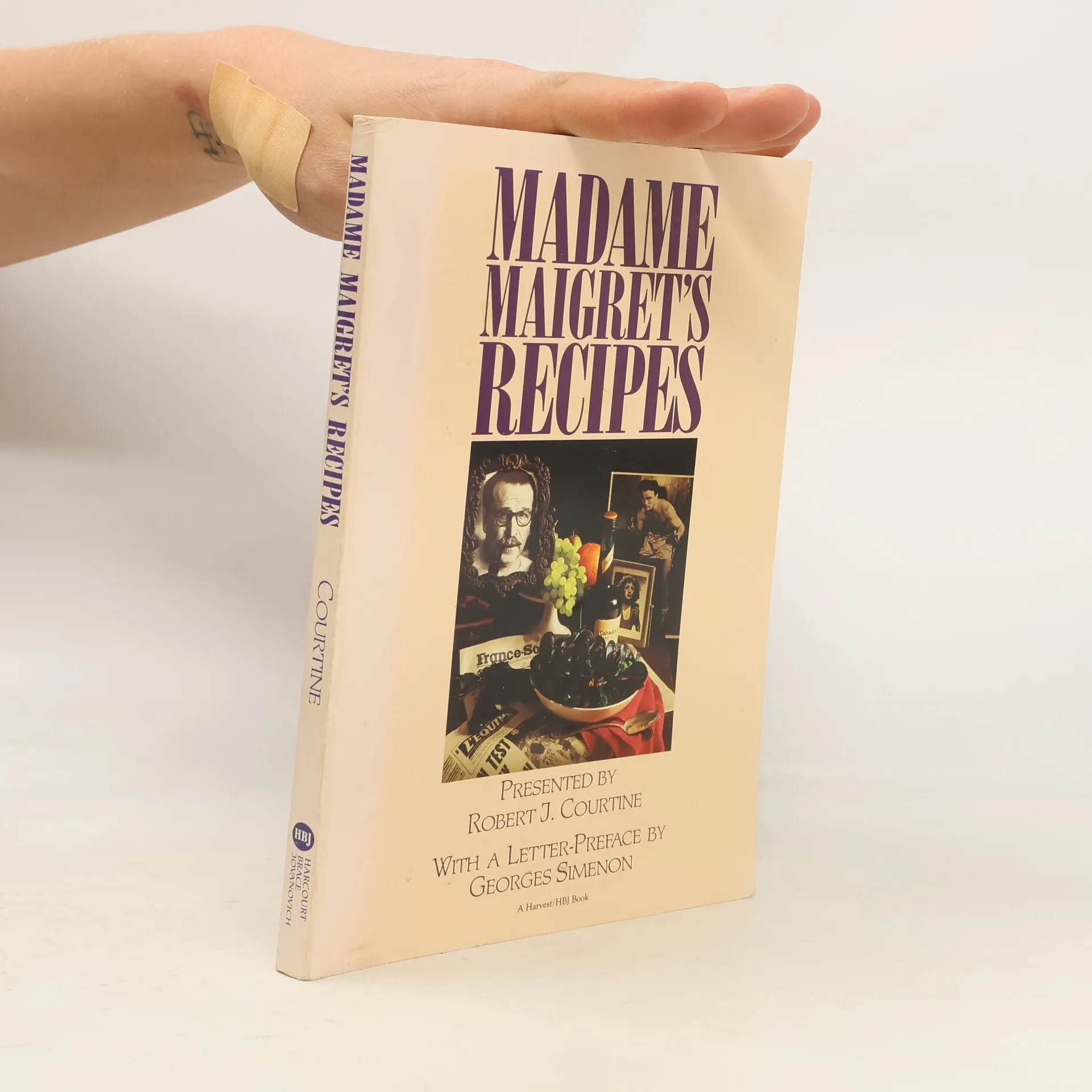
Collects over one hundred recipes from the fictional, but enviable notebooks of the wife of Georges Simenon's Inspector Maigret, providing full instructions, methods, accompaniments, and alternatives
Explore the insights of authors as they delve into their writing techniques, the inspiration behind their characters' names, and the critical reception their novels have received. This collection offers a behind-the-scenes look at the creative process, revealing how personal experiences and literary influences shape their work.
This volume is the first in the Tout Maigret series, gathering the investigations of one of the key characters in detective literature. Seventy-five novels and twenty-eight short stories allow readers to rediscover the most famous hero of 20th-century literature, a hero who is distinct, human, and universal.
This new selection of stories featuring Inspector Maigret - three of which are published in English for the first time - takes the detective from a mysterious death in a Cannes hotel to a love triangle in the Loire countryside and a bitter rivalry within a Parisian family. Written during the Second World War, just a few years after Simenon had published what was intended to be his last novel featuring Inspector Maigret, these tales of human frailty and deceit distil the atmosphere, themes and psychological intensity that make Simenon's famous detective series so compelling. Translated by Ros Schwartz 'Not just the world's bestselling detective series, but an imperishable literary legend . . . he exposes secrets and crimes not by forensic wizardry, but by the melded powers of therapist, philosopher and confessor' Boyd Tonkin, Times
The story presents the famous Inspector Maigret in a new role as a husband, with his wife assisting him in unraveling a complex murder case. Her involvement is so effective that he teasingly refers to her as "Mme la commissaire Maigret." This narrative showcases the dynamics of their relationship while maintaining the hallmark mastery of the renowned crime author. It explores themes of partnership, trust, and the intersection of personal and professional lives, all set against the backdrop of a gripping mystery.
Paris has taken its toll and Maigret is sent to Vichy for the cure, but the Inspector finds it difficult to give his curiosity a rest. He compiles a mental dossier on his fellow guests, including a curious woman he and Madam Maigret note in particular -- the lady in lilac. When a headline in the local paper announces the woman's murder, Maigret -- with some relief -- interrupts his routine to aid the investigation. The arrival of the dead woman's sister provokes more questions than answers but Madame Maigret, as always, puts everything in the proper perspective.
In the final novel featuring Inspector Maigret, the famous detective reaches a pivotal moment in his career Maigret is a few years short of his retirement and has just refused promotion to the post of Head of the Police Judiciare, preferring the human contact he enjoys as Head of the Criminal Division. His wish is granted when Madam Nathalie Sabin-Levesque, an elegant but highly nervous lwoman, insists that he personally investigates the disappearance of her husband Gėrard, a highly successful and wealthy Parisian lawyer. In Maigret and Monsieur Charles, the conclusive installment of the the Inspector Maigret mystery series, our famous detective finds himself contemplating his past and future as he delves into the Paris underworld one last time.
“One of the greatest writers of the twentieth century . . . Simenon was unequaled at making us look inside, though the ability was masked by his brilliance at absorbing us obsessively in his stories.” —The Guardian Inspector Maigret finds himself caught in the middle of a husband and wife duo’s case of “he said/she said”—with murderous consequences An unusually quiet day for Inspector Maigret at the Quai des Orfèvres is disturbed by a visit from mild-mannered toy salesman Xavier Manton. Maigret is taken aback by Manton’s revelation that he suspects his wife of plotting to poison him. And when he receives a visit from Madame Manton expressing her own grave concerns later that day, he finds himself deeply conflicted, unsure of whom to trust. Maigret heeds the advice of his seniors and begins investigating the couple—and with every turn, new complications arise. When the case comes to a boil and a body is discovered, everyone, including Maigret, is shocked. Maigret’s Doubts is an engrossing mystery of marriage and deceit that forces the reader to question whether our brilliant inspector may be fallible after all.
When Maigret receives a visit from an old schoolmate whose mistress has been shot to death, he feels compelled to look into the case. Yet his friend is one of the suspects-along with the dead woman's four other lovers, each unknown to the others. The basis for a public television Mystery! presentation. Translated by Eileen Ellenbogen. A Helen and Kurt Wolff Book
Seventeen stories feature Simenon's dauntless detective as he works on some baffling cases both from his base--Paris police headquarters on the Quai des Ortevres--and throughout the provinces.
Nobody mentioned the victims, or the terror that had gripped the town. For the last twenty days it had rained and between the usual quiet conversations and card games, only the trickle of water and the air of cold fear could be detected. A serial killer stalks La Rochelle's cobbled streets - and by the most unfortunate of occurrences, Kachoudas, a poor timid tailor and a newcomer to the town, knows exactly who it is... One of Georges Simenon's darkest novels, The Hatter's Ghosts is a riveting portrait of murder and subterfuge, at once a cat and mouse thriller and an acute physiological study of the criminal imagination.
Dan said he would go back out into the snowstorm to look for Ray. Instead he has spent the last few hours on a red bench in the barn, smoking cigarette after cigarette. As he replays his memories of recent months, of the dinner party that evening in Connecticut and the journey home with their wives, his heroic search for his friend turns into a trial of their friendship - one that could leave Ray to perish in the snow.
“A writer as comfortable with reality as with fiction, with passion as with reason.” —John Le Carré In this Georges Simenon classic, a Dutch clerk flees to Paris with his crooked boss’s money and meets the woman behind the man “A certain furtive, almost shameful emotion . . . disturbed him whenever he saw a train go by, a night train especially, its blinds drawn down on the mystery of its passengers.” Kees Popinga is a respectable Dutch citizen and family man—until the day he discovers his boss has bankrupted the shipping firm he works for, and something snaps. Kees used to watch the trains go by on their way to exciting destinations. Now, on some dark impulse, he boards one at random, and begins a new life of recklessness and violence. The Man Who Watched the Trains Go By is a chilling portrayal of a man who breaks from society and goes on the run asks who we are, and what we are capable of.
Here in notebooks that were never intended for publication, Simenon reflects on his life in some of the most candid revelations ever written. He reflects on his past - his childhood in Liege, the wild parties in Paris and travels around the world - and also examines his motivations and his attitude to work.
English, French (translation)
The Penguin Crime and Espionage series offers a curated collection of thrilling narratives that delve into the world of crime and espionage. Each installment features gripping plots, complex characters, and intricate twists that keep readers on the edge of their seats. This series aims to showcase both classic and contemporary works, appealing to fans of suspense and intrigue. With a focus on storytelling that captures the essence of mystery and danger, it promises to be a must-read for enthusiasts of the genre.
A bullet in the eye ends the life of the postmistress of a small French village. Because she pried into their secrets, everyone hated her. Everyone was glad she was dead. A man is accused - wrongfully. His life is at stake. In the end his main crime seems to be that he is from Paris, and villagers hang together against outsiders. When Maigret investigates he finds only hostility, shifty answers and lies.
Murder Most A Collection of Great Crime Stories
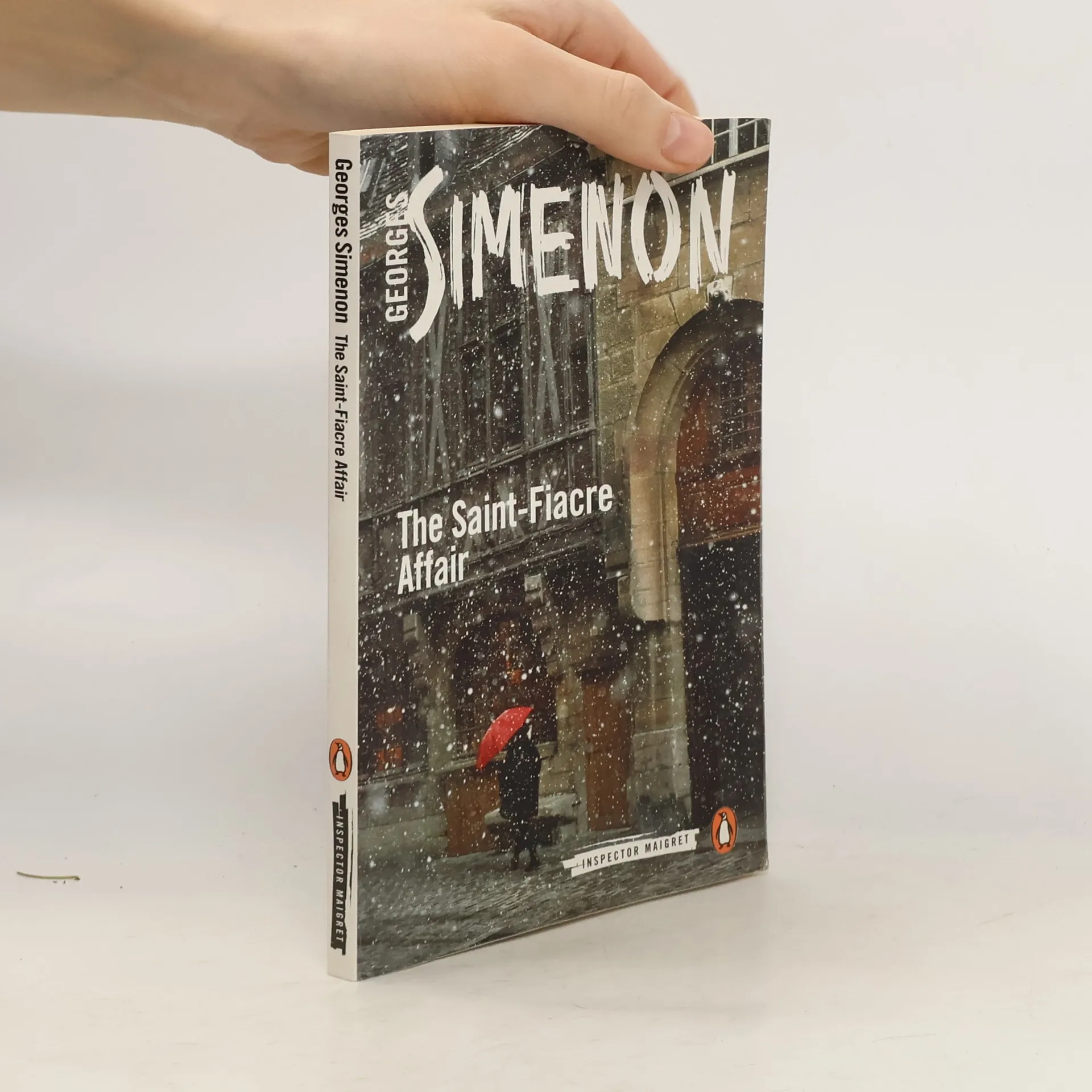
When an ominous note predicting the time and place of a death finds its way to Maigret's desk in Paris, his investigation brings him to Saint-Fiacre, the place of his birth. It isn't long before a darkness descends on Maigret and the town, as the prediction becomes a brutal reality and the Inspector discovers he is not welcome in the place he once called home. As much a thriller as a meditation on alienation, The Saint-Fiacre Affair displays Simenon's unique and searing perspective of the struggles we all are forced to endure.
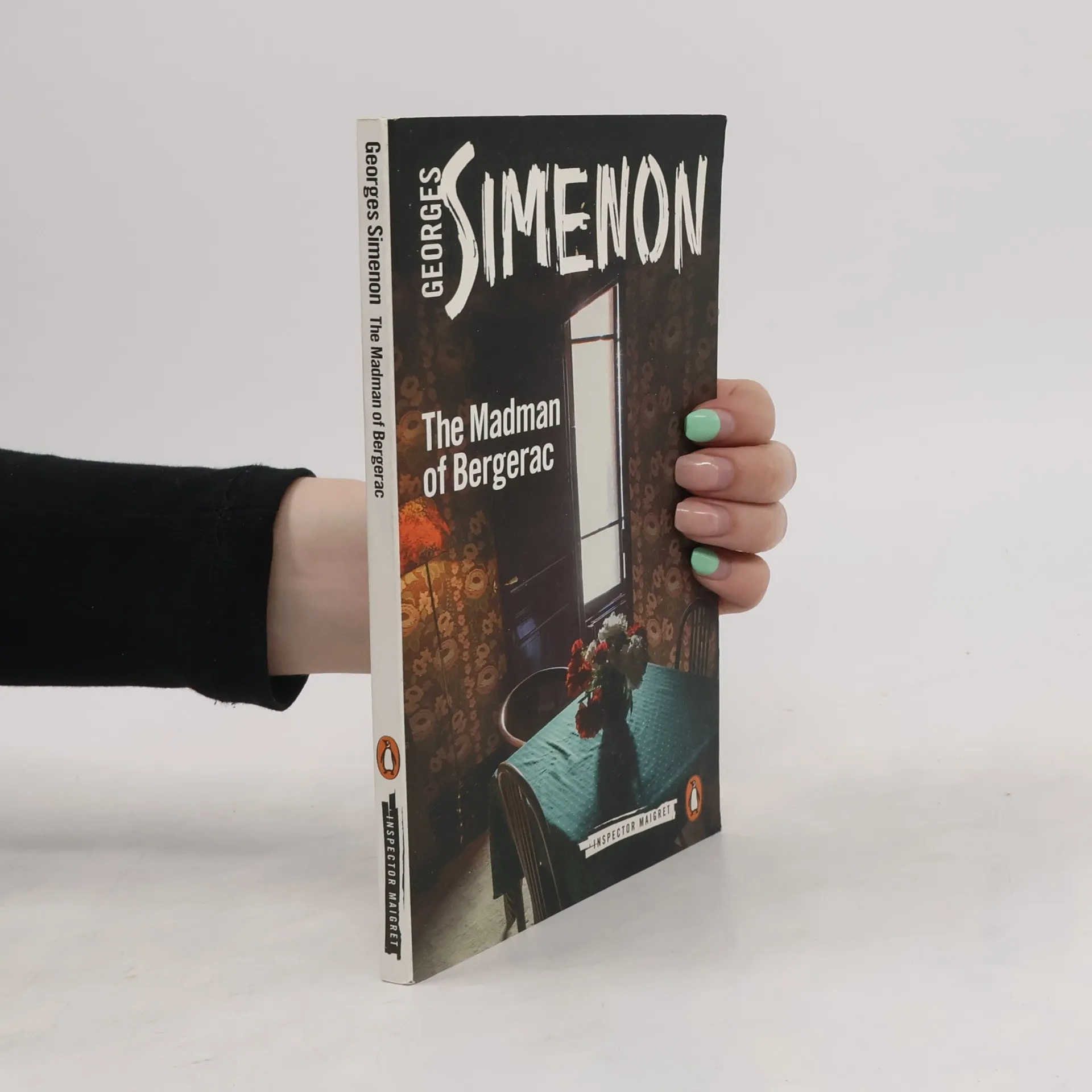
“A writer as comfortable with reality as with fiction, with passion as with reason.” —John Le Carré A tense, unforgettable Inspector Maigret mystery from Georges Simenon “He recalled his travelling companion’s agitated sleep—was it really sleep?—his sighs, and his sobbing. Then the two dangling legs, the patent-leather shoes and hand-knitted socks . . . An insipid face. Glazed eyes. And Maigret was not surprised to see a grey beard eating into his cheeks.” A distressed passenger leaps off a night train and vanishes into the woods. Maigret, on his way to a well-earned break in the Dordogne, is soon plunged into the pursuit of a madman, hiding amongst the seemingly respectable citizens of Bergerac.
Nine short stories make up this delightful holiday-themed collection, each featuring Georges Simenon's famous detective, Jules Maigret. Christmas mysteries abound: an otherwise sensible little girl insists that she has seen Father Christmas, a statement alarming to her neighbors, Monsieur and Madame Maigret. Then, a choirboy helps the inspector solve a crime while he lies in bed with a cold; another boy, pursued by a criminal, ingeniously leaves a trail to help Maigret track him. Many of these stories feature observant and resourceful children, frightened yet resolute, who bring out a paternal streak in the childless Maigret. The rapport between the inspector and these youthful heroes imparts a delightful freshness to this holiday collection- a cornucopia for fans of Maigret and mysteries.
Against all expectations Marcel Féron has made a “normal” life in a bucolic French suburb in the Ardennes. But on May 10, 1940, as Nazi tanks approach, this timid, happy man must abandon his home and confront the “Fate” that he has secretly awaited. Separated from his pregnant wife and young daughter in the chaos of flight, he joins a freight car of refugees hurtling southward ahead of the pursuing invaders. There, he meets Anna, a sad-looking, dark- haired girl, whose accent is “neither Belgian nor German,” and who “seemed foreign to everything around her.” As the mystery of Anna’s identity is gradually revealed, Marcel leaps from the heights of an exhilarating freedom to the depths of a terrifying responsibility—one that will lead him to a blood-chilling choice. When it first appeared in English in 1964, British novelist and critic Brigid Brophy declared The Train to be “the novel his admirers had been expecting all along from Simenon.” Until The Train, she wrote, the dazzlingly prolific novelist had been “a master without a masterpiece.”
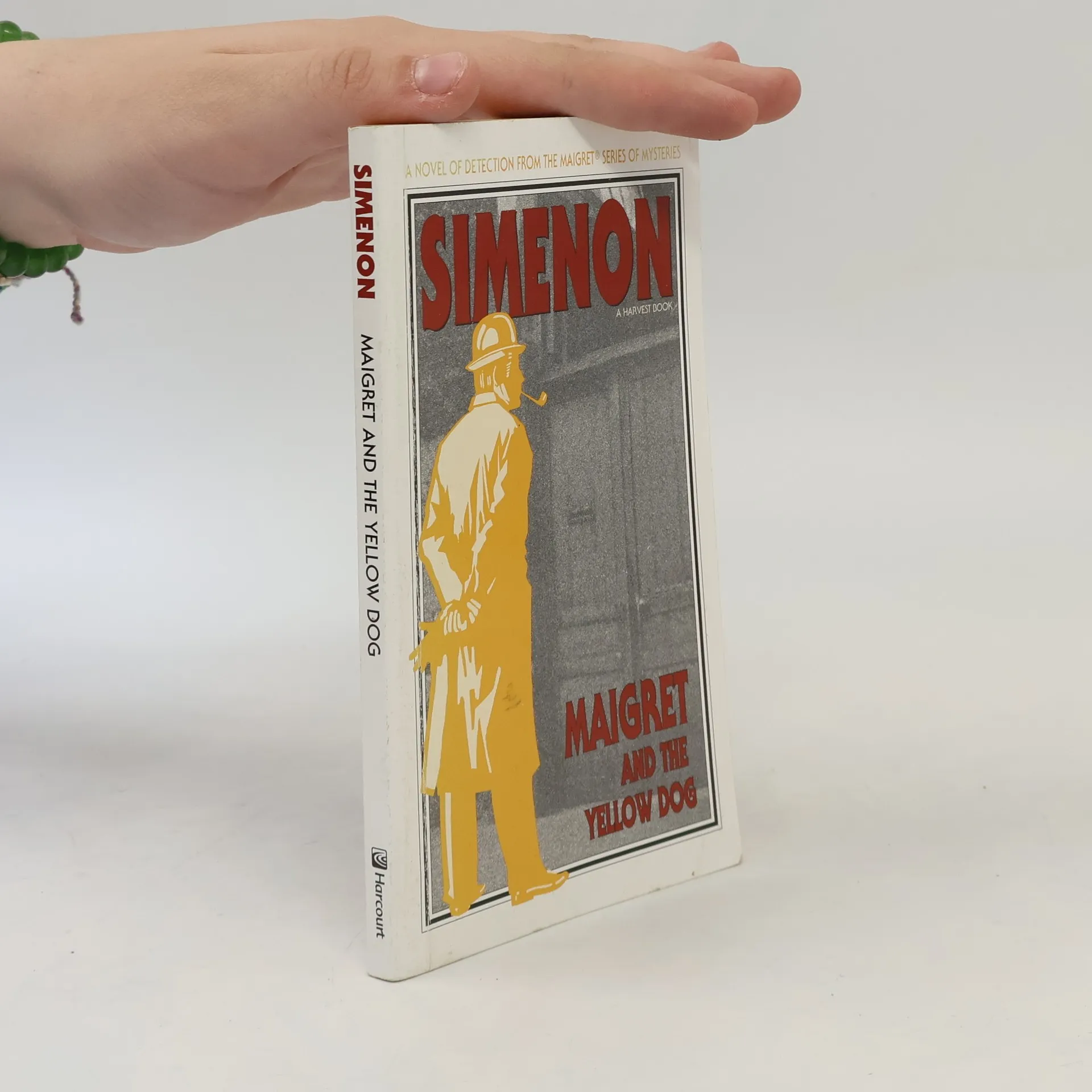
In the windswept seaside town of Concarneau, a local wine merchant is shot. In fact, someone is out to kill all the influential men and the entire town is soon sent into a state of panic. For Maigret, the answers lie with the pale, downtrodden waitress Emma, and a strange yellow dog lurking in the shadows...
Inspector Lognon - an embittered but dedicated detective - is shot. To everyone's amazement, it emerges that Lognon had spent the last ten nights in the room of a beautiful young woman - who has disappeared. In retreading Lognon's secretive last days, Maigret's investigations lead him into the murky world of art-collecting and forgery.
"It's not because you're foreigners. It's because you aren't foreign enough... or else that you are too foreign. Just as the Krull house sits on the edge of a rural French town, the family occupies a marginal place in the life of the community around them. Snubbed by the locals despite having lived there for decades, they rely on trade with passing sailors to earn a living. When their relative arrives unannounced from Germany, with his unsettling, nonchalant ways, the family becomes the target of increasing suspicion and the scapegoat for a terrible crime. Written on the eve of the Second World War, The Krull House is a taut, strangely prophetic novel about how distrust and hostility towards outsiders descends into hate-filled violence." -- Provided by publisher
Is Carl Andersen innocent of murder, or a very good liar? Detective Chief Inspector Maigret has been interrogating the enigmatic Danish aristocrat for seventeen hours. A diamond merchant was found dead, shot at point-blank range, in the garage of Andersen's mansion, yet he will not confess to the crime. To get to the truth, Maigret must delve into the secrets of Three Widows Crossroads, the isolated neighbourhood where he lives with his mysterious, reclusive sister Else - and where, it seems, everyone has something to hide.
A bus stops on the road to Montlu on, and there two strangers meet- Tati, a steely widow, who runs the farm her late husband left behind, and Jean, an odd, quiet man with nowhere to go. There is between them an affinity and Jean agrees to lodge with Tati, and help with the farm as he can. In the still and heat of the summer, they labour together and, inevitably, begin their affair. But nothing is at it seems, and as affections strain and stray, their relationship hurtles toward a disturbing doom . . . First published in 1942 at the same time as Albert Camus' The Outsider, this is Simenon's existentialist masterpiece - a powerful exploration of desire and death, of the barbarous edge that encircles the human soul.
Simenon explores the complexity of parent child relationships and the bitterness of things left unsaid in this stark, confessional piece.
'The new crime and espionage series from Penguin Classics makes for a mouth-watering prospect' Daily Telegraph A baffling case. A mysterious inheritance. It starts when a man's arm is fished out of Paris's Canal Saint-Martin. Then the rest of the body is retrieved - apart from the head. Inspector Maigret is determined to unearth the truth behind this disturbing murder. When he meets the strangely taciturn owner of a shabby local bistro, Madame Calas, who says her husband is away, the pieces start to fall into place. But, as the dogged, laconic detective discovers, nothing in this tangled case is as it seems.
Why are Emile and Marguerite Bouin still married? They cannot stand each other. This is evident from the moment we meet them, isolated and wordless before a beautiful fire. Their only correspondence is an occasional invective jotted on a scrap of paper--this discreetly flicked across the room to the recipient's lap. A bizarre situation to be sure, but ideal for Simenon. Taking marriage born of a desperate need for companionship and following it to its devastation eight years later, Simenon patiently makes hate almost as alluring as love.
"Adrift, and troubled by her recent divorce from her bourgeoisie husband, we meet Betty alone in a bar. When she is embraced by an older woman, we learn of Betty's adulterous past. Feigning as a victim of high society exclusion, the truth of Betty is eventually revealed; that of a sinister woman overwrought with jealousy who cannot help but ensnare innocents into her dark webs of deception. Originally published in 1961, this psychological thriller caused a sensation and became an instant classic which inspired a film adaptation of the same title."--Provided by publisher
On the shore of the Black Sea, on the edge of the Soviet Union, a little city has a new Turkish consul. Adil Bey - alone in an alien land - has taken the job after the mysterious death of his predecessor. Receiving only suspicion and hostility, he soon becomes reliant on his secretary, Sonia, for any taste of intimacy. They begin a quiet love affair, and from his window at the consulate, he watches her and her family go about their lives in the room across the way. But this is Stalin's world before the war, and nothing is as it seems. . . Georges Simenon's most starkly political work, The People Opposite is a tour de force of slow-burn tension and existentialist meditation.
To be honest, the profession he had always dreamed of did not exist. As a boy in his hometown, he felt that many people were not in their right place or took the wrong path simply because they lacked clarity. He imagined a man of infinite wisdom and insight, both a doctor and a priest, someone who could discern the fate of individuals with a mere glance. This man would be consulted like a physician, a sort of mediator of destinies. Not only because he was intelligent—perhaps he didn't even need exceptional intelligence—but because he could live the lives of others, empathizing with anyone. Maigret had never spoken of this to anyone, nor did he dare to think too seriously about it for fear of feeling ridiculous. Unable to complete his medical studies, he had entered the police force by chance. But was it truly just chance? And aren't police officers sometimes mediators of destinies themselves?


Introducing Little Clothbound Classics: irresistible, mini editions of short stories, novellas and essays from the world's greatest writers, designed by the award-winning Coralie Bickford-SmithCelebrating the range and diversity of Penguin Classics, they take us from snowy Japan to springtime Vienna, from haunted New England to a sun-drenched Mediterranean island, and from a game of chess on the ocean to a love story on the moon. Beautifully designed and printed, these collectible editions are bound in colourful, tactile cloth and stamped with foil.Georges Simenon's brilliant pipe-smoking detective, Jules Maigret, is one of the most beloved literary creations of the twentieth century. In this adventure, an officer from Scotland Yard is studying Maigret's methods when a call from an island off the Cote d'Azure sends the two men off to an isolated community to investigate its eccentric inhabitants.
Set in the in the atmospheric and squalid streets of Paris, Maigret sets out to prove the innocence of a man condemned to death for a brutal murder. In another one of Maigret's unconventional and audacious plans, he arranges the escape of the condemned man in an attempt to prove his theory. The presumed murderer goes on the run across Paris and its suburbs, dropping misleading clues along the way and leading Maigret into the labyrinthine twists of the mystery. Maigret is in for more than he bargained for, as he encounters rich American expatriates, dangerous foreigners and their hidden motives.
Hector Loursat, a lawyer in the small town of Moulins, has lived as a drunken recluse since his wife left him eighteen years previously. Unmoored from society and estranged from his daughter, he shuts himself away, numbed by endless bottles of burgundy. But when a dead man is found in his house one night, the resulting police investigation unearths secrets that shake the town - and Loursat's isolation - to the core. No longer able to ignore the world, he emerges to take on the murder case himself and confront the lives of Moulins' by-ways and back streets. In the progressive break-down of Loursat's self-imposed isolation, Simenon brilliantly depicts the psychology of loneliness and a man's tortured re-engagement with humanity and its darkest acts.
On a foggy winter's evening in Dieppe, after the arrival of the daily ferry from England, a railway signalman habitually scrutinizes the port from his tiny, isolated cabin. When a scuffle on the quayside catches his eye, he is drawn to the scene of a brutal murder and his once quiet life changes forever. A mere observer at first, he soon finds himself fishing a briefcase from the water and in doing so he enters a feverish and secret chase. As the murderer and witness stalk and spy on each other, they gain an increasingly profound yet tacit understanding of each other until the witness becomes an accomplice. Written in 1933, soon after the successful launch of the Inspector Maigret novels, this haunting, atmospheric novel soon became a classic and the inspiration for several film and TV adaptations.
“One of the greatest writers of the twentieth century . . . Simenon was unequaled at making us look inside, though the ability was masked by his brilliance at absorbing us obsessively in his stories.” —The Guardian A fictional autobiography of Maigret, Georges Simenon’s brilliant detective In this make-believe memoir, Maigret recounts a meeting with the author himself. The account starts with the arrival of Georges Sim, as he is called here, at the Paris Police Judiciaire to soak up atmosphere for his crime novels by dogging the footsteps of Inspector Maigret. The detective is irritated by the audacious young writer who names a character after him and argues that he oversimplifies, in his fiction, the intricate duties of the police investigating a case. Here, Maigret “sets the record straight,” telling readers how he’s different from the invention, and about his courtship and marriage to his beloved Louise. Ingeniously amusing and tender, Maigret’s Memoirs is a look inside the mind of the brilliant Maigret like never before.
Two of Simenon's Maigret crime stories, which originally appeared in "Maigret's Christmas".
Dutch translation of "Maigret a New York"
“One of the greatest writers of the twentieth century . . . Simenon was unequaled at making us look inside, though the ability was masked by his brilliance at absorbing us obsessively in his stories.” —The Guardian At a lavish dinner party, Inspector Maigret recounts the tale of an old case that has haunted him for years At one of his friends’ frequent dinner parties, Maigret shares the story of a case from a few years back that haunts him to this day, in which a man named Adrien Josset was found guilty and was executed for the murder of his wife, Christine. Adrien had been a weak-willed, mild-mannered man, but Christine, who was much wealthier than he, had used her connections to land him an influential position in an important career. Maigret had interviewed Adrien only once when the examining magistrate took over the case and successfully moved to have him executed. But though all the clues pointed to Adrien’s guilt, Maigret remained unconvinced, and years later, he still doubts the murderer’s true identity. Maigret’s Secret is a thought-provoking dive into the machinations of justice, and the ways in which they can sweep away an innocent man’s life.
'There were some weeks that were painful, nerve-racking. At the office or at home, in the middle of a meal, he would suddenly find his forehead bathed in sweat, a tightness in his chest, and at those times, feeling everyone's eyes on him was unbearable.' When an unusually inquisitive stranger strikes up conversation with Justin Calmar on the train home from a family holiday, his sun-drenched memories are overshadowed by an event that will change his life forever. As he travels alone through northern Italy and Switzerland, his carefully constructed life as an upright citizen begins to unravel, revealing secret motivations and hidden impulses that threaten to overwhelm him. Originally published in 1965, shortly after Simenon moved into the spacious new home he had built in palinges, Switzerland, this chilling novel is a powerful exploration of the fragility of the human psyche.
“One of the greatest writers of the twentieth century . . . Simenon was unequaled at making us look inside, though the ability was masked by his brilliance at absorbing us obsessively in his stories.” —The Guardian In Simenon’s iconic first novel featuring Inspector Maigret, the laconic detective is taken from grimy bars to luxury hotels as he traces a fraudster’s true identity Inspector Jules Maigret, a taciturn detective and commissaire of the Paris Brigade Criminelle, receives notice from Interpol that a notorious conman known only as Peitr the Latvian is en route to France. Armed with a broad description and a scant few clues, Maigret plans to intercept him at the train station outside Paris. But when he arrives, he finds that there are several suspects—some living, and some dead—who meet the description uncannily well. Who is Pietr the Latvian, truly? A vagrant, a seaman, a businessman, a corpse? Russian, Norwegian, American or Latvian? In Pietr the Latvian, the iconic first novel of Simenon’s classic series that made Inspector Maigret a legendary figure in the annals of detective fiction, Maigret must use his every instinct to unravel the mystery and track down the truth.
A recently divorced actor and a no less lonely woman meet by chance in a New York diner. The city - its bars, its cheap motels and its rented rooms - becomes the cinematic setting of the couple's escalating and mysterious relationship. A move against desperation and drift, their affair nevertheless glows with an urgent and compulsive romance. Georges Simenon was one of the most popular twentieth-century novelists. Three Bedrooms in Manhattan - closely based on the story of his own meeting with his second wife - is his most passionate and revealing work.
This replica of the Summer 1951 issue of SUSPENSE MAGAZINE features a diverse collection of stories spanning genres such as Science Fiction, Mystery, Adventure, Crime, The Macabre, and Fantasy. Notable contributions include John Wyndham's OPERATION PEEP and Georges Simenon's ELUSIVE WITNESS, alongside works from authors like Ambrose Bierce and Edith Saylor Abbot. Each tale promises to engage readers with thrilling plots and intriguing characters, reflecting the rich storytelling of mid-20th century literature.