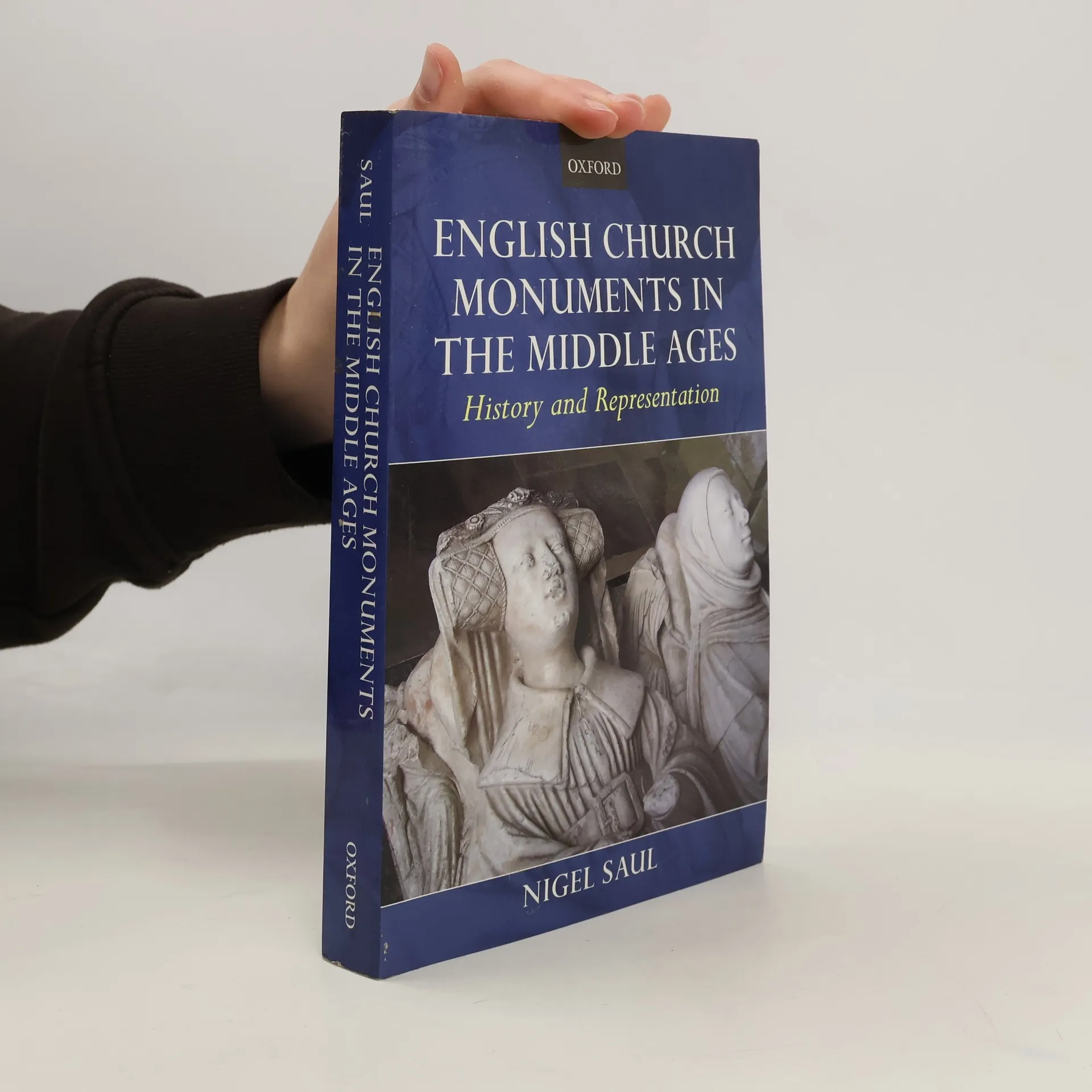
This work provides a comprehensive survey of English church monuments from the pre-Conquest period to the early sixteenth century, treating the subject within a historical context. It explores medieval monuments regarding their social significance and their role in the commemorative strategies of individuals. The text examines the production of monuments, their geographical distribution, the evolution of types, and design's role in conveying messages. A key theme is the self-representation of the commemorated, focusing on effigies of clergy, knights, esquires, and lesser landowners, while also analyzing women's effigial monuments through the lens of gender construction. The author utilizes monuments to gain insights into the lives of the commemorated and employs documentary sources to reveal the influences shaping these monuments. An innovative chapter discusses identity construction in inscriptions, highlighting how the liturgical role of monuments constrained opportunities for self-expression. The author aims to position monuments at the core of medieval studies, emphasizing their significance not only in the history of sculpture and design but also in social and religious history more broadly.
Saul Nigel Boeken
Professor Nigel Saul wordt erkend als een vooraanstaand expert op het gebied van de geschiedenis van middeleeuws Engeland. Zijn geschriften duiken in de complexiteit van het leven en de samenleving van die tijd en gebruiken diepgaand onderzoek om het verleden tot leven te brengen. Saul's aanpak staat bekend om zijn nauwgezetheid en aandacht voor detail, waardoor lezers diepgaande inzichten krijgen in de onderwerpen die hij onderzoekt. Zijn literaire bijdrage ligt in het toegankelijk en boeiend maken van historische kennis.