

Bookbot

Damon Murray

    CCCP Cook Book
    Holidays in Soviet Sanatoriums
    Soviet Cities: Labour, Life & Leisure
    Soviet Seasons: Photographs by Arseniy Kotov
    Soviet Metro Stations
    • Soviet Metro Stations

      • 248bladzijden
      • 9 uur lezen

      Soviet leader Nikita Khrushchev described the Metro as something supernatural, reflecting its unique role in the Soviet Union's cultural landscape. Unlike the straightforward systems of London, Paris, or New York, these Metro networks, built between the 1930s and 1980s, served as propaganda artworks, merging sculpture, architecture, and art with styles from Byzantine to constructivist. They embodied the vision of communism as a 'communal luxury' for all, representing a tangible realization of a Soviet utopia. Canadian photographer Christopher Herwig, following his acclaimed exploration of 'Soviet Bus Stops', undertook a subterranean journey to photograph the Metro stations across the former USSR. His work captures the striking contrast between opulent marble and chandeliers and stark, minimalist designs. 'Soviet Metro Stations' showcases the diverse architectural styles and elements that define this unique Soviet experience, including neon, concrete, escalators, signage, mosaics, and relief sculptures. The book also features an essay by prominent architectural and political writer Owen Hatherley, known for his insightful works on post-Soviet landscapes.
      Soviet Metro Stations
      4,6
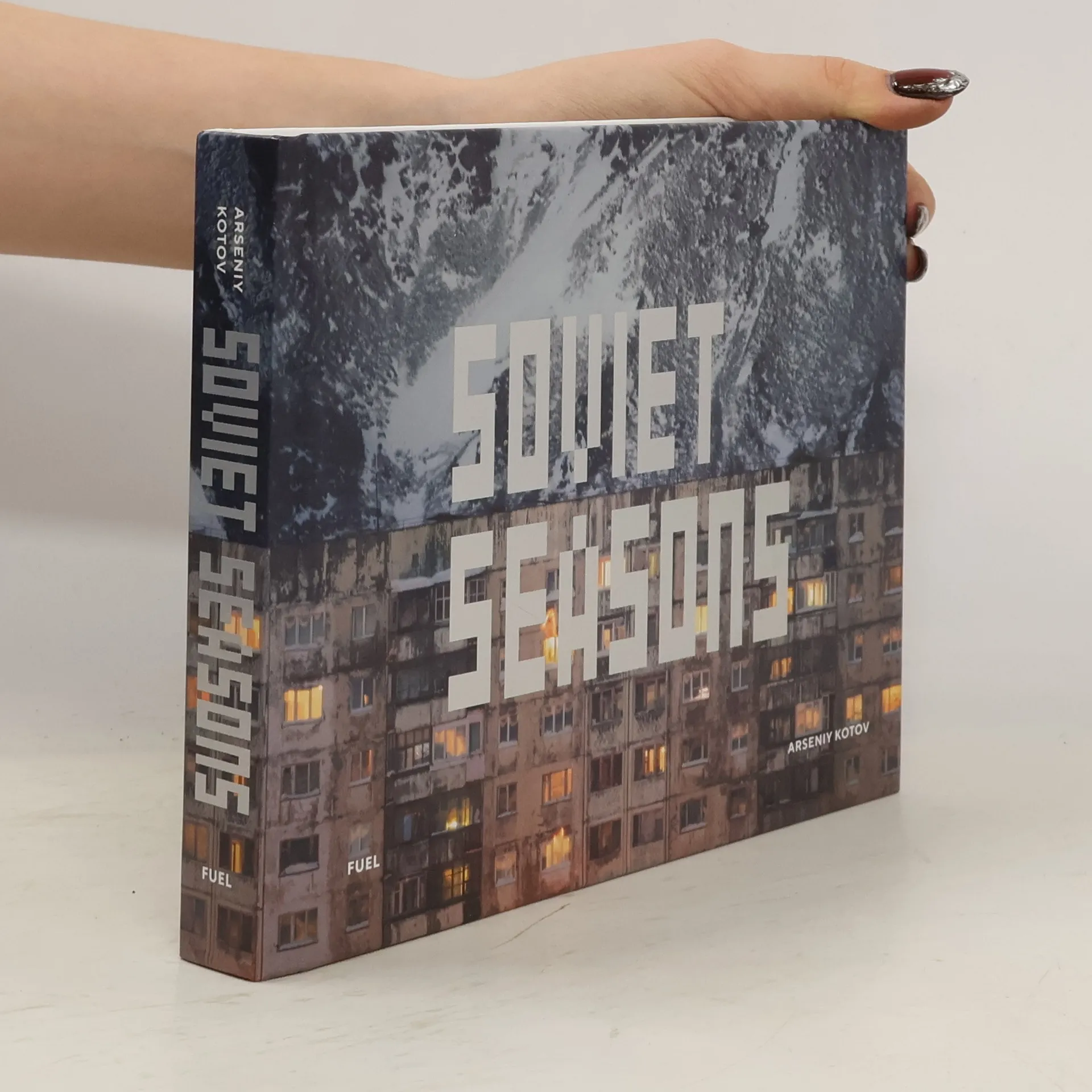
    • In Soviet Seasons, Arseniy Kotov reveals unfamiliar aspects of the post-Soviet terrain in sublime photographs. From snow-blanketed Siberia in winter to the mountains of the Caucasus in summer, these images show how a once powerful, utopian landscape has been affected by the weight of nature itself.

      Soviet Seasons: Photographs by Arseniy Kotov
      4,5
    • The architectural heritage of the Soviet period remains largely unacknowledged, leading to the destruction or alteration of many unique modernist buildings in Russian cities. Photographer Arseniy Kotov aims to document these structures and their surroundings before they disappear. He prefers to shoot in winter during the "blue hour," when warm yellow lights from apartment windows contrast with the twilight gloom outside, evoking an idealized vision of the Soviet era. Kotov imagines a great civilization built on a fair society, aspiring to explore nature and conquer space. His work spans locations from the Baikonur Cosmodrome in Kazakhstan to the stark high-rise dormitory blocks of Volgograd, capturing the essence of the post-Soviet landscape. He reflects on the remnants of the USSR, showcasing outstanding buildings that once housed Soviet citizens and illustrating how cities appeared: devoid of decoration, bright colors, or luxury, characterized instead by bare concrete and powerful forms. This beautifully designed volume is part of Fuel's inspiring series on Soviet-era architecture, revealing the enduring legacy of a bygone era.

      Soviet Cities: Labour, Life & Leisure
      4,5
    • Holidays in Soviet Sanatoriums

      • 192bladzijden
      • 7 uur lezen

      Visiting a Soviet sanatorium is like stepping back in time. Originally built in the 1920s, they afforded workers a place to holiday, courtesy of a state-funded voucher system. At their peak they were visited by millions of citizens across the USSR every year. A combination of medical institution and spa, the era's sanatoriums are among the most innovative buildings of their time. Although aesthetically diverse, Soviet utopian values permeated every aspect of these structures; Western holidays were perceived as decadent. By contrast, sanatorium breaks were intended to edify and strengthen visitors: health professionals carefully monitored guests throughout their stay, so they could return to work with renewed vigor. Certain sanatoriums became known for their specialist treatments, such as crude-oil baths, radon water douches and stints in underground salt caves. While today some sanatoriums are in critical states of decline, many are still fully operational and continue to offer their Soviet-era treatments to visitors. Using specially commissioned photographs by leading photographers of the post-Soviet territories, and texts by sanatorium expert Maryam Omidi, this book documents over 45 sanatoriums and their unconventional treatments. From Armenia to Uzbekistan, it represents the most comprehensive survey to date of this fascinating and previously overlooked Soviet institution

      Holidays in Soviet Sanatoriums
      5,0
    • CCCP Cook Book

      • 192bladzijden
      • 7 uur lezen

      "Featuring 60 recipes, each introduced with an insightful historical anecdote and accompanying image sourced from original Soviet cook books"--Page 4 of cover

      CCCP Cook Book
      4,0