

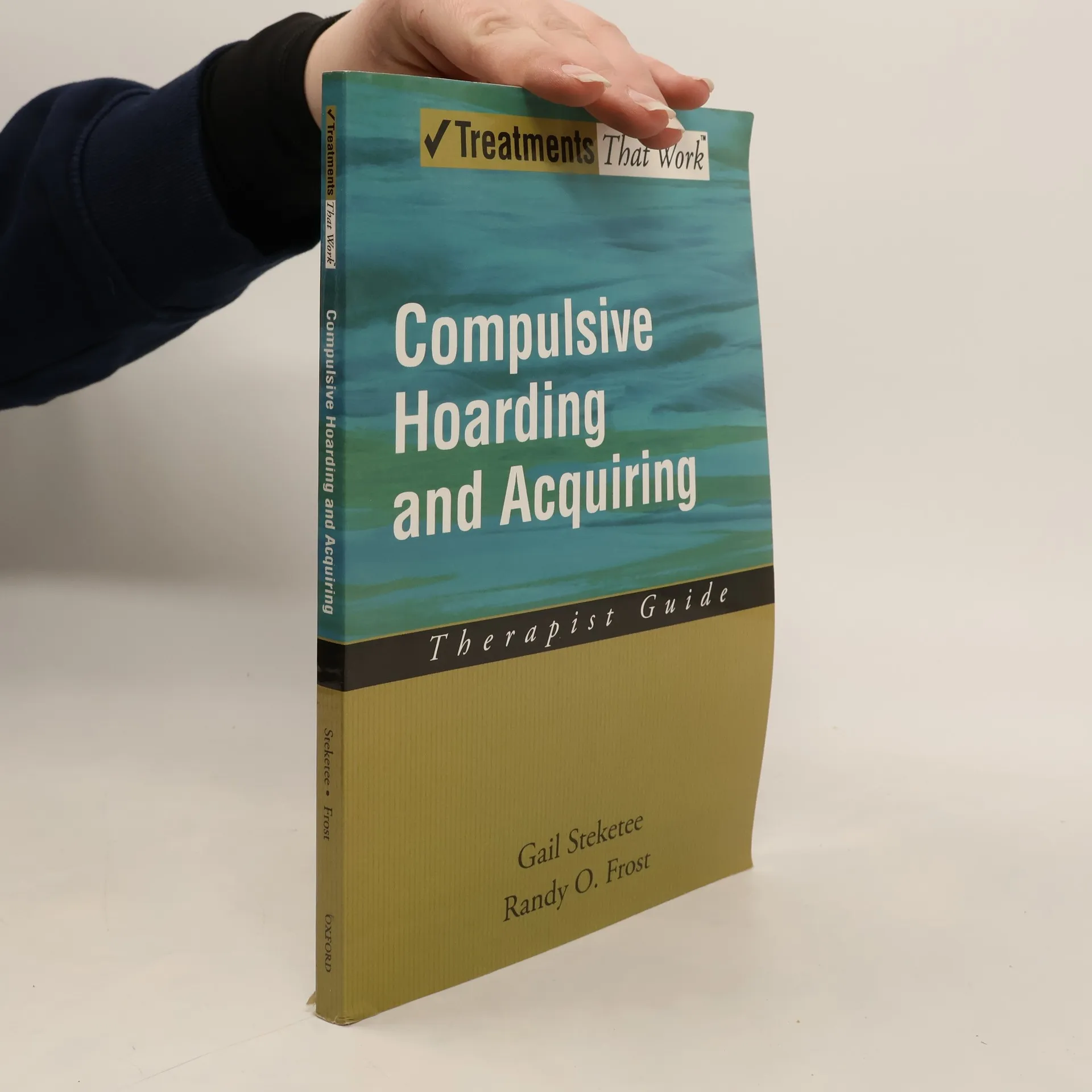
Compulsive hoarding and acquiring is more prevalent than many realize, often going undiagnosed due to shame or the belief that it isn't a serious issue. Approximately two percent of the U.S. population struggles with this condition, which can be emotionally draining and dangerous. This manual, crafted by the developers of a groundbreaking treatment, presents the first empirically supported CBT program specifically for compulsive hoarding and acquiring. It equips clinicians with essential knowledge and proven tools to assist clients in overcoming their compulsive behaviors. The guide teaches individuals to identify cognitive distortions and employs both imagined and real exposures to develop necessary management skills. Treatment includes home visits and consultations with additional professionals when needed. Homework exercises involve behavioral experiments to challenge beliefs about possessions, creating organization plans, and sorting items room-by-room. This therapist guide, meant to complement the corresponding workbook, features numerous assessment and intervention forms, case examples, and strategies for addressing challenges. Representing the gold standard of behavioral healthcare interventions, the Treatments That Work TM series is rigorously tested and backed by extensive research, ensuring clinicians provide the most effective care available.
Gail S Steketee Boeken
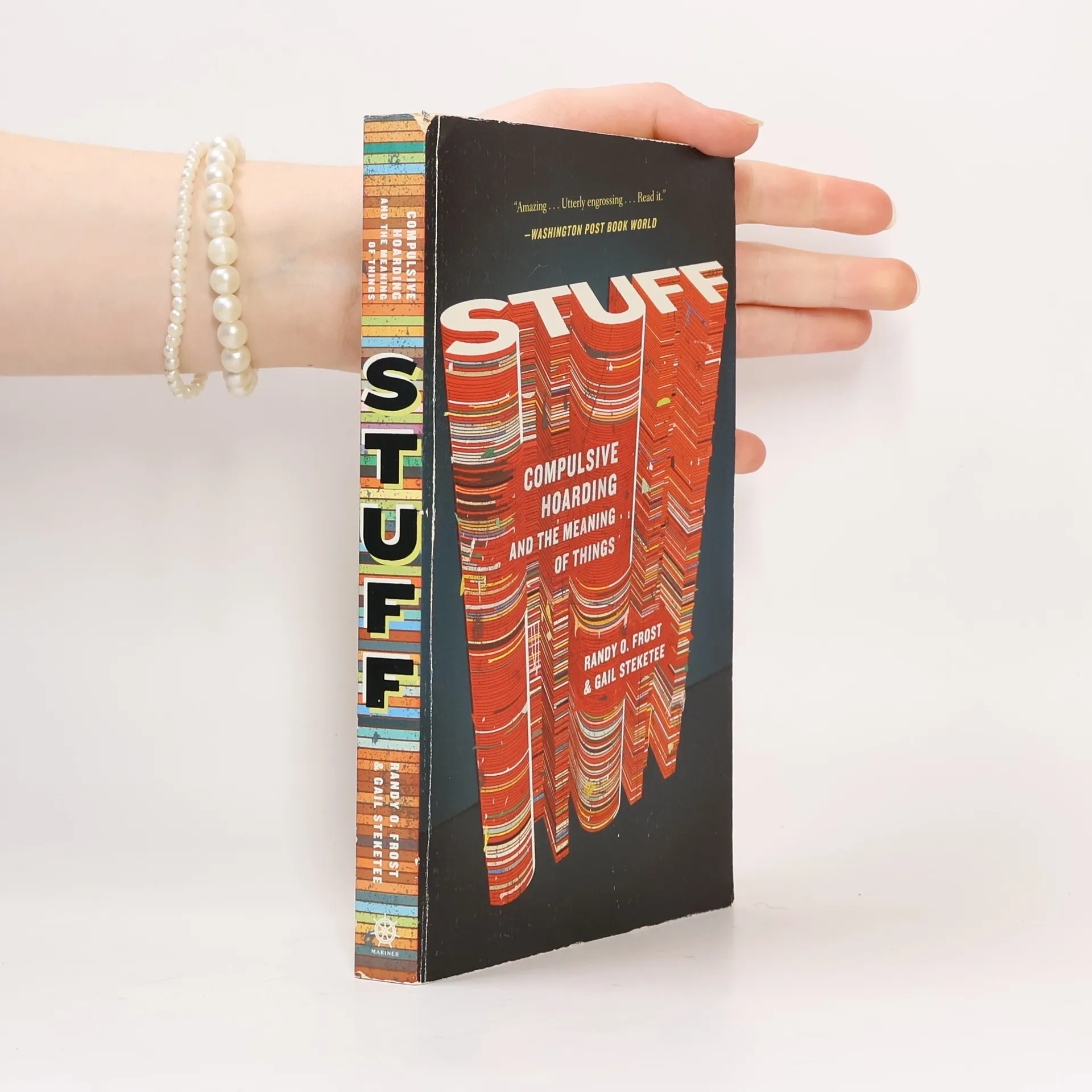
What compels someone to save every scrap of paper? What drives Irene, whose hoarding cost her marriage, or Ralph, who nearly lost his house over imagined uses for discarded items? Then there are Jerry and Alvin, wealthy twins who filled luxury apartments with art, leaving no room to sleep. Randy Frost and Gail Steketee, pioneers in the study of hoarding, initially expected to find a few cases but ended up treating hundreds and receiving thousands of calls from concerned families. They delve into the compulsion through compelling case studies, revealing traits that identify hoarders—furniture rendered useless by piles, homes navigable only by narrow paths, and vast collections of paper and animals. They explain the disorder's causes and the often ineffective treatments available. Additionally, Frost and Steketee highlight the universal pull of possessions, showing that whether we are savers, collectors, or compulsive cleaners, we all grapple with impulses that can lead to extreme behaviors. For the six million affected individuals, their families, and anyone with a complex relationship to belongings, this exploration addresses what occurs when our possessions begin to control us.
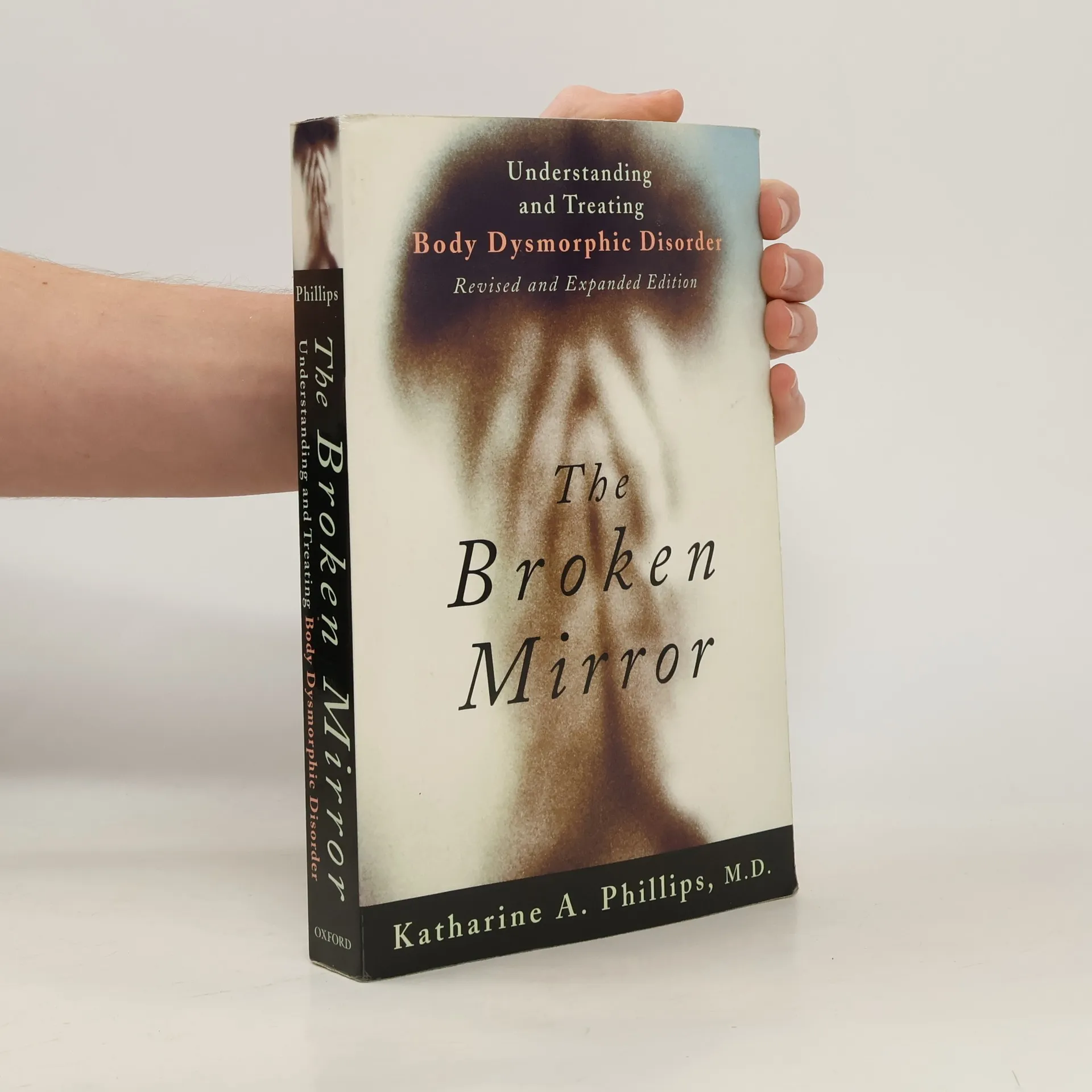
The Broken Mirror: Understanding and Treating Body Dysmorphic Disorder
- 424bladzijden
- 15 uur lezen
Provides information on body dysmorphic disorder (BDD), a relatively common and sometimes debilitating disorder in which sufferers are obsessed with perceived appearance flaws. This book describes BDD and includes a quick self-assessment questionnaire. It also provides information and recommendations on how to effectively treat BDD.