

Sheila Miyoshi Jager returns to the three-cornered contest among imperial Russia, China, and Japan over the Korean Peninsula. The battle to colonize Korea upended East Asian geopolitics, set great-power conflicts of the twentieth century in motion, and seeded internal rivalries that persist in the peninsula's division between North and South.
Sheila Miyoshi Jager Boeken
Deze auteur is een vooraanstaand historicus gespecialiseerd in Oost-Azië en Korea. Haar wetenschappelijke werk duikt in de ingewikkelde geschiedenis van de regio en analyseert de positie ervan in de wereld na de Koude Oorlog. Via haar boeken biedt ze diepgaande inzichten in de Koreaanse geschiedenis en de bredere context van Aziatische naties. De auteur biedt een origineel perspectief op belangrijke historische gebeurtenissen en hun impact.
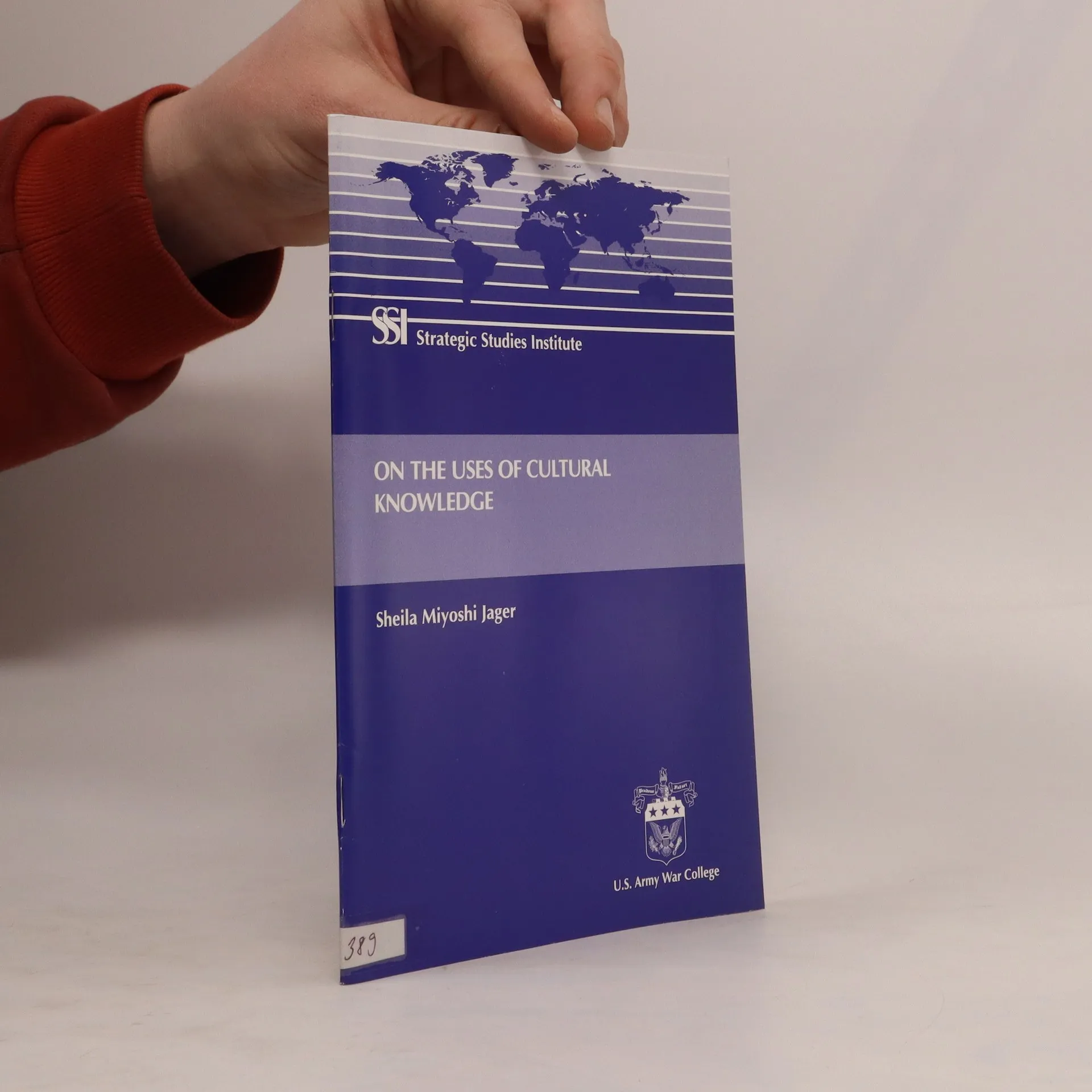

On the Uses of Cultural Knowledge
- 30bladzijden
- 2 uur lezen
This work has been selected by scholars as being culturally important, and is part of the knowledge base of civilization as we know it. This work was reproduced from the original artifact, and remains as true to the original work as possible. Therefore, you will see the original copyright references, library stamps (as most of these works have been housed in our most important libraries around the world), and other notations in the work. This work is in the public domain in the United States of America, and possibly other nations. Within the United States, you may freely copy and distribute this work, as no entity (individual or corporate) has a copyright on the body of the work.As a reproduction of a historical artifact, this work may contain missing or blurred pages, poor pictures, errant marks, etc. Scholars believe, and we concur, that this work is important enough to be preserved, reproduced, and made generally available to the public. We appreciate your support of the preservation process, and thank you for being an important part of keeping this knowledge alive and relevant.