

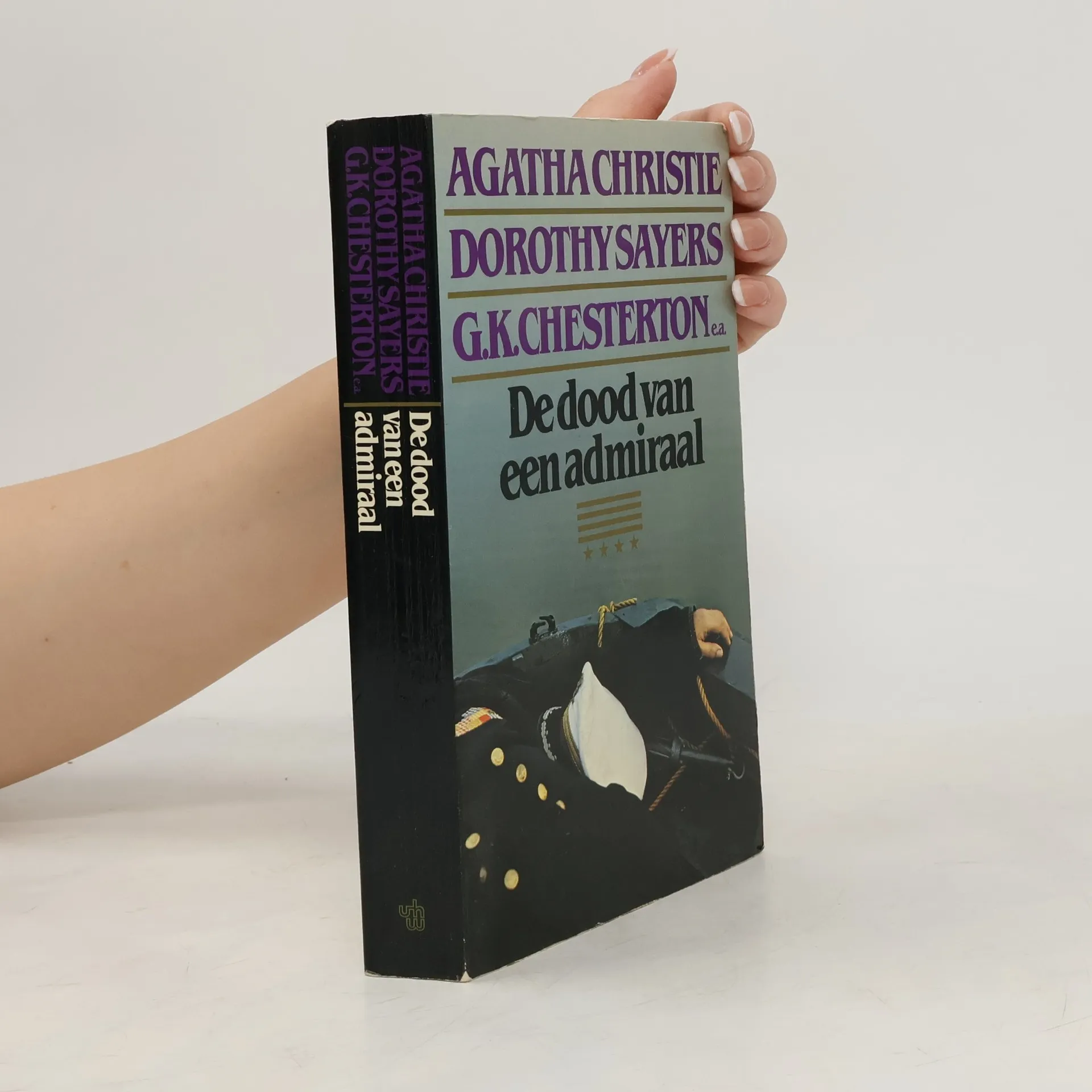
De dood van een admiraal
- 257bladzijden
- 9 uur lezen
Inspector Rudge rarely deals with murder in the quiet seaside town of Whynmouth, but everything changes when an old sailor arrives with a rowing boat containing a fresh corpse, stabbed in the chest. The investigation quickly reveals obstacles, including a vicar who seems to be hiding information and the mysterious disappearance of the victim's niece. The case grows more complex as the victim's identity comes into question, leading Rudge to ponder the number of people involved in this extraordinary crime and whether he will ever solve it. In 1931, a group of crime writers from the newly formed Detection Club, including Agatha Christie and Dorothy L. Sayers, collaborated on a unique crime novel. Each author contributed a chapter in a literary game of consequences, with G.K. Chesterton writing a paradoxical prologue and Anthony Berkeley providing the conclusion. All authors submitted their own solutions in sealed envelopes, which were included at the end of the book, with Christie's clever resolution noted as particularly noteworthy. The contributing authors include G.K. Chesterton, Canon Victor Whitechurch, G.D.H. Cole, Margaret Cole, Henry Wade, Agatha Christie, John Rhode, Milward Kennedy, Dorothy L. Sayers, Ronald Knox, Freeman Wills Crofts, Edgar Jepson, Clemence Dane, and Anthony Berkeley.