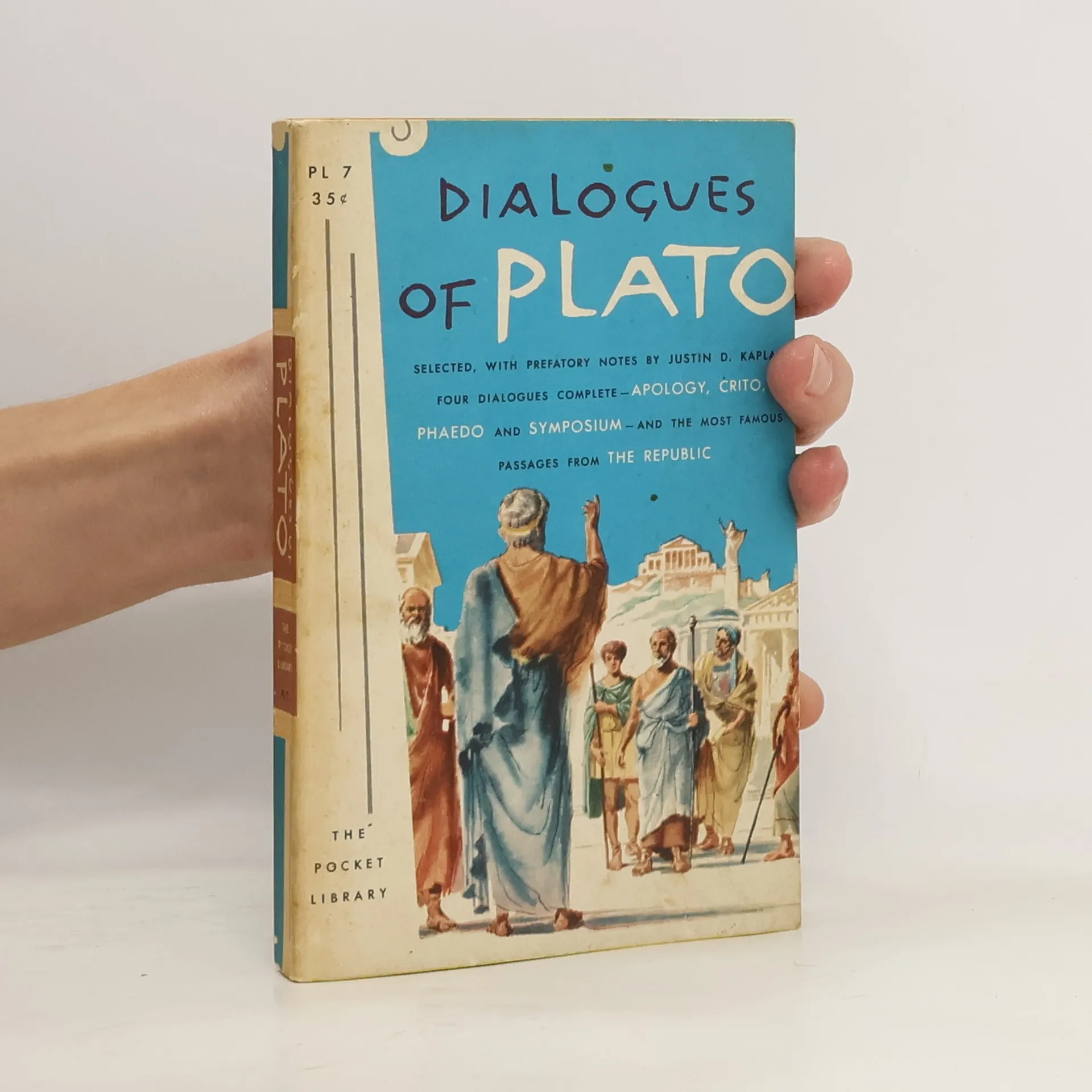
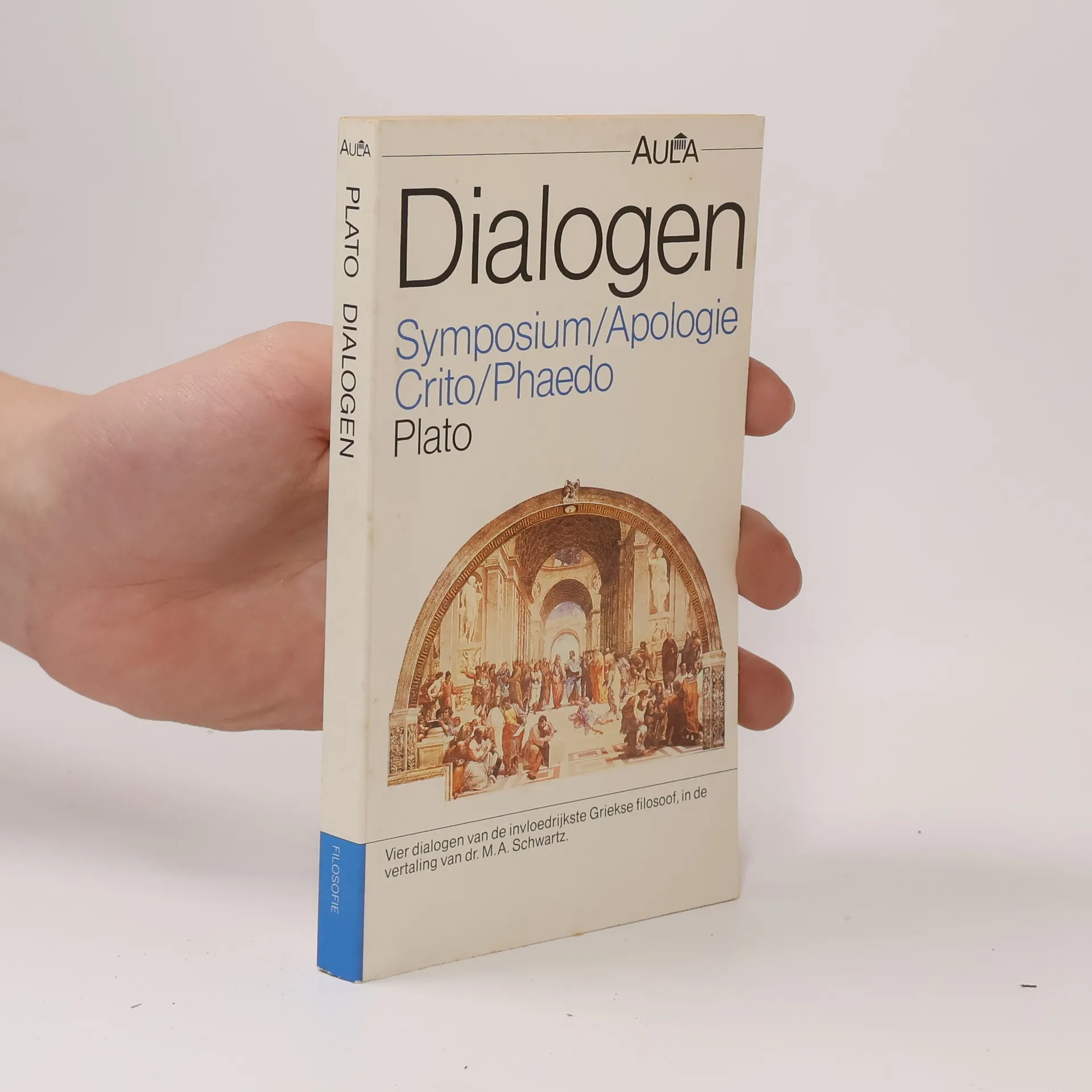
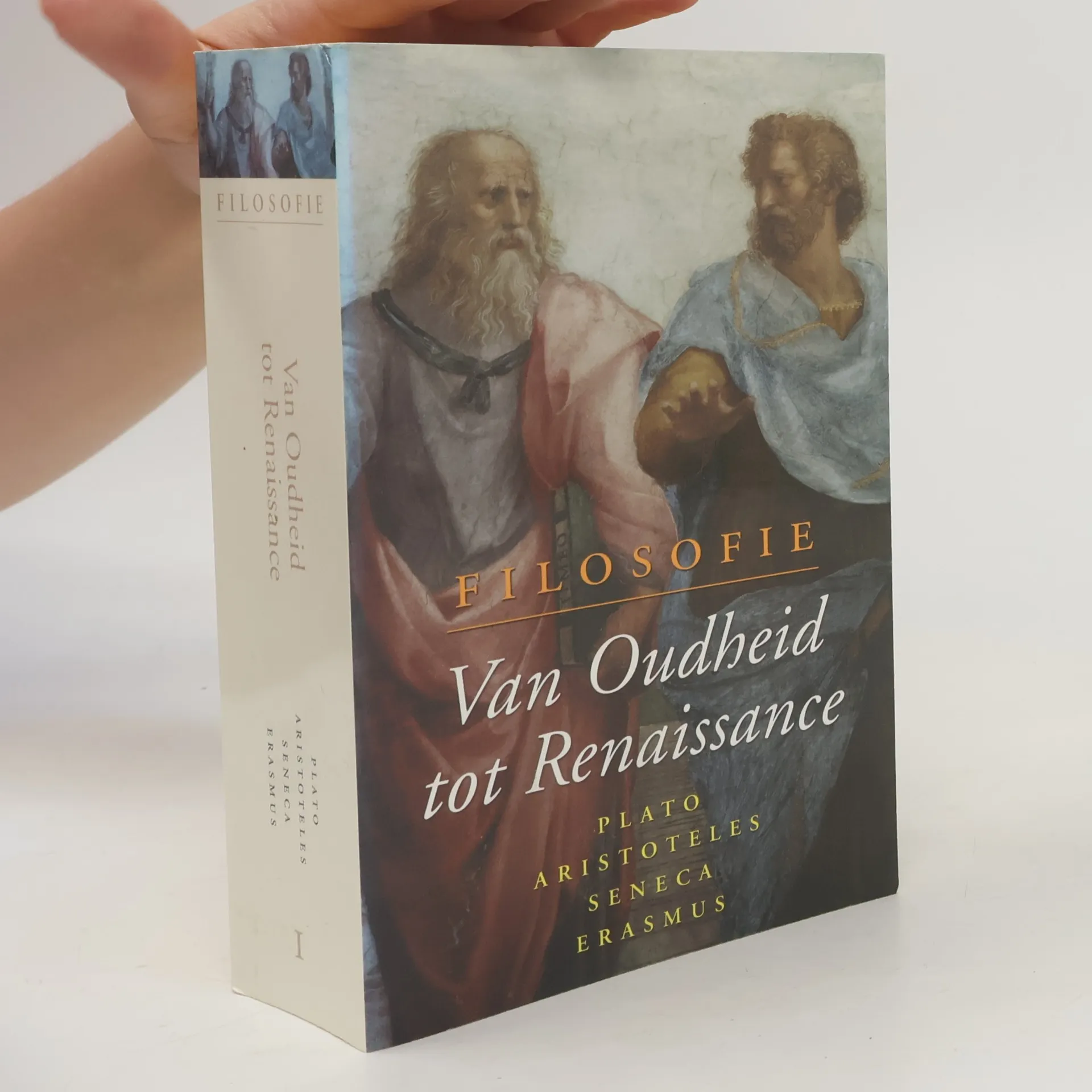
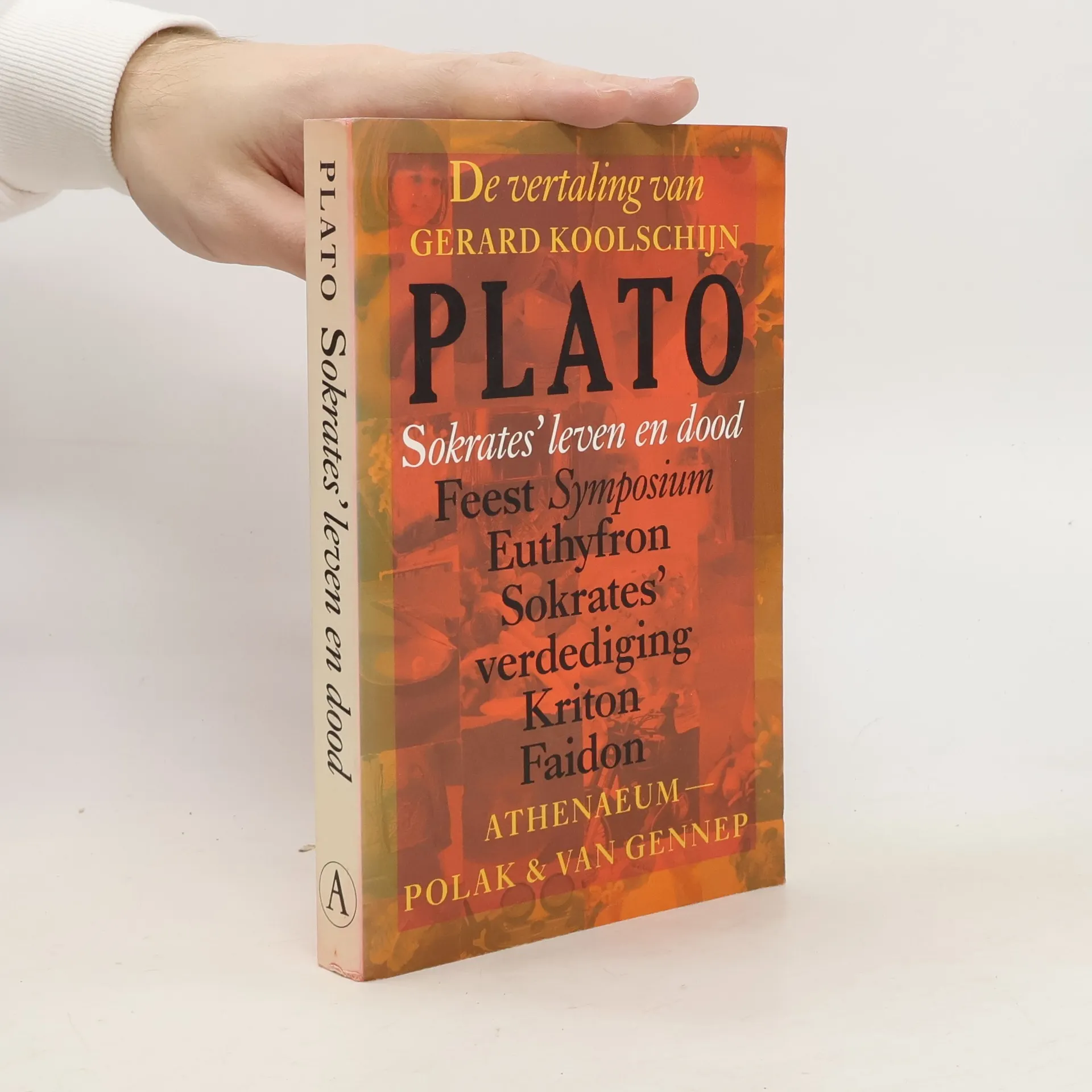
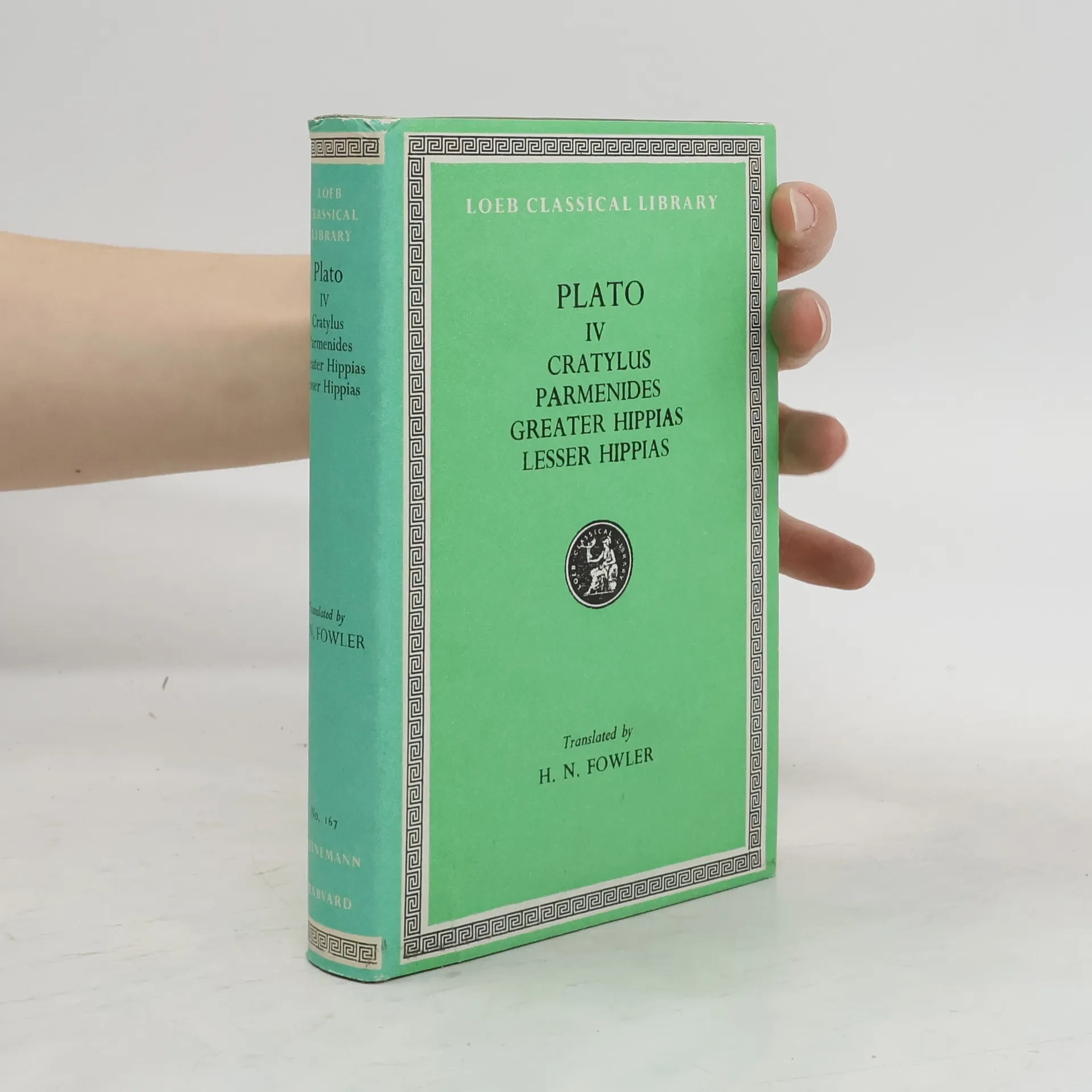
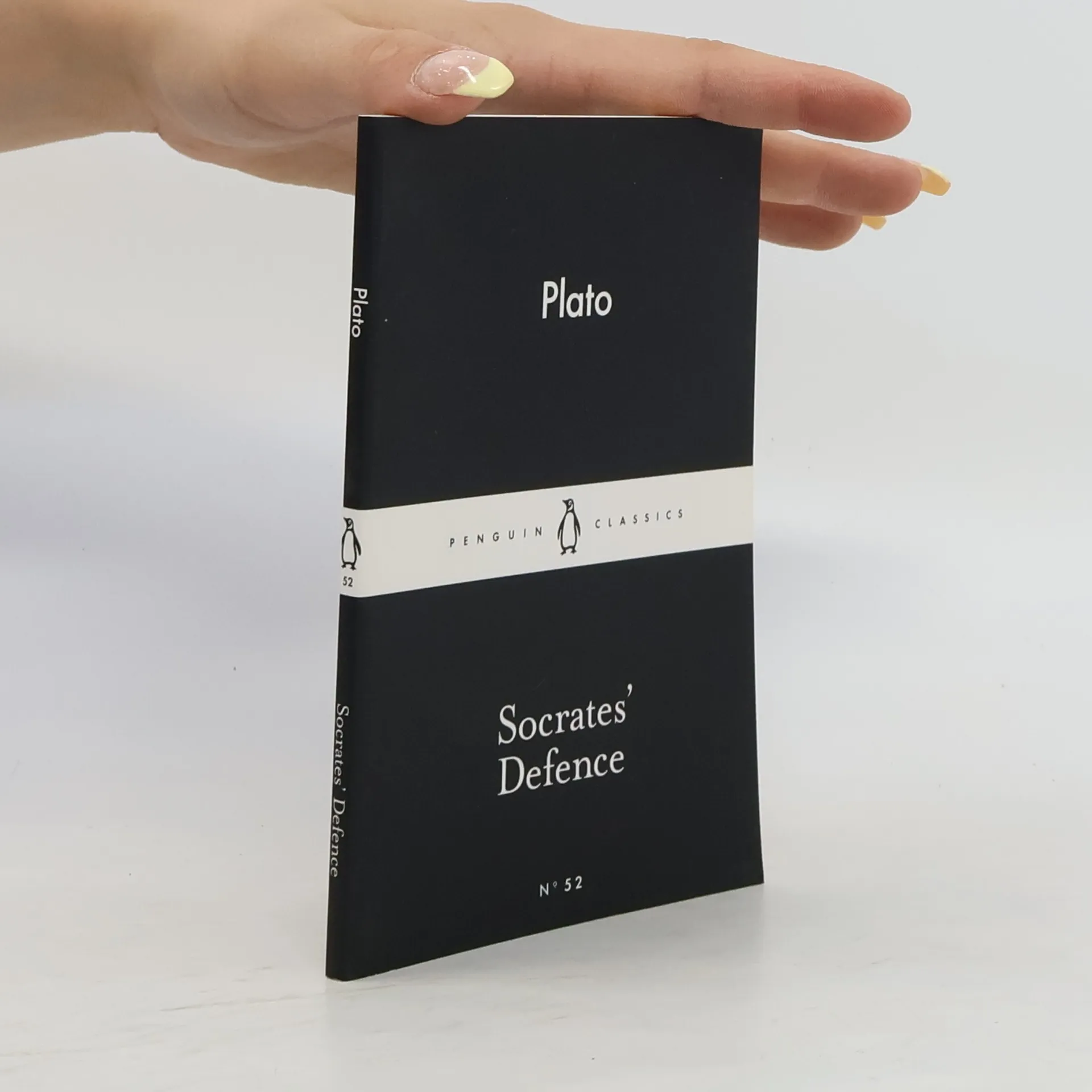
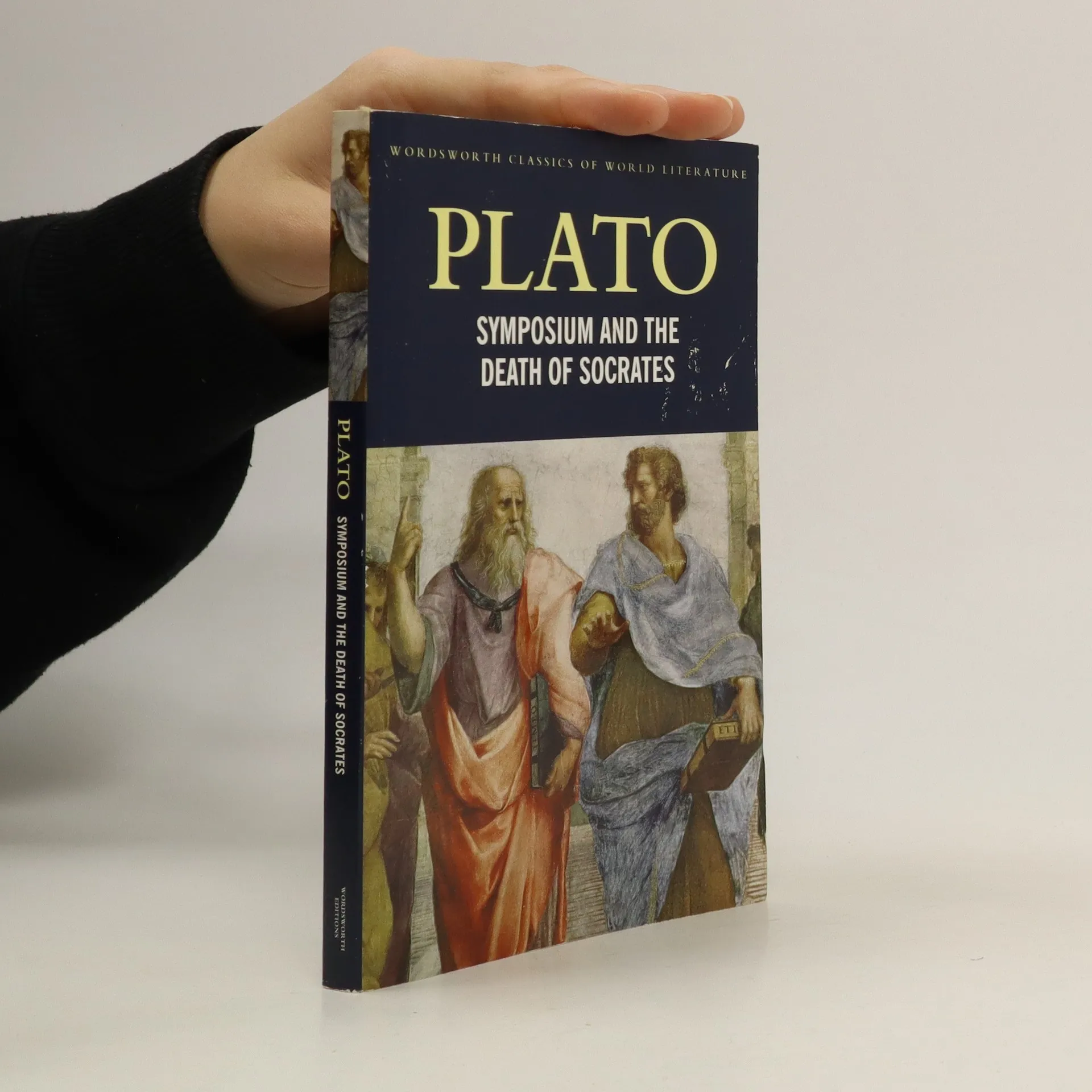
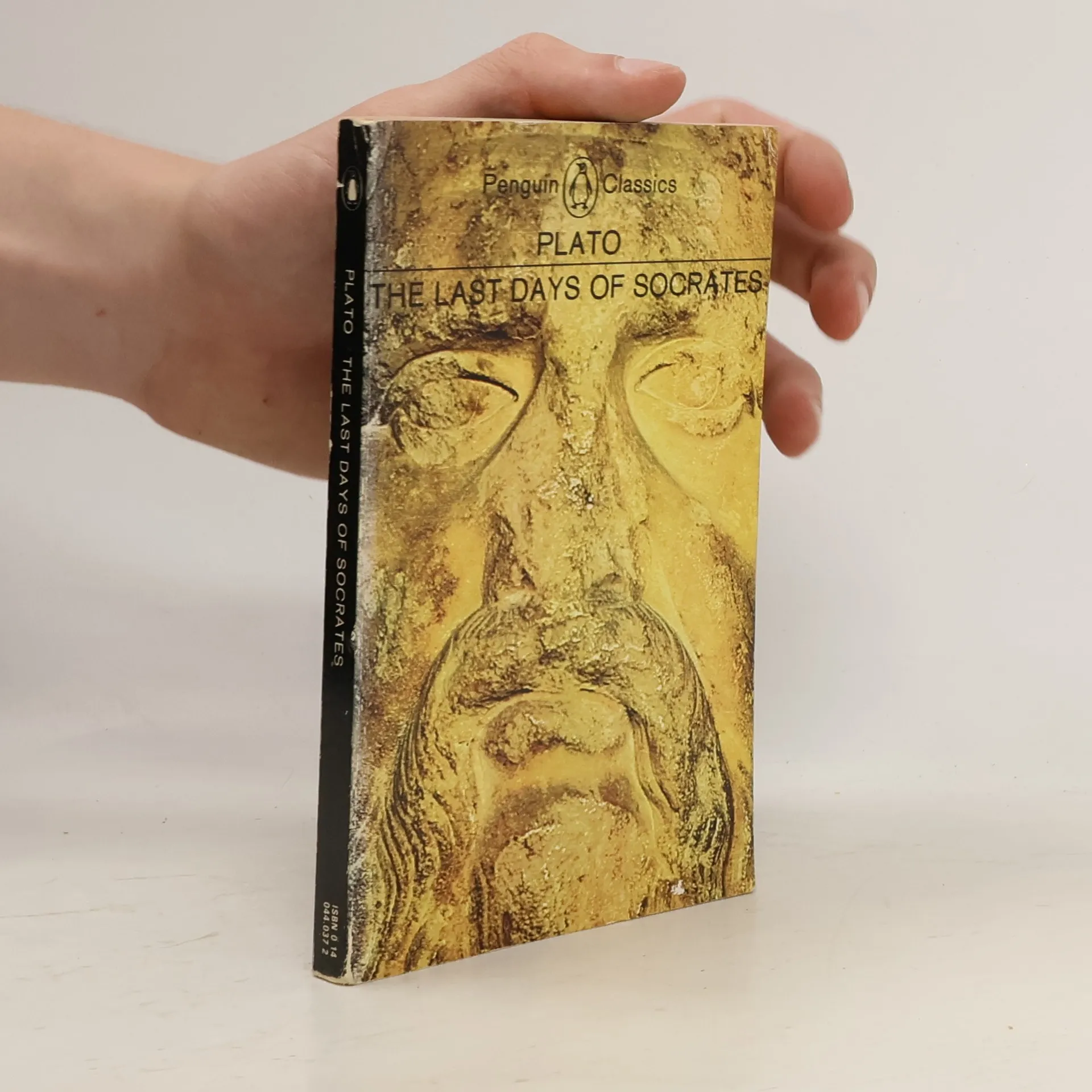
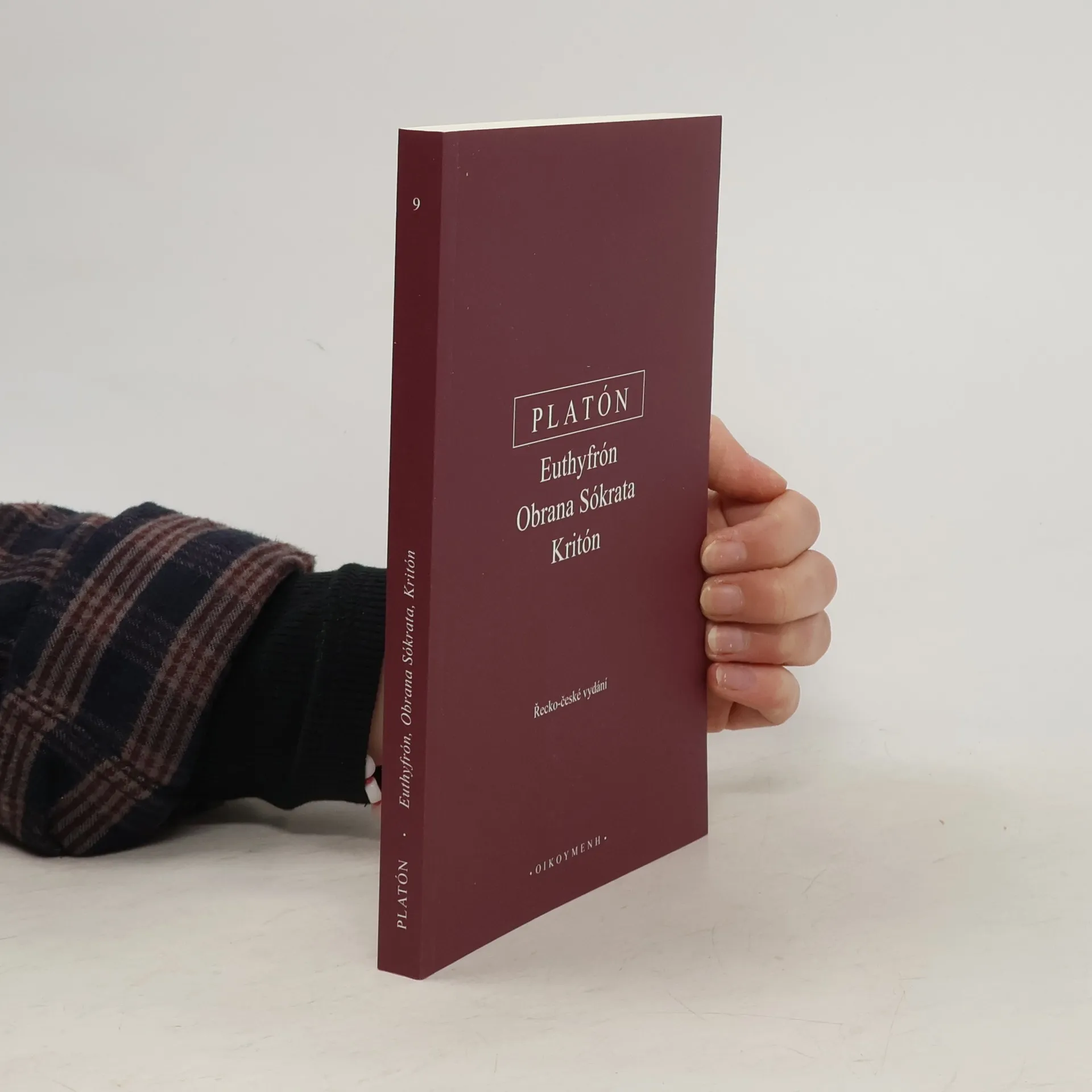
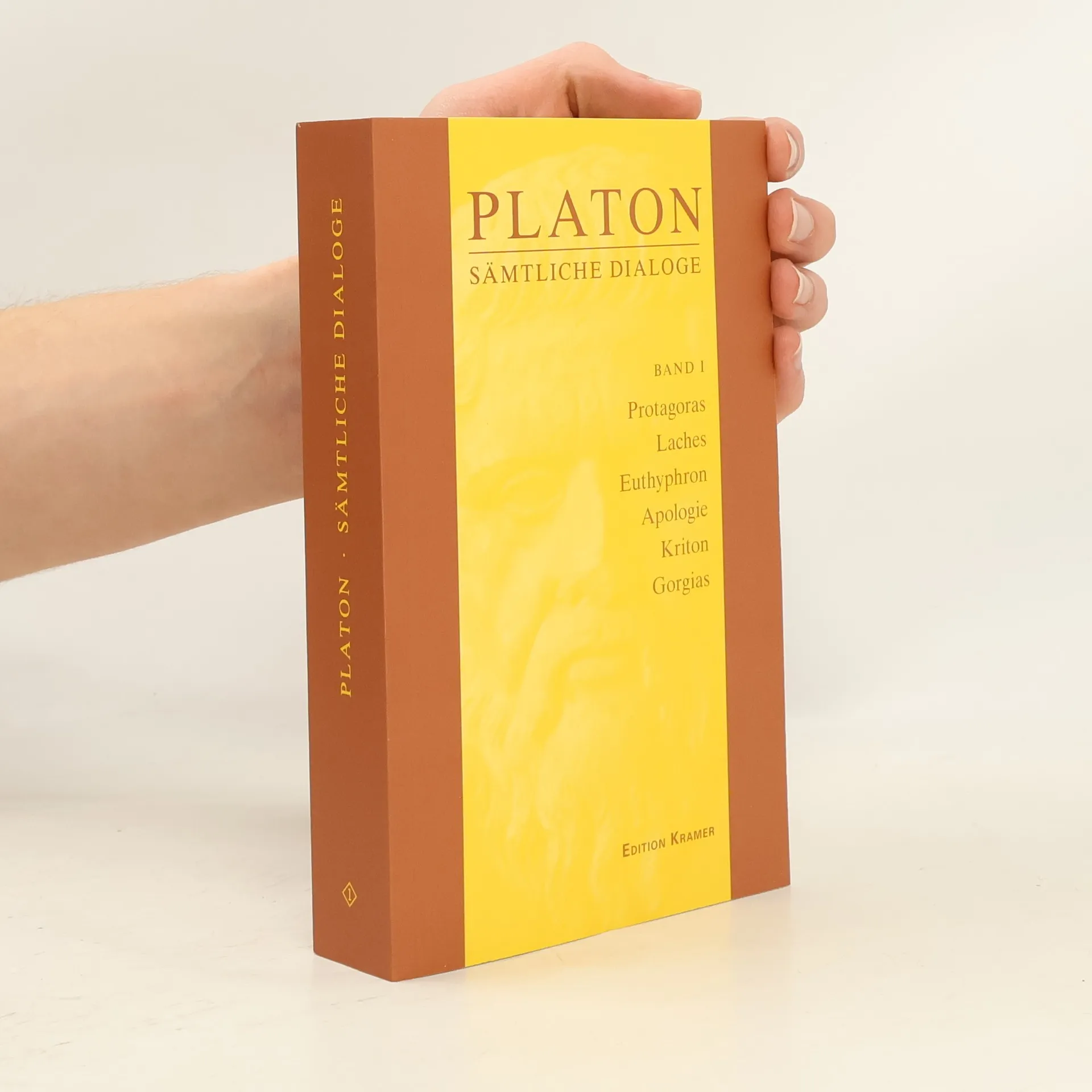
Plato en Sokrates zijn onafscheidelijk. In deze bundel zijn Plato's boeken bijeengebracht waaraan Sokrates zijn aureool ontleent. Feest (Symposion) is Plato's meesterwerk over liefde, dat een beeld geeft van Sokrates ongrijpbare persoonlijkheid. De andere titels houden verband met Sokrates proces. In Euthyfron discussieert Sokrates over godsdienst. Sokrates verdediging beschrijft de ironische, zelfverzekerde manier waarop hij het martelaarschap zoekt. In Kriton weigert hij uit de dodencel te ontsnappen. Faidon tenslotte gaat over de onsterfelijkheid van de ziel en eindigt met de aangrijpende beschrijving van Sokrates dood.
Plato's Republic concerns righteousness both in individuals and in
communities, and proposes an ideal state organized and governed on
philosophical principles. This edition, which replaces Shorey's, offers text,
translation, and annotation that are fully current with modern scholarship.
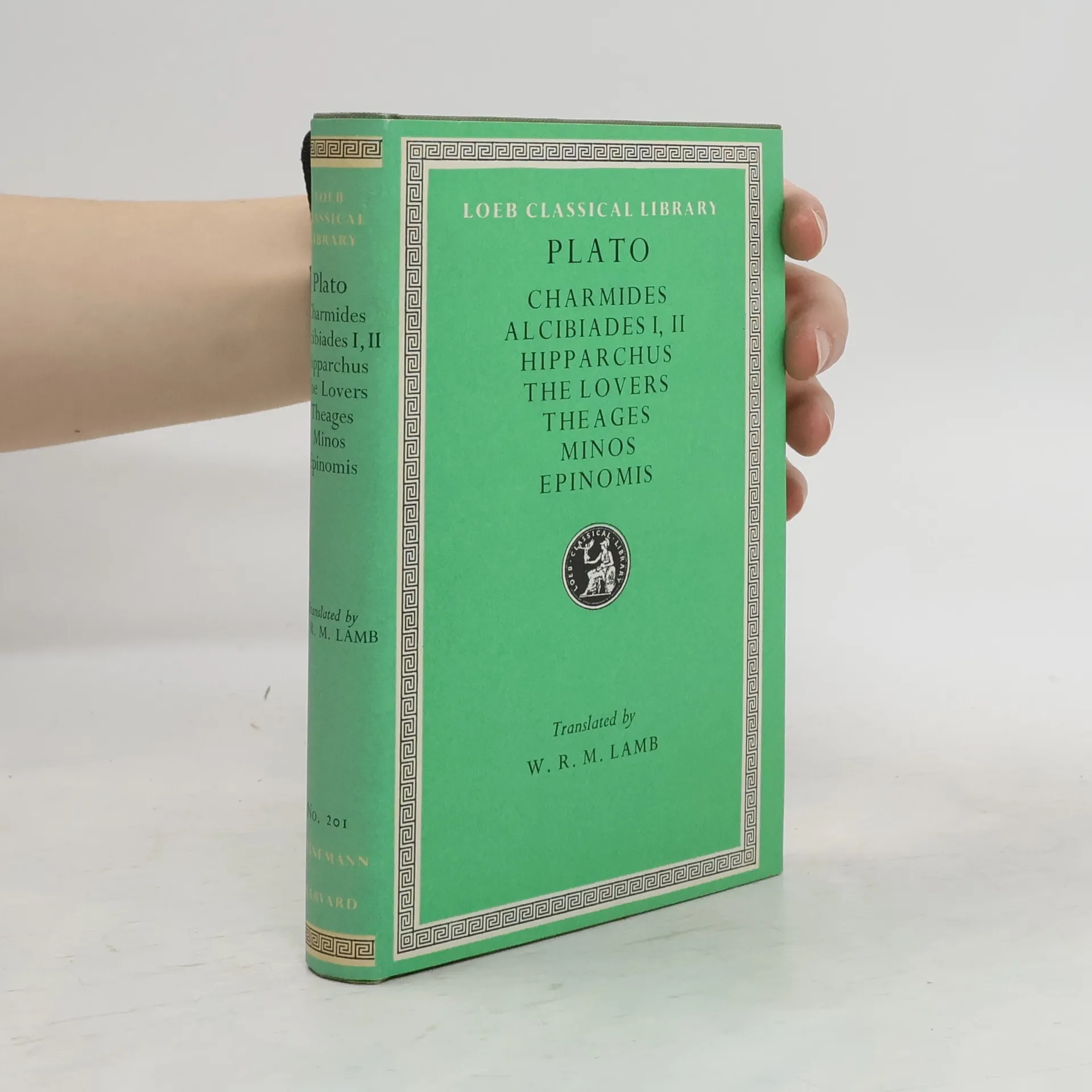
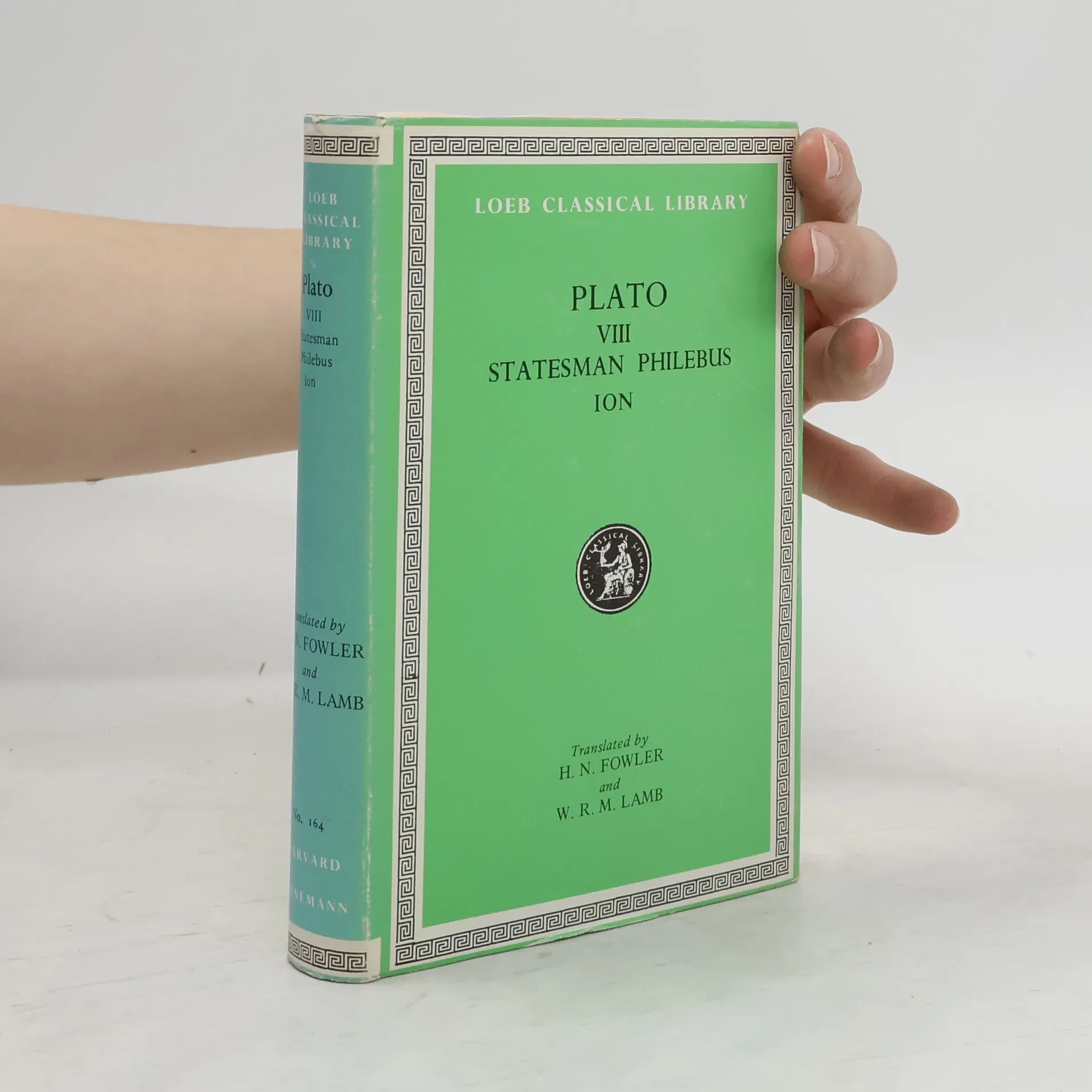
The Loeb Classical Library edition of Plato is in 12 volumes.
Gorgias, Phaedo, and The Symposium hold a central place in the series of Plato's Dialogues. Composed during his mature period, these texts exhibit profound philosophical depth and an engaging formal composition. Gorgias explores rhetoric and politics, contrasting Socrates with the sophists Gorgias and Polus, and the young Callicles, a prototype of the immoral politician. Phaedo examines the arguments regarding the immortality of the soul in Socrates' final conversation with his disciples before his death. The Symposium presents various perspectives on eros from the dinner guests, all surpassed in transcendence and beauty by Socrates' exalted discourse. In these three dialogues, Plato recreates his teacher's conversations on themes of enduring relevance. Authentic life, the afterlife, and the ambiguity of love are treated with an unparalleled balance between the poetic and the ideological, articulated in such clear language that, even after centuries, their perennial interest remains irresistible.
Plato of Athens, who laid the foundations of the Western philosophical tradition and ranks among its greatest practitioners, was born to a prosperous and politically active family around 427 BCE. An admirer of Socrates in his early life, Plato later founded the first institution of higher learning in the West, the Academy, whose notable alumni included Aristotle. Traditionally ascribed to Plato are thirty-six dialogues that develop Socrates' dialectic method and are composed with great stylistic virtuosity, along with thirteen letters. "Republic," a masterpiece of philosophical and political thought, concerns righteousness in individuals and communities and proposes an ideal state organized and governed on philosophical principles.
Five Dialogues: Euthyphro, Apology, Crito, Meno, Phaedo (Royal Collector's Edition) (Case Laminate Hardcover with Jacket)
232bladzijden
9 uur lezen
The dialogues feature Socratic conversations that explore profound philosophical themes such as morality, justice, and the nature of knowledge. Through the lens of Socrates, Plato addresses critical questions about ethics and the soul, showcasing the influence of Socratic thought on his own philosophical development. Each dialogue serves as a platform for Socratic questioning, revealing insights into human behavior and the pursuit of truth.
Set in the weeks leading up to Socrates' trial, this dialogue features a conversation between Socrates and Euthyphro that delves into profound philosophical themes. The discussion explores the nature of piety and justice, challenging the characters to examine their beliefs and the implications of their definitions. Through their exchange, readers are invited to reflect on the complexities of moral concepts and the essence of virtue.
'I'll stop doing it as soon as I understand what I'm doing.' Somewhere between a historical account and work of philosophy, Socrates' Defence details the final plea of Plato's beloved mentor. Introducing Little Black Classics: 80 books for Penguin's 80th birthday. Little Black Classics celebrate the huge range and diversity of Penguin Classics, with books from around the world and across many centuries. They take us from a balloon ride over Victorian London to a garden of blossom in Japan, from Tierra del Fuego to 16th-century California and the Russian steppe. Here are stories lyrical and savage; poems epic and intimate; essays satirical and inspirational; and ideas that have shaped the lives of millions. Plato (474 BC-347 BC). Plato's works available in Penguin Classics are Republic, The Last Days of Socrates, The Laws, Phaedrus, Protagoras and Meno, Timaeus and Critias, Theaetetus, Early Socratic Dialogues, The Symposium and Gorgias.
Works in this volume explore the relationship between two people known as love
(eros) or friendship (philia). In Lysis, Socrates meets two young men at a
wrestling school; in Symposium, he joins a company of accomplished men at a
drinking party; and in Phaedrus, experimental speeches about love lead to a
discussion of rhetoric.
"Symposium" gives an account of the sparkling society that was Athens at the height of her empire. The other dialogues collected here under the title "The Death of Socrates" tell the tale of how Socrates was put on trial for impiety, found guilty and sentenced to death.
The Republic of Plato explores themes of justice, the ideal state, and the philosopher-king. It presents a dialogue led by Socrates, examining the nature of justice and the just individual, as well as the structure of an ideal society. The work delves into the roles of education, the importance of the guardians, and the allegory of the cave, illustrating the philosopher's journey from ignorance to enlightenment.
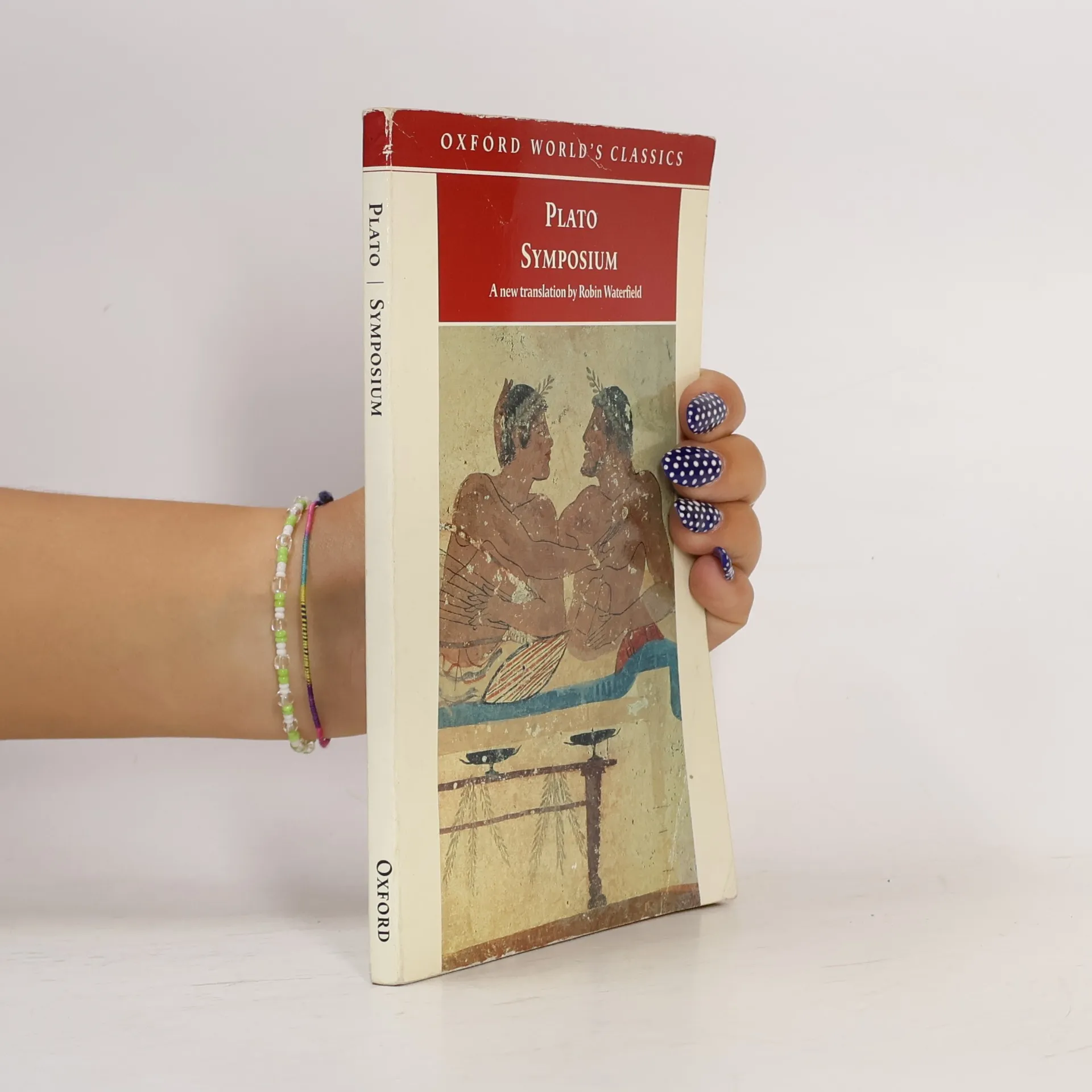
In his celebrated masterpiece, Symposium, Plato imagines a high-society dinner-party in Athens in 416 BC. The guests--including the comic poet Aristophanes and Plato's mentor Socrates--each deliver a short speech in praise of love. The sequence of dazzling speeches culminates in Socrates' famous account of the views of Diotima, a prophetess who taught him that love is our means of trying to attain goodness, and a brilliant sketch of Socrates himself by a drunken Alcibiades, the most popular and notorious Athenian of the time. Engaging the reader on every page, this new translation conveys the power, humor, and pathos of Plato's creation and is complemented by full explanatory notes and an illuminating introduction.
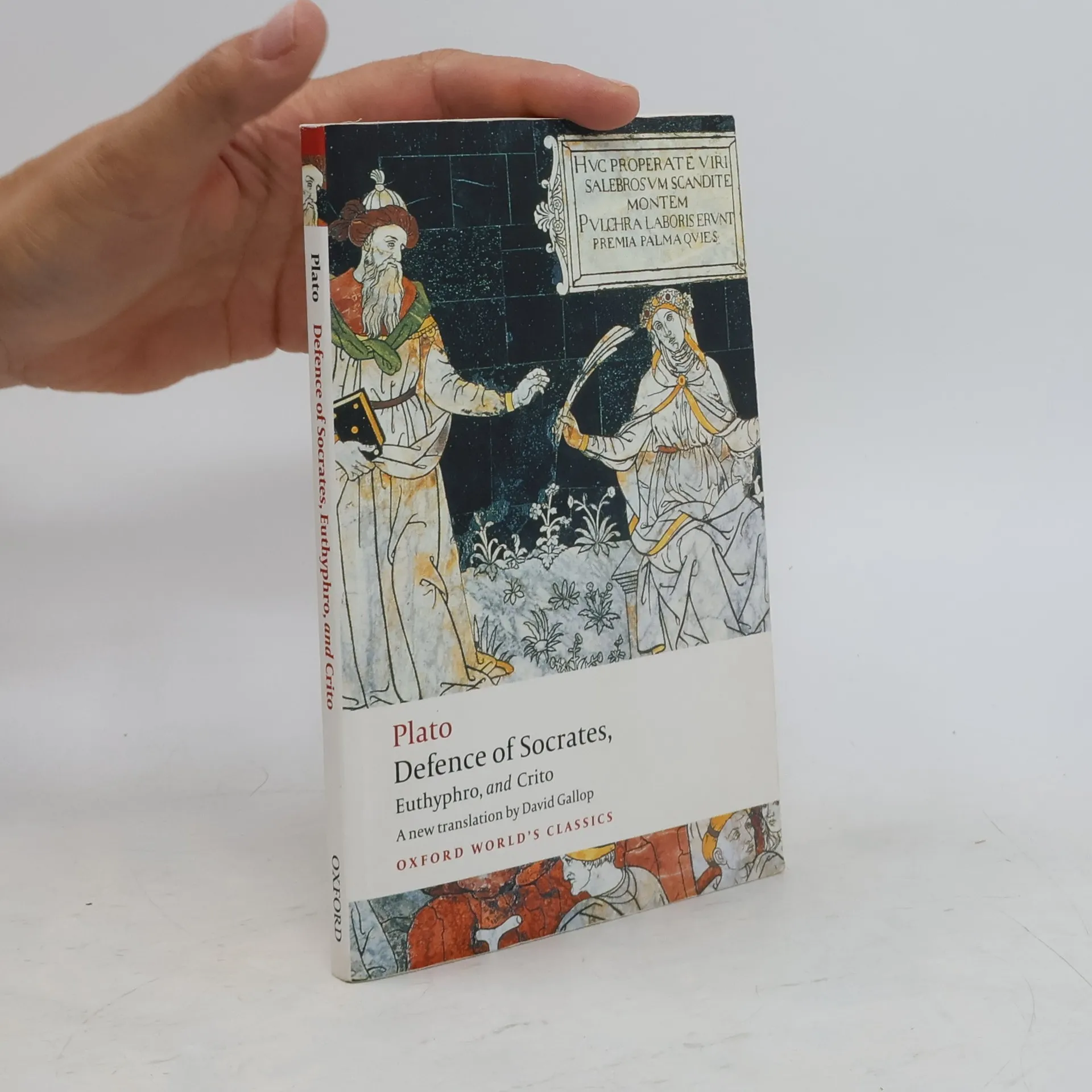
These new translations present Plato's remarkable dramatizations of the momentous events surrounding the trial of Socrates on charges of irreligion and corrupting the young.
In these four dialogues Plato considers virtue and its definition. Charmides,
Laches, and Lysis investigate the specific virtues of self-control, courage,
and friendship; the laterMeno discusses the concept of virtue as a whole, and
whether it is something that can be taught.
Toward the end of The Apology, Socrates makes a statement that resonates even with those who have never read Plato: "I tell you that ... examining both myself and others is really the very best thing that a man can do, and that life without this sort of examination is not worth living" (p. 63). The Apology, Euthyphro, Crito, and Phaedo, which depict Socrates' activities just prior to his trial until his death, hold a central place among the works of Plato. They sum up the philosophical career of Socrates, protagonist of most of the Platonic dialogues. But this summing up does not imply the end of the examinations Socrates pursued. On the contrary, during his last days, Socrates rigorously continued the kind of inquiries he had pursued all his life, even at the risk of execution, and he enjoined his companions to continue them when he was gone. -- Publisher description
Engaging in a compelling dialectic, Socrates meets the mysterious Stranger from Elea to explore the complex relationship between being and appearance. This philosophical dialogue delves into profound questions surrounding truth, reality, and deception, making it a significant contribution to the study of ontology. Through their conversation, readers are invited to reflect on the nature of existence and the nuances of perception, highlighting timeless philosophical inquiries that resonate through the ages.
"This is a superb new translation that is remarkably accurate to Plato's very difficult Greek, yet clear and highly readable. The notes are more helpful than those in any other available translation of the Laws since they contain both the information needed by the beginning student as well as analytical notes that include references to the secondary literature for the more advanced reader. For either the beginner or the scholar, this should be the preferred translation." --Christopher Bobonich, Clarence Irving Lewis Professor of Philosophy, Stanford University
Symposium attempts to find the ultimate manifestation of the love that controls the world, leading to mystic union with eternal & supercosmic beauty. Phaedrus discusses the psychology of love, resulting in the concept of the familiar Platonic "forms" as objects of transcendental emotion.
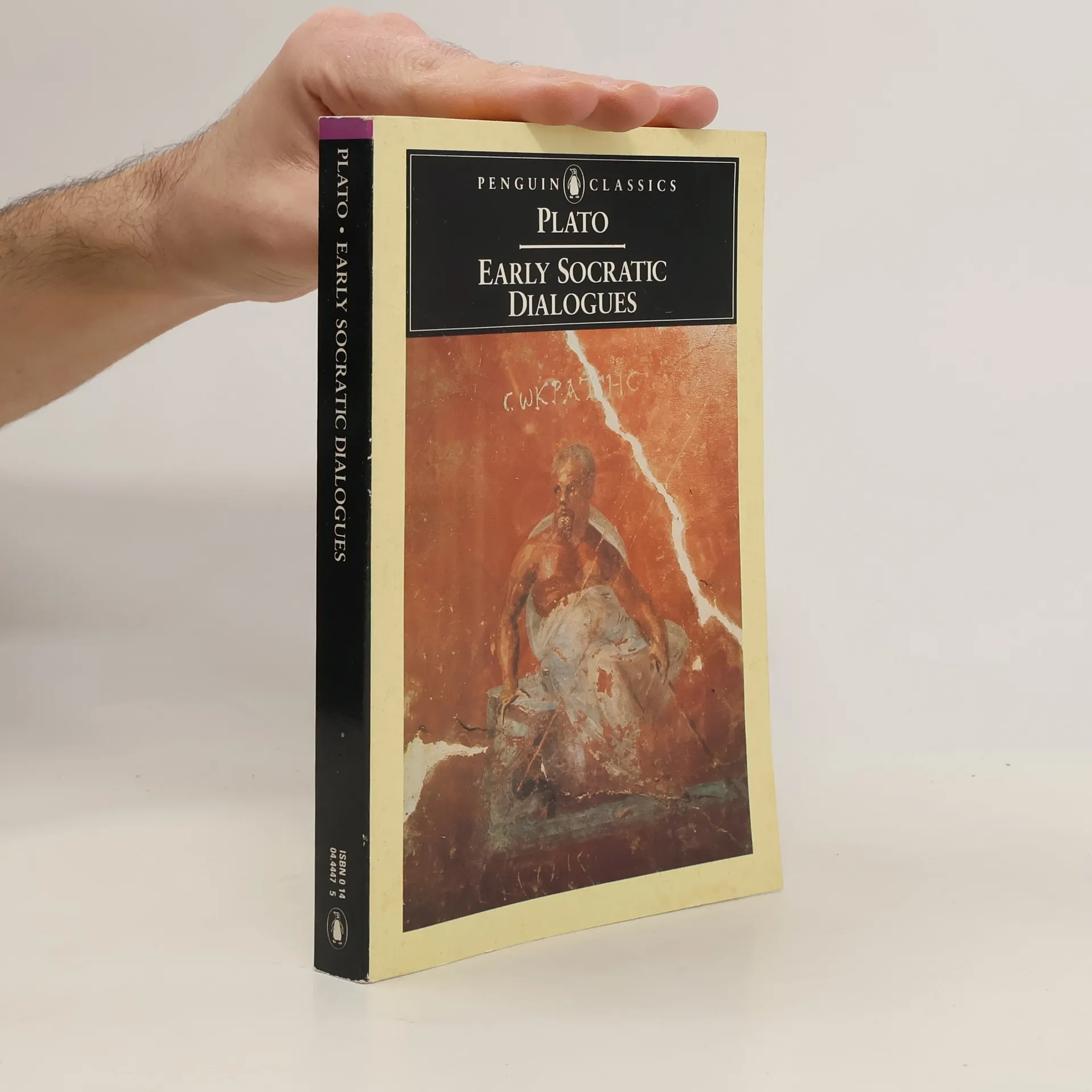
Ion/Laches/Lysis/Charmides/Hippias Major/Hippias Minor/EuthydemusRich in drama and humor, these dialogues provide the definitive portrait of Socrates (469-399 B.C.) and his times.Socrates, with his unique ability to tie his opponents in knots and spell out the contradictions in their ideas about friendship, courage, and other familiar topics, was the father of Western philosophy, ann inspiration - and a major irritant - to the Athenians of his day. After his trial and execution, Plato (c. 427-347 B.C.), his greatest pupil, wrote the early dialogues as an act of homage. Shorter and more accessible than the Republic and the other later masterpieces, they also give a much truer picture of the real Socrates and raise issues still keenly debated by philosophers; as such, they form an ideal introduction to Plato, to Greek thought and to philosophy.
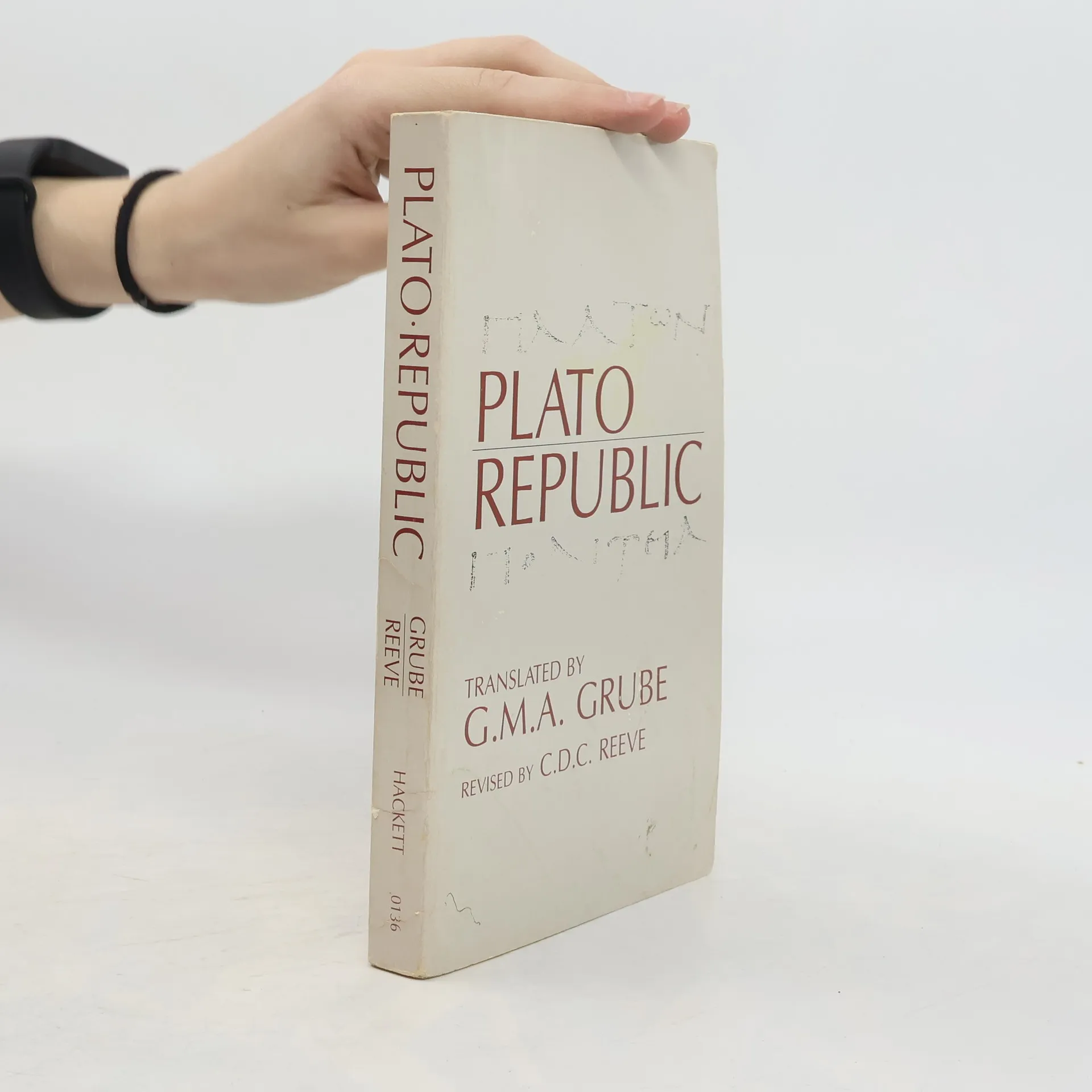
Since its publication in 1974, scholars throughout the humanities have adopted G M A Grube's masterful translation of the Republic as the edition of choice for their study and teaching of Plato's most influential work. In this brilliant revision, C D C Reeve furthers Grube's success both in preserving the subtlety of Plato's philosophical argument and in rendering the dialogue in lively, fluent English, that remains faithful to the original Greek. This revision includes a new introduction, index, and bibliography by Reeve.
Plato, an influential Athenian philosopher, established the Platonist school and the Academy, the first higher learning institution in the West. Renowned for his contributions to philosophy, he is a key figure alongside Socrates and Aristotle. His work laid the groundwork for Western thought and religion, with neoplatonism significantly impacting early Christian theology through figures like Augustine. His legacy continues to shape philosophical and spiritual discourse today.
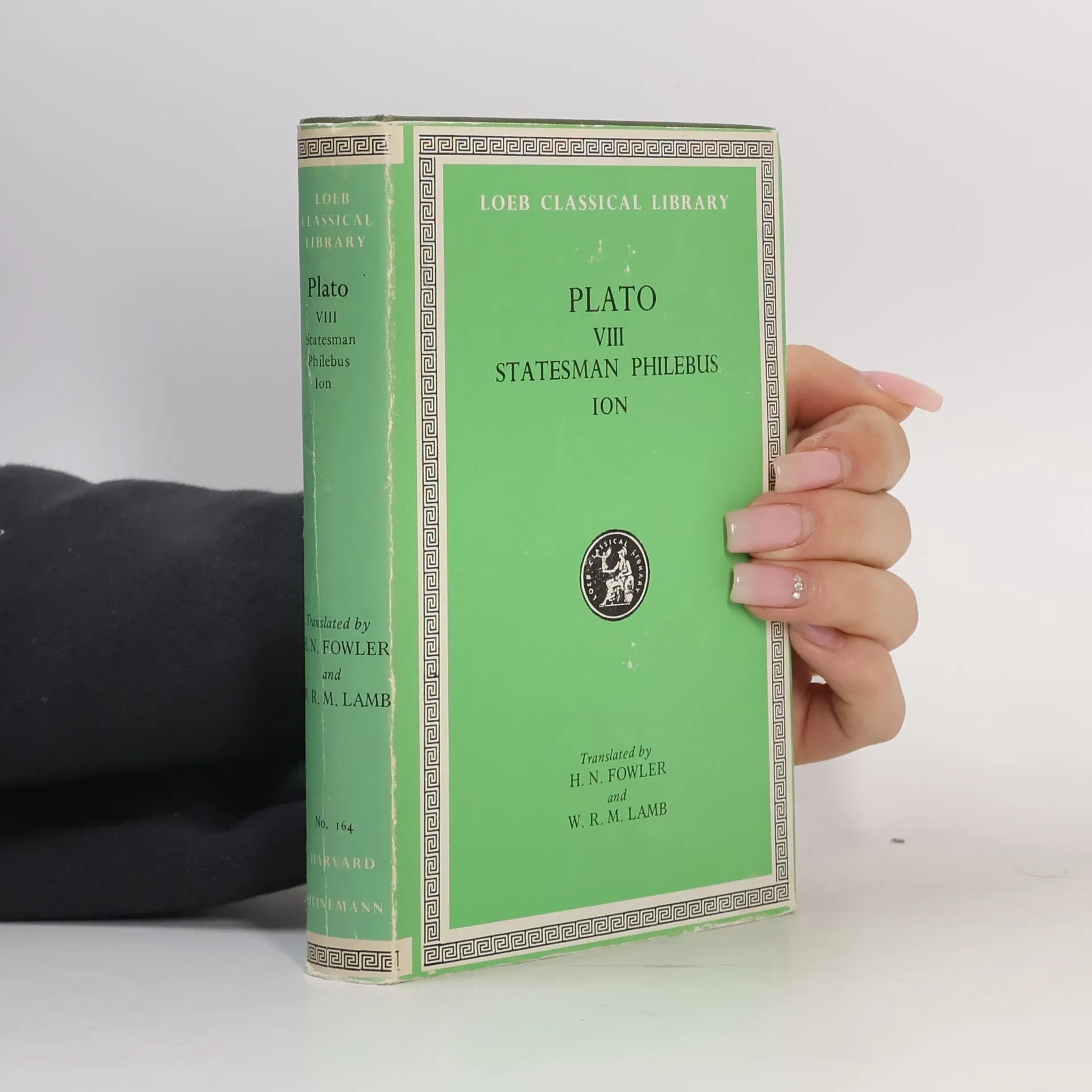
The dialogue explores the philosophical debate between hedonism and the pursuit of higher pleasures. Socrates engages with Protarchus, who defends the hedonistic viewpoint of Philebus, yet Socrates argues for a balanced life that harmonizes both physical and intellectual pleasures. Through this discussion, the text delves into the nature of happiness and the complexities of human fulfillment, ultimately questioning what constitutes the best life.
Set in the weeks leading up to Socrates' trial, this Socratic dialogue features a conversation between Socrates and Euthyphro that explores profound themes of piety and justice. Through their exchange, Plato delves into philosophical inquiries that ultimately lead to uncertainty and unresolved questions, characteristic of his early works. The dialogue invites readers to reflect on moral concepts while showcasing the complexities of ethical discourse.
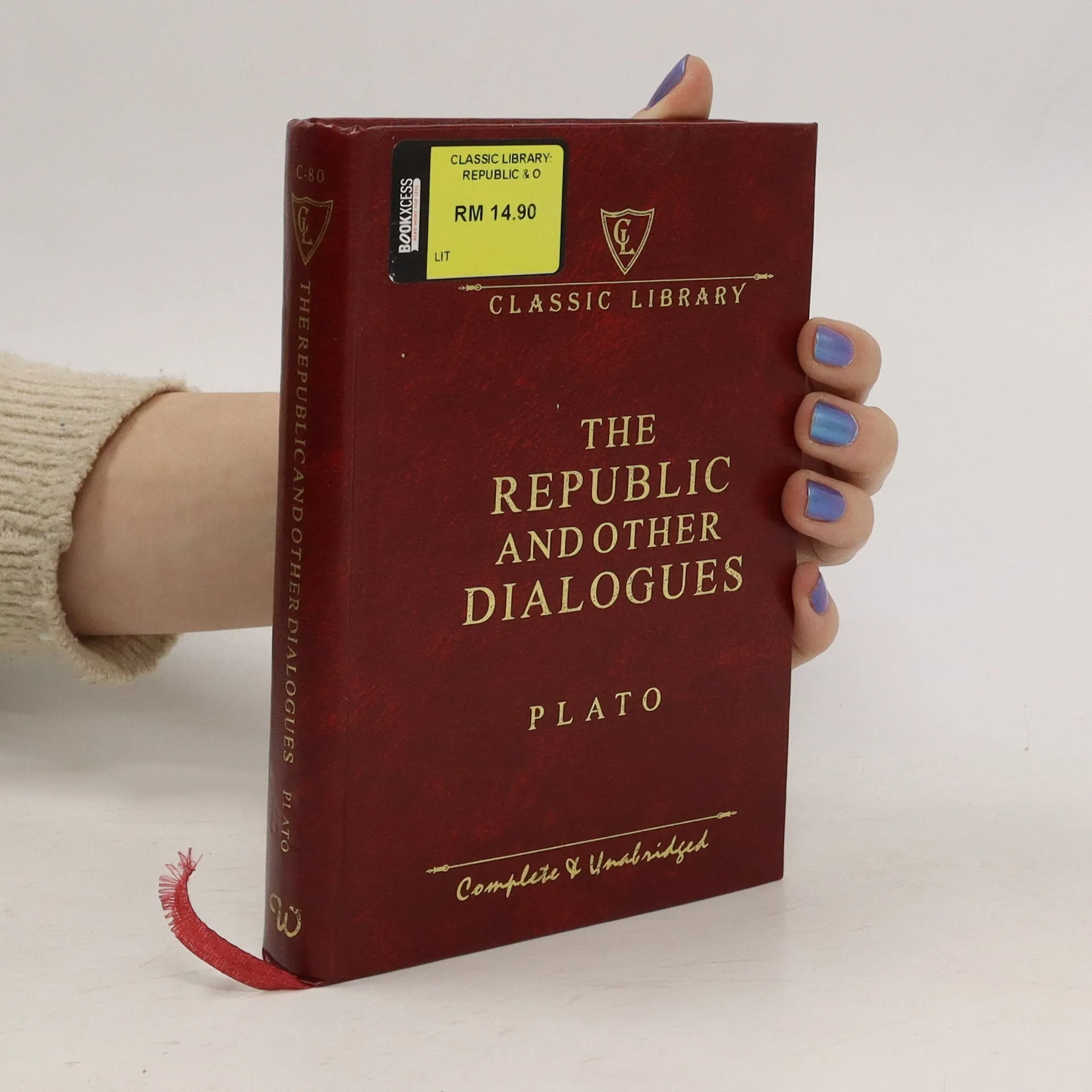
These portable, handy sized classics are a great addition to your collection or they make a great gift item. All are hardcover editions in imitation red leather with golden foil stamping. Includes a red ribbon marker.
Throughout history, some books have changed the world. They have transformed
the way we see ourselves - and each other. They have inspired debate, dissent,
war and revolution. They have enlightened, outraged, provoked and comforted.
They have enriched lives - and destroyed them. Now Penguin brings you the
works of the great thinkers, pioneers, radicals and visionaries whose ideas
shook civilization and helped make us who we are. Plato's retelling of the
discourses between Socrates and his friends on such subjects as love and
desire, truth and illusion, spiritual transcendence and the qualities of a
good ruler, profoundly affected the ways in which we view human relationships,
society and leadership - and shaped the whole tradition of Western philosophy.
The narrative is presented through Phaedo, a disciple of Socrates, recounting the philosopher's final moments and discussions on the immortality of the soul. Central to the text are the Cyclical and Affinity Arguments, which assert that the soul is imperishable, contrasting with the mortal body. Plato introduces the Theory of Recollection, suggesting that the soul possesses innate knowledge from a pre-birth existence. This dialogue not only explores profound philosophical concepts but also highlights the enduring nature of the soul as part of the eternal Forms.
Excerpt from Plato Gorgias: Edited, on the Basis of Deuschle-Cron's Edition The appendix, which is much more extensive than that of'the German edition, will be found to contain, in addition to the regis ter of textual variations, much matter which could not be inserted in a commentary, but which students should know. About the Publisher Forgotten Books publishes hundreds of thousands of rare and classic books. In rare cases, an imperfection in the original, such as a blemish or missing page, may be replicated in our edition. We do, however, repair the vast majority of imperfections successfully; any imperfections that remain are intentionally left to preserve the state of such historical works.
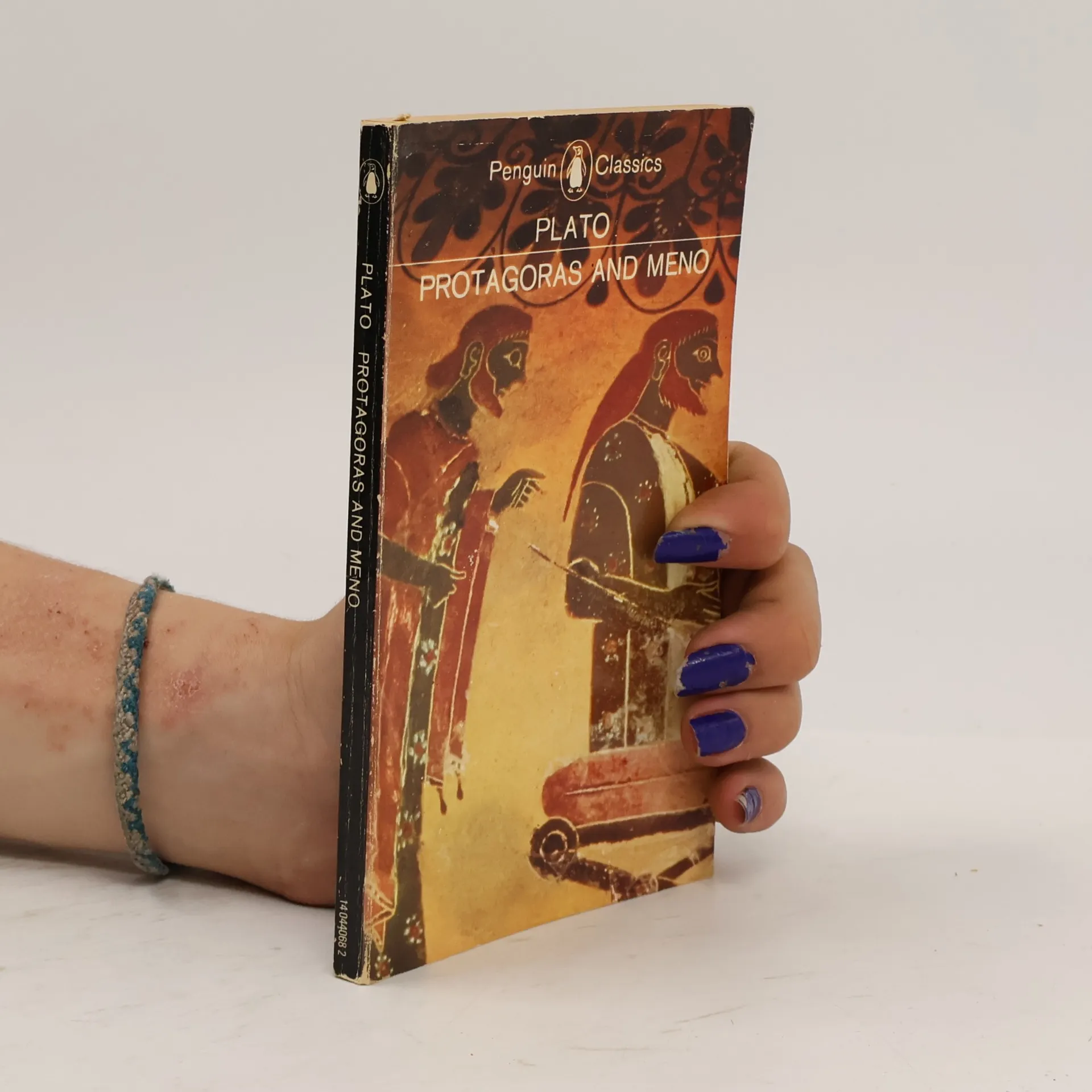
This volume contains new translations of two dialogues of Plato, the Protagoras and the Meno, together with explanatory notes and substantial interpretive essays. Robert C. Bartlett's translations are as literal as is compatible with sound English style and take into account important textual variations. Because the interpretive essays both sketch the general outlines of the dialogues and take up specific theoretical or philosophic difficulties, they will be of interest not only to those reading the dialogues for the first time but also to those already familiar with them. The Protagoras and the Meno are linked by the attention each pays to the idea of virtue: the latter dialogue focuses on the fundamental Socratic question "What is virtue?," the former on the specific virtue of courage, especially in its relation to wisdom. An appendix contains a short extract from Xenophon's Anabasis of Cyrus that vividly portrays the figure of Meno.
This translation of Plato's classic work is published along with an extensive
introductory essay, which situates the work in the context of the development
of Greek science and discusses points of contemporary interest. schovat popis
The book invites readers into a captivating narrative that promises to engage and intrigue. It offers a blend of compelling themes and rich character development, making it a noteworthy addition to your reading list. The exploration of its central ideas is designed to resonate with a wide audience, ensuring that it leaves a lasting impact. Prepare for an immersive experience that challenges perspectives and ignites curiosity.
Taking the form of dialogues between Socrates, Timaeus, Critias and Hermocrates, these two works are among Plato's final writings. In Timaeus, he gives a thorough account of the world in which we live, describing a cosmos composed of four elements - earth, air, fire and water - which combine to give existence to all things. An exploration of the origins of the universe, life and humanity, which outlines not just physical laws but also metaphysical and religious principles, it remained a paradigm of science for two thousand years. The mysterious preamble to Timaeus contains the first account in literature of Atlantis, while the fragmentary Critias, unfinished by its author, provides a spellbinding description of the lost continent's ideal society, which Critias asserts was created by the god-like children of Poseidon himself.
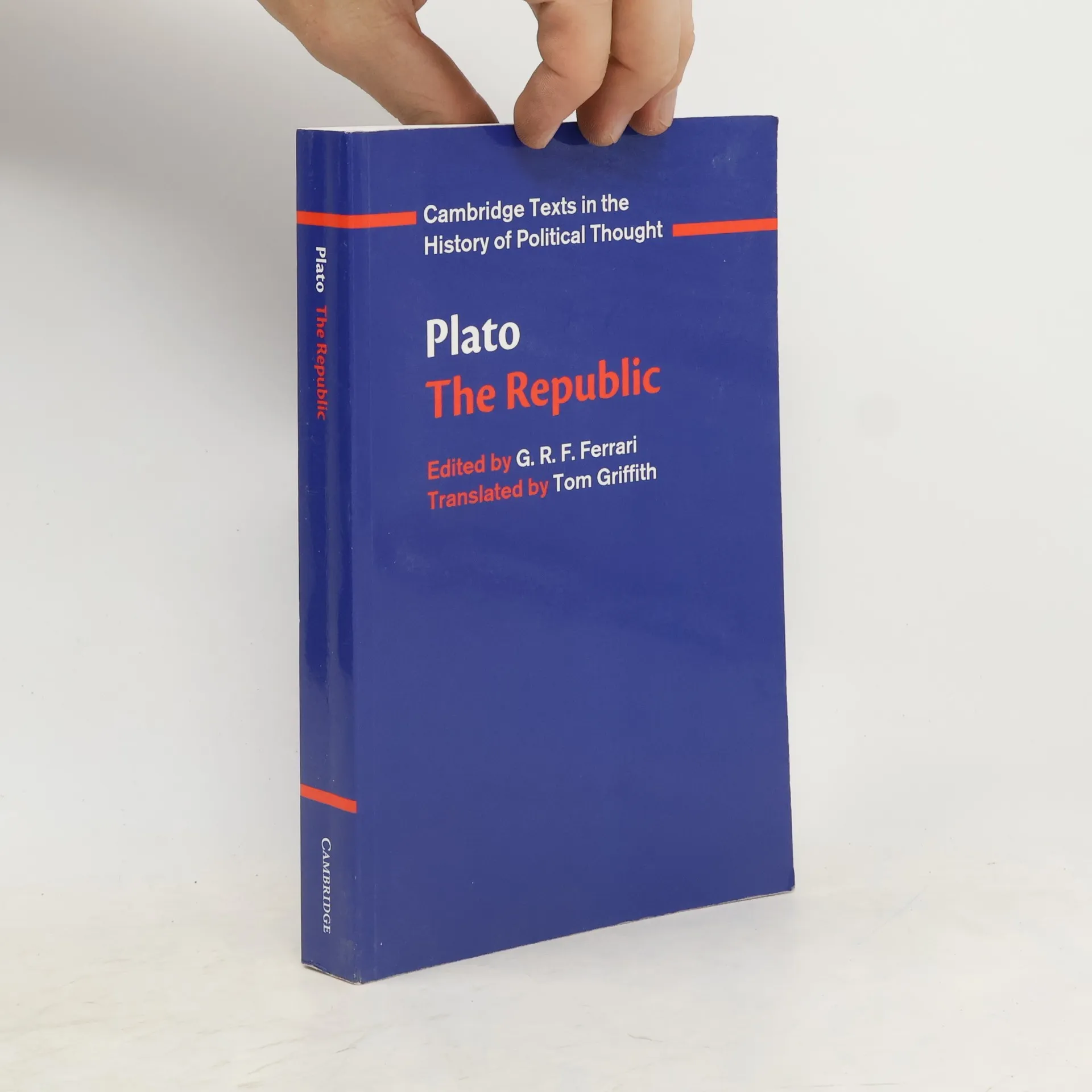
The new translation offers a clear and contemporary rendition of Plato's dialogue, tailored for students of political thought. It includes an introduction that contextualizes the argument within the evolution of Plato's ideas, providing essential philosophical and historical background. This approach enhances understanding for readers interested in political theory, making the text more accessible and relevant to modern discussions.
The writings of Plato are numerous, and most are in the form of dialogues. This edition contains translations of three of his works: "The Apologia," "The Crito" and "The Phaedo," all of which have reference to the trial, imprisonment and death of Socrates."
"Set in the idyllic countryside outside Athens, the Phaedrus is a dialogue between the philosopher Socrates and his young friend Phaedrus, inspired by their reading of a clumsy speech by the writer Lysias about love. After first considering the virtues of romantic love, their conversation develops into a wide-ranging discussion on such subjects as the pursuit of beauty, the nature of humanity, the immortality of the soul and the attainment of truth, and ends with an in-depth consideration of the principles of rhetoric. Probably a work of Plato's maturity, the Phaedrus represents a high point in his achievement as a writer. It remains a fascinating exploration of love, mortality, destiny and what it means to be human."
Plato's Statesman is the second of a projected trilogy of dialogues, in which an unnamed stranger sets out to satisfy Socrates' desire for an account of sophist, statesman, and philosopher. (The third was never written.) It includes a clear English translation along with notes and supplementary materials.
Plato, an Athenian philosopher from Ancient Greece, is renowned for founding the Platonist school and the Academy, the first higher learning institution in the Western world. His contributions significantly shaped Western philosophy, alongside his teacher Socrates and student Aristotle. Often regarded as a pivotal figure in human history, he also played a crucial role in the development of Western religion and spirituality, influencing later thinkers like Plotinus and Augustine through the movement of neoplatonism.
"As one would expect from the team of Brann, Kalkavage and Salem, their edition of Plato's Meno is a fine one. The translation meets their stated goal of remaining 'as faithful as possible to the Greek, while using lively, colloquial English.' Their notes are consistently helpful and will be particularly useful to those readers willing to explore the nuances of Plato's extraordinary prose. Their introduction is clear and compact, and it highlights the most philosophically important themes of the dialogue. One particularly useful feature of this edition is the manner in which it displays the diagrams Socrates draws in order to illustrate his famous 'square within a square.' Instead of relegating them to the notes, it integrates them into the text of the dialogue itself. Readers are able to follow along, and 'watch' Socrates actually construct them." --David Roochnik, Boston University
Focusing on the nature of knowledge, this dialogue features Socrates questioning the young mathematician Theaetetus about perception, belief, and true knowledge. Through their conversation, Plato articulates his philosophical views, emphasizing that true understanding is achieved through inquiry and contemplation. The text also addresses the philosopher's role in the pursuit of wisdom. "Theaetetus" stands as a pivotal work in Western philosophy, showcasing the depth of philosophical exploration in ancient Greece.
Plato, an Athenian philosopher of the Classical period, established the Academy, marking the beginning of higher education in the Western world. Renowned for his profound influence on philosophy, he is often regarded alongside Socrates and Aristotle as a cornerstone of Ancient Greek thought. His contributions extend beyond philosophy, impacting Western religion and spirituality, particularly through the neoplatonism of later thinkers like Plotinus and Porphyry, which significantly shaped Christian theology as seen in the works of Church Fathers such as Augustine.
Approaching a liberal arts tradition in the classroom, across the curriculum, and beyond, The McGraw-Hill Reader offers rich and diverse readings in education, the social sciences, business and economics, the humanities, and the sciences. This new eleventh edition offers a new focus on reading and composing across various media; it includes over 100 selections from prominent thinkers and writers; each essay was chosen to provoke critical thought and encourage effective writing.
Ah, Hippothales, I said; what a noble and really perfect love you have found! I wish that you would favour me with the exhibition which you have been making to the rest of the company, and then I shall be able to judge whether you know what a lover ought to say about his love, either to the youth himself, or to others.
The Republic is a Socratic dialogue, written by Plato around 380 BC, concerning the definition of justice, the order and character of the just city-state and the just man-for this reason, ancient readers used the name On Justice as an alternative title (not to be confused with the spurious dialogue also titled On Justice). The dramatic date of the dialogue has been much debated and though it might have taken place some time during the Peloponnesian War, "there would be jarring anachronisms if any of the candidate specific dates between 432 and 404 were assigned". It is Plato's best-known work and has proven to be one of the most intellectually and historically influential works of philosophy and political theory. In it, Socrates along with various Athenians and foreigners discuss the meaning of justice and examine whether or not the just man is happier than the unjust man by considering a series of different cities coming into existence "in speech", culminating in a city called Kallipolis, which is ruled by philosopher-kings and by examining the nature of existing regimes. The participants also discuss the theory of forms, the immortality of the soul, and the roles of the philosopher and of poetry in society.
Experience the timeless wisdom and insight of one of ancient Greece's greatest thinkers with this essential collection. Plato's Apology, Crito, and Phaedo are masterpieces of philosophy, offering insights into morality, justice, and the nature of reality. More's introduction provides helpful context and analysis, making this a perfect resource for students, scholars, and anyone seeking to deepen their understanding of Plato's work.
The book explores the life and contributions of Plato, an Athenian philosopher who established the Academy, the first higher learning institution in the West. It highlights his pivotal role in shaping Ancient Greek and Western philosophy alongside Socrates and Aristotle. Additionally, the text delves into Plato's influence on Western religion and spirituality, particularly through the lens of neoplatonism and its impact on early Christian thought as seen in the works of Church Fathers like Augustine.
The book is a reproduction of a historical work, produced by Megali, a publishing house dedicated to creating large print editions. This initiative aims to enhance accessibility for readers with impaired vision, ensuring that important historical texts are available to a wider audience.
Focusing on accessibility, this book is a reproduction of a historical work presented in large print, catering specifically to individuals with impaired vision. Published by Megali, a house dedicated to enhancing readability, it aims to make classic literature more inclusive for all readers.
The book is a reproduction of a historical work, presented in large print to enhance accessibility for readers with impaired vision. Published by Megali, a house dedicated to making historical texts more readable, it aims to preserve important literature while accommodating the needs of those who struggle with standard print sizes.
This book is a reproduction of a historical work, published in large print for enhanced readability, particularly benefiting individuals with impaired vision. Megali, the publishing house behind this edition, focuses on making classic texts accessible to a wider audience through thoughtful formatting.
This book is a reproduction of a historical work, presented in large print to enhance readability for individuals with impaired vision. Published by Megali, a house dedicated to making historical texts accessible, it aims to preserve important literature while catering to the needs of readers who require larger text.
The book is a reproduction of a historical work, published by Megali, which focuses on making literature accessible to individuals with impaired vision through large print. This initiative highlights the importance of inclusivity in reading, ensuring that classic texts remain available to a wider audience.
This publication features a reproduction of a historical work, specifically designed in large print to enhance readability for individuals with impaired vision. Megali, the publishing house behind this initiative, focuses on making classic texts more accessible, ensuring that important historical narratives can be enjoyed by a wider audience.
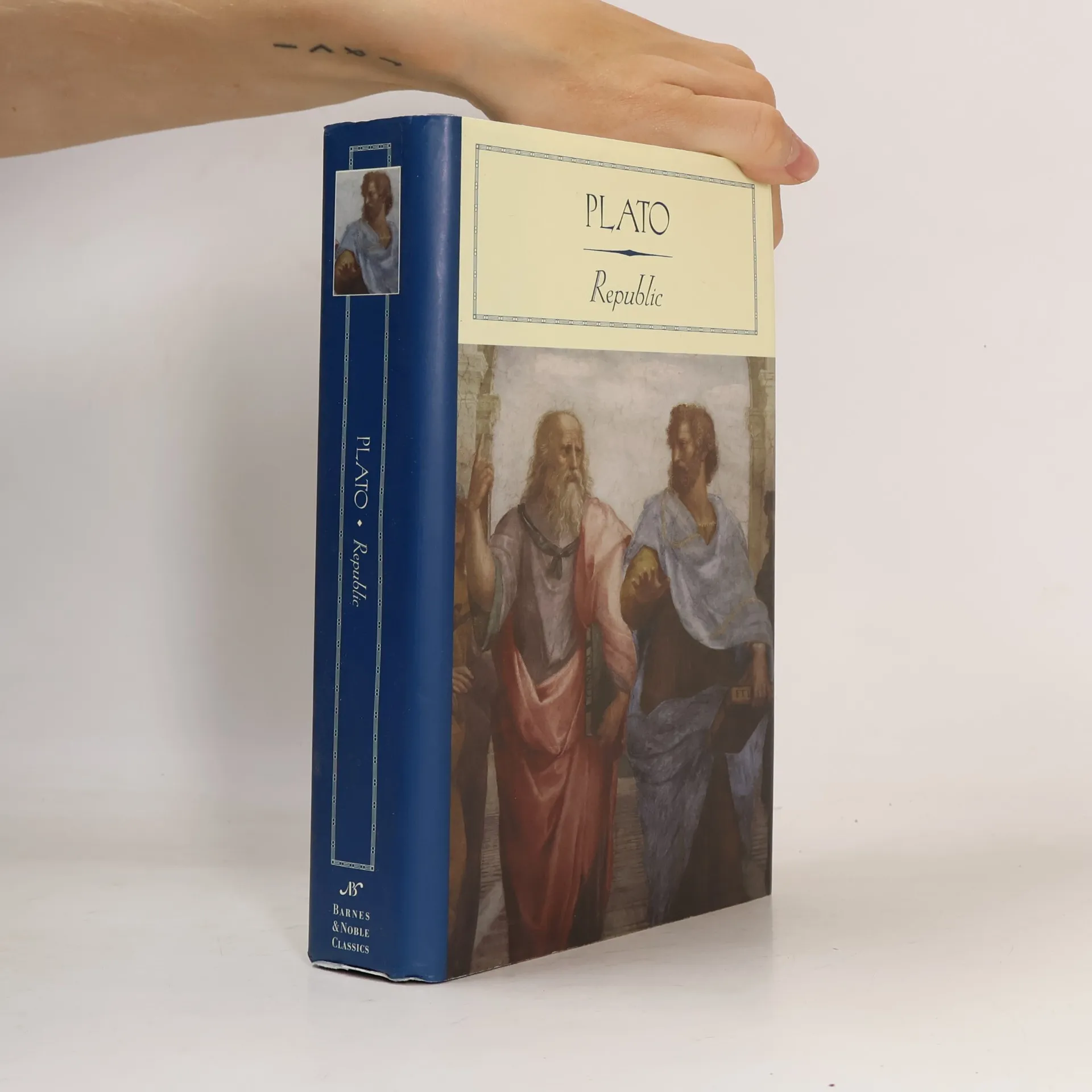
The Republic is a Socratic dialogue written by Plato around 380 BC concerning the definition of justice and the order and character of the just city-state and the just man. It is Plato's best-known work and has proven to be one of the most intellectually and historically influential works of philosophy and political theory. In it, Socrates along with various Athenians and foreigners discuss the meaning of justice and examine whether or not the just man is happier than the unjust man by considering a series of different cities coming into existence "in speech," culminating in a city ruled by philosopher-kings; and by examining the nature of existing regimes.
Part of the Barnes & Noble Classics series, this edition offers quality at an affordable price, featuring new introductions from contemporary writers and scholars, author biographies, and chronologies of relevant historical and cultural events. The book includes footnotes, endnotes, and discussions of various adaptations inspired by the work, alongside comments from notable authors, study questions, bibliographies, and indices when appropriate. Each edition is beautifully designed and printed to high standards, with some featuring historical illustrations.
One of the most significant works of philosophy, political theory, and literature, this text has influenced Western thought for millennia and remains relevant today. It begins with the question of justice and explores why we should be just, especially when the wicked appear more successful. The inquiry delves into how individuals and institutions organize and behave, examining the ideal state and the roles of education, art, family, and religion. Through vivid settings, well-defined characters, and engaging dialogue, the philosopher presents thought-provoking arguments. Often described as foundational to Western philosophy, this work is both entertaining and intellectually stimulating, continuing to challenge and expand readers' perspectives. Elizabeth Watson Scharffenberger, an expert in ancient Athenian culture and literature, teaches at Columbia University and NYU’s Gal
The great Athenian philosopher Plato was born in 427 BCE and lived to be eighty. Acknowledged masterpieces among his works are the Symposium, which explores love in its many aspects, from physical desire to pursuit of the beautiful and the good, and the Republic, which concerns righteousness and also treats education, gender, society, and slavery.
Plato, the renowned philosopher from Athens, was born in 427 BCE. Initially an admirer of Socrates, he later established the influential philosophical school in the grove Academus. Much of his life remains uncertain; it is likely he left Athens after Socrates' execution and possibly traveled to Cyrene, Egypt, and Sicily. Wealthy and critical of advanced democracy, he lived to 80. Linguistic analyses, including those from computer science, continue to explore the order of his philosophical dialogues, which are celebrated for their exquisite prose and the interplay of Socratic and Platonic thought.
In dialogues like Laches, Charmides, and Lysis, ethical concepts are examined, while Protagoras, Ion, and Meno question whether righteousness can be taught. Gorgias portrays Socrates' estrangement from Athenian thought, leading to his impending fate. The Apology, Crito, Euthyphro, and Phaedo recount Socrates' trial and death, addressing the immortality of the soul. The Symposium and Phaedrus explore the nature of love, and Cratylus delves into language. The Republic, a ten-book masterpiece, discusses righteousness, education, gender equality, societal structure, and slavery abolition. The dialectical dialogues include Euthydemus on philosophy, Parmenides on concepts, and Theaetetus on knowledge. Sophist, Politicus, and Philebus tackle not-being, statesmanship, and the nature of good, respectively. The Timaeus investigates the univers
The great Athenian philosopher Plato was born in 427 BCE and lived to be eighty. Acknowledged masterpieces among his works are the Symposium, which explores love in its many aspects, from physical desire to pursuit of the beautiful and the good, and the Republic, which concerns righteousness and also treats education, gender, society, and slavery.
Sborník textů z 1. mezinárodního pražského platónského symposia, konaného v Praze ve dnech 4.–5. 4. 1997. Obsah: N. Blößner, Dialogautor und Dialogfigur: Überlegungen zum Status sokratischer Aussagen in der Politeia T. Ebert, Sind Meinung und Wissen nach Platon Vermögen ? A. Havlíček, Die Kritik Platons an Glaukons Auffassung des besten Staates im V. Buch der Politeia K. Thein, The Foundation and Decay of Socrates' best City (Republic VI, 499b-c, and Books VIII-IX) M. Mráz, Die Kritik an Platons Politeia im II. Buch von Aristoteles' Politik F. L. Lisi, Die Stellung der Nomoi in Platons Staatslehre: Erwägungen zur Beziehung zwischen Nomoi und Politeia D. Papadis, Regent und Gesetz in Platons Dialogen Politeia und Nomoi A. L. Pierris, The Metaphysics of Politics in the Politeia, Politikos and Nomoi Dialogue Group Th. M. Robinson, Gender-Differentiation and Platonic Political Theory J.-F. Pradeau, L'Exégète ennuyé. Une introduction à la lecture des Lois de Platon L. Brisson, Vernunft, Natur und Gesetz im zehnten Buch von Piatons Gesetzen J. Tomin, Joining the Beginning to the End
Die Mythen und Gleichnisse Platons werden im vorliegenden Band zum ersten Mal vollständig vorgelegt: Die Sammlung will hinführen zu dem Gedankenreichtum Platons, indem sie mit der einen, der mythischen Seite seines Vortrags vertraut macht und so den Kontakt mit der anderen, dem Bereich des Logos, vorbereitet und erleichtert. Der Poet Platon besticht durch den Glanz seiner Sprache, der Philosoph spricht hier seine persönlichsten Gedanken aus. Eine Quintessenz seines Denkens zeichnet sich ab, ein Summarium seines Fragens und Antwortens. Die dem Philosophen wichtigen Probleme treten wiederholt hervor, die Grundgedanken erscheinen mehrfach in verwandten, aber abgewandelten Bildern. Der poetische Glanz der Rede, die gedankliche Kraft und Tiefe der Vorstellungen machen diese Texte zu einem zentralen Zugang zu der Welt des Fürsten der Philosophie. Hier finden sich neben vielen anderen Texten: 'Vom Ursprung der Menschen', 'Die Wiedergeburt der Seele', 'Das Leben im Jenseits', 'Die Geburt des Eros', 'Die Erfindung der Schrift', 'Der kugelrunde Urmensch', 'Atlantis', 'Das goldene Zeitalter' oder 'Das Höhlengleichnis'.
Die Dialoge Platons: Apologie, Kriton, Euthyphron, Phaidon, Protagoras, Meno, Symposion und Gorgias. "Das ungeprüfte Leben ist nicht lebenswert." Die Worte des Sokrates sind nach wie vor wahr, und die Ideen in Platons Dialogen bilden weiterhin die Grundlage für die Bildung eines denkenden Menschen. Diese hervorragende Sammlung enthält ausgezeichnete zeitgenössische Übersetzungen, die für ihre Klarheit und Zugänglichkeit für den heutigen Leser ausgewählt wurden, sowie eine prägnante Einführung, die Platons Leben offenbart und die philosophischen Fragen, die in jedem Dialog behandelt werden, erläutert. Die ersten vier Dialoge berichten vom Prozess und der Hinrichtung Sokrates' – der außergewöhnlichen Tragödie, die Platons Leben veränderte und den Verlauf des westlichen Denkens für immer beeinflusste. Weitere Dialoge schaffen ein reiches Tableau des intellektuellen Lebens in Athen im vierten Jahrhundert v. Chr. und untersuchen zeitlose und aktuelle Themen wie die Natur von Tugend und Liebe, Wissen und Wahrheit, Gesellschaft und Individuum. Diese großartigen Werke, durchdrungen von dem Humor und der erstaunlichen Brillanz Sokrates', bleiben kraftvoll, hinterfragend und unverzichtbar.
Ein bedeutendes Werk zur Ethik und Gesellschaft, der Dialog Protagoras ist griechisch-deutsch und gilt als künstlerisch vollendet. Er hat die staatspolitische Theorie seit der Antike stark beeinflusst, neben Platons Der Staat.