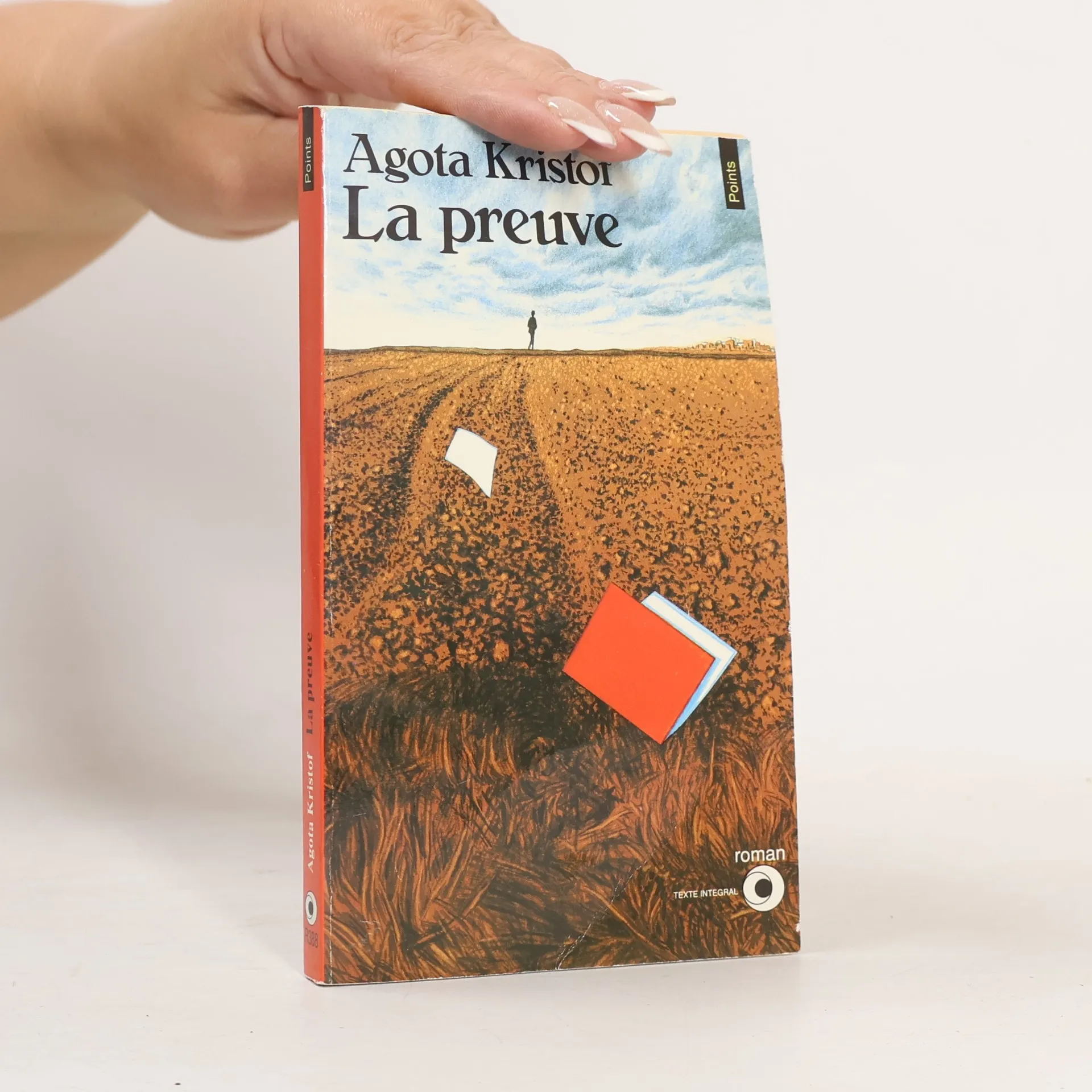
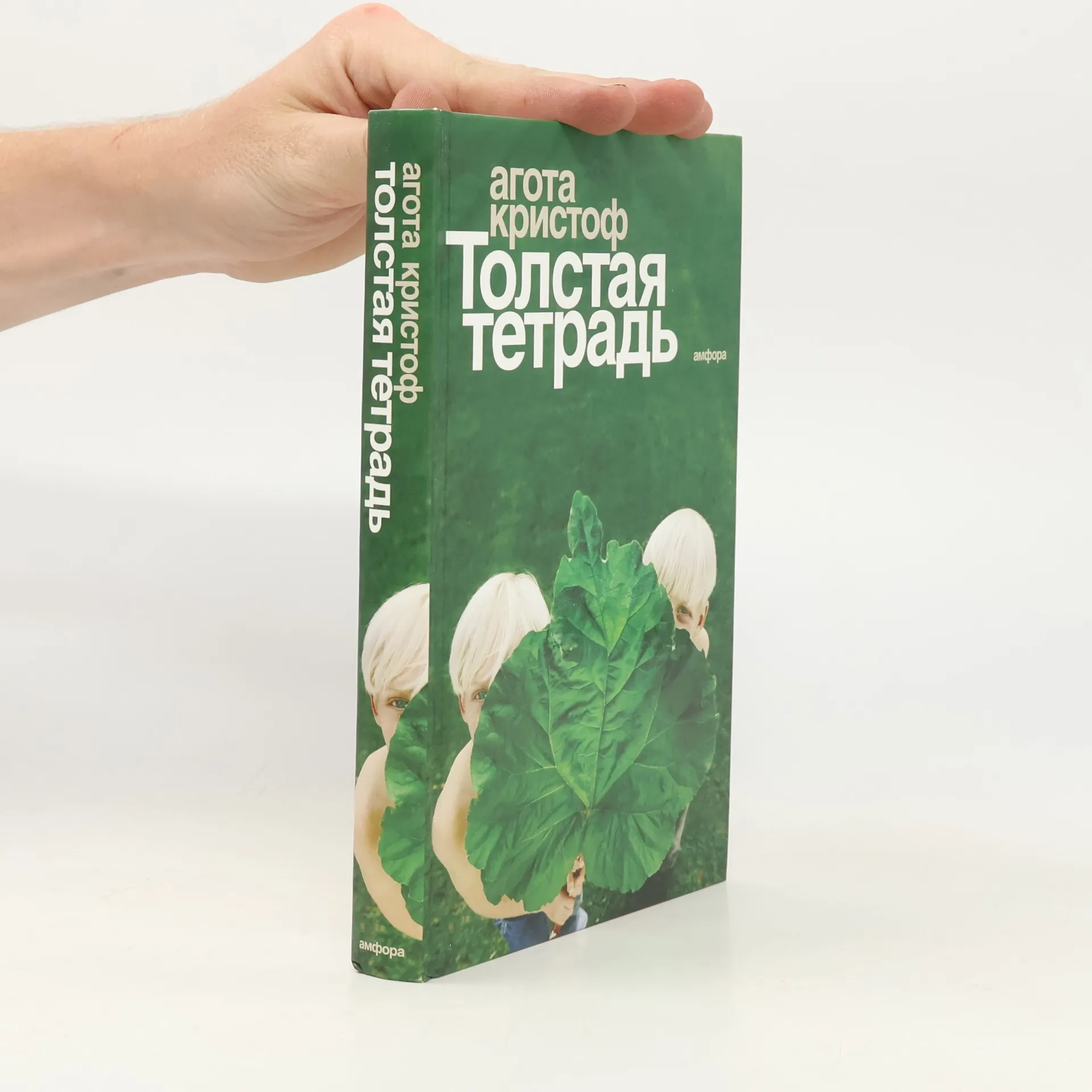
Dans un pays ravagé par la guerre, Claus Et Lucas font l'apprentissage de la vie, de l'écriture et de la cruauté. Premier roman d'une émigrée hongroise installée en Suisse, Le Grand Cahier est également le premier volet d'une trilogie qui comprend La Preuve et Le Troisième Mensonge. L'œuvre d'Agota Kristof est aujourd'hui réduite dans une quinzaine de pays.
This bleak story, by a Hungarian-born writer living in Switzerland and writing in French, is both an allegory on the East-West divisions of Europe and a commentary on the damage parents can do to children. The narrator, Claus, revisits the places of his youth after the fall of Communism. He recounts a past that begins with his waking up during World War II with a serious spinal injury at the age of four and progresses through rehabilitation and foster homes. He has only a vague memory of a happier childhood before then. In the middle of the book a surprise twist casts a new light on Claus' past. Translated by Marc Romano.
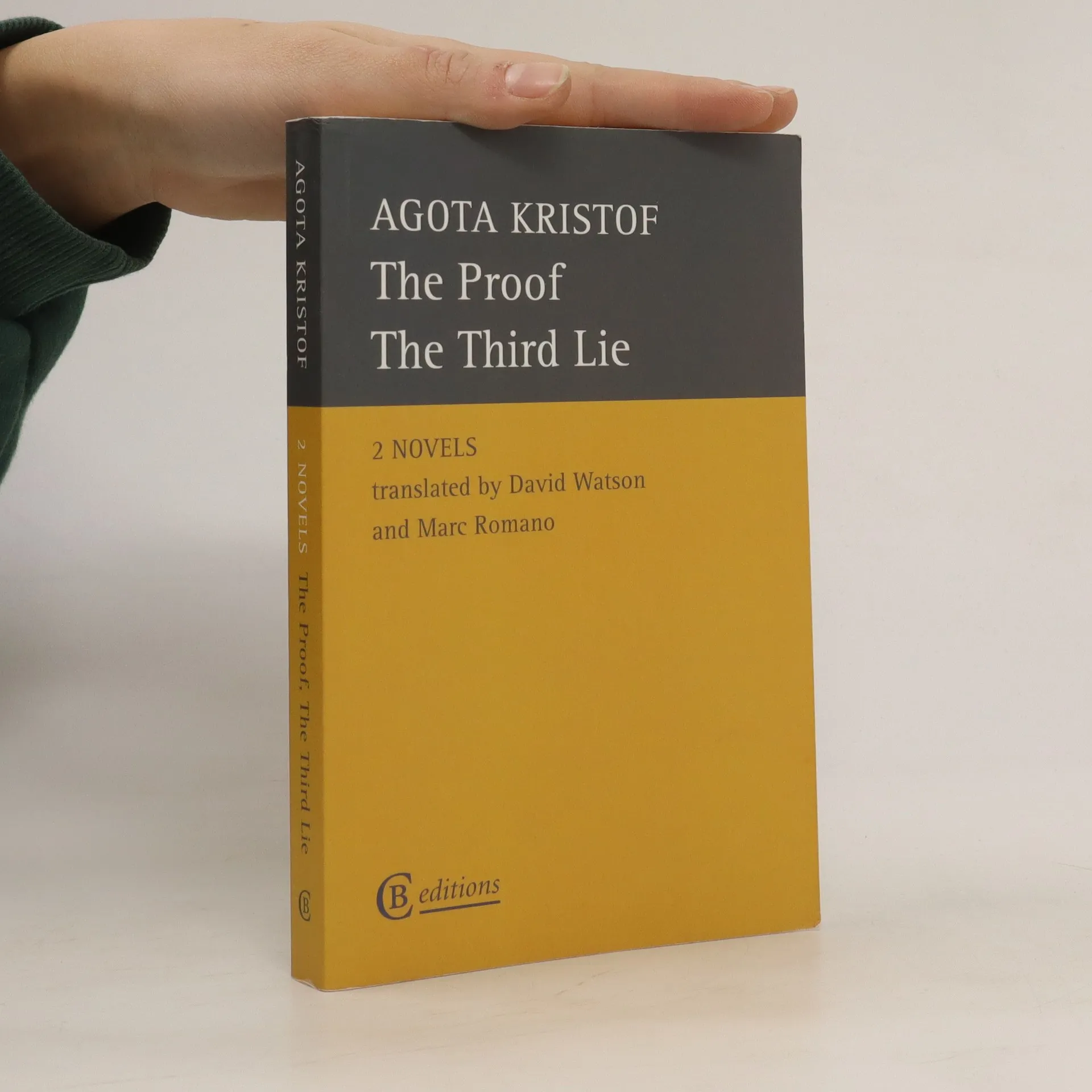
The child says, ‘That’s the only difference between the dead and those who go away, isn’t it? Those who aren’t dead will return.’ Lucas says, ‘But how do we know they aren’t dead when they’re away?’ ‘We can’t know.’Following on from The Notebook, which recounted the survival of twin brothers during war and occupation, The Proof and The Third Lie complete the trilogy of novels in which Kristof, as an emigré writer, forged wholly distinctive ways to treat the 20th-century European experience of war, occupation and separation.As the brothers Claus and Lucas, isolated in different countries, yearn for the seemingly impossible restoration of their lost connection, perspectives shift, memories diverge, identity becomes unstable. Written in Kristof ’s spare, direct style, the novels are an exploration both of the aftereffects of trauma and of the nature of story-telling.‘At the heart of this acrid trilogy, in all its studied understatement and lack of portentousness, we can feel the author’s slow-burning rage at the wholesale erasure of certainty and continuity in the world of her childhood and adolescence. At the same time we sense Kristof saturninely enjoying this annihilation for its imaginative potential. She will reassemble a shattered world on her own rigorous terms, and watch us wince and shudder in the process.’ – Jonathan Keates, Times Literary Supplement
Agota Kristof's celebrated trilogy of novels exploring the after-effects of
trauma and the nature of story-telling in the context of Nazi occupation and
Soviet 'liberation' at the end of World War Two.
Narrated in a series of brief vignettes, The Illiterate is Kristof 's memoir
of her childhood, her escape from Hungary in 1956 with her husband and small
child, her early years working in factories in Switzerland, and the writing of
her first novel, The Notebook.
Agota Kristof, on bir kısa ve öz bölümde köken hikayesini etkileyici bir şekilde anlatıyor. Macaristan'daki ailesinin yanında geçen, başlangıçta korunaklı ama mütevazı çocukluğu, İkinci Dünya Savaşı sırasında ve sonrasında, okullarda sadece Rusça konuşulması gerektiği bir dönemde büyümesi, babasının tutuklanması, devlet yurduna yerleştirilmesi, Stalin'in ölümü üzerine öğrencilerin "Emekçilerin Büyük Arkadaşı" hakkında yazmaya zorlanması, 1956 Kasım'ında genç kocasıyla birlikte belirsizliğe doğru kaçışı ve nihayetinde İsviçre'ye varışıyla birlikte, güvenli bir yere ulaşsa da kültürel bir çölle karşılaşması, dil bilmediği için yaşadığı zorluklar, dört yaşında okumayı öğrenmişken yeniden okuma ve yazma öğrenme süreci. Agota Kristof, bu kişisel yolculuğu ile kendisini tanınan bir yazar haline getiren deneyimlerini paylaşıyor.
Un'irresistibile vertigine tra sogno e realtà caratterizza i racconti di "Dove sei Mathias?", esplorando temi come l'infanzia, la nostalgia e l'illusione. "Line" presenta un dialogo teatrale tra un giovane e una bambina, mentre "Dove sei Mathias?" sfida il lettore con le sue allucinazioni e ambiguità sui personaggi.
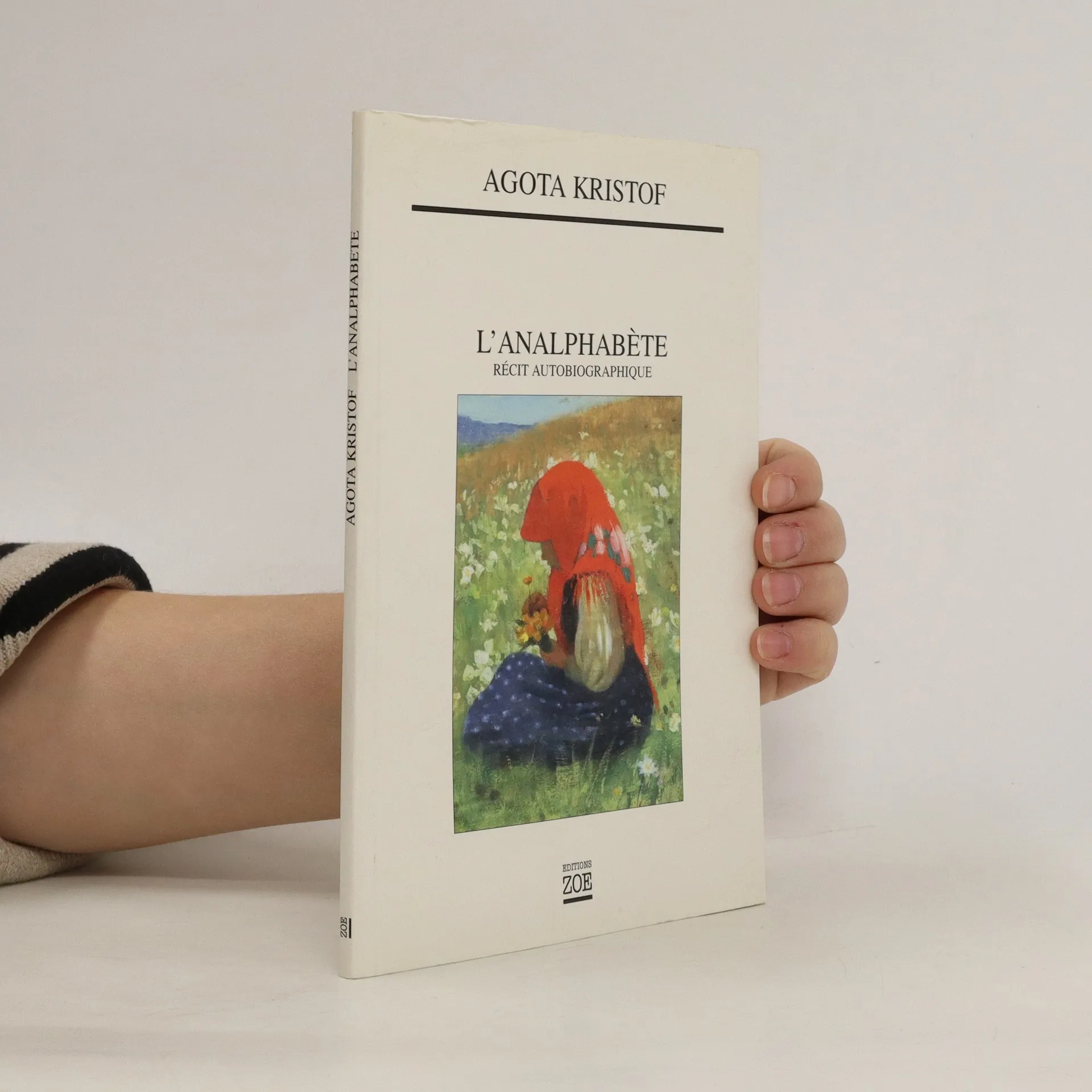
Onze chapitres pour onze moments de sa vie, de la petite enfance en Hongrie à l'apprentissage du français et à l'envoi de son premier roman à des éditeurs parisiens. La pauvreté matérielle en Hongrie pendant l'enfance et les années d'internat, l'endoctrinement, la langue maternelle et les langues ennemies, allemande et russe, la mort de Staline, la fuite vers l'Autriche, l'arrivée à Lausanne avec son bébé, tous ces récits ne sont pas tristes mais cocasses, avec cet humour noir qui traverse toute l'oeuvre de la romancière. Phrases courtes et mots justes, efficacité des histoires et lucidité carrée, un humour immense, le monde d'Agota Kristof est là, dans sa vie comme dans ses romans.
Avec Le Grand Cahier nous étions dans un pays en guerre où deux enfants, des jumeaux, apprenaient à survivre en usant toutes les ressources du mal et de la cruauté. Puis les jumeaux se séparaient, l’un d’eux franchissant la frontière, laissant l’autre en son pays pacifié mais dominé par son régime autoritaire. Seul, désormais privé d’une partie de lui-même, Lucas, celui resté, semble vouloir se consacrer au bien. Il recueille Yasmine et adopte son fils Mathias, porte sa pitance au curé du village, tente de consoler Clara dont le mari fut pendu pour ‘‘trahison’’, écoute avec attention la confession de Victor, le libraire qui rêve d’écrire un livre ... Et si c’était pire ? Le propre d’un système totalitaire n’est-il pas de pervertir à la base tout élan de générosité ? Ce que découvrira Claus, le jumeau exilé de retour sur les lieux de ses premiers forfaits, sera plus terrible encore : qu’il n’y a pas de générosité sans crime, et qu’on est toujours deux, même quand on est seul. Au-delà de la fable, l’auteur pousuit ici son exploration impitoyable d’une mémoire si longtemps divisée, à l’image de l’Europe, et nous livre une belle méditation désespérée sur la littérature.
Tobias önemsiz bir ülkenin ismi olmayan bir köyünde doğmuştur. Annesiyle yokluk içinde yaşar. Annesi köyde dilenir; un, mısır veya süt karşılığında erkeklerle yatar; tarlalardan, bahçelerden meyve sebze toplar, bazen de çiftliklerden tavuk çalar. Küçük Tobias bir gün annesi bir erkekle yatarken ikisini de bıçaklar ve köyünden, ülkesinden kaçarak başka bir ülkeye sığınır. Yeni bir ülkede yeni bir hayata başlar. Adı artık Sandor Lester'dir. Bir fabrikada işe girer. Yazar olma hayalleri kurar. Ama ilkokuldaki kız arkadaşı Line'i unutamaz, onun bir gün yanına geleceğini umut eder... Ve günün birinde Caroline'le karşılaşır... Agota Kristof, "Büyük Defter~Kanıt~Üçüncü Yalan" üçlemesinin ardından bu kez okuru "Dün"de baş döndürücü bir hikâyeye davet ediyor.
L'autrice di "Trilogia della città di K." scrive in questi racconti essenziali da torcersi in apologhi - di emozioni paralizzate, di solitudini che anelano incontri che poi rifuggono, della crudeltà dei bambini che rispecchia quella degli adulti, di claustrofobiche e sadiche torture famigliari. Racconti che parlano di emozioni paralizzate, di solitudini che desiderano incontri che poi rifuggono, crudeltà di bambini che rispecchia quella degli adulti, di torture famigliari. Ritratti di personaggi distrutti che tuttavia tentano di conservare la dignità; perdenti che, pur consapevoli del proprio destino, perseverano in una lotta rassegnata, a volte stralunata. C'è chi si aggrappa alla promessa di una voce inaspettata all'altro capo del filo; chi si sposta dall'immobilità del proprio appartamento per rannicchiarsi all'entrata di un grande magazzino, d'inverno, e assiste all'insensato via vai del mondo approfittando delle correnti di aria calda. Vite alla deriva che cercano ostinatamente di tornare a casa, di rivedere in faccia il proprio passato. Schegge narrative che raccontano un mondo mostruosamente duro, di fronte al quale domina il senso di estraneità e di smarrimento.
Символично, что самая безжалостная книга минувшего столетия была написана незадолго до его окончания, в 1986 году. Не менее символично, что она написана женщиной. Даже комичное сходство имени Аготы Кристоф с именем Агаты Кристи (тоже, кстати сказать, весьма безжалостной леди) вполне символично. Агата всю жизнь выдумывала занимательные истории о меркантильных отравителях; Агота поступила проще: она попробовала пересказать жизнь "близко к тексту", писать правду и только правду. Ее истории занимательными не назовешь: они слишком правдивы (отвратительно правдивы), чтобы быть занимательными. В основу книги лег дневник, написанный братьями-близнецами Клаусом и Лукасом, но на протяжении романа братья сливаются в один персонаж, а повествование, и без того насыщенное жестокостью, страхом, дополняется еще и виной перед братом, реальным или, может быть, вымышленным.