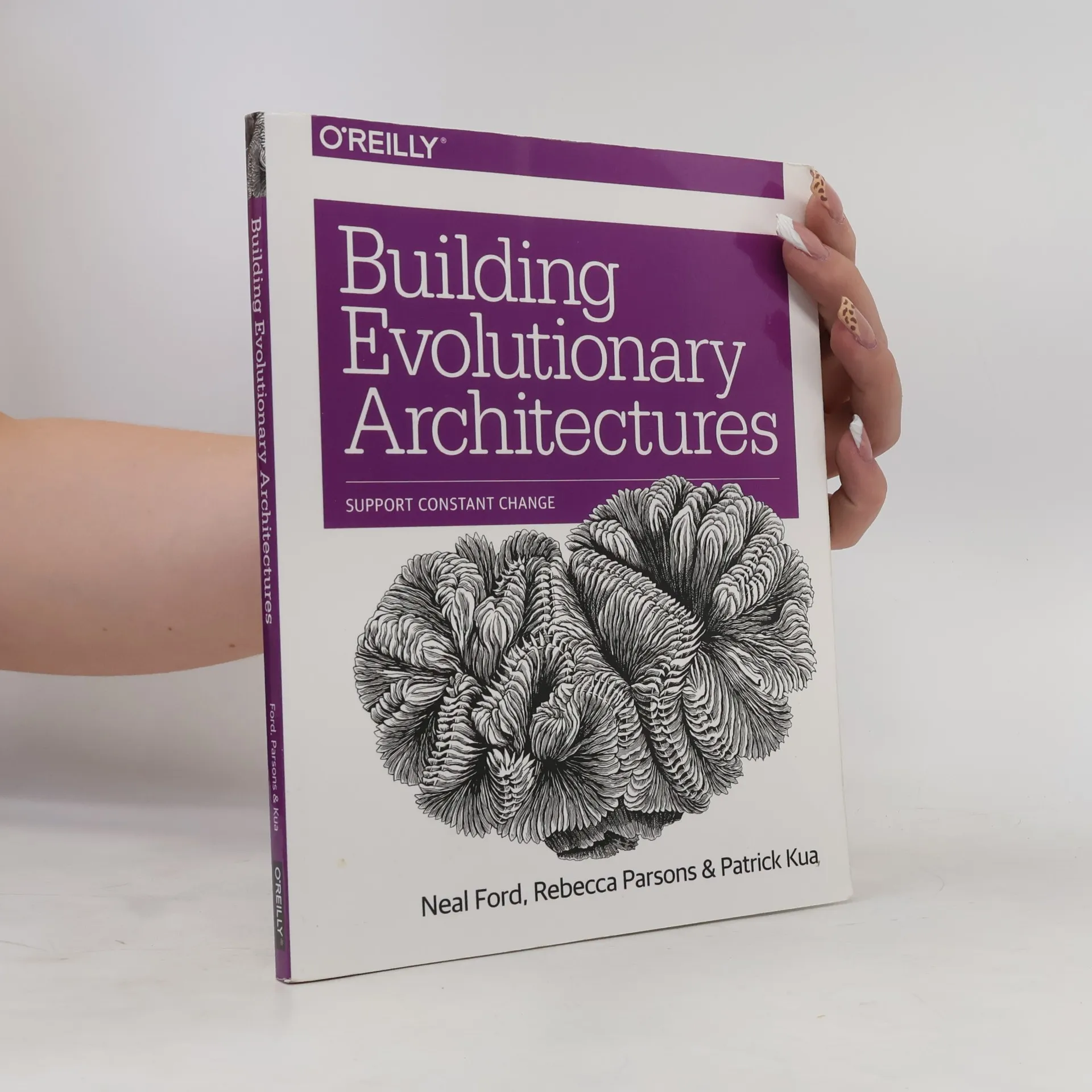
The software development ecosystem is constantly changing, providing a constant stream of new tools, frameworks, techniques, and paradigms. Over the past few years, incremental developments in core engineering practices for software development have created the foundations for rethinking how architecture changes over time, along with ways to protect important architectural characteristics as it evolves. This practical guide ties those parts together with a new way to think about architecture and time.
Martin Fowler Volgorde van de boeken (chronologisch)
18 december 1963
Martin Fowler is een software-ingenieur en een vooraanstaand voorstander van best practices in het ontwerp van bedrijfssoftware. Zijn werk richt zich sterk op agile softwareontwikkelingsmethodologieën en promoot principes die leiden tot effectiever en kwalitatief beter softwareontwerp. Hij legt de nadruk op praktische toepassing en kennisdeling binnen de softwaregemeenschap.


NoSQL Distilled
- 188bladzijden
- 7 uur lezen
'NoSQL Distilled' is designed to provide you with enough background on how NoSQL databases work, so that you can choose the right data store without having to trawl the whole web to do it. It won't answer your questions definitively, but it should narrow down the range of options you have to consider.
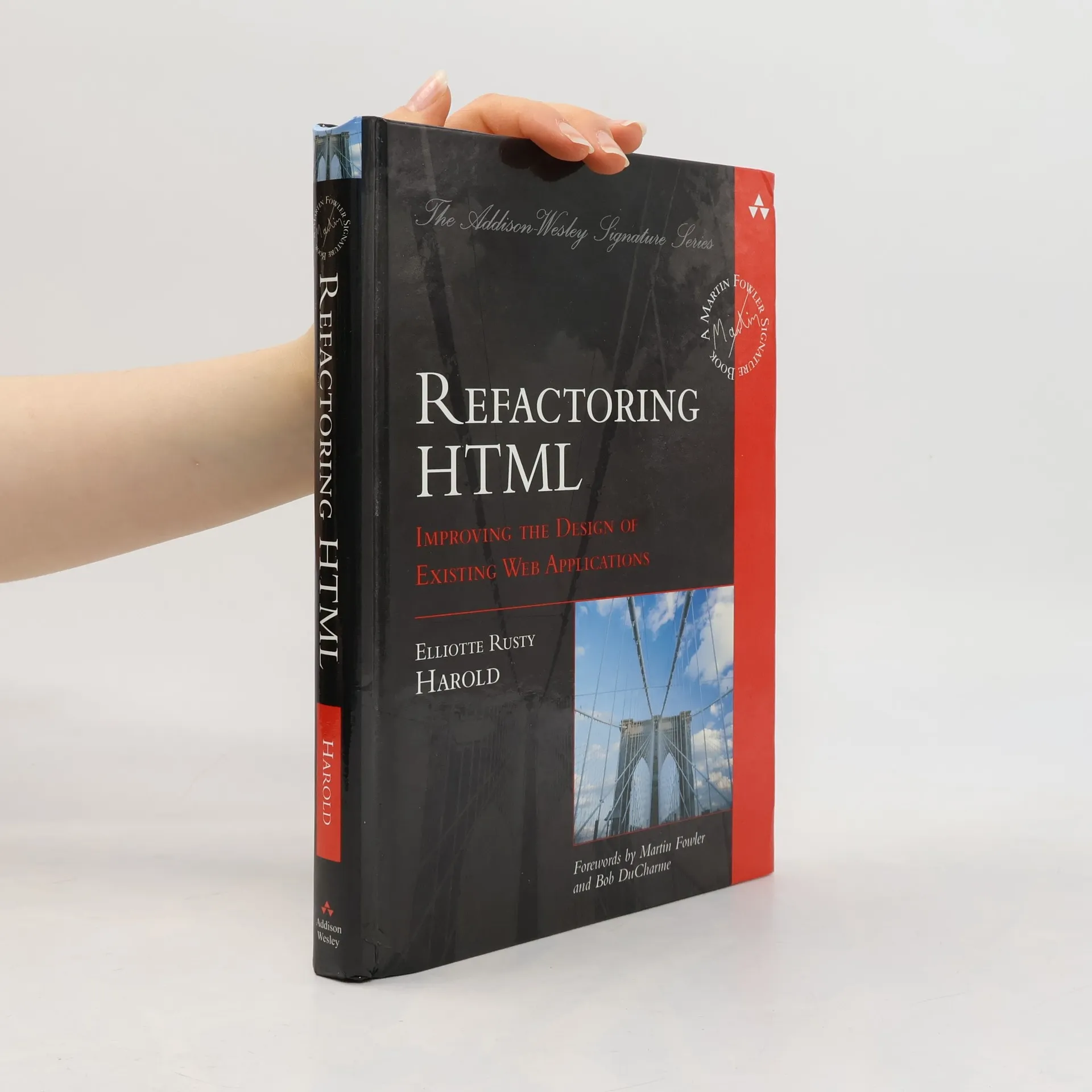
Websites, like any software system, accumulate “cruft” over time, leading to slower performance, broken links, and various compatibility and security issues. While rebuilding from scratch is ideal, it's often impractical due to time and budget constraints. Fortunately, refactoring offers a solution. This guide details how to enhance any website or application using proven techniques and tools from software development. The author provides insights for both programmers and non-programmers, demonstrating how to refactor for improved reliability, performance, usability, security, accessibility, and search engine optimization. Step-by-step instructions help migrate outdated code to modern standards like XHTML, CSS, and REST, addressing common issues such as presentation-based markup and “tag soup.” The book features an extensive catalog of detailed refactorings and practical recipes organized for quick access, enabling users to enhance site performance efficiently and ensure easier maintenance and scalability in the future. Key topics include identifying problematic Web code, transforming old HTML into valid XHTML, modernizing layouts with CSS, updating Web forms, and restructuring sites without altering user-facing URLs. This resource is invaluable for Web designers, developers, project managers, and anyone involved in maintaining or updating websites, particularly those looking to refresh their knowledge of current standar
"Domain-Driven Design" incorporates numerous examples in Java-case studies taken from actual projects that illustrate the application of domain-driven design to real-world software development.
Developers of enterprise applications (e.g reservation systems, supply chain programs, financial systems, etc.) face a unique set of challenges, different than those faced by their desktop system and embedded system peers. For this reason, enterprise developers must uncover their own solutions. In this new book, noted software engineering expert Martin Fowler turns his attention to enterprise application development. He helps professionals understand the complex -- yet critical -- aspects of architecture. While architecture is important to all application development, it is particularly critical to the success of an enterprise project, where issues such as performance and concurrent multi-user access are paramount. The book presents patterns (proven solutions to recurring problems) in enterprise architecture, and the context provided by the author enables the reader to make the proper choices when faced with a difficult design decision.
Over the last few years, Java 2 Platform, Enterprise Edition (J2EE) technology has emerged and matured as a standard platform for building enterprise applications. While the platform has matured into a solid offering for developing and deploying enterprise applications, it does offer its challenges. As developers, often we confuse learning the technology with learning to design with the technology. In this book, senior architects from the Sun Java Center, Suns Java consulting organization share with the reader their cumulative design experience with and expertise on J2EE technology.The primary focus of the book is on patterns, best practices, design strategies, and proven solutions using the key J2EE technologies including JavaServer Pages (JSP), Servlets, Enterprise Java Beans (EJB), and Java Message Service (J.M.S) API. Other ancillary technologies like JDBC and JNDI are also discussed as relevant to their usage in these patterns. The J2EE Patterns catalog with 16 patterns and numerous strategies is presented to document and promote best practices for these technologies.In addition to the patterns and strategies, the book offers the following: *Presents various design strategies
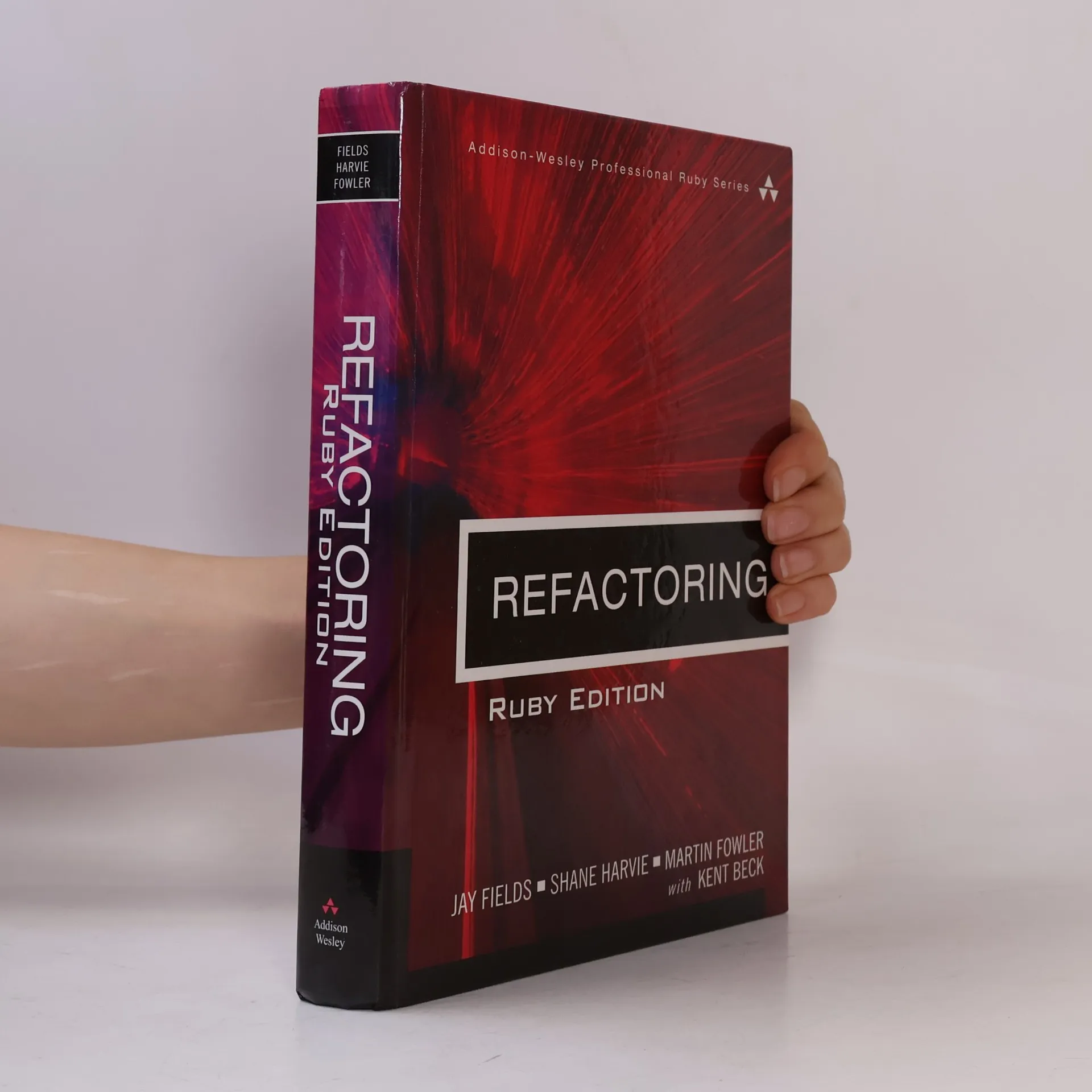
Refactoring
- 454bladzijden
- 16 uur lezen
Programmers can transform even the most chaotic software into well-designed systems that are far easier to evolve and maintain. What's more, they can do it through a series of simple, proven steps. This book features Ruby examples and idioms throughout - not code adapted from Java or any other environment.
Refactoring. Improving the Design os Existing Code
- 464bladzijden
- 17 uur lezen
Refactoring is gaining momentum amongst the object oriented programming community. It can transform the internal dynamics of applications and has the capacity to transform bad code into good code. This book offers an introduction to refactoring.
UML Distilled
A Brief Guide to the Standard Object Modeling Language, 3rd Edition
- 192bladzijden
- 7 uur lezen
A guide to the standard object modelling language, UML, this text provides programmers with the information needed to get up to speed.
This 1998 book conveys the essence of object-oriented programming and software building through the Unified Modeling Language.