

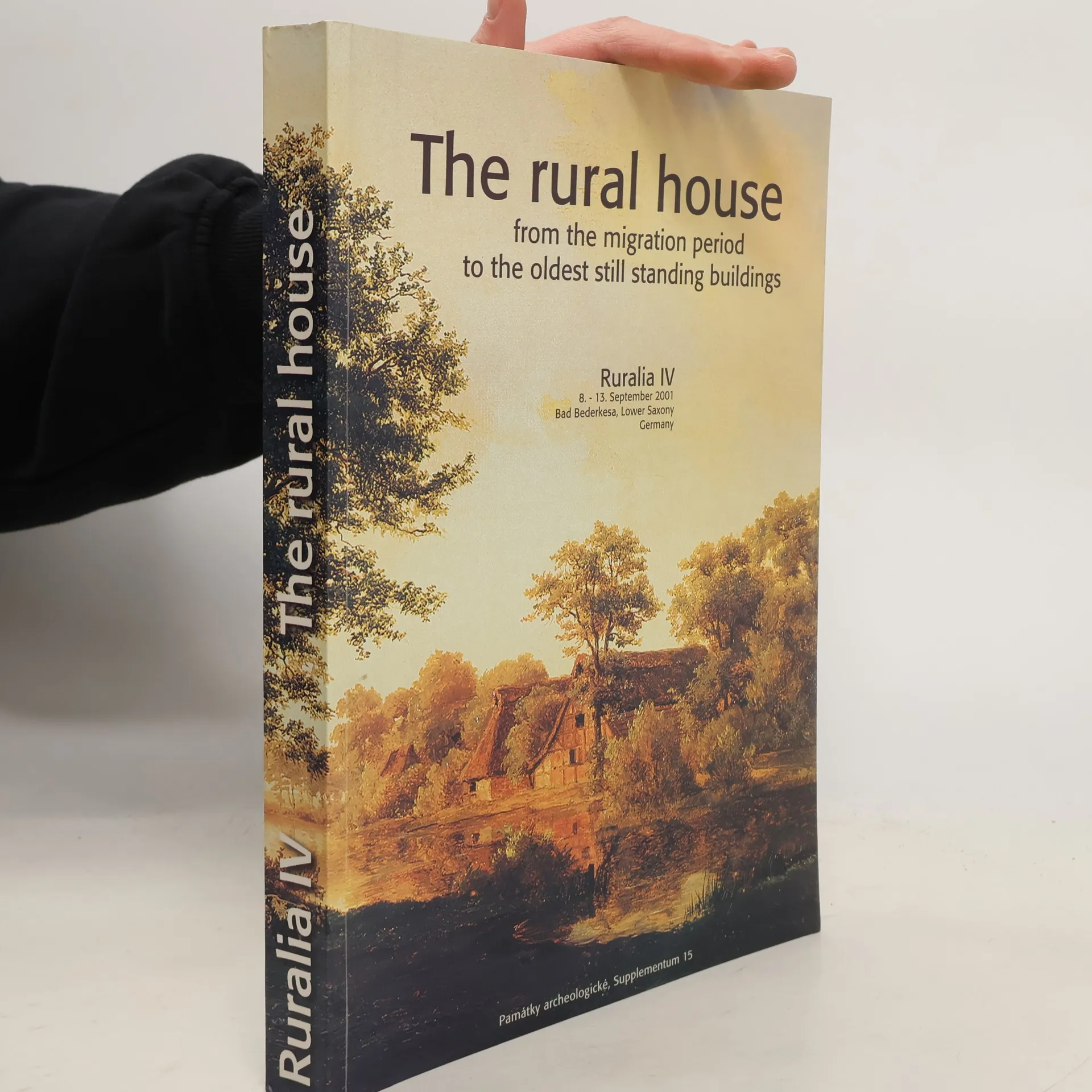
Ruralia - 4: The Rural House, From the Migration Period to the Oldest Still Standing Buildings
- 368bladzijden
- 13 uur lezen
This collection presents a comprehensive examination of rural architecture and daily life across various regions in medieval Europe. W. Haio Zimmerman's introduction sets the stage for diverse case studies, beginning with Emma Bentz's exploration of building functions and social spaces in South Scandinavia. Jochen Komber discusses Viking Age architecture, while Hans Skov traces the evolution of rural house types in Denmark from 800 to 1500 A.D. Mette Svart Kristiansen reconstructs the layout of a Danish farmstead, and Henriette Rensbro analyzes medieval farmhouses in Eastern Denmark, emphasizing different building techniques. Further contributions include Annette Hoff's insights on farm buildings based on Northwest European lawbooks, Rolf Barenfanger's examination of medieval houses in East Frisia, and Wolfgang Dorflers' study of early farmhouse structures in the Elbe-Weser region. Various authors investigate the transformation of rural housing, including Heinrich Stiewe's focus on 16th-century changes in Ostwestfalen, and Dietrich Maschmayer's analysis of Northwest German hall houses as indicators of agricultural revolutions. Additional topics cover late medieval log houses in Switzerland, house plans from Dutch settlements, and housing in medieval Ireland and Scotland. The anthology concludes with reflections on rural housing in Hungary and Bohemia, showcasing the continuity and change in architectural practices across the