A resounding success in the United States and various countries, Debt: The First 5,000 Years is not only one of the most important books on economic history and anthropology in recent times but also a fundamental work for understanding the current stage of capitalism. In it, American anthropologist David Graeber presents a new perspective on the history of debt and credit, as well as the origin of money. Graeber's comprehensive analysis challenges myths of economic studies, such as the idea that money was invented to replace barter. The anthropologist demonstrates that even before the creation of currency, civilizations dealt with elaborate systems of indebtedness and trade. The emergence of money brought violent consequences for societies, and debt, once linked to reciprocity and the exchange of favors, became an instrument of enslavement, domination, and war - as it continues to be today. A fascinating and unprecedented history of civilization emerges in this book, emphasizing the social dimension of economic relations and providing a radical critique of how capitalism, through indebtedness, produces control and destruction.
David Graeber Boeken
David Graeber was een Amerikaanse antropoloog en anarchist wiens werk thema's als schuld, arbeid en anarchie onderzocht. Zijn benadering was diep geworteld in de sociale antropologie, maar reikte verder dan de academische wereld door zijn sterke betrokkenheid bij politiek activisme. Graebers schrijfstijl stond bekend om zijn scherpte en zijn vermogen om theoretische concepten te verbinden met de dagelijkse realiteit en uitdagingen van maatschappelijke structuren. Zijn analyses belichtten vaak de onzichtbare vormen van macht en controle binnen de moderne samenleving.


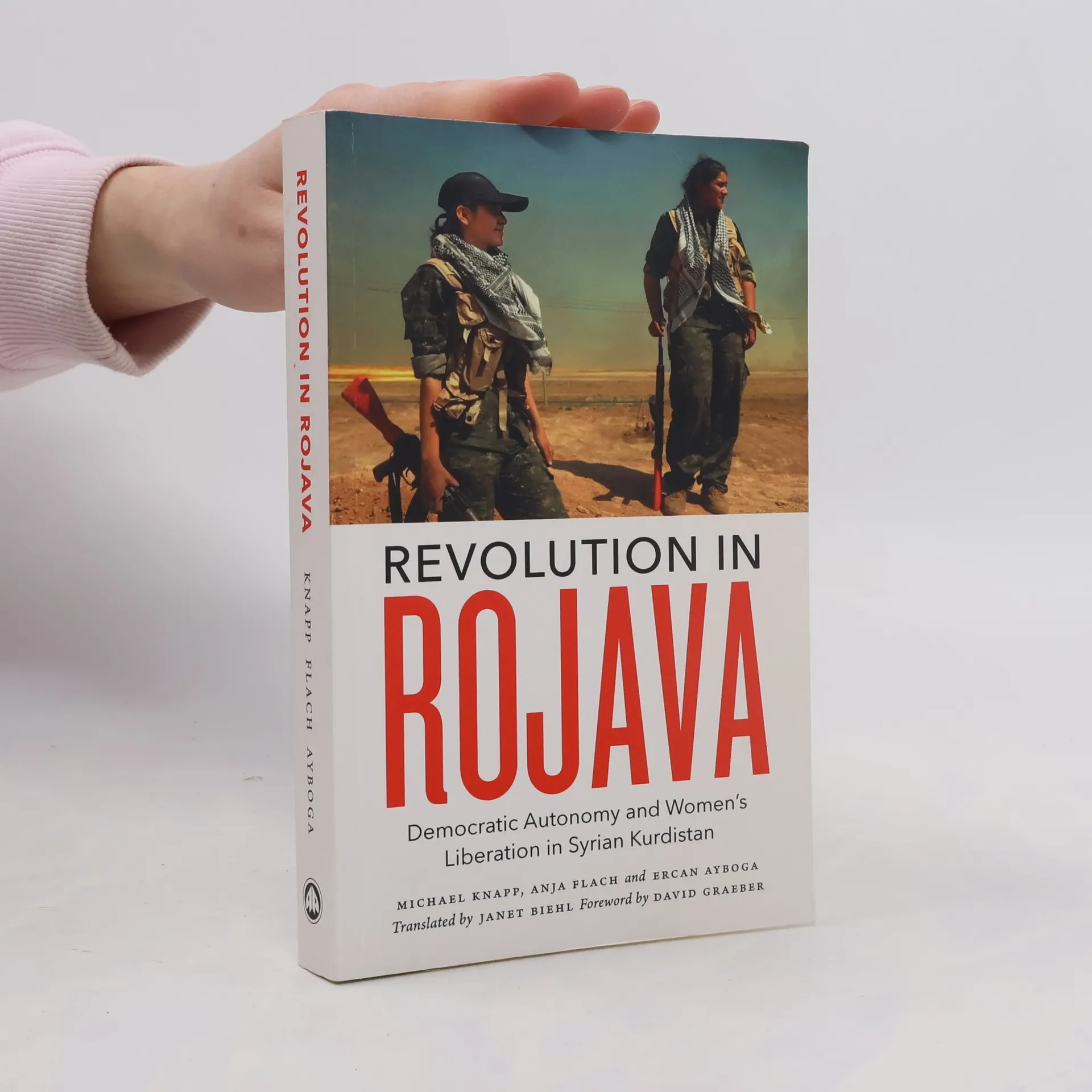
Revolution in Rojava
Democratic Autonomy and Women's Liberation in the Syrian Kurdistan
- 272bladzijden
- 10 uur lezen
Given the widespread violence and suffering in Syria, it's not unreasonable that outsiders look at the situation as unrelentingly awful. And while the reality of the devastation is undeniable, there is reason for hope in at least one small pocket of the nation: the cantons of Rojava in Syrian Kurdistan, where in the wake of war people are quietly building one of the most progressive societies in the world today. Revolution in Rojava tells the story of Rojava's groundbreaking experiment in what they call democratic confederalism, a communally organized democracy that is fiercely anti-capitalist and committed to female equality, while rejecting reactionary nationalist ideologies. Rooted in the ideas of imprisoned Kurdish leader Abdullah Ocalan, the system is built on effective gender quotas, bottom-up democratic structures, far-sighted ecological policies, and a powerful militancy that has allowed the region to keep ISIS at bay. This first full-length study of democratic developments in Rojava tells an extraordinary and powerfully hopeful story of a little-known battle for true freedom in dark times.
Now a widely cited classic, this innovative book is the first comprehensive synthesis of economic, political, and cultural theories of value. David Graeber reexamines a century of anthropological thought about value and exchange, in large measure to find a way out of ongoing quandaries in current social theory, which have become critical at the present moment of ideological collapse in the face of Neoliberalism. Rooted in an engaged, dynamic realism, Graeber argues that projects of cultural comparison are in a sense necessarily revolutionary He attempts to synthesize the best insights of Karl Marx and Marcel Mauss, arguing that these figures represent two extreme, but ultimately complementary, possibilities in the shape such a project might take. Graeber breathes new life into the classic anthropological texts on exchange, value, and economy. He rethinks the cases of Iroquois wampum, Pacific kula exchanges, and the Kwakiutl potlatch within the flow of world historical processes, and recasts value as a model of human meaning-making, which far exceeds rationalist/reductive economist paradigms.
David Graeber challenges mainstream liberal and leftist thought through his extensive experience as an ethnologist and activist. He explores a new genealogy of anarchist thought, inspired by movements like Occupy Wall Street, aiming to inspire fresh political ideas for the 21st century, emphasizing collective action over individualism.
Possibilities
- 433bladzijden
- 16 uur lezen
An anthropologist investigates the revolution of everyday life.
In this work, David Graeber explores the implications of linking anthropology to anarchism.
Debt : the first 5000 years
- 542bladzijden
- 19 uur lezen
The groundbreaking international best-seller that turns everything you think about money, debt, and society on its head—from the “brilliant, deeply original political thinker” David Graeber (Rebecca Solnit, author of Men Explain Things to Me) Before there was money, there was debt. For more than 5,000 years, since the beginnings of the first agrarian empires, humans have used elaborate credit systems to buy and sell goods—that is, long before the invention of coins or cash. It is in this era that we also first encounter a society divided into debtors and creditors—which lives on in full force to this day. So says anthropologist David Graeber in a stunning reversal of conventional wisdom. He shows that arguments about debt and debt forgiveness have been at the center of political debates from Renaissance Italy to Imperial China, as well as sparking innumerable insurrections. He also brilliantly demonstrates that the language of the ancient works of law and religion (words like “guilt,” “sin,” and “redemption”) derive in large part from ancient debates about debt, and shape even our most basic ideas of right and wrong. We are still fighting these battles today.
The Ultimate Hidden Truth of the World
- 384bladzijden
- 14 uur lezen
Featuring a collection of influential essays and interviews spanning over twenty years, this compilation showcases David Graeber's groundbreaking insights. Renowned for his thought-provoking perspectives, Graeber tackles themes such as economics, society, and politics, making complex ideas accessible and engaging. This anthology serves as a testament to his legacy, offering readers a deep dive into his critical analysis and unique viewpoints that challenge conventional wisdom.
Direct Action: An Ethnography
- 600bladzijden
- 21 uur lezen
A radical anthropologist studies the global justice movement.
The democracy project : a history, a crisis, a movement
- 352bladzijden
- 13 uur lezen
On August 2 2011, David Graeber and a group of veterans from various European, Middle Eastern and Asian activist movements answered the Adbusters provocation to 'occupy Wall Street'. This book tells the story of Occupy Wall Street's origins and explains how the movement works and how readers can replicate its method in their communities.
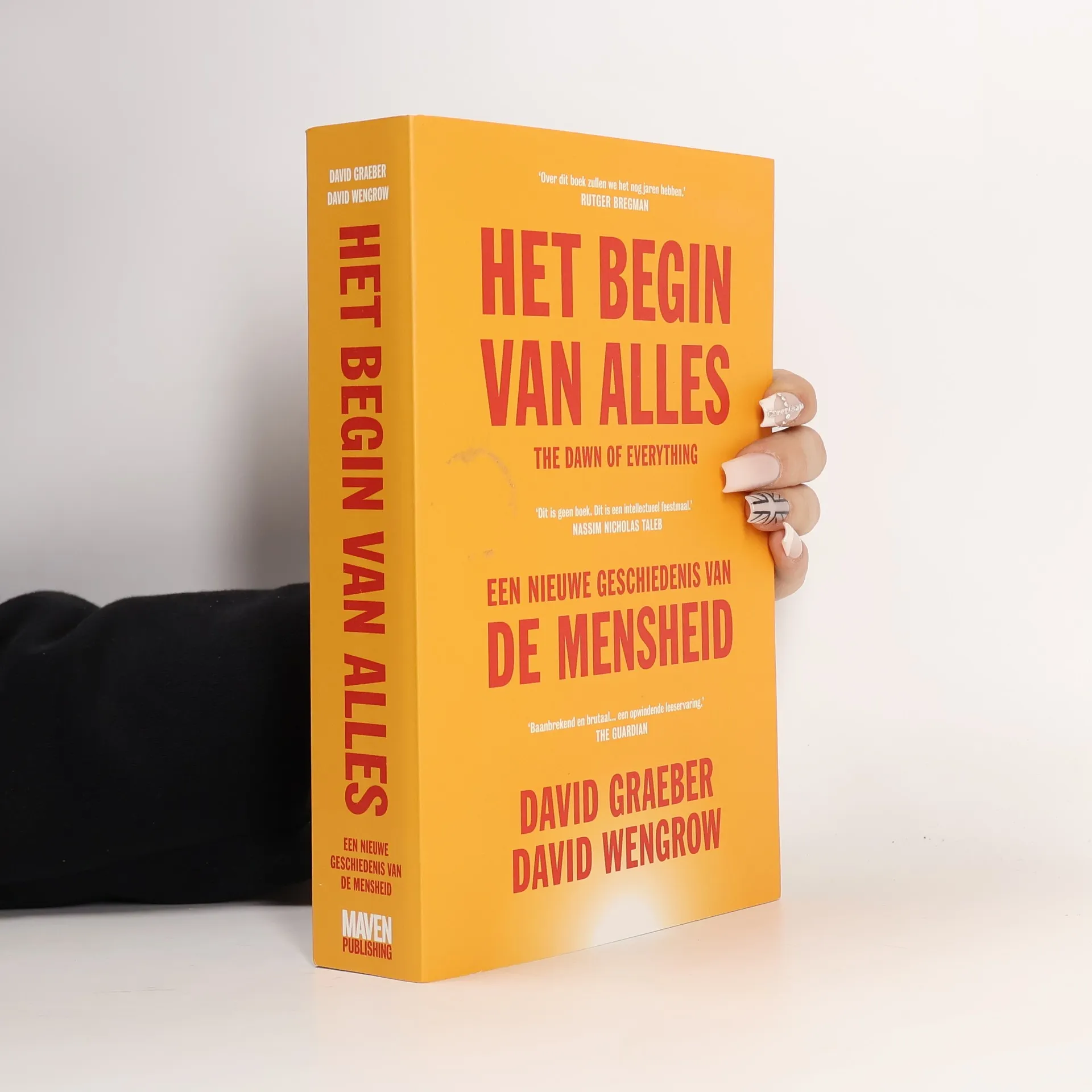
Fascinerend, provocerend, baanbrekend – een boek dat in de komende jaren voor discussie zal zorgen. David Graeber, een van de meest invloedrijke antropologen van onze tijd, en David Wengrow, een vooraanstaand archeoloog, ontvouwen in hun uitgebreide mensheidsgeschiedenis hoe de oorsprongen van onze beschaving opnieuw verbonden kunnen worden met de toekomst van de mensheid. Ze herzien ons bestaande mensenbeeld en vertellen de geschiedenis van de mensheid op een geheel nieuwe manier. Gedurende duizenden jaren zijn er diverse vormen van sociale organisatie uitgevonden, en de zoektocht naar vrijheid, kennis en geluk was al vóór de Verlichting aanwezig. Graeber en Wengrow tonen aan hoe sterk inheemse perspectieven het westerse denken hebben beïnvloed en hoe belangrijk het is om deze terug te winnen. Ze moedigen ons aan om moediger op te komen voor een andere toekomst van de mensheid en deze door ons handelen te veranderen. Dit meesterwerk is Graebers nalatenschap en stimuleert ons om de menselijke mogelijkheden opnieuw te overdenken en de geschiedenis in een nieuw licht te zien. Het ontmaskert clichés over de mensheidsgeschiedenis en opent nieuwe mogelijkheden voor de toekomst.
The utopia of rules : on technology, stupidity, and the secret joys of bureaucracy
- 272bladzijden
- 10 uur lezen
From the author of the international bestseller Debt: The First 5,000 Years comes a revelatory account of the way bureaucracy rules our livesWhere does the desire for endless rules, regulations, and bureaucracy come from? How did we come to spend so much of our time filling out forms? And is it really a cipher for state violence?To answer these questions, the anthropologist David Graeber--one of our most important and provocative thinkers--traces the peculiar and unexpected ways we relate to bureaucracy today, and reveals how it shapes our lives in ways we may not even notice...though he also suggests that there may be something perversely appealing--even romantic--about bureaucracy. Leaping from the ascendance of right-wing economics to the hidden meanings behind Sherlock Holmes and Batman, The Utopia of Rules is at once a powerful work of social theory in the tradition of Foucault and Marx, and an entertaining reckoning with popular culture that calls to mind Slavoj Zizek at his most accessible.An essential book for our times, The Utopia of Rules is sure to start a million conversations about the institutions that rule over us--and the better, freer world we should, perhaps, begin to imagine for ourselves.
Bullshit jobs
- 320bladzijden
- 12 uur lezen
Back in 1930, the economist John Maynard Keynes prophesied that by the century's end, technology would see us all working fifteen-hour weeks. But instead, something curious happened. Today, average working hours have not decreased, but increased. And now, across the developed world, three-quarters of all jobs are in services or admin, jobs that don't seem to add anything to society- bullshit jobs. In Bullshit Jobs, David Graeber explores how this phenomenon - one more associated with the 20th-century Soviet Union, but which capitalism was supposed to eliminate - has happened. In doing so, he looks at how we value work, and how, rather than being productive, work has become an end in itself; the way such work maintains the current broken system of finance capital; and, finally, how we can get out of it.
Cities Made Differently
- 120bladzijden
- 5 uur lezen
Exploring the diverse experiences of urban life across cultures and history, this book delves into the unique characteristics of cities, both real and imagined. It investigates the existential questions surrounding humanity, examining how these concepts shift from childhood to adulthood. Through a wide array of examples, the work highlights the varied ways people have lived, dreamed, and feared urban environments, offering insights into the universal aspects of human existence.
Revolutions In Reverse: Essays On Politics, Violence, Art, And Imagination
- 114bladzijden
- 4 uur lezen
Today's capitalist systems appear to be coming apart - but what is the alternative? In a generation or so, capitalism may no longer exist as it's impossible to maintain perpetual growth on a finite planet. David Graeber explores political strategy, global trade, violence, alienation and creativity looking for a new common sense.
"Pirates have long lived in the realm of romance and fantasy, symbolizing risk, lawlessness, and radical visions of freedom. But at the root of this mythology is a rich history of pirate societies--vibrant, imaginative experiments in self-governance and alternative social formations at the edges of the European empire. In graduate school, David Graeber conducted ethnographic field research in Madagascar for his doctoral thesis on the island's politics and history of slavery and magic. During this time, he encountered the Zana-Malata, an ethnic group of mixed descendants of the many pirates who settled on the island at the beginning of the eighteenth century. Pirate Enlightenment, or the Real Libertalia, Graeber's final posthumous book, is the outgrowth of this early research and the culmination of ideas that he developed in his classic, bestselling works Debt and The Dawn of Everything (written with the archaeologist David Wengrow). In this lively, incisive exploration, Graeber considers how the protodemocratic, even libertarian practices of the Zana-Malata came to shape the Enlightenment project defined for too long as distinctly European. He illuminates the non-European origins of what we consider to be "Western" thought and endeavors to recover forgotten forms of social and political order that gesture toward new, hopeful possibilities for the future"--Publisher's description
From his solitary jail cell, Abdullah Ocalan has penned daring works that give profuse evidence of his position as one of the most significant thinkers of our day. His prison writings have mobilised tens of thousands of people and inspired a revolution in the making in northern Syria, while also penetrating the walls of academia triggering debate and reflection among countless scholars. So how do you engage in a meaningful dialogue with Abdullah Ocalan when he has been held in total isolation since April 2015? You compile a book of essays written by a diverse cast of luminaries, send it to Ocalan's jailers and hope that they deliver it to him.
Dluh. Prvních 5000 let
- 416bladzijden
- 15 uur lezen
Peníze byly údajně vynalezeny, aby nahradily obtížný a komplikovaný směnný obchod. Dluhy se přitom táhnou alespoň pět tisíc let, tedy podstatně déle, než se datuje existence peněz. Kde je tedy pravda? Uznávaný americký antropolog a aktivista David Graeber popisuje, jak se celé dějiny točí kolem dluhů. Zároveň dokládá, že napříč různými kulturami se jako červená nit táhne odpouštění dluhů, které pomáhalo udržovat stabilitu společenských systémů. Splácení dluhů je morálním základem, na němž stojí lidské vztahy. Autor knihy vás přesvědčí, že čas od času však nastávají chvíle, kdy je tento základ nutno zbořit a dluhy smazat. Davidu Graeberovi se podařilo něco vzácného – napsal fundovanou knihu, která se čte jedním dechem. Mistrovským zpracováním vystihl klíčová témata dnešní diskuse, ač pět tisíc let stará. Čtenáře jen překvapí, proč mu to samotnému nedošlo dříve. Kniha se stává okamžitou klasikou ve svém oboru.
In seinen »Fragmenten« lädt David Graeber dazu ein, sich eine intellektuelle Praxis vorzustellen, die bisher nur als Möglichkeit existierte: eine anarchistische Anthropologie. Wenn wir die Geschichte der Menschheit in ihrer Gänze erkundeten, würden wir feststellen, dass es unzählige Möglichkeiten gab und gibt, alles anders zu machen. Die Anthropologie birgt einen noch ungehobenen Schatz an Wissen, mit dem sich zeigen ließe, dass Selbstbestimmung und soziale Kreativität weitaus üblicher sind und waren, als wir mithin meinen. Graeber verstand es, gelebte radikale alltägliche politische Praxis greifbar zu machen und in der Form seiner Theorie als Geschenk zurückzugeben. Was wäre weiterhin, wenn diese Forschung ergäbe, dass Konzepte wie ›der Westen‹ oder ›unsere Tradition‹ der Demokratie, derer wir uns zur Selbstvergewisserung bedienen, nicht so einmalig sind, wie die gelehrte Vorstellung behauptet? In »Einen Westen hat es nie gegeben« schaut Graeber auf die Demokratie und die Demokratie schaut zurück, um ›unsere‹ gedanklichen Horizonte zu dezentrieren und dekolonialisieren. Was nach mehr als zehn Jahren mit Erscheinen seines Bestsellers »Anfänge« (2022) für Furore sorgte, können wir hier in den ersten, vor ansteckender Kreativität strotzenden Vorschlägen nachlesen – und werden en passant durch diese kleine Einführung für den Anarchismus begeistert.
Soziale Ungerechtigkeit, Naturzerstörung sowie die Schulden- und Finanzkrise lassen zweifeln, ob die Marktwirtschaft die richtige Lösung für die Probleme unserer Zeit ist. Der Bestsellerautor Tomas Sedlacek („Die Ökonomie von Gut und Böse“) bricht dennoch eine Lanze für den Kapitalismus: Er ist das beste Wirtschaftssystem, das wir kennen. Aber er muss von Grund auf reformiert werden. David Graeber („Schulden: Die ersten 5000 Jahre“) hält dagegen: Der Kapitalismus ist nicht mehr reformierbar, er gehört abgeschafft. Unsere Wirtschaft braucht ein anderes, gerechteres System. Die Stars der Kapitalismuskritik treffen aufeinander – und beziehen pointiert Stellung.
Anarchie - oder was?
Gespräche mit Mehdi Belhaj Kacem, Nika Dubrovsky und Assia Turquier-Zauberman
- 243bladzijden
- 9 uur lezen
Die Diskussion über anarchistisches Denken im Kontext des 21. Jahrhunderts steht im Mittelpunkt dieses Buches. David Graeber, gemeinsam mit Philosophen und Anthropologen, untersucht die Wurzeln und Perspektiven anarchistischer Ideen, während er sich mit aktuellen Bewegungen wie Occupy Wall Street und Gilets Jaunes auseinandersetzt. Ziel ist es, neue Impulse für ein politisches Denken zu entwickeln, das über traditionelle Alternativen hinausgeht. Graebers geistreiche und radikale Herangehensweise als Querdenker wird in diesem dynamischen Dialog deutlich.
Au commencement était…
Une nouvelle histoire de l'humanité
Die ultimative heimliche Wahrheit der Welt
- 400bladzijden
- 14 uur lezen
David Graebers Vermächtnis zeigt, dass die Welt von uns gestaltet wird und wir sie anders gestalten könnten. Als einer der radikalsten Denker der letzten Jahrzehnte schrieb Graeber geistreich gegen den Kapitalismus und die damit verbundene Unfreiheit an. In diesem Band sind 18 überraschende und intellektuell anregende Texte versammelt, die die Essenz seines Schaffens und sein geistiges Erbe widerspiegeln. Er stellt grundlegende Fragen: Warum akzeptieren wir Ungleichheit? Warum erscheinen gesellschaftliche Hierarchien als gegeben? Und weshalb nehmen wir die Ausbeutung durch den Kapitalismus hin? Graeber, ein international anerkannter Anthropologe und Bestsellerautor, widmete sein Leben der schonungslosen Offenlegung der Widersprüche unserer Gesellschaft und deren Wurzeln. Seine scharfsinnigen und provokanten Publikationen haben neue Denkanstöße in die Diskussionen eingebracht und zahlreiche Debatten angestoßen. Diese Sammlung bedeutender und teils unveröffentlichter Essays sprüht vor dem Geist, der unwiderstehlichen Suggestion und dem Witz Graebers. Die Auswahl wird durch Interviews mit Thomas Piketty und Hannah Appel ergänzt und behandelt zentrale Themen seines Werks: Antikapitalismus, soziale Ungleichheit, radikale Demokratie, Anarchie und grenzenlose Freiheitsliebe.
DŁUG PIERWSZE PIĘĆ TYSIĘCY LAT
- 640bladzijden
- 23 uur lezen
Wszystkie podręczniki ekonomii mówią to samo. Pieniądz wynaleziono po to, by zastąpić uciążliwy i skomplikowany barter – aby starożytni nie musieli już nosić swoich towarów na rynek. Problem z tą wersją historii? Nie ma cienia dowodu na jej prawdziwość. Antropolog David Graeber w porywający sposób odwraca utarte przekonania. Pokazuje, że pięć tysięcy lat temu, w okresie narodzin rolniczych imperiów, ludzie korzystali z rozbudowanych systemów kredytowych. Wtedy po raz pierwszy pojawiły też się społeczeństwa podzielone na dłużników i wierzycieli. Gdy z czasem wirtualny pieniądz kredytowy zastąpiły złote i srebrne monety, system zaczął się chylić ku upadkowi. Stopy procentowe poszybowały w górę i dłużnicy stali się niewolnikami. System istniał ze cenę rosnącej przemocy. Wyłącznie dzięki okazjonalnym interwencjom królów i kościołów udawało się nie dopuścić, aby sprawy wymknęły się spod kontroli. Dług: pierwsze pięć tysięcy lat jest fascynującą kroniką tej słabo znanej części historii. Pokazuje wpływ historii długu na przebieg ludzkich dziejów, a także jej związek z aktualnymi kryzysami finansowymi i przyszłością naszej gospodarki.
Inside Occupy
- 200bladzijden
- 7 uur lezen
„Occupy Wall Street!“ Mit diesem Aufruf besetzt im September 2011 eine Gruppe von Aktivisten den Zuccotti-Park im New Yorker Finanzdistrikt. Sie wollen friedlich gegen die Finanzmärkte und Banken, die ungerechte Verteilung der Vermögen sowie die Untätigkeit der Politik demonstrieren. Was steckt hinter dieser Bewegung, die in kurzer Zeit Millionen Menschen rund um den Globus mobilisiert? Was steckt hinter den Guy-Fawkes-Masken der Besetzer? Was steckt hinter ihrem Mut und ihrem Zorn? Der Vordenker und Aktivist David Graeber berichtet aus erster Hand, wie alles begann, wie die Bewegung stark werden konnte und warum dies erst der Anfang ist.
Práce na hovno
- 384bladzijden
- 14 uur lezen