The Upswing
- 448bladzijden
- 16 uur lezen
A celebrated political scientist shows how we can remedy the current economic, social and political ills - by doing what we did a century ago and becoming once more a 'we' rather than 'I' society


Robert Putnam is een politicoloog en professor in openbaar beleid aan de Universiteit van Harvard. Zijn invloedrijke 'two-level game theory' stelt dat internationale overeenkomsten alleen succesvol zullen zijn als ze ook binnenlandse voordelen opleveren. In zijn bekendste werk stelt hij dat de Verenigde Staten sinds de jaren '60 een ongekende ineenstorting van het maatschappelijk middenveld hebben doorgemaakt, met ernstige negatieve gevolgen.



A celebrated political scientist shows how we can remedy the current economic, social and political ills - by doing what we did a century ago and becoming once more a 'we' rather than 'I' society
New York Times bestseller and examination of the growing inequality gap from the bestselling author of Bowling Alone.
Based on two new studies, "American Grace" examines the impact of religion on American life and explores how that impact has changed in the last half-century.
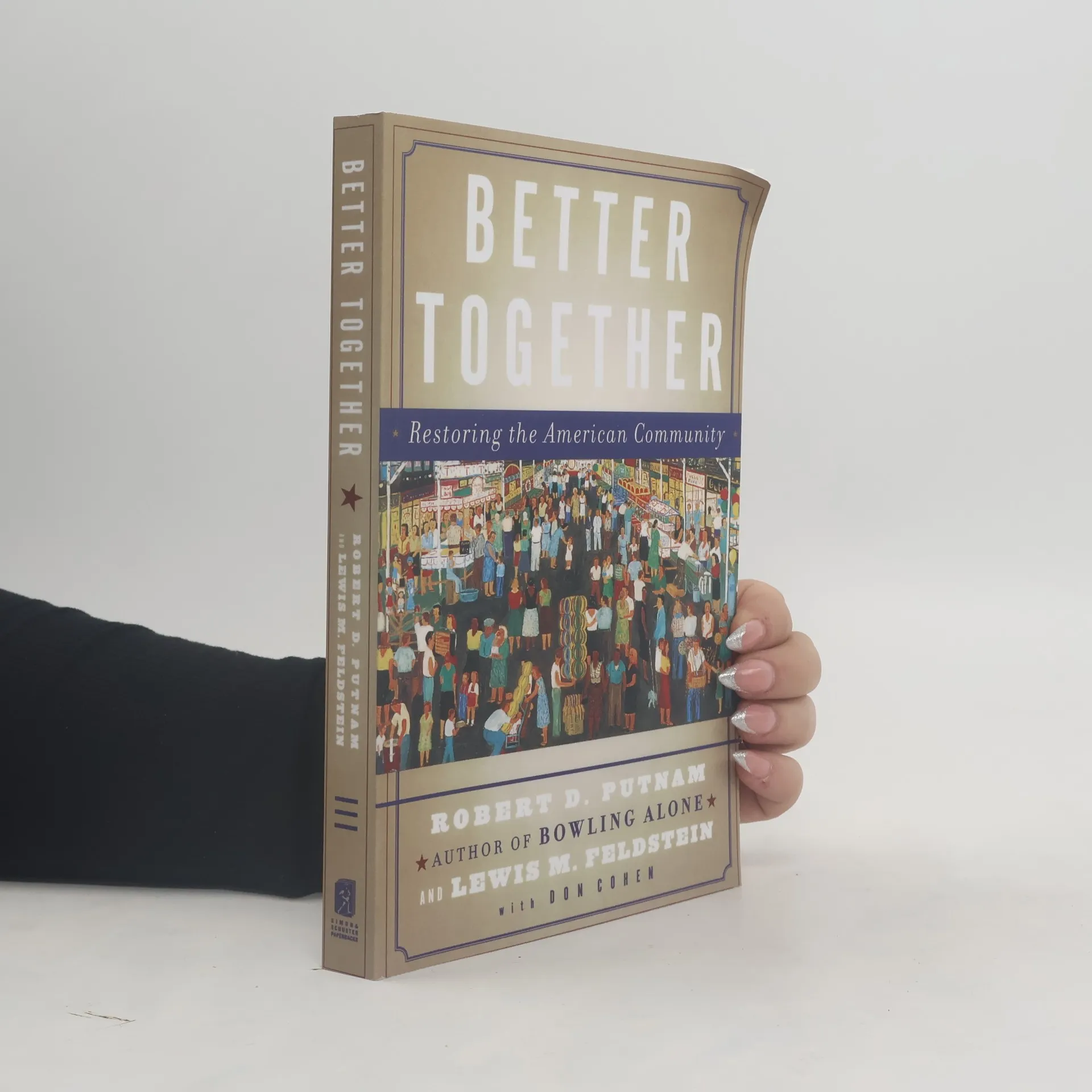
From bestselling author Robert Putnam, comes a groundbreaking follow-up book that puts into practice the lessons learnt from BOWLING ALONE.
Shows how changes in work, family structure, women's roles, and other factors have caused people to become increasingly disconnected from family, friends, neighbors, and democratic structures--and how they may reconnect.
Why do some democratic governments succeed and others fail? In a book that has received attention from policymakers and civic activists in America and around the world, Robert Putnam and his collaborators offer empirical evidence for the importance of "civic community" in developing successful institutions. Their focus is on a unique experiment begun in 1970 when Italy created new governments for each of its regions. After spending two decades analyzing the efficacy of these governments in such fields as agriculture, housing, and health services, they reveal patterns of associationism, trust, and cooperation that facilitate good governance and economic prosperity.