

Schoolboy Emil Sinclair boasts of a theft and finds himself blackmailed by a bully. He turns to Max Demain in whom he finds a friend and mentor. Under this strangely self-possessed figure's guidance, Emil discovers a new world of corruption and evil.
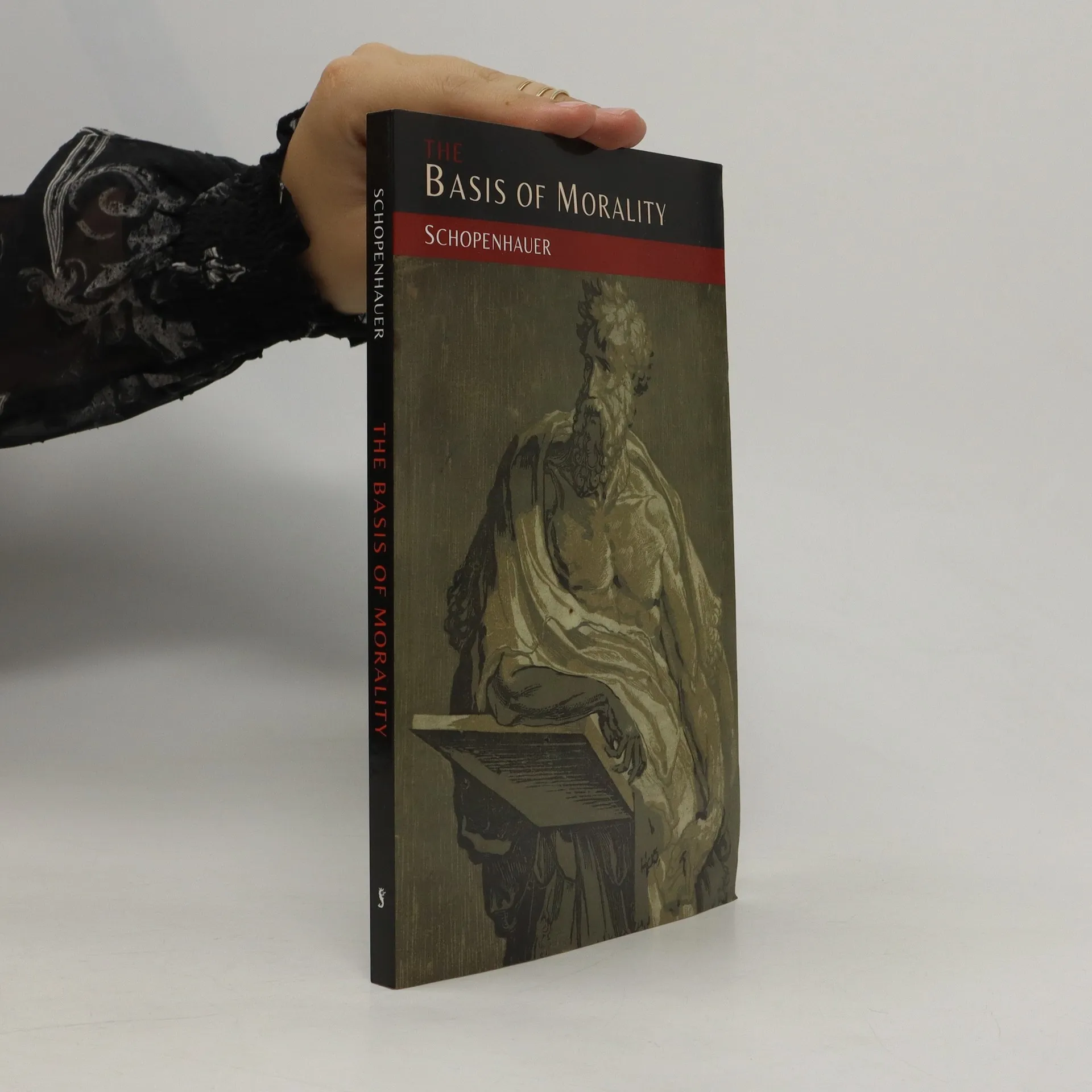
2015 Reprint of 1915 Edition. "The Basis of Morality" is one of Arthur Schopenhauer's major works in ethics, in which he argues that morality stems from compassion. Schopenhauer begins with a criticism of Kant's "Groundwork of the Metaphysic of Morals," which Schopenhauer considered to be the clearest explanation of Kantian ethics. Persuasive and humane, this classic of philosophy represents one of the nineteenth century's most significant treatises on ethics. "The Basis of Morality" offers Schopenhauer's fullest examination of traditional ethical themes, and it articulates a descriptive form of ethics that contradicts the rationally based prescriptive theories. Starting with his polemic against Kant's ethics of duty, Schopenhauer anticipates the latter-day critics of moral philosophy. Arguing that compassion forms the basis of morality, he outlines a perspective on ethics in which passion and desire correspond to different moral characters, behaviors, and worldviews. In conclusion, Schopenhauer defines his metaphysics of morals, employing Kant's transcendental idealism to illustrate both the inter-connectedness of being and the affinity of his ethics to Eastern thought.
Harry Haller is the Steppenwolf: wild, strange, shy and alienated from society. His despair and desire for death draw him into a dark, enchanted underworld. Through a series of shadowy encounters - romantic, freakish and savage by turn - the misanthropic Haller gradually begins to rediscover the lost dreams of his youth. This blistering portrayal of a man who feels himself to be half-human and half-wolf was the bible of the 1960s counterculture, capturing the mood of a disaffected generation, and remains a haunting story of estrangement and redemption.
Buddenbrooks, first published in Germany in 1901, when Mann was only twenty-six, has become a classic of modern literature. It is the story of four generations of a wealthy bourgeois family in northern Germany facing the advent of modernity; in an uncertain new world, the family’s bonds and traditions begin to disintegrate. As Mann charts the Buddenbrooks’ decline from prosperity to bankruptcy, from moral and psychic soundness to sickly piety, artistic decadence, and madness, he ushers the reader into a world of stunning vitality, pieced together from births and funerals, weddings and divorces, recipes, gossip, and earthy humor. In its immensity of scope, richness of detail, and fullness of humanity, buddenbrooks surpasses all other modern family chronicles. With remarkable fidelity to the original German text, this superb translation emphasizes the magnificent scale of Mann’s achievement in this riveting, tragic novel.
This edition contains: -A translation into Spanish of the German play Der Tod des Empedokles (1846) by Friedrich Hölderlin. - A commentary of the play. -Translation into Spanish of a number of poems by the same author. Translations and commentary are done by Carmen Bravo-Villasante.
La vita del compositore tedesco Adrian Leverkühn narrata da un amico
579bladzijden
21 uur lezen
Opera tra le più significative di Thomas Mann, Doctor Faustus è la tragica storia di Adrian Leverkühn, un musicista tedesco che come Faust ottiene dal demonio anni di meravigliosa attività intellettuale in cambio della dannazione eterna. Scritto alla fine della Seconda guerra mondiale e nell'immediato dopoguerra, il romanzo dà voce all'atmosfera disperata di quella che fu la catastrofe della Germania. Intorno alla narrazione principale, che abbraccia tre generazioni, si muove un mondo di personaggi presentati con la sapiente maestria di un grande stilista, con accorata pietà o con mordente ironia, mentre alla trama centrale si annodano digressioni che spaziano nei campi della musica, della filosofia, della scienza.