

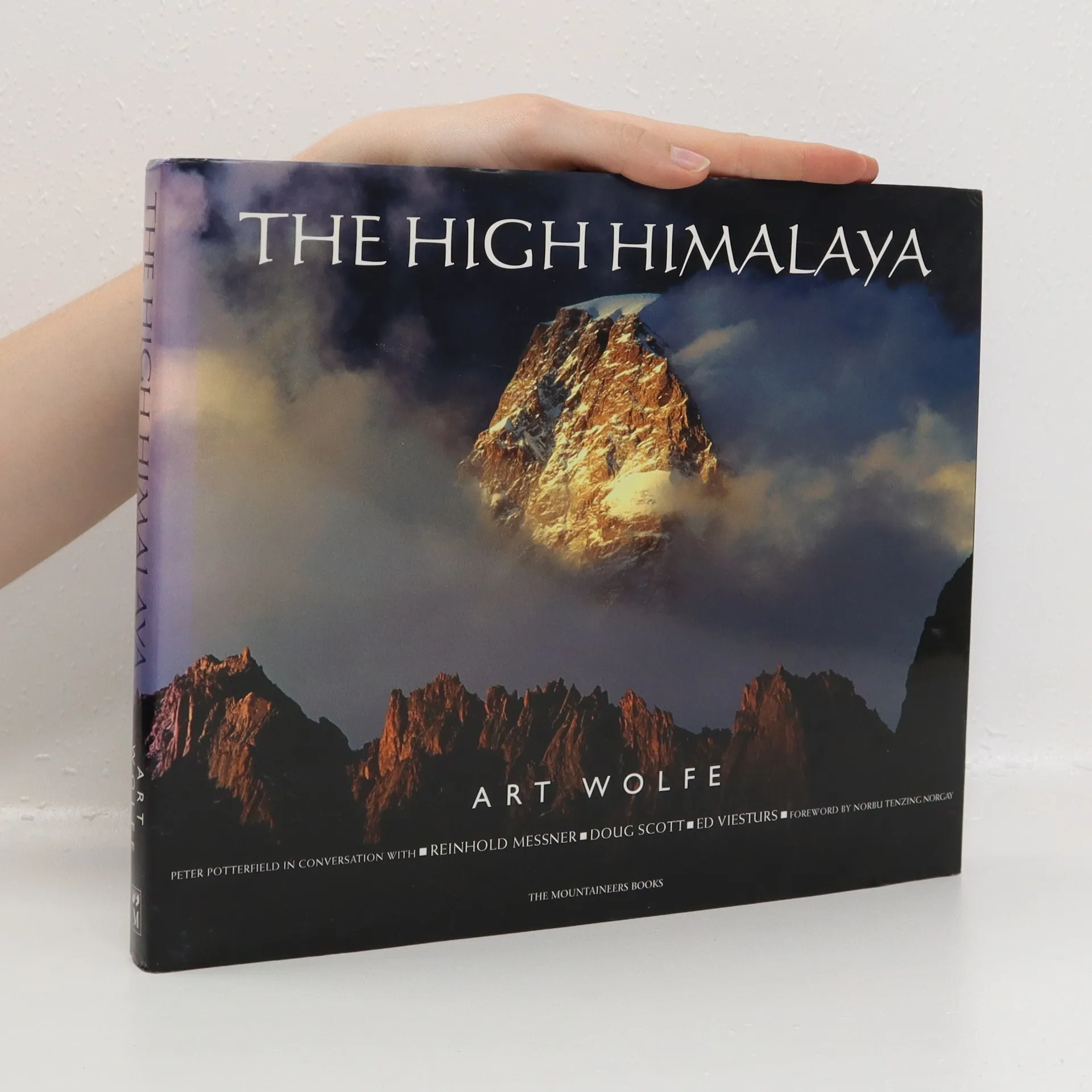
Art Wolfe, an internationally acclaimed nature photographer, has captured the essence of the Himalayan region in a stunning collection of photographs. This work features over 150 breathtaking images taken during his travels through Pakistan, India, Nepal, Tibet, and China, showcasing the diverse landscapes, flora, fauna, and cultures of the highest mountain range in the world. Wolfe's artistry brings to life the people, architecture, religious icons, and majestic vistas of these areas. Enhancing this visual experience are intimate interviews conducted by Peter Potterfield with renowned climbers Reinhold Messner, Doug Scott, and Ed Viesturs. They share their perspectives on the Himalaya as a natural, social, and climbers' world, providing personal insights that complement Wolfe's striking images and set this collection apart. Wolfe, a Seattle resident and award-winning photographer, has published over forty books and is known for his engaging slide shows and lectures. His accolades include the Alfred Eisenstaedt Magazine Photography Award and the Outstanding Nature Photographer of the Year title from the National Audubon Society. Peter Potterfield is also an accomplished author, while Norbu Tenzing Norgay, the son of the legendary Tenzing Norgay, brings his own climbing expertise to the narrative.
Ed Viesturs Boeken
Ed Viesturs is Amerika's belangrijkste hoogalpienist, bekend om het bedwingen van talrijke uitdagende toppen wereldwijd. Zijn benadering van klimmen geeft prioriteit aan persoonlijke prestaties en de ervaring van de berg in zijn pure vorm, waarbij hij aanvullende zuurstof vermijdt. Voor Viesturs is de reis naar de top belangrijker dan de prestatie zelf, wat een filosofie van respect voor de natuur en zelfontdekking weerspiegelt. Zijn beklimmingen zonder gebottelde zuurstof hebben hem diepgaande inzichten gegeven in zowel de bergen als zijn eigen capaciteiten.




At 28,251 feet, the world's second-tallest mountain, K2 thrusts skyward out of the Karakoram Range of northern Pakistan. Climbers regard it as the ultimate achievement in mountaineering, with good reason. Four times as deadly as Everest, K2 has claimed the lives of seventy-seven climbers since 1954. In August 2008 eleven climbers died in a single thirty-six-hour period on K2-the worst single-event tragedy in the mountain's history and the second-worst in the long chronicle of mountaineering in the Himalaya and Karakoram ranges. Yet summiting K2 remains a cherished goal for climbers from all over the globe
No Shortcuts to the Top
- 384bladzijden
- 14 uur lezen
For eighteen years Viesturs pursued climbing's holy grail: to stand atop the world's fourteen 8,000-meter peaks, without the aid of bottled oxygen. As he recounts his most harrowing climbs, he reveals a man torn between the safe world he and his loved ones share and the majestic and deadly places where only he can go. A cautious climber who once turned back 300 feet from the top of Everest, but who would not shrink from a peak (Annapurna) known to claim the life of one climber for every two who reached its summit, Viesturs has an unyielding motto, "Getting to the top is optional. Getting down is mandatory." It is with this philosophy in mind that he vividly describes fatal errors in judgment made by his fellow climbers as well as a few of his own close calls and gallant rescues.--From publisher description
A seasoned mountain climber describes his harrowing attempt to climb the Himalayas' Annapurna, the statistically most deadly peak in the world. By the best-selling author of K2.