

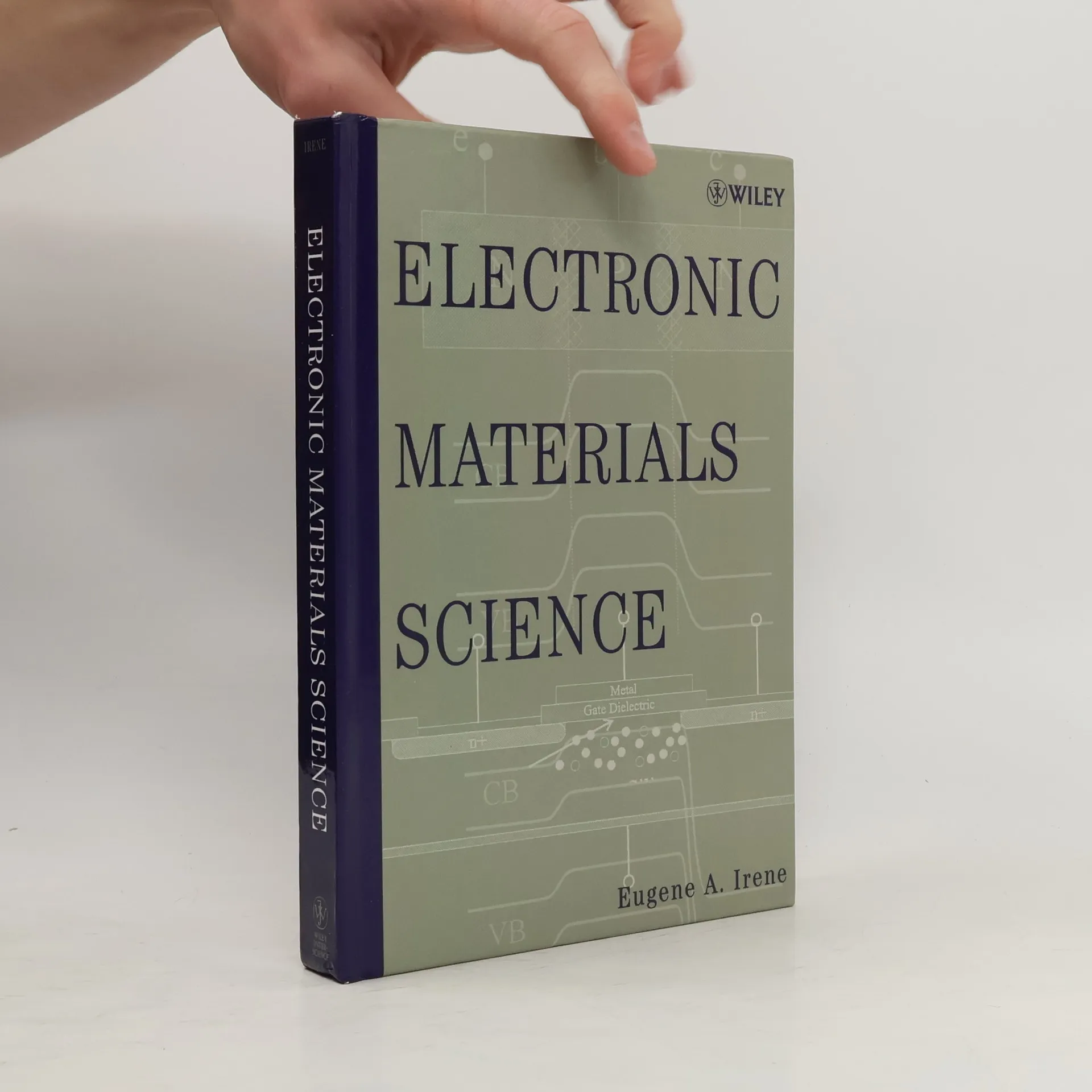
Electronic Materials Science
- 320bladzijden
- 12 uur lezen
This comprehensive introduction covers fundamental principles and applications of materials science, which has evolved from metallurgy and ceramics to include advanced fields like microelectronics, polymers, biomaterials, and nanotechnology. The text provides a detailed exploration suitable for a multidisciplinary audience, offering a higher-level treatment than typical undergraduate materials. It is particularly beneficial for students and professionals in electronics and optical materials science, as well as in emerging areas such as polymers and biomaterials. Readers with a foundational knowledge of physical chemistry or physics will find the sophisticated presentation of contemporary materials science valuable. The book includes instructive derivations of key formulae often omitted in introductory texts, shedding light on essential topics like defects, phase equilibria, and mechanical properties. Concepts such as reciprocal space, electron energy band theory, and thermodynamics are introduced earlier and with greater depth than in other resources. Additionally, the text features an orientation towards industry and academia, drawing on the author's extensive experience. It includes information on applications in semiconductors, optoelectronics, photocells, and nanoelectronics, along with problem sets and important references. By treating the subject with greater depth than other introductory texts, this work prepares grad