


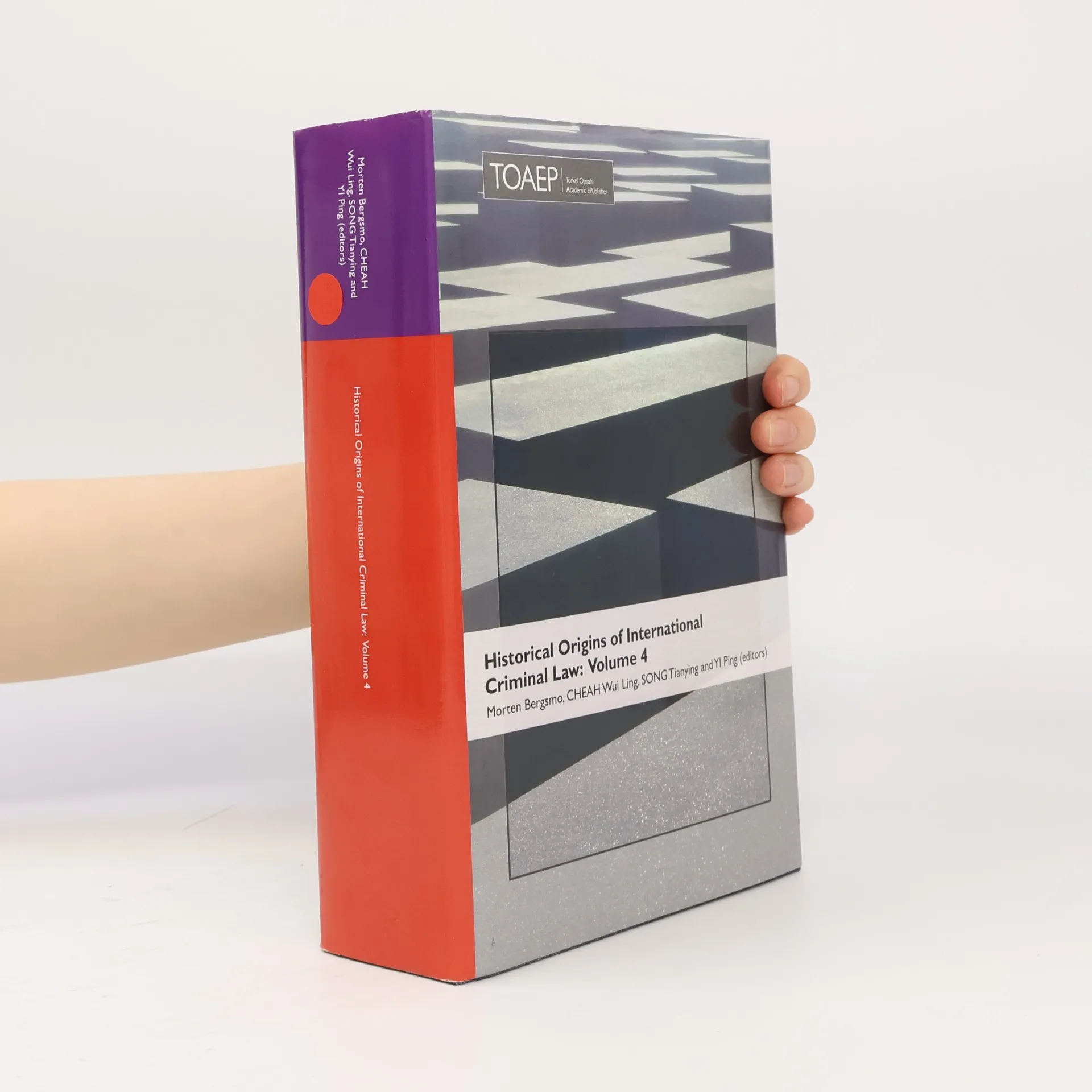
Historical Origins of International Criminal Law
- 998bladzijden
- 35 uur lezen
This fourth volume in the series focuses on institutional contributions to the development of international criminal law, differing from the chronological and doctrinal approaches of previous volumes. It examines the roles of various institutions, including the Nuremberg, Tokyo, ex-Yugoslavia, and Rwanda tribunals, as well as INTERPOL and the International Association of Penal Law. The analysis extends to jurisdictional principles and methodologies employed by international and national institutions. Additionally, it addresses broader trends in the evolution of international criminal law. Contributors include a diverse group of scholars such as Wegger Christian Strommen, LING Yan, Anuradha Bakshi, and many others, highlighting a global discourse community. In the foreword, Strommen emphasizes that this four-volume project underscores the shared legacy and interests central to international criminal law, fostering a collaborative environment among over 100 scholars worldwide. This initiative serves as a vital reminder of the fundamental principles that underpin international criminal law.