

"In 1884 there appeared in Russia a slim volume containing four short tales. They told of a pilgrim, a lone wanderer, led by his quiet curiosity and a deep spiritual longing to undertake a lifelong journey across the land. A folk hero, a figure familiar from the works of Tolstoy and Leskov, this gentle pilgrim and his simple story would soon travel the world - and would even, much later, traverse the pages of JD Salinger's Franny and Zooey as the 'small pea-green cloth-bound book' that Franny keeps close in her handbag. The pilgrim's ancient journey takes him from a city monastery through forests, fields and the steppes of Siberia. He walks by day and by night, through rains and summer months, finding food and shelter where he can. Along the way, he encounters priests and professors, convicts, nuns and beggars, a tipsy old man in a soldier's greatcoat, from whom he slowly gathers great stores of wisdom and experience. But at the heart of his journey is his time spent praying as he journeys on alone, discovering the peace and consolation that come of constant prayer and silent contemplation. Simple and sincere, The Way of a Pilgrim paints an enduring picture of a life of detachment through wandering and prayer. And, as the pilgrim makes his way through the wilds, he invites us to travel with him, along an ancient path into an immense, mystical landscape."-- Amazon.com
Cristina Campo Boeken
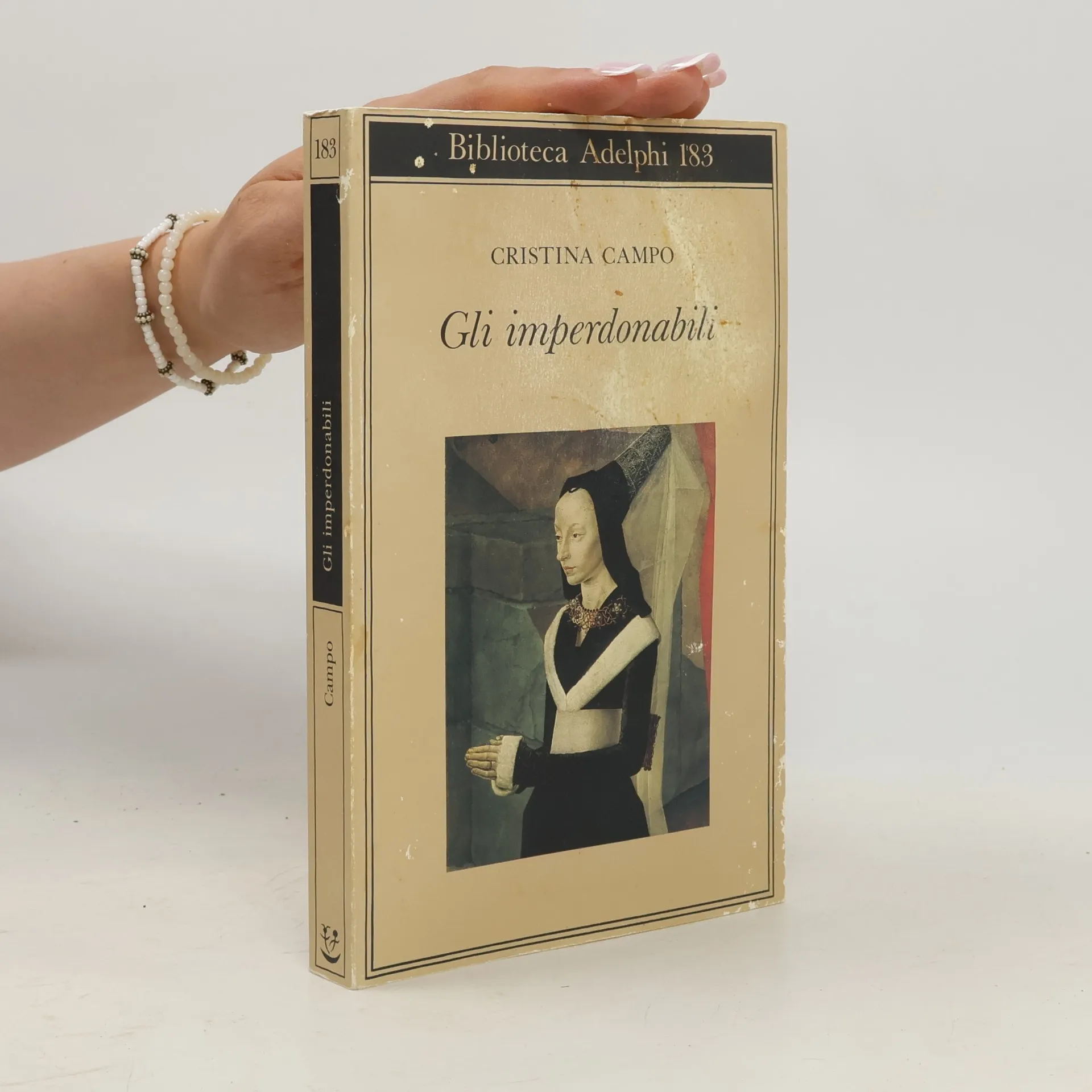
Biblioteca Adelphi - 183: Gli imperdonabili
- 282bladzijden
- 10 uur lezen
Nella nota biografica che accompagnava un suo libro, Cristina Campo diceva di se stessa: «Ha scritto poco e le piacerebbe avere scritto meno». Quel poco è quasi tutto raccolto in questo libro e imporrà una constatazione a ogni lettore percettivo: queste pagine appartengono a quanto di più bello si sia mostrato in prosa italiana negli ultimi cinquant’anni. Cristina Campo era un’ imperdonabile , nel senso che la parola ha nel saggio che dà il titolo a questo libro: come Marianne Moore, come Hofmannsthal, come Benn, come la Weil, aveva la «passione della perfezione». Non altrimenti avrebbe potuto scrivere le pagine che qui si leggono su Chopin o sulla fiaba, sulle Mille e una notte o sul linguaggio. «Saluto una sapienza oggi fra le più strane» ha scritto Ceronetti, una volta, della Campo. Forse è venuto il tempo perché i lettori si accorgano che in Italia, in mezzo a tanti promotori delle proprie mediocrità, è vissuta anche questa «trappista della perfezione».