



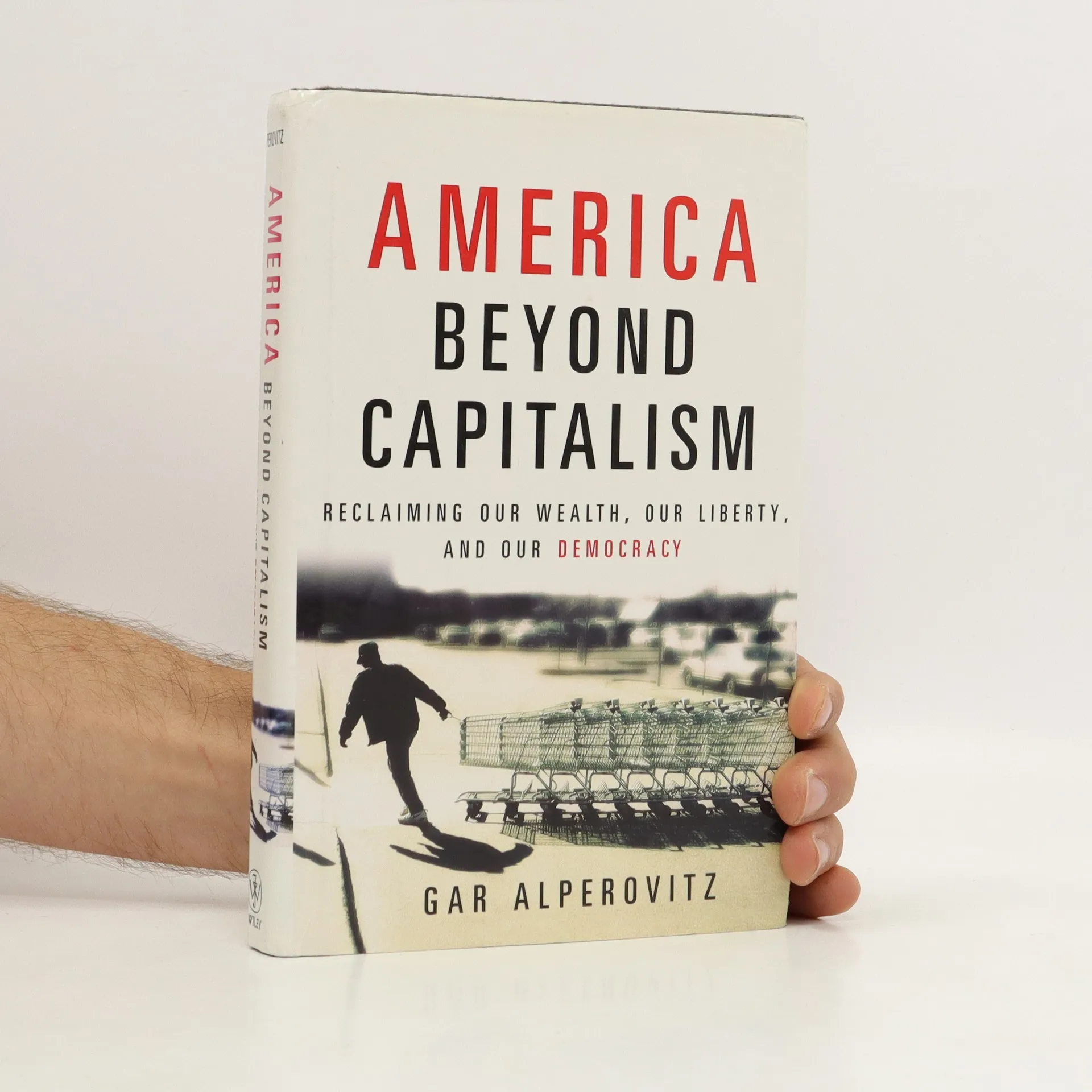
America Beyond Capitalism
- 336bladzijden
- 12 uur lezen
Imagining a future beyond unrestrained capitalism raises the question of whether such a future is attainable. In his latest work, Gar Alperovitz, a distinguished scholar in politics, economics, and history, asserts that we are at a pivotal moment in history. He argues that the early twenty-first century, marked by escalating economic inequality, diminishing civil liberties, and a government disconnected from its citizens, is creating conditions ripe for significant change. Historically, the U.S. has experienced five major political realignments, each emerging amid skepticism about the possibility of change. Alperovitz highlights that a growing number of citizens are beginning to engage in meaningful actions at both local and national levels, potentially igniting a new approach. The decline of communism and the adverse effects of globalization have left many seeking viable alternatives. He emphasizes that capitalism and socialism, in their purest forms, have never truly existed, and our current system, dominated by large corporations, is not the only option. By examining the current landscape, Alperovitz suggests that a sustainable, community-oriented vision is emerging—one that can leverage our wealth to achieve equality, democracy, and liberty. He draws parallels to the transformative changes of the 1960s and the rise of modern conservatism, arguing that fundamental change is a historical norm. This work is a call to actio