

Koop 10 boeken voor 10 € hier!
Bookbot

Paul Collier

    1 januari 1949

    Paul Collier is een vooraanstaand econoom wiens werk zich verdiept in de diepgaande economische uitdagingen waarmee de wereld wordt geconfronteerd. Zijn geschriften onderzoeken rigoureus de grondoorzaken van armoede, conflicten en ongelijkheid, en bieden inzichtelijke analyses en praktische oplossingen. Collier's stijl wordt gekenmerkt door zijn duidelijkheid, logische argumentatie en de drang om academisch onderzoek te verbinden met praktische implicaties voor mondiale rechtvaardigheid. Door zijn werk tracht hij complexe economische verschijnselen te belichten en de dialoog te bevorderen over het opbouwen van een rechtvaardigere en welvarendere wereld.

    Paul Collier
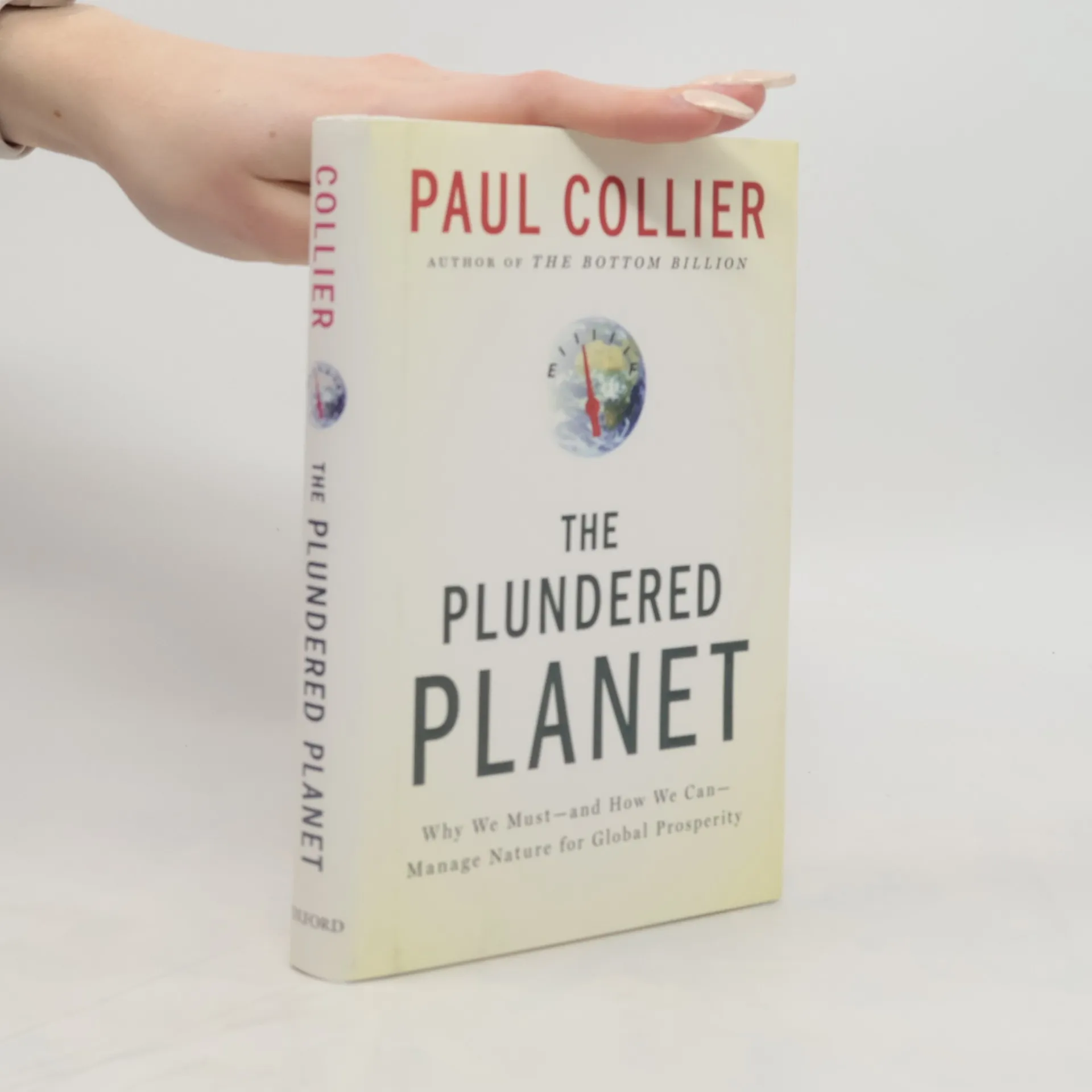
    The Plundered Planet
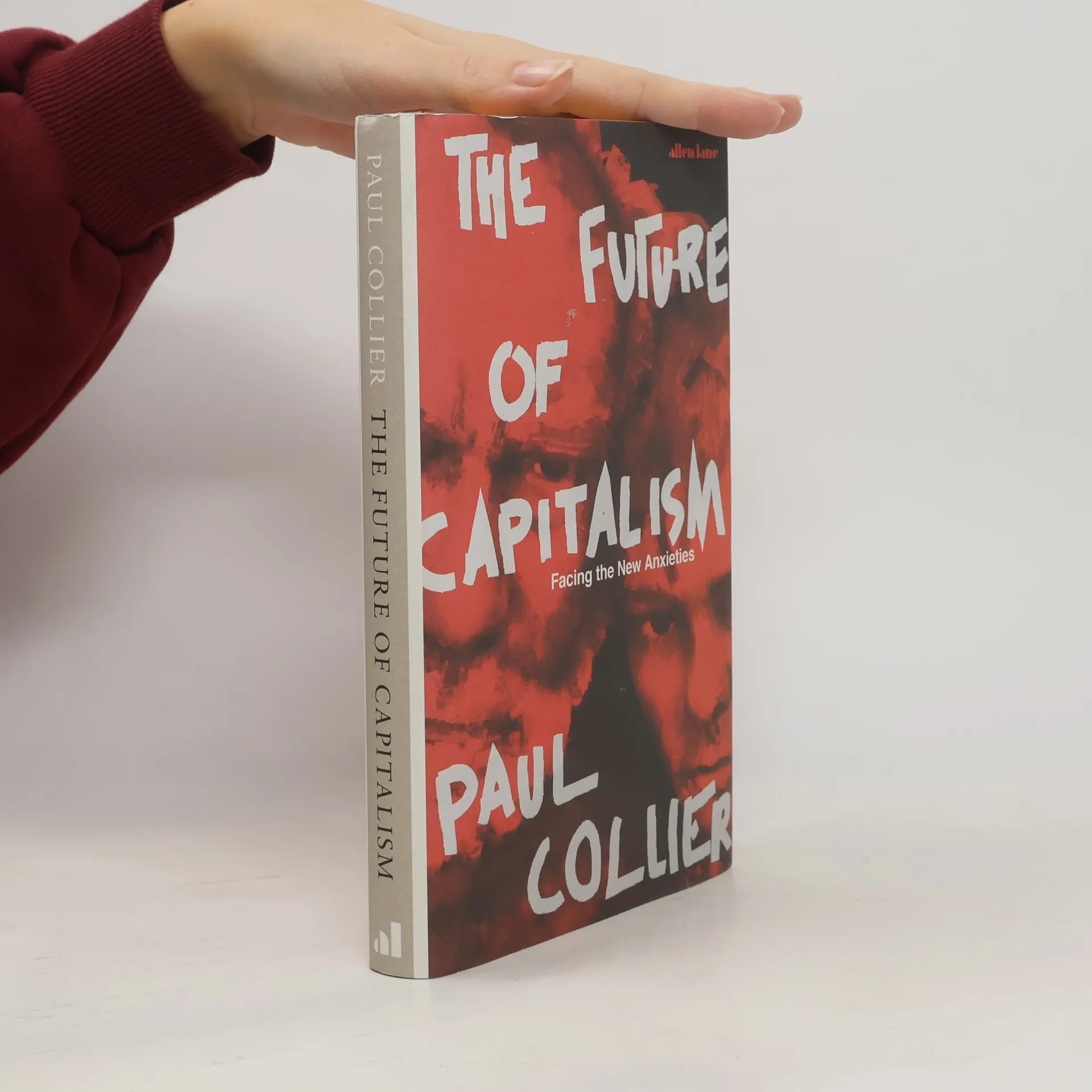
    The Future of Capitalism
    The Bottom Billion
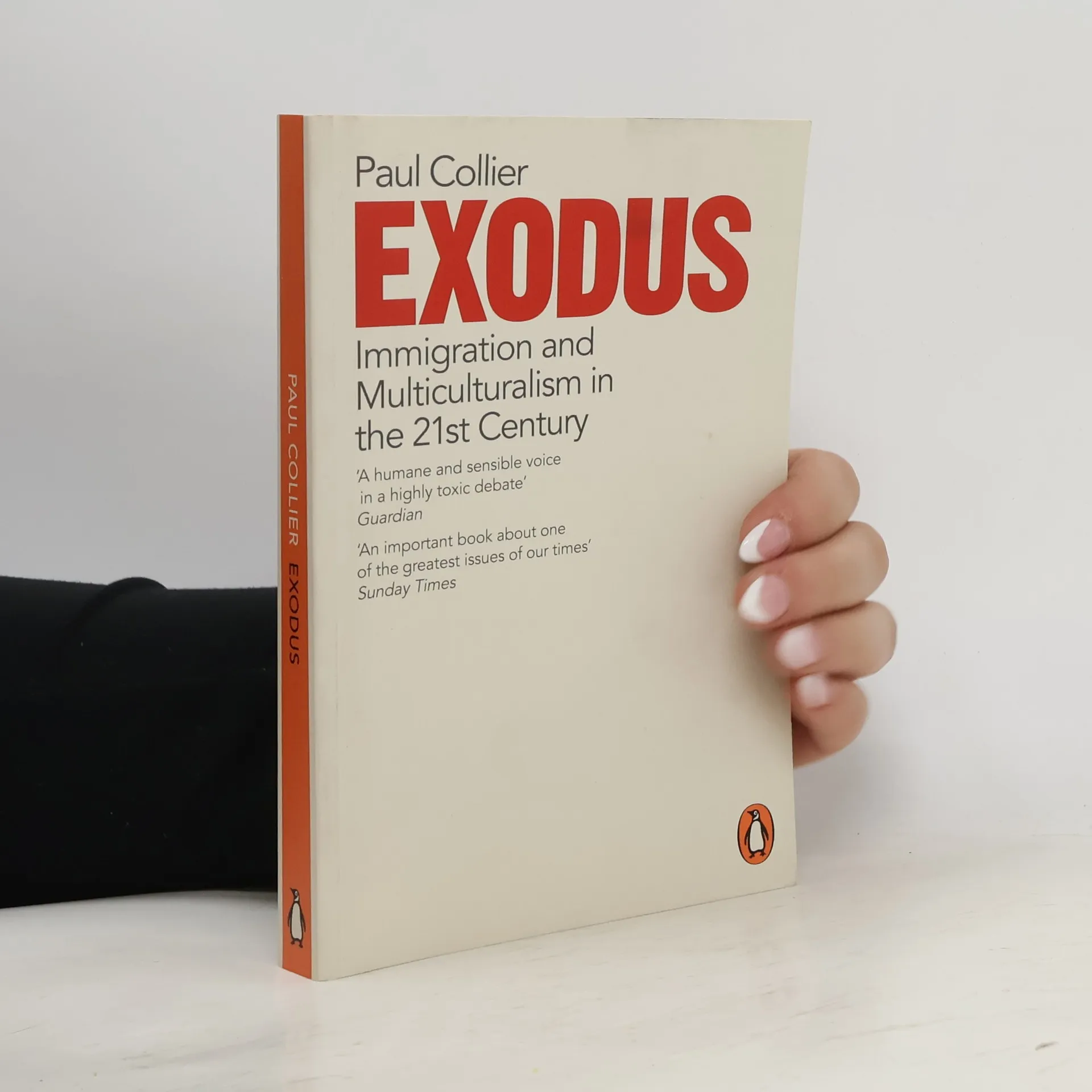
    Exodus
    Wars, Guns & Votes
    Refuge : transforming a broken refugee system
    • "Europe is facing its greatest refugee crisis since the Second World War, yet the institutions responding to it remain virtually unchanged from those created in the post-war era. As neighbouring countries continue to bear the brunt of the Syrian catastrophe, European governments have enacted a series of ill-considered gestures, from shutting their borders to welcoming refugees without a plan for their safe passage or integration upon arrival. With a deepening crisis and a xenophobic backlash in Europe, it is time for a new vision for refuge. Going beyond the scenes of desperation which have become all-too-familiar in the past few years, Alexander Betts and Paul Collier show that this crisis offers an opportunity for reform if international policy makers focus on delivering humane, effective and sustainable outcomes (both for Europe and for countries that border conflict zones). Refugees need more than simply food, tents and blankets, and research demonstrates that they can offer tangible economic benefits to their adopted countries if given the right to work and education. An urgent and necessary work, Refuge sets out an alternative vision that can empower refugees to help themselves, contribute to their host societies, and even rebuild their countries of origin"--Provided by the publisher.

      Refuge : transforming a broken refugee system
    • Wars, Guns & Votes

      • 255bladzijden
      • 9 uur lezen
      3,8(39)Tarief

      The world is in a mess. For more than a billion people, everyday life is played out against the backdrop of civil wars, military coups and failing economies. For them, the peaceful democracy taken for granted in the West seems an impossible pipe-dream.

      Wars, Guns & Votes
    • Exodus

      Immigration and Multiculturalism in the 21st Century

      3,8(80)Tarief

      Mass international migration is a response to extreme global inequality, and immigration has a profound impact on the way we live. Yet our views - and those of our politicians - remain caught between two extremes- popular hostility to migrants, tinged by xenophobia and racism; and the view of business and liberal elites that 'open doors' are both economically and ethically imperative. Few issues are so urgently in need of dispassionate analysis - and few are more incendiary. Clear-headed and insightful, Exodusseeks to defuse this explosive subject. Paul Collier, an internationally renowned economist and leading expert on global poverty, looks at how the effects of extreme inequality are changing our world. He shows how people from the world's poorest societies struggle to migrate to the rich West; examines the effects on those left behind and on the host societies; and explores the impulses and thinking that inform Western immigration policy. Bringing sharp analysis and practical wisdom to this divisive issue, Collier argues that, while we must guard against the evils of nationalism, national identity does matter - and migration controls are increasingly important tools of social policy. What is wrong is not that migrant controls exist, but that their design is so inept. It is not a question of whether migration is bad or good - but how much migration is best.

      Exodus
    • The Bottom Billion

      Why The Poorest Countries Are Failing and What Can Be Done about It

      • 209bladzijden
      • 8 uur lezen
      3,9(6492)Tarief

      The Bottom Billion is an elegant and impassioned synthesis from one of the world's leading experts on Africa and poverty. It was hailed as "the best non-fiction book so far this year" by Nicholas Kristoff of The New York Times.

      The Bottom Billion
    • The Future of Capitalism

      • 256bladzijden
      • 9 uur lezen
      3,8(123)Tarief

      Deep new rifts are tearing apart the fabric of Britain and other Western societies- thriving cities versus the provinces, the highly skilled elite versus the less educated, wealthy versus developing countries. As these divides deepen, we have lost the sense of ethical obligation to others that was crucial to the rise of post-war social democracy. So far these rifts have been answered only by the revivalist ideologies of populism and socialism, leading to the seismic upheavals of Trump, Brexit and the return of the far right in Germany. We have heard many critiques of capitalism but no one has laid out a realistic way to fix it, until now. In a passionate and polemical book, celebrated economist Paul Collier outlines brilliantly original and ethical ways of healing these rifts - economic, social and cultural - with the cool head of pragmatism, rather than the fervour of ideological revivalism. He reveals how he has personally lived across these three divides, moving from working-class Sheffield to hyper-competitive Oxford, and working between Britain and Africa, and acknowledges some of the failings of his profession. Drawing on his own solutions as well as ideas from some of the world's most distinguished social scientists, he shows us how to save capitalism from itself - and free ourselves from the intellectual baggage of the 20th century.

      The Future of Capitalism
    • The Plundered Planet

      Why We Must and How We Can Manage Nature for Global Prosperity

      • 288bladzijden
      • 11 uur lezen
      3,6(335)Tarief

      Argues that technological innovation, environmental protection, and regulation are key to managing the planet's natural resources and ensuring equitable development

      The Plundered Planet
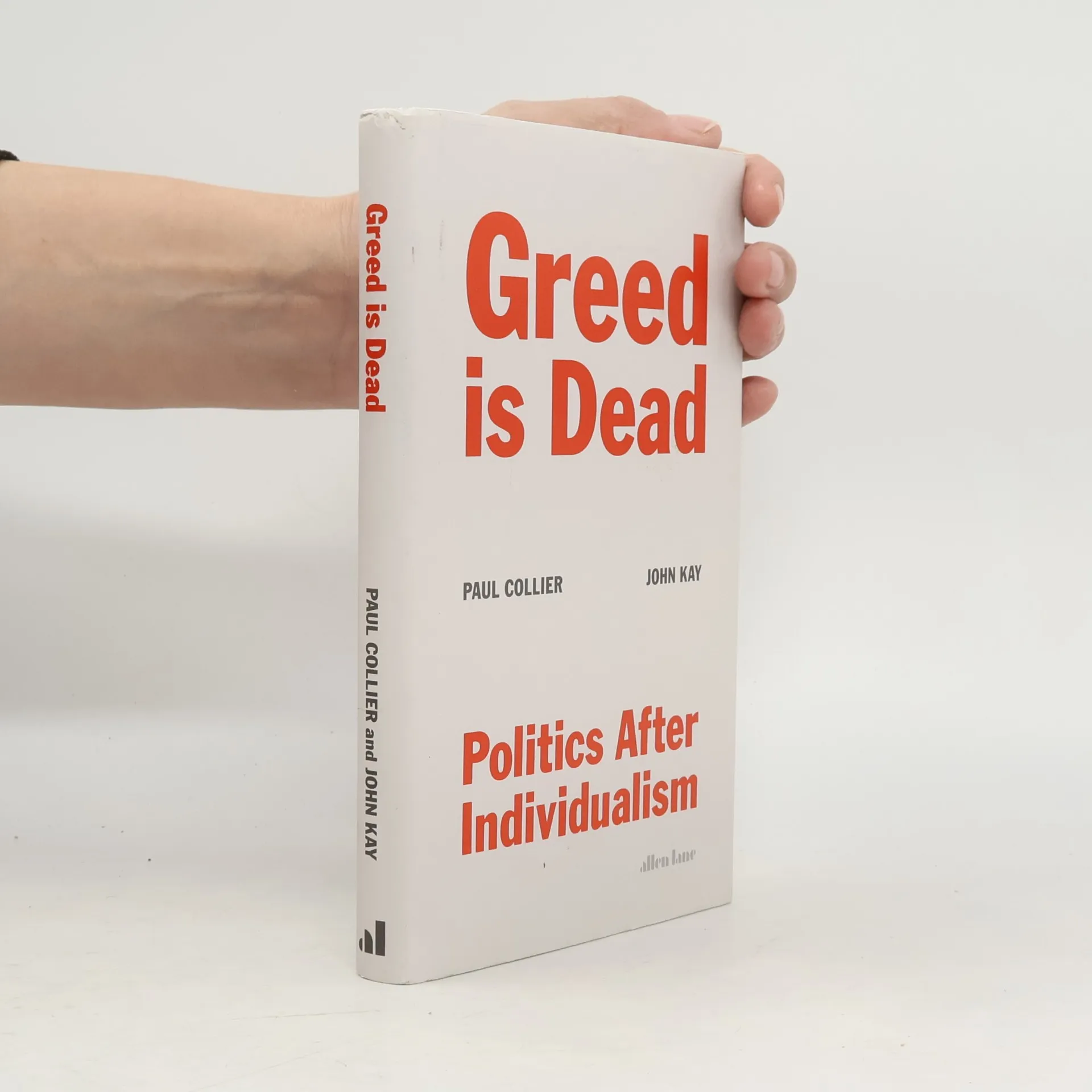
    • "Two of the UK's leading economists call time on selfishness as the engine of prosperity. The idea that people are basically driven by individualism and economic incentives, and that prosperity and good societies come from top-down leadership, has dominated politics for the last thirty years (from some perspectives, much longer). This book shows that the age of homo economicus and centralisation is coming to an end. Instead, Collier and Kay argue that community and mutuality will be the drivers of successful societies in the future - as they are already in some parts of the world. They show how politics can reverse the move to extremes of right and left in recent years, that the centre can hold, and that if we think differently we can find common ground to the benefit of all"--Amazon.com

      Greed Is Dead
    • The world-renowned economist offers a ground-breaking new vision for inclusive prosperity Left behind places can be found in prosperous countries--from South Yorkshire, integral to the industrial revolution and now England's poorest county, to Barranquilla, once Colombia's portal to the Caribbean and now struggling. More alarmingly, the poorest countries in the world are diverging further from the rest of humanity. Why have these places fallen further behind? And what can we do about it? World-renowned development economist Paul Collier has spent his life working in neglected communities. In this book he offers his candid diagnosis of why some regions and countries are falling further behind, and a new vision for how they can catch up. Collier lays the blame for widening inequality on stale economic orthodoxies that prioritize market forces and centralized bureaucracies like the UK Treasury. In contrast, a new wave of academic research has revealed the crucial role of collective learning, social capital and local agency in reversing decline and equalising life-chances. Drawing on insights from social psychology, moral philosophy and behavioural economics, as well as a range of illuminating case studies, Collier shares a galvanizing vision for a more inclusive, prosperous world.

      Left Behind
    • Exodus

      Warum wir Einwanderung neu regeln müssen

      • 320bladzijden
      • 12 uur lezen
      4,2(5)Tarief

      Mutig und meinungsstark – das grundlegende Buch zur aktuellen Flüchtlingskrise Angesichts der Hunderttausenden Flüchtlinge, die aktuell nach Deutschland und in andere Länder Europas strömen, ist wohl kaum eine Frage so brisant wie die der Einwanderung. Dürfen wir Menschen an der Grenze abweisen und wieder in ihre Heimatländer zurückschicken, auch wenn dort Krieg, Armut und Hunger herrschen? In seinem hochgelobten Buch Exodus gibt der Entwicklungsökonom Paul Collier neue, überraschende Antworten. Seine Einsichten sind für die anhaltende Debatte über Flüchtlinge und Zuwanderung unverzichtbar. Wer darf ins Land kommen und wer nicht? Profitieren wir von der Einwanderung – oder hilft der Massenexodus nur den Migranten selbst? Paul Collier erforscht, welche Kosten und welchen Nutzen die weltweite Migration mit sich bringt: für die aufnehmenden Ländern (vor allem in Europa), für die Einwanderer selbst und für jene Länder, die die Migranten zurücklassen. Auch das Schicksal dieser Staaten, die oft zu den Ländern der »ärmsten Milliarde« gehören, müssen wir im Blick behalten, so Collier, wenn wir über die Gewinner und Verlierer von Migration sprechen. Nur so wird es möglich sein, angesichts der aktuellen Flüchtlingskrise gerechte neue Regeln für die Einwanderung zu finden und keiner Gesellschaft zu schaden.

      Exodus
    • Wohl kaum eine Frage wird heute so heftig debattiert wie die der Einwanderung. Dürfen wir Menschen an der Grenze abweisen und sie wieder in ihre Heimatländer zurückschicken, auch wenn dort Armut und Hunger herrschen? Einwanderungspolitik, schreibt Paul Collier, ist bislang eine Mischung aus viel Emotion und wenig Wissen. In seinem neuen Buch zeigt er, warum es sich lohnt, einen völlig neuen Blick auf die weltweite Migration zu werfen. Wer darf ins Land kommen und wer nicht? Profitieren wir von der Einwanderung – oder hilft der Massenexodus nur den Migranten selbst? Paul Collier erforscht, welche Kosten und welchen Nutzen die weltweite Migration mit sich bringt: für die aufnehmenden Ländern (vor allem Europa und die USA), für die Einwanderer selbst und für jene Länder, die die Migranten zurücklassen. Vor allem diese Staaten, die oft zu den Ländern der „ärmsten Milliarde“ gehören, müssen wir im Blick behalten, so Collier, wenn wir über die Gewinner und Verlierer von Migration sprechen. Nur so wird es möglich sein, neue, gerechte Einwanderungsregeln zu finden, von denen möglichst viele Menschen profitieren und die keiner Gesellschaft schaden.

      Exodus