Paul Strathern is een Britse auteur wiens werk een indrukwekkende reeks onderwerpen omvat, variërend van filosofie en geschiedenis tot literatuur en wetenschap. Hij bezit een opmerkelijk vermogen om complexe ideeën met duidelijkheid en boeiende proza te onderzoeken, waardoor diepgaande concepten toegankelijk worden voor een breed publiek. Stratherns schrijven wordt gekenmerkt door intellectuele diepgang en narratieve elegantie, en biedt lezers een verrijkende intellectuele reis. Zijn aanpak combineert rigoureus academisch onderzoek met een meeslepende vertelstijl.
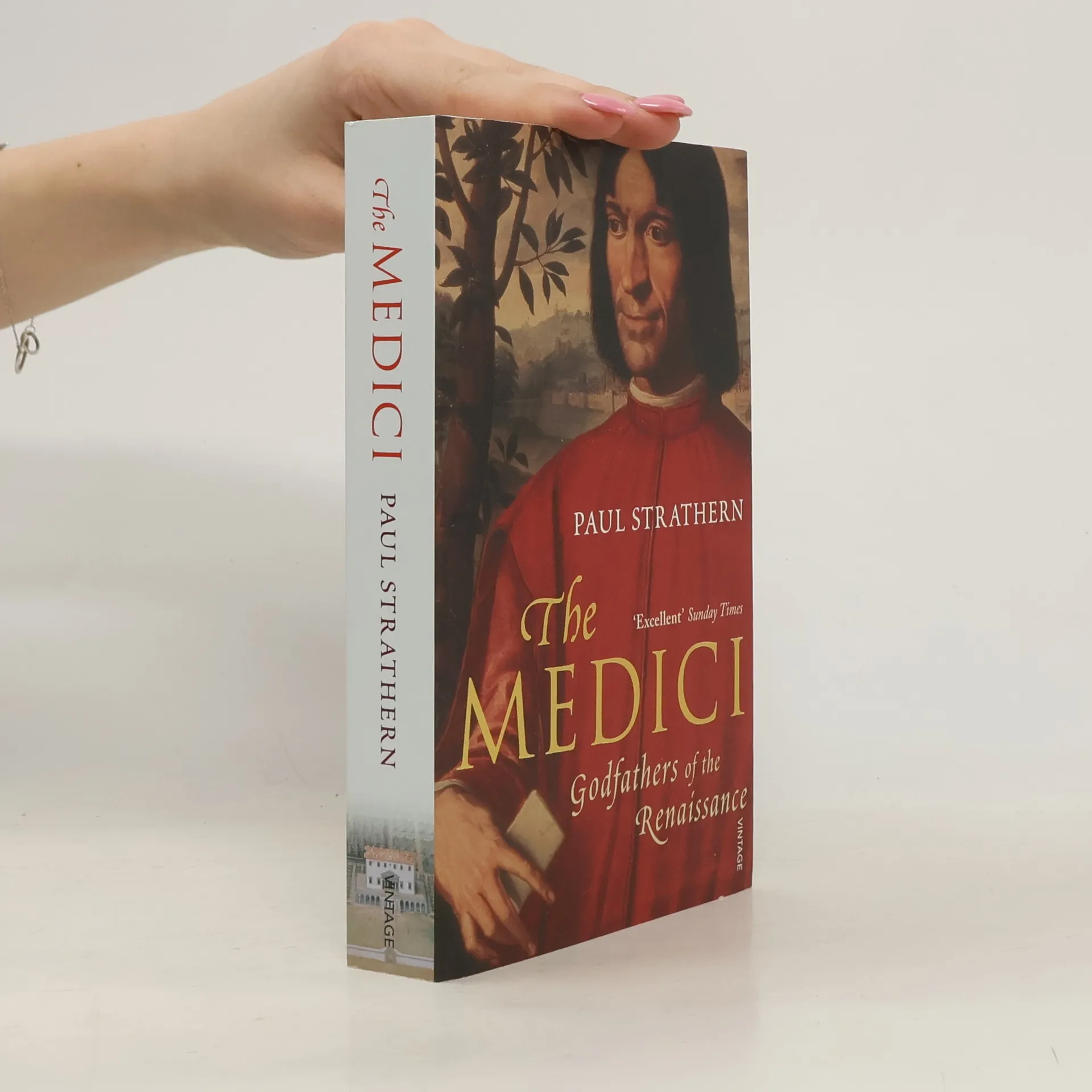
A history of the modest family which rose to become one of the most powerful in Europe, this book is a remarkably modern story of power, money and ambition. Paul Strathern explores the rise and fall of the Medici family in Florence, as well as the Italian Renaissance which they did so much to sponsor.
With a focus on the lives and ideas of renowned writers, this series offers brief yet insightful biographical studies. Paul Strathern's engaging prose makes complex literary concepts accessible, providing readers with a refined understanding of each author's contributions. Each book serves as both an entertaining read and an authoritative appraisal, highlighting the significance of these literary figures in an accessible manner.
"Between the birth of Dante in 1265 and the death of Galileo in 1642 something happened which transformed the entire culture of western civilisation. Painting' sculpture and architecture would all visibly change in such a striking fashion that there could be no going back on what had taken place. Likewise' the thought and self-conception of humanity would take on a completely new aspect. Sciences would be born' or emerge in an entirely new guise. The ideas which broke this mould largely began' and continued to flourish' in the city of Florence in the province of Tuscany in northern central Italy. These ideas' which placed an increasing emphasis on the development of our common humanity - rather than other-worldly spirituality - coalesced in what came to be known as humanism. This philosophy and its new ideas would eventually spread across Italy' yet wherever they took hold they would retain an element essential to their origin. And as they spread further across Europe this element would remain. Transformations of human culture throughout western history have remained indelibly stamped by their origins. The Reformation would always retain something of central and northern Germany. The Industrial Revolution soon outgrew its British origins' yet also retained something of its original template. Closer to the present' the IT revolution which began in Silicon Valley remains indelibly coloured by its Californian origins. Paul Strathern shows how Florence' and the Florentines' played a similar role in the Renaissance."
The book presents concise biographical studies of renowned writers, showcasing their lives and ideas through engaging and accessible prose. Paul Strathern combines wit with insightful analysis, offering readers a refined understanding of each writer's contributions. These studies serve as authoritative introductions, making complex literary concepts approachable. Praised for their dramatic flair and ability to evoke a sense of time and place, these works are ideal for those seeking to explore Western civilization's literary heritage.
"The glorious and infamous history of the Borgia family--a world of saints, corrupt popes, and depraved princes and poisoners--set against the golden age of the Italian Renaissance."--Amazon.com
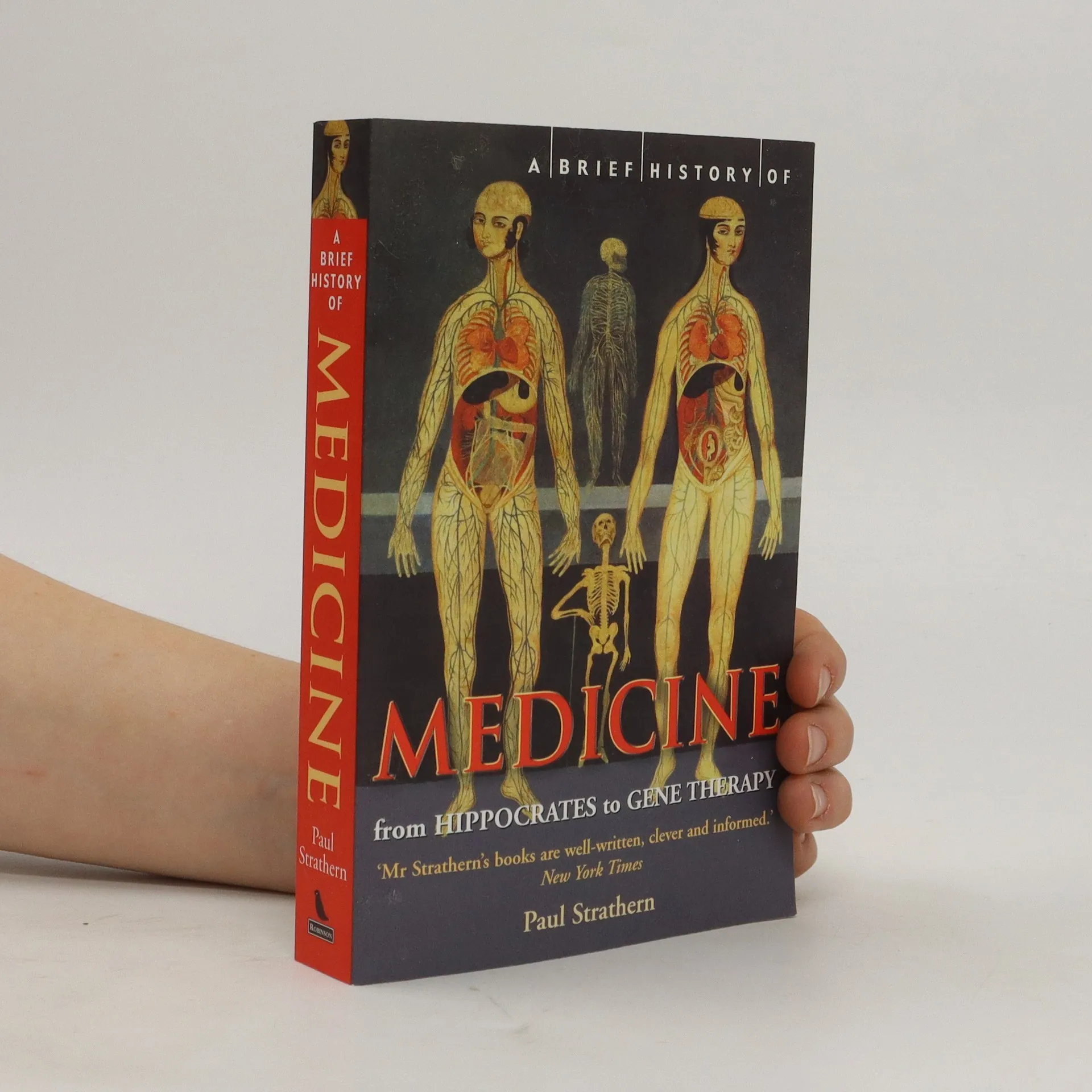
Includes: Inspired geniuses, such as Paracelsus, the father of medical chemistry, and Edward Jenner, who discovered the smallpox vaccination; Cuthroat competition, as during the 'Gas Wars' over who'd invented the anaesthetic, Scientific endeavour, such as the discovery of X-rays; Mistakes both fortunate and fatal, Anatomy,.
Leonardo da Vinci, Niccolò Machiavelli, and Cesare Borgia—three iconic figures whose intersecting lives provide the basis for this astonishing work of narrative history. They could not have been more different, and they would meet only for a short time in 1502, but the events that transpired when they did would significantly alter each man’s perceptions—and the course of Western history. In 1502, Italy was riven by conflict, with the city of Florence as the ultimate prize. Machiavelli, the consummate political manipulator, attempted to placate the savage Borgia by volunteering Leonardo to be Borgia’s chief military engineer. That autumn, the three men embarked together on a brief, perilous, and fateful journey through the mountains, remote villages, and hill towns of the Italian Romagna—the details of which were revealed in Machiavelli’s frequent dispatches and Leonardo’s meticulous notebooks. Superbly written and thoroughly researched, The Artist, the Philosopher, and the Warrior is a work of narrative genius—whose subject is the nature of genius itself.
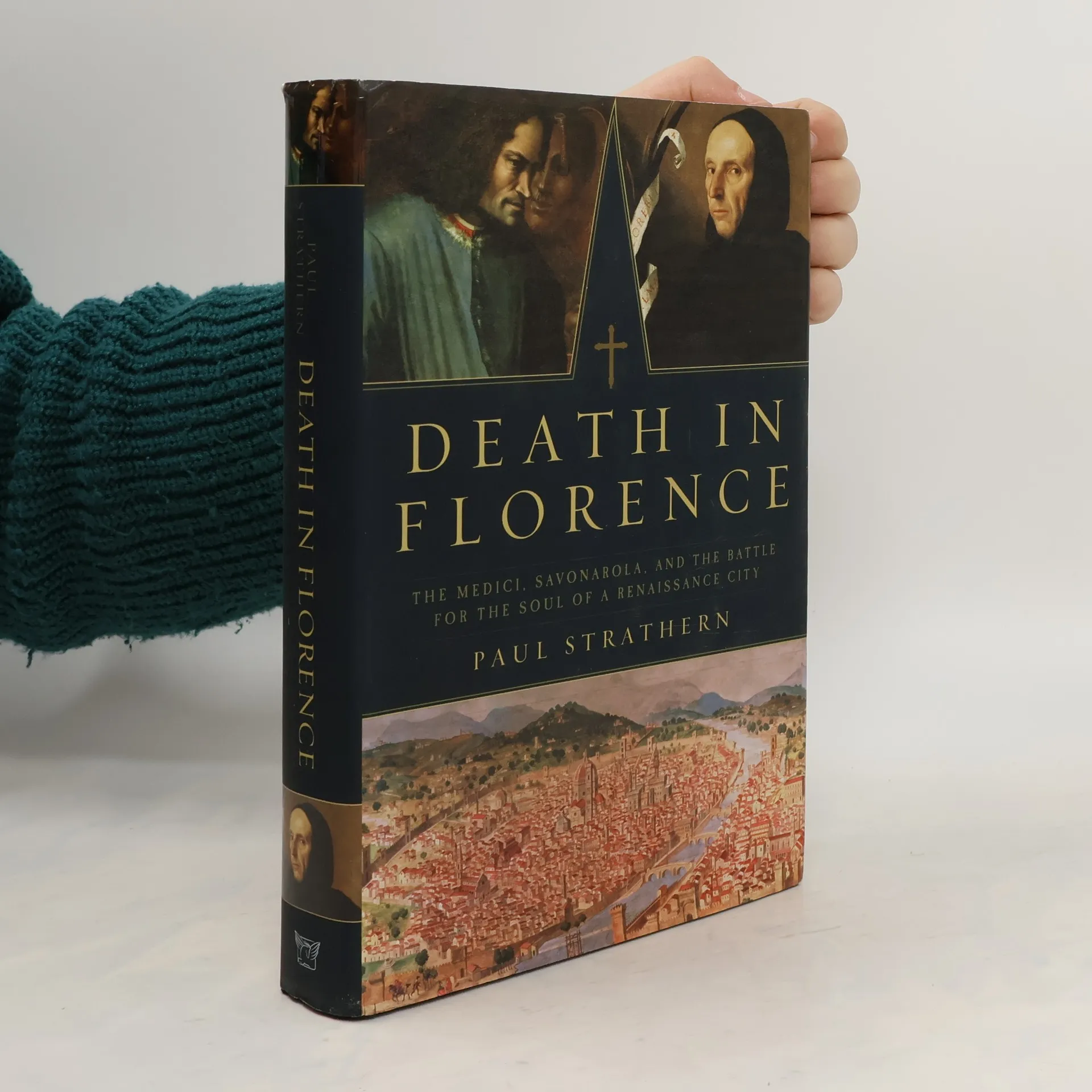
By the end of the fifteenth century, Florence was well established as the home of the Renaissance. As generous patrons to the likes of Botticelli and Michelangelo, the ruling Medici embodied the progressive humanist spirit of the age, and in Lorenzo de' Medici they possessed a diplomat capable of guarding the militarily weak city in a climate of constantly shifting allegiances. However, in Savonarola, an unprepossessing provincial monk, Lorenzo found his nemesis. Filled with Old Testament fury, Savonarola's sermons reverberated among a disenfranchised population, who preferred medieval Biblical certainties to the philosophical interrogations and intoxicating surface glitter of the Renaissance. The battle between these two men would be a fight to the death, a series of sensational events—invasions, trials by fire, the 'Bonfire of the Vanities', terrible executions and mysterious deaths—featuring a cast of the most important and charismatic Renaissance figures. Was this a simple clash of wills between a benign ruler and religious fanatic? In an exhilaratingly rich and deeply researched story, Paul Strathern reveals the paradoxes, self-doubts, and political compromises that made the battle for the soul of the Renaissance city one of the most complex and important moments in Western history.