

Thorstein Bunde Veblen was een Noors-Amerikaanse econoom en socioloog, bekend als een geestige criticus van het kapitalisme. Hij is beroemd om het concept van "opzichtige consumptie", samen met "opzichtige vrije tijd", als middelen om rijkdom en sociale status te demonstreren. Veblen wordt beschouwd als een leider van de institutionele economische beweging, en zijn onderscheid tussen "instellingen" en "technologie" staat bekend als de Vebleniaanse dichotomie. Als vooraanstaand intellectueel van het Progressieve Tijdperk bekritiseerde Veblen productie voor winst, waarbij zijn ideeën de socialistische denkers die zochten naar niet-marxistische kritieken op het kapitalisme aanzienlijk beïnvloedden.
Examining the interplay between business practices and economic theory, this seminal work by Thorstein Veblen critiques the capitalist system. Published in 1904, it stands as one of Veblen's key contributions to economic thought, providing insights into how business enterprises operate within the broader economic landscape. Veblen's analysis challenges conventional perspectives, making it a significant text for understanding the dynamics of capitalism.
Although initiated before the U.S. entered World War I, this work primarily examines the cultural divergences between English-speaking and German-speaking peoples and their economic and social consequences. Initially suppressed by war censors, it was released post-war and has since become a significant contribution to economics and sociology. The insights within remain relevant today. Charles A. Beard remarked that the author wrote for the ages, placing this work alongside his renowned Theory of Business Enterprise. Wesley C. Mitchell noted that the underlying factors contributing to Germany's efficiency persisted even under the Nazi regime, suggesting that past forecasts may still hold true. Lewis Mumford described the work as the best depiction of the residual barbarisms in German civilization, highlighting the roots of Nazism. This new edition features a compelling opening essay by Otto G. Mayer, a director at a prominent German think tank and editor of an English-language journal. Mayer's commentary not only reflects on the original work but also addresses the historical context of the German economy and society, reinforcing the belief that this book remains "a treasure chest of knowledge."
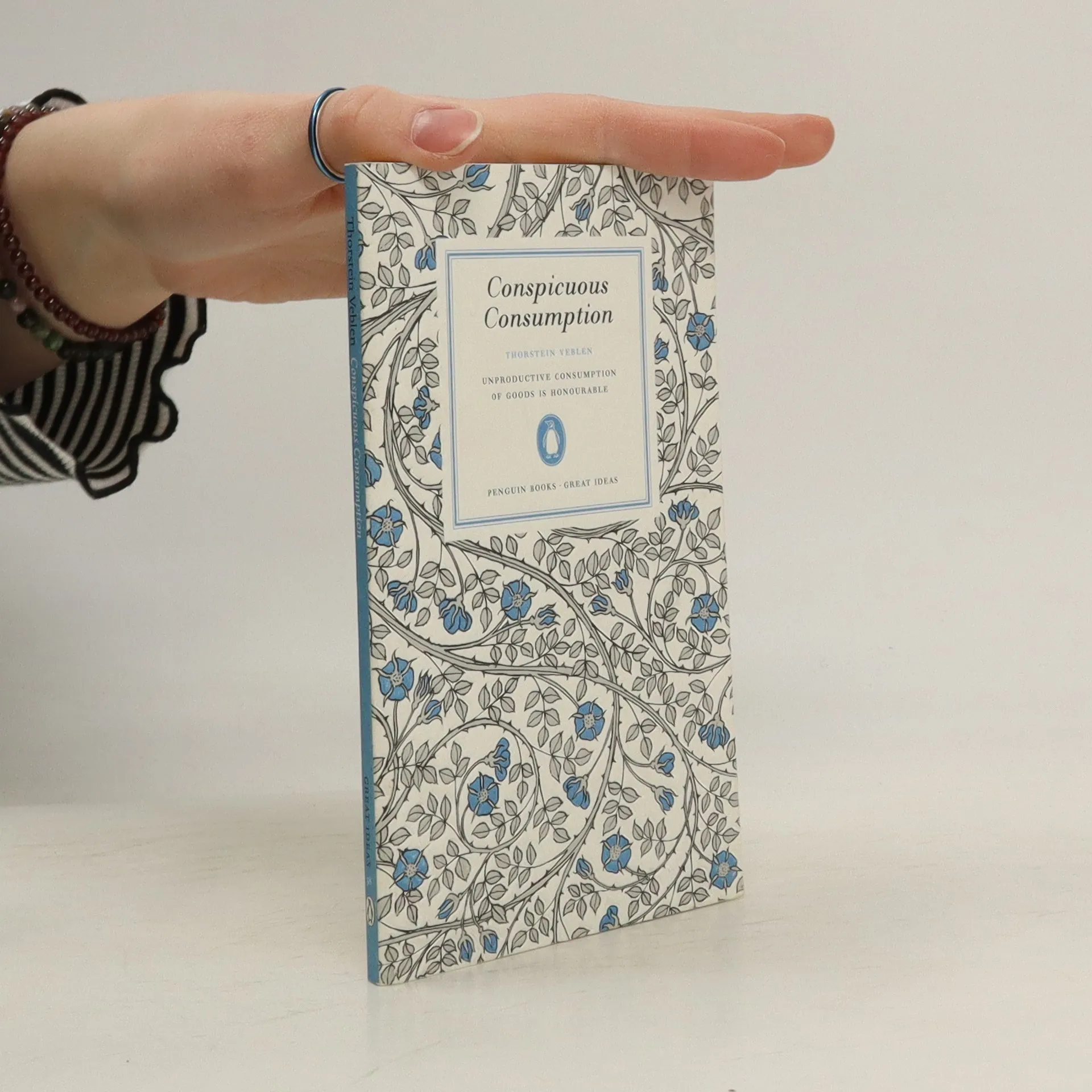
Veblen's study indicts the nineteenth-century socio-economic system which based class status on the accumulation of material wealth. More than a century after its original publication, his work still is of surprisingly high relevance, since it casts an astonishingly contemporary and often very satirical eye on American economics and society. Originally released in 1899, „The Theory of the Leisure Class“ is considered as the first detailed critique of consumerism.
Throughout history, some books have changed the world. They have transformed the way we see ourselves � and each other. They have inspired debate, dissent, war and revolution. They have enlightened, outraged, provoked and comforted. They have enriched lives � and destroyed them. Now Penguin brings you the works of the great thinkers, pioneers, radicals and visionaries whose ideas shook civilization and helped make us who we are. With its wry portrayal of a shallow, materialistic �leisure class� obsessed by clothes, cars, consumer goods and climbing the social ladder, this withering satire on modern capitalism is as pertinent today as when it was written over a century ago.
Focusing on the aftermath of World War I, this classic political science work explores the nature of peace and the conditions necessary for its lasting maintenance. It delves into the complexities of post-war relations and the frameworks that can sustain harmony among nations. Through a critical analysis, the book addresses the challenges and strategies for achieving enduring peace, making it a significant contribution to the discourse on international relations and conflict resolution.
The book explores the logical framework of Marx's economic theories, emphasizing their systematic nature and coherence. It delves into the principles that underpin Marxist economics, highlighting the relevance and application of these theories in understanding contemporary economic issues. Through a detailed analysis, the author aims to illustrate how Marx's insights remain significant in today's economic discourse.
The book is a reproduction of a historical work, produced by Megali, a publishing house dedicated to creating large print editions. This initiative aims to enhance accessibility for readers with impaired vision, ensuring that important historical texts can be enjoyed by a wider audience.
The Theory of the Leisure Class is criticism of capitalism. Conspicuous consumption, along with "conspicuous leisure," is performed to demonstrate wealth or mark social status. The book is a treatise on economics and a detailed, social critique of conspicuous consumption, as a function of social class and of consumerism, derived from the social stratification of people and the division of labour, which are the social institutions of the feudal period (9th - 15th centuries) that have continued to the modern era. The book presents the evolutionary development of human institutions (social and economic) that shape society, such as how the citizens earn their livelihoods, wherein technology and the industrial arts are the creative forces of economic production. The sociology and economics applied by Veblen show the dynamic, intellectual influences of Charles Darwin, Karl Marx, Adam Smith, and Herbert Spencer; thus, his theories of socio-economics emphasize evolution and development as characteristics of human institutions. Thorstein Veblen (1857-1929) was an American economist and sociologist. He is well known as a witty critic of capitalism. Within the history of economic thought, Veblen is considered the leader of the institutional economics movement. Veblen's distinction between "institutions" and "technology" is still called the Veblenian dichotomy by contemporary economists.
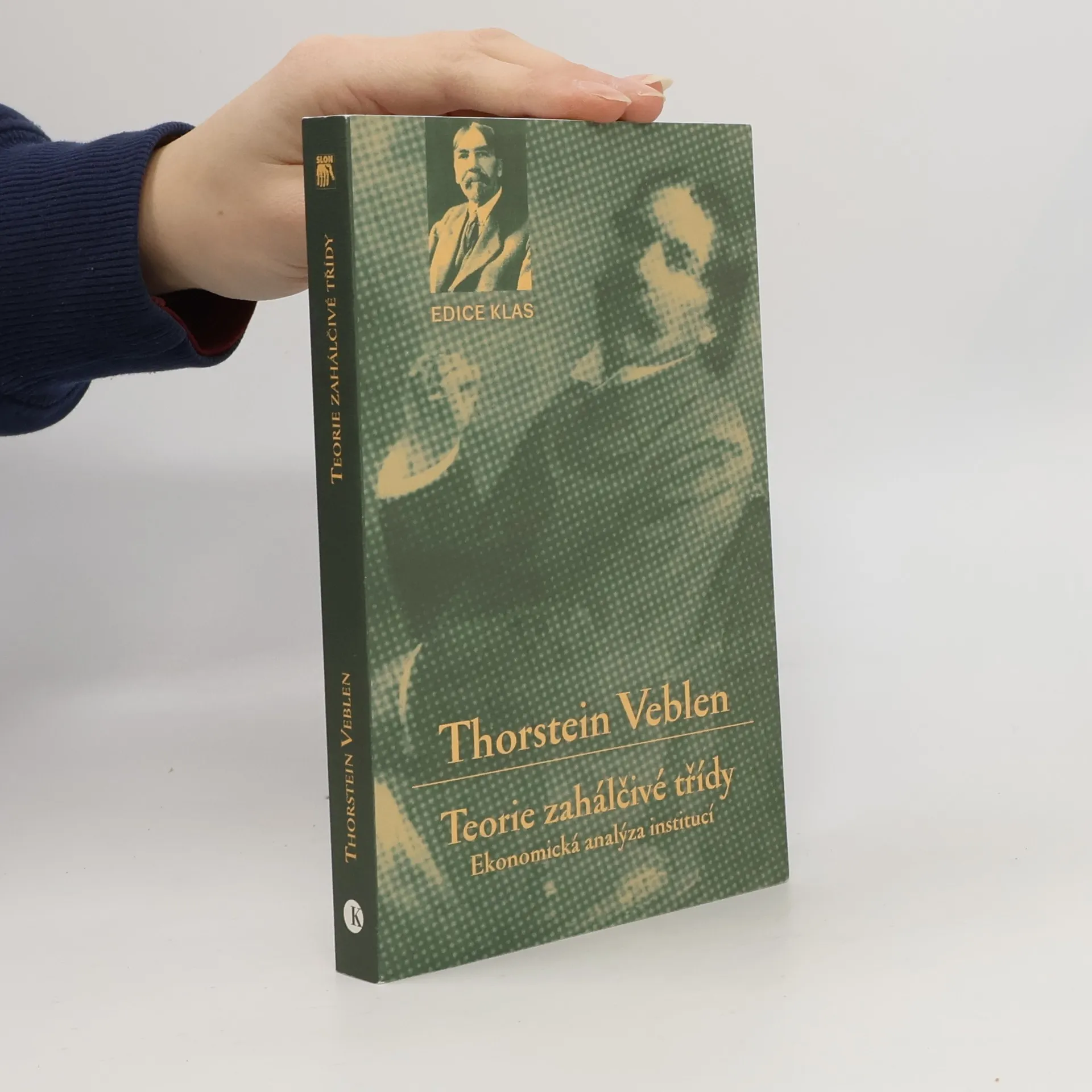
Jedna z nejslavnějších prací tzv. kritické sociologie. Vebleen ve své knize podal první systematickou analýzu životního způsobu, který je důsledkem společenské organizace založené více na motivu peněžního zisku než tzv. instinktu dobré práce. Podle Veblena se vyšší (vládnoucí) třídy společností věnují tzv. ostentativní zahálce, čímž odlišují své postavení od jiných tříd. Život bez práce je dle nich nejlepším a nejskutečnějším svědectvím bohatství, a tím i vznešenosti. Vládnoucí třídy se tak stávají třídami zahálčivými. Pojmem zahálka (leisure) Veblen označuje neproduktivní využití času. V novodobé anonymní společnosti pak nabírá ostentativní zahálka podoby ostentativní spotřeby. Oba typy tohoto vnějšího odlišení jsou ovšem založeny na plýtvání materiálními hodnotami. Chování zahálčivé třídy je tak v příkrém rozporu s projevy tzv. instinktu dělnosti, který je podle Veblena vrozen a vede člověka k pozitivnímu postoji k produkci, k užitečné práci a ke všemu, co mu skutečně slouží. Autor se domnívá, že v novodobém mírovém stádiu tvořivosti je další existence zahálčivé třídy škodlivá, ale že zároveň svým příkladem rozhoduje v zásadních rysech o tom, jaký životní styl bude celou společností uznán za odpovídající a vhodný. Veblen byl v tomto směru jedním z prvních, kdo upozornil – řečeno dnešní terminologií – na příznaky konzumního způsobu života a předběhl tak téměř o půl století pozdější analytiky volného času.