


Focuses on the way that changing sites - local, regional, diasporic - are the scenes of emergent forms of sovereignty in which matters of style, sensibilities, and ethos articulates new legalities and new kinds of violence. This work examines how this transformation involves changes in the situation of the nation, the state, and the city.
Arjun Appadurai Boeken
Arjun Appadurai is een Indiaas-Amerikaanse antropoloog die wordt erkend als een belangrijke theoreticus in de globaliseringsstudies. In zijn antropologische werk bespreekt hij het belang van de moderniteit van natiestaten en globalisering. Zijn onderzoek gaat dieper in op hoe mondiale stromen van media, technologie en mensen worden gevormd en hoe deze op hun beurt lokale culturen en identiteiten beïnvloeden. Appadurai's inzichten bieden een cruciaal begrip van de dynamische relatie tussen het mondiale en het lokale in de hedendaagse wereld.


The study delves into the intricate politics surrounding worship practices at the Sri Partasarati Svami Temple, an esteemed ancient Sri Vaisnava shrine in India. It explores the interplay of religious rituals, community dynamics, and cultural significance within the temple's historical context, offering insights into how worship shapes and is shaped by social and political factors. Through this examination, the work highlights the temple's role in the broader landscape of Sri Vaisnava traditions and its impact on local and religious identity.
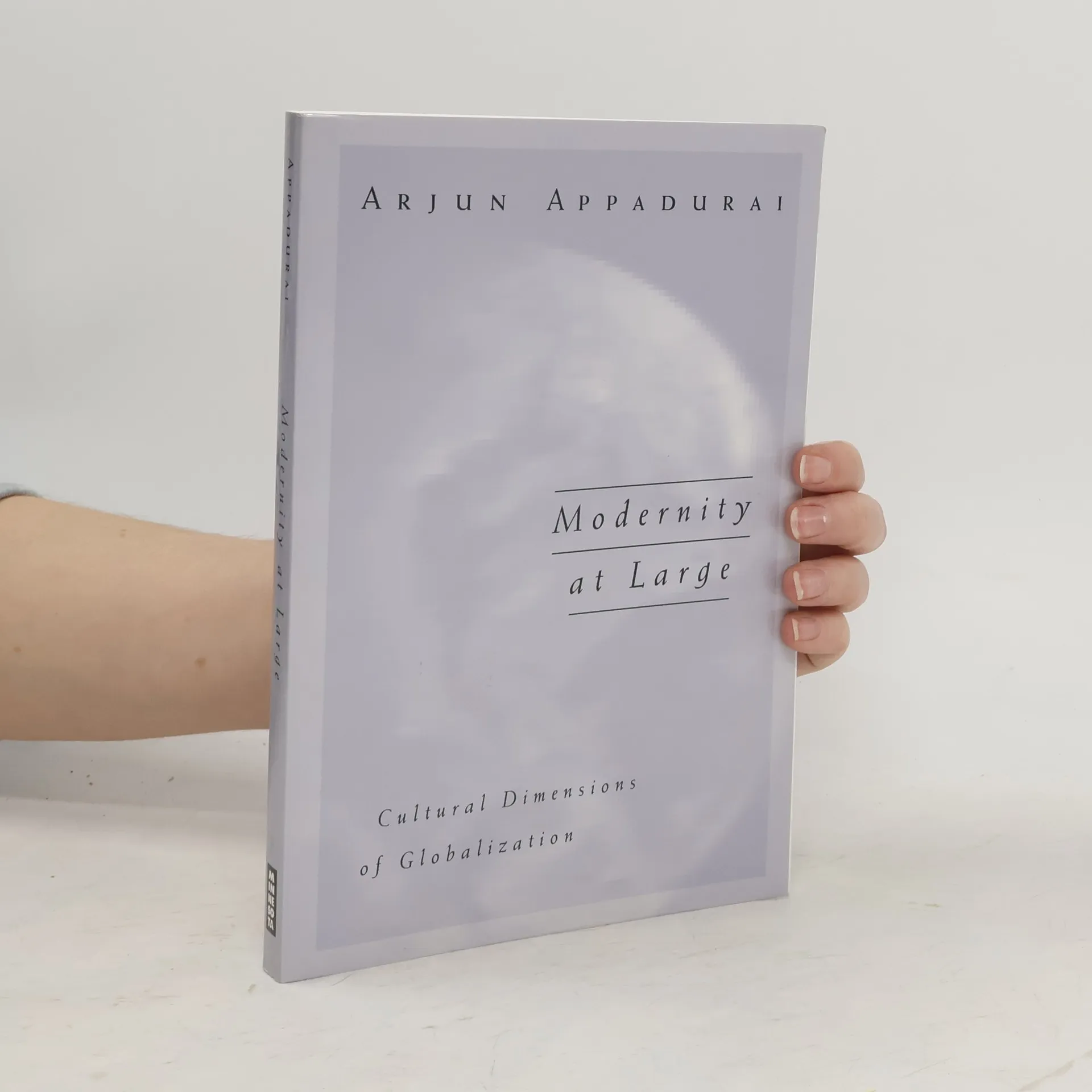
Offering a new framework for the cultural study of globalization, Modernity at Large shows how the imagination works as a social force in today's world, providing new resources for identity and energies for creating alternatives to the nation-state, whose era some see as coming to an end. Appadurai examines the current epoch of globalization, which is characterized by the win forces of mass migration and electronic mediation, and provides fresh ways of looking at popular consumption patters, debates about multiculturalism, and ethnic violence. He considers the way images--of lifestyles, popular culture, and self-representation--circulate internationally through the media and are often borrowed in surprising (to their originators) and inventive fashions.
The Future as Cultural Fact
- 336bladzijden
- 12 uur lezen
Acclaimed author presents a decade's research toward creating an anthropology of the future.
Nalini Malani, In search of vanished blood
- 96bladzijden
- 4 uur lezen
In Search of Vanished Blood ist ein Künstlerbuch der dOCUMENTA (13) zu Nalini Malanis zeitbezogenen Werken. Im Kontext der zunehmend schwierigen politischen Situation der frühen 1990er-Jahre gehörte sie zu den ersten Künstlern in Indien, die sich vom traditionellen Tafelbild abwandten und »vergängliche« Wandzeichnungen, Theaterstücke, Schattenspiele oder Videos schufen. Malini wurde damit zu einer der einflussreichsten zeitgenössischen Künstlerinnen ihres Landes, sie brachte ihren dezidiert feministischen Standpunkt visuell zum Ausdruck und stellte damit überlieferte Ikonografien und hochgeschätzte kulturelle Stereotypen infrage. Ihr Standpunkt ist urban und international, sie verurteilt unnachgiebig jenen zynischen Nationalismus, der die breite Masse ausnutzt. Ihre Kunst ist exzessiv, überschreitet die Grenzen herkömmlicher Erzählweisen und Konventionen und setzt Dialoge in Gang. Ausstellung: dOCUMENTA (13) 9.6.–16.9.2012

Failure
- 120bladzijden
- 5 uur lezen
Failure explores the deeply troubling paradox by which the more technological and financial systems fail us, the more dependent on them we become. The authors propose a theory of habitual failure by exploring crisis and divides - yet failure is not a self-evident quality. It requires a new understanding of why it is so quickly forgotten--
This collection of essays by Arjun Appadurai based on his fieldwork in rural Maharashtra, India, in the early 1980s is one of the few anthropological treatments of agricultural reasoning. In conversation with agronomists, economists, and development anthropologists, the essays explore the ways agricultural technologies, changes in how surface wells are dug and managed, the provision and sharing of food and management of time, issues of scale in studying rural lives, and how local knowledge is formed and transformed reveal the distinctive character of rural Indian sociality. Locating these features in the context of “subsistence capitalism,” Appadurai draws our attention to the importance of relational practices and the pull of autonomy. These essays offer a close look at an agrarian society at the pivotal moment of its encounter with capitalist transformation and study ideas of measurement, sociality, and independence.
In this provocative look at one of the most important events of our time, renowned scholar Arjun Appadurai argues that the economic collapse of 2008—while indeed spurred on by greed, ignorance, weak regulation, and irresponsible risk-taking—was, ultimately, a failure of language. To prove this sophisticated point, he takes us into the world of derivative finance, which has become the core of contemporary trading and the primary target of blame for the collapse and all our subsequent woes. With incisive argumentation, he analyzes this challengingly technical world, drawing on thinkers such as J. L. Austin, Marcel Mauss, and Max Weber as theoretical guides to showcase the ways language—and particular failures in it—paved the way for ruin. Appadurai moves in four steps through his analysis. In the first, he highlights the importance of derivatives in contemporary finance, isolating them as the core technical innovation that markets have produced. In the second, he shows that derivatives are essentially written contracts about the future prices of assets—they are, crucially, a promise . Drawing on Mauss’s The Gift and Austin’s theories on linguistic performatives, Appadurai, in his third step, shows how the derivative exploits the linguistic power of the promise through the special form that money takes in finance as the most abstract form of commodity value. Finally, he pinpoints one crucial feature of derivatives (as seen in the housing market especially): that they can make promises that other promises will be broken. He then details how this feature spread contagiously through the market, snowballing into the systemic liquidity crisis that we are all too familiar with now. With his characteristic clarity, Appadurai explains one of the most complicated—and yet absolutely central—aspects of our modern economy. He makes the critical link we have long needed to make: between the numerical force of money and the linguistic force of what we say we will do with it.
Výbor teoretických studií a esejů je čtvrtým svazkem série Postkoloniální myšlení. Tato série má volně chronologickou návaznost a obsahuje jak překlady ucelených knih (Frantz Fanon – Černá kůže, bílé masky a Homi K. Bhabha – Místa kultury), tak dvě antologie vybraných textů. Stávající svazek se zaměřuje na následující období od osmdesátých let dvacátého století po současnost. V průběhu této doby se postkoloniální reflexe autorů a autorek působících na převážně anglo-amerických univerzitách rozvinula napříč celou sférou humanitních disciplín. Tato reflexe přináší kritickou revizi filosofických, historických, antropologických, literárních, kulturních i genderových či jinak předsudečně zaměřených reprezentací, identit a narativů/vyprávění dějin. Klíč pro pochopení současné situace nejen v kolonizovaných zemích, ale také v kontextu globalizace je možné nalézt v rozličných proměnách pojmu postkoloniality. Sám tento pojem není však nikterak homogenní a byl či je často problematizován pro svoji historickou neurčitost, teoretickou nezakotvenost či obecně pojmovou proměnlivost. Smyslem výboru je českému čtenáři nabídnout pluralitu přístupů a kritických stanovisek teoretického postoje, jenž vedl ke změně společenskovědního paradigmatu v posledních třiceti letech.
Arjun Appadurai ist einer der renommiertesten Anthropologen der Gegenwart. Mit Die Geographie des Zorns liegt nun eines seiner wichtigsten Werke erstmals auf deutsch vor. Appadurai beschäftigt sich mit der Dialektik der Globalisierung: Während die Jahre nach dem Fall der Berliner Mauer einerseits eine Zeit der Demokratisierung und der weltweiten Angleichung von Instutitionen waren, erlebten wir beispiellose Exzesse der Gewalt: den Völkermord in Ruanda, die Bürgerkriege auf dem Balkan, die Anschläge des 11. September. Angesichts der drohenden kulturellen Homogenisierung erwacht ein »Narzißmus der Minderheiten«; wir leben – so Appadurai – in einer »Kultur des Kampfes«.