


Philip Smith, een kunstenaar wiens schilderijen in talrijke musea in het hele land te zien zijn, biedt een uniek perspectief in zijn memoires, 'Walking Through Walls'. Het boek duikt in zijn jeugdervaringen, gevormd door een vader met buitengewone paranormale gaven, waaronder het vermogen om met overledenen te communiceren en zieken te genezen.
Exploring the intersection of art and societal madness, the book argues that Art Spiegelman's comics reveal the deep-seated insanity in post-Enlightenment society, positing that the Holocaust was a tragic outcome of modernization. The author analyzes Spiegelman's key works—Breakdowns, Maus, and In the Shadow of No Towers—while employing comic scholarship terminology and theories of madness and trauma. This critical examination sheds light on the profound implications of Spiegelman's art in relation to Holocaust literature and modernity.
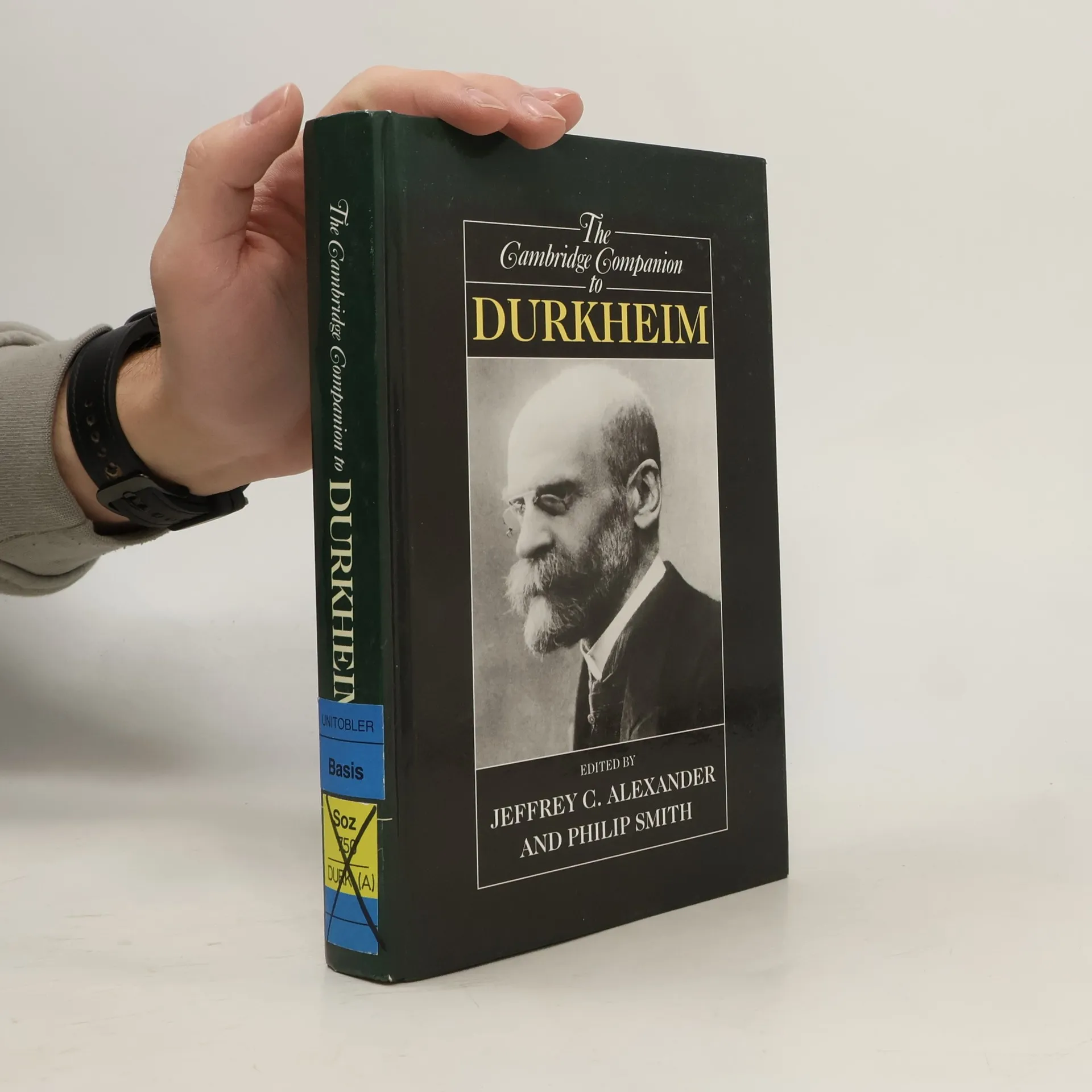
In this book, Philip Smith examines not only aEmile Durkheim's founding texts
of sociology, but also reveals how he inspired more than a century of
theoretical innovations, identifying the key paths, bridges, and dead ends --
as well as the tensions and resolutions -- in what has been a remarkably
complex intellectual history--

Focusing on Clifford Geertz as a theorist, this volume explores his significant influence across various disciplines beyond Anthropology. It offers a comprehensive and impartial examination of his contributions, filling the gap for an authoritative work on this pivotal intellectual figure.
Growing up in 1960s Miami, the author recounts his life with a decorator father who unexpectedly gains the ability to communicate with the dead and heal the sick. This memoir blends humor and the supernatural, capturing the eccentricities of family life and the challenges of navigating a unique upbringing. The narrative promises a captivating exploration of personal and familial dynamics against a backdrop of unusual gifts and the vibrant culture of the era.
Denies that punishment is about justice, reason, and law. This book shows that
punishment is an essentially irrational act founded in ritual as a means to
control evil without creating more of it in the process. It looks at issues
ranging from public executions and the development of the prison to the
invention of the guillotine.
WITH AN INTRODUCTION BY BENJAMIN MARKOVITS In 1845 Thoreau, a Harvard-educated 28-year-old, went to live by himself in the woods in Massachusetts. He stayed for over two years, living self-sufficiently in a small cabin built with his own hands. Walden is his personal account of the experience, in which he documents the beauty and fulfilment to be found in the wilderness, and his philosophical and political motivations for rejecting the materialism which continues to define our modern world.
This book analyses everyday encounters with rudeness and asks what can be done to improve civic life in a world of strangers. Inhaltsverzeichnis 1. Redirecting incivility research; 2. The fundamentals of the incivil encounter; 3. Everyday incivility and the everyday round; 4. Emotions and sequences; 5. Gender, age and class: divergent experiences?; 6. After the event: coping, avoiding and changing; 7. General attitudes towards the stranger: exploring fear and trust; 8. How to confront incivility; 9. Twenty questions and answers.
A fire lookout tower (fire tower or lookout tower) provides housing and protection for a person known as a fire lookout, whose duty is to search for wildfires in the wilderness. The fire lookout tower is a small building usually located on the summit of a mountain or other high vantage point in order to maximize the viewing distance and range, known as viewshed. From this vantage point, the fire lookout can see any trace of smoke that may develop, determine the location by using a device known as an Osborne Fire Finder, and call fire suppression personnel to the fire. The typical fire lookout tower consists of a small room known as a cab and located atop a large steel or wooden tower. However, sometimes natural rock may be used to create a lower platform. In some cases, the terrain makes it possible, so there is no need for an additional tower, and these are known as ground cabs. Ground cabs are called towers even if they don't sit on a tower. Towers gained popularity in the early 1900s, and fires were reported using telephones, carrier pigeons, and heliographs. Although many fire lookouts have fallen into disuse as a result of neglect, abandonment, and declining budgets, some fire service personnel have made an effort to preserve older fire towers, arguing that a good set of human eyes watching the forest for wildfire can be an effective and cheap fire safety measure