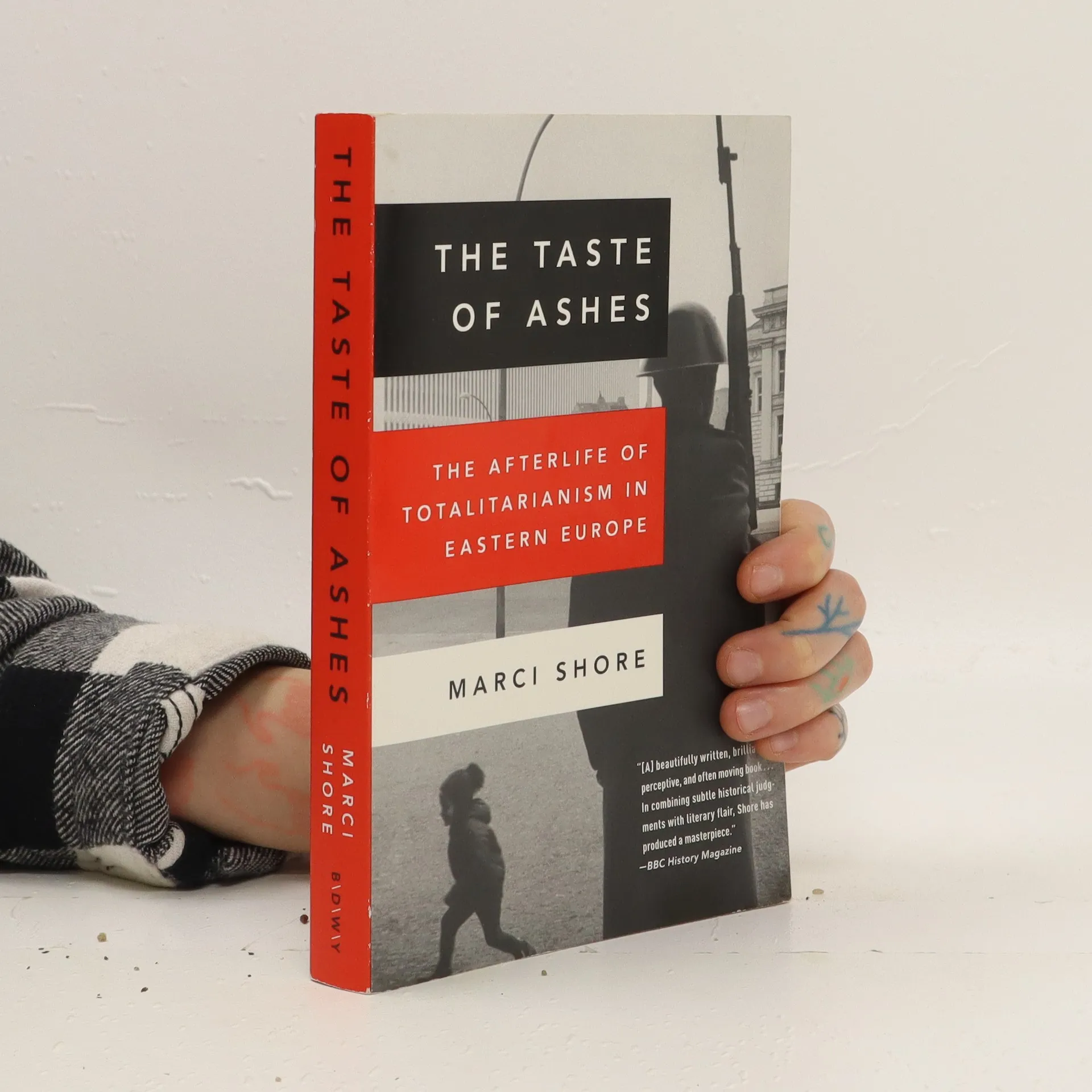
A shimmering literary examination of the ghost of communism, a haunting presence of Europe's past Oskar has just killed himself. After waiting a quarter century, he returned to Prague only to find it was no longer his home. With his memorial service, Yale historian and prize-winning author Marci Shore leads us gently into the post-totalitarian world. We meet a professor of literature who as a child played chess with the extortionist who had come to deliver him to the Gestapo and an elderly Trotskyite whose deformed finger is a memento of seventeen years in the Soviet gulag. Parents who had denounced their teenage dissident daughter to the communist secret police plead for understanding. For all of these people, the fall of Communism has not ended history but rather summoned the past: rebellion in 1968, Stalinism, the Second World War, the Holocaust. The revolutions of 1989 opened the archives, illuminating the tragedy of twentieth-century Eastern Europe: there were moments in which no decisions were innocent, in which all possible choices caused suffering. As the author reads pages in the lives of others, she reveals the intertwining of the personal and the political, of love and cruelty, of intimacy and betrayal. The result is a lyrical, touching, and sometimes heartbreaking portrayal of how history moves and what history means.
Marci Shore Boeken
Marci Shore is universitair docent geschiedenis aan de Yale University, wiens werk diepgaand is beïnvloed door haar uitgebreide verblijf in Midden- en Oost-Europa. Ze verkent de complexe historische en politieke transformaties van de regio en belicht de diepgaande impact van historische gebeurtenissen op individuele levens en collectief geheugen. Shore's schrijven put vaak uit persoonlijke verhalen en intieme observaties om het verleden tot leven te wekken. Haar onderscheidende aanpak combineert academisch onderzoek met een meeslepende literaire gevoeligheid.


The Taste of Ashes
- 384bladzijden
- 14 uur lezen
A superb account of complex psyche of Eastern Europe in the wake of the revolutions of 1989 and the opening of the communist archives. In the tradition of Timothy Garton Ashâe(tm)s The File, Yale historian and prize-winning author Marci Shore draws upon intimate understanding to illuminate the afterlife of totalitarianism. The Taste of Ashes spans from Berlin to Moscow, moving from Vienna in Europeâe(tm)s west through Prague, Bratislava, Warsaw and Bucharest to Vilnius and Kiev in the post-communist east. The result is a shimmering literary examination of the ghost of communism âe" no longer Marxâe(tm)s 'spectre to come' but a haunting presence of the past. Marci Shore builds her history around people she came to know over the course of the two decades since communism came to an end in Eastern Europe: her colleagues and friends, once-communists and once-dissidents, the accusers and the accused, the interrogators and the interrogated, Zionists, Bundists, Stalinists and their children and grandchildren. For them, the post-communist moment has not closed but rather has summoned up the past: revolution in 1968, Stalinism, the Second World War, the Holocaust. The end of communism had a dark side. As Shore pulls the reader into her journey of discovery, reading the archival records of people who are themselves confronting the traumas of former lives, she reveals the intertwining of the personal and the political, of love and cruelty, of intimacy and betrayal. The result is a lyrical and sometimes heartbreaking portrayal of how history moves and what history means.
A vivid and intimate account of the Ukrainian Revolution, the rare moment when the political became the existential

Der Geschmack von Asche
Das Nachleben des Totalitarismus in Osteuropa
Die Jahrzehnte kommunistischer Herrschaft in den osteuropäischen Ländern haben in praktisch jeder Familie Fragen aufgeworfen, die nach dem Fall des Eisernen Vorhangs irgendwie beantwortet werden müssen. Diese „posttraumatischen“ Störungen in Ländern und Gesellschaften, die nach ihrer Identität suchen, sind das Thema dieses Buchs. Es ist eine Reise in die Seelenlandschaften der Menschen und die Summe einer zwanzigjährigen Beschäftigung. Marci Shore spürt den Geistern des Kommunismus im gegenwärtigen Osteuropa nach, vor allem in Polen, Tschechien, der Slowakei und Rumänien. Sie interessiert sich für das, was Geschichte aus den Menschen und ihren Leben gemacht hat. Sie hat Menschen in Prag, Krakau, Warschau, Vilnius, Kiew, Moskau, Bukarest besucht, aber auch in der Provinz und in den jeweiligen Enklaven in New York, Jerusalem und Wien. Das Buch ist von hoher literarischer Qualität, geradezu betörend schön geschrieben. Es atmet eine tiefe Humanität, und man spürt, dass die Ich-Erzählerin eine ungewöhnlich kluge und sympathische Frau ist; sie wirkt wie ein Medium zwischen den porträtierten Menschen und dem Leser, durch das hindurch man sich sehr gut in die jeweilige Situation hineinversetzen kann, von der sie berichtet.