

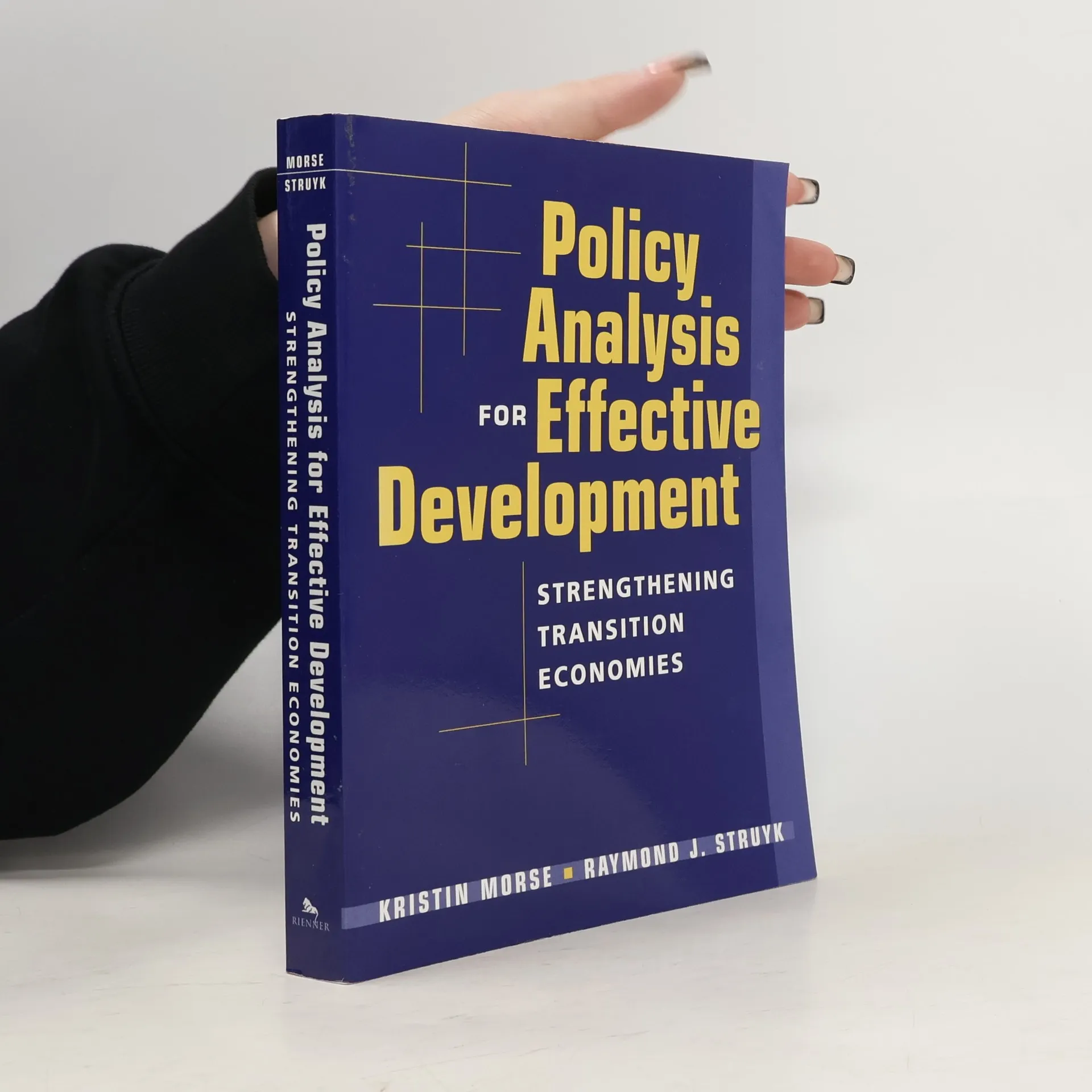
Policy Analysis for Effective Development
Strengthening Transition Economies
- 440bladzijden
- 16 uur lezen
This practical text equips students and professionals with essential skills for developing and implementing effective public policies, particularly in transition economies. The authors, Morse and Struyk, emphasize the daily tasks involved in addressing social and economic policy issues. Key topics include resource allocation, balancing political and technical factors, introducing competition in the public sector, and evaluating programs. The book offers exercises and case studies that allow readers to apply theoretical lessons to real-world scenarios. An online instructor's manual provides answers to study problems, discussion ideas, and tips for interactive teaching. The content covers a range of subjects, including stakeholder analysis, data analysis, policy design and implementation, government resource allocation, outsourcing public services, and various evaluation methods. It also addresses cost-benefit analysis and the preparation and presentation of policy recommendations. With contributions from experienced policy analysts, this text serves as a comprehensive guide for those looking to navigate the complexities of public policy effectively.