

Stevens explores each phase of Jung's life, linking his personal and professional development with his theories of the life cycle, dream symbolism and the collective unconscious. In this 2nd revised edition he rebuts the well-publicised criticisms of Jung and Jungian analysis voiced in some recent publications.
Anthony Stevens Boeken
27 maart 1933 – 13 juli 2023






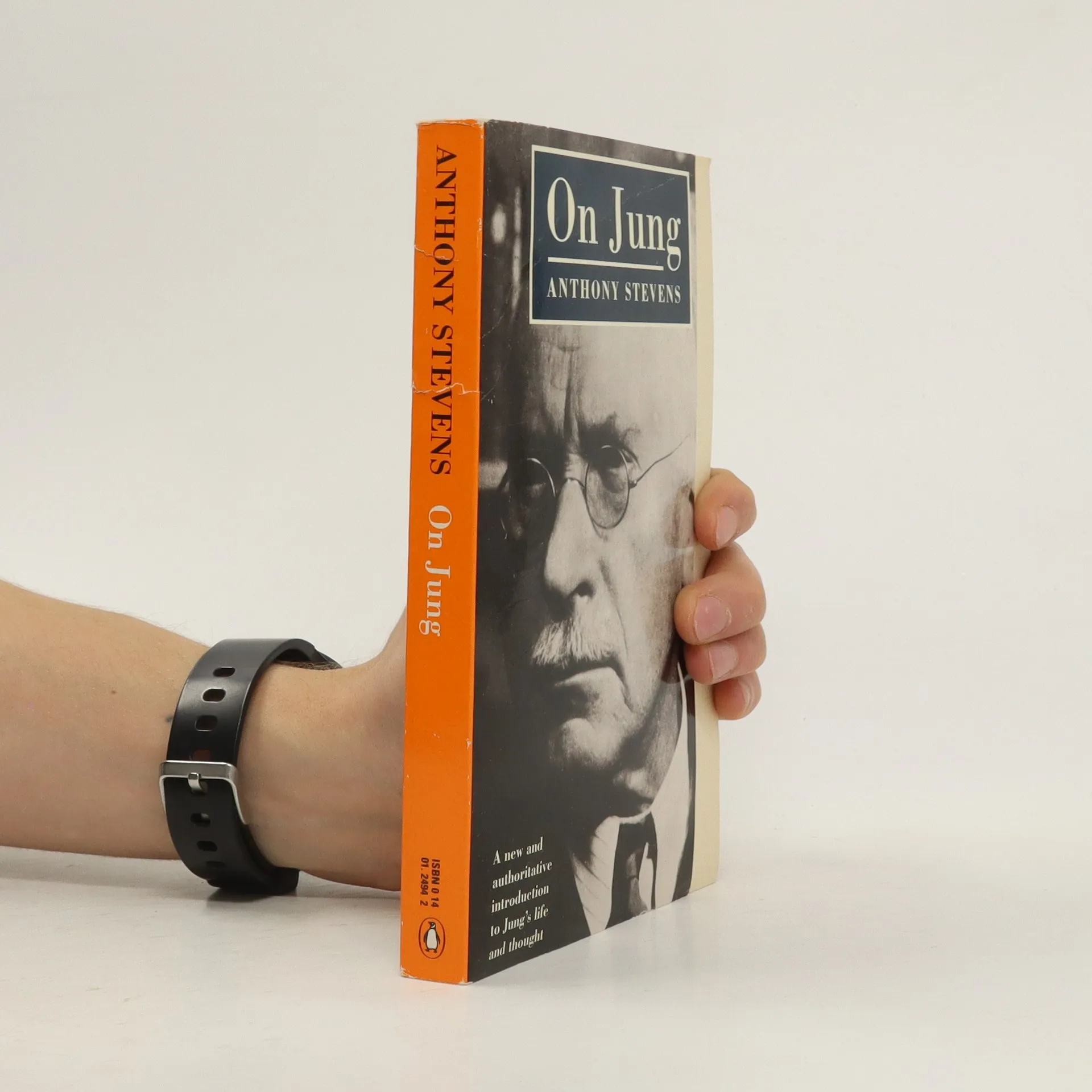
The author skillfully connects ancient myths and symbols to contemporary psychological understanding, revitalizing their significance beyond mere historical interest. His stylish prose integrates insights from various disciplines, presenting a cohesive and engaging narrative that appeals to both the intellect and the imagination.
Jung
- 192bladzijden
- 7 uur lezen
This is the most lucid and timely introduction to the thought of Carl Gustav Jung available to date. Though he was a prolific writer and an original thinker of vast erudition, Jung lacked a gift for clear exposition, and his ideas are less widely appreciated than they deserve to be. Now, in this extremely accessible introduction, Anthony Stevens--one of Britain's foremost Jungian analysts--clearly explains the basic concepts of Jungian psychology: the collective unconscious, complex, archetype, shadow, persona, anima, animus, and the individualization of the Self. A small masterpiece of insight and concision, this volume offers a clear portrait of one of the twentieth century's most important and controversial thinkers.About the Series: Combining authority with wit, accessibility, and style, Very Short Introductions offer an introduction to some of life's most interesting topics. Written by experts for the newcomer, they demonstrate the finest contemporary thinking about the central problems and issues in hundreds of key topics, from philosophy to Freud, quantum theory to Islam.
The roots of war : a Jungian perspective
- 237bladzijden
- 9 uur lezen
Argues that war is an ancient tendency rooted in human psychology, discusses the archetypes of war, and suggests ways to reduce the risk of war
An Intelligent Person's Guide to Psychotherapy
- 224bladzijden
- 8 uur lezen
Psychoanalysis, and its many psychotherapeutic offshoots, has been a major influence in 20th-century cultural life. Yet dynamic psychotherapy now finds itself in grave crisis as a result of the intellectual shipwreck of its founder, Sigmund Freud. Since Freud, theory has been shown to be largely without empirical basis, what is to stop the whole psychotherapeutic edifice from collapsing into the quicksands on which it is built? In this overview, Anthony Stevens describes how the major schools of psychodynamic therapy grew out of the psychology of their charismatic founders and have subsequently turned into exclusive and mutually hostile rival "sects". Stevens argues that the best hope for the future lies in research to determine the positive therapeutic ingredients that all methods have in common. This, combined with the kind of undogmatic, open-minded humanity advocated by C.G. Jung, could lead to the adoption of a new paradigm capable of transcending the differences between them - the paradigm adopted by the new breed of "evolutionary psychotherapists".
Vom Traum und vom Träumen
Deutung, Forschung, Analyse