Koop 10 boeken voor 10 € hier!
Bookbot

Alfred W. Crosby

    15 januari 1931 – 14 maart 2018

    Alfred W. Crosby Jr. was een interdisciplinaire onderzoeker die geschiedenis, geografie, biologie en geneeskunde met elkaar verbond. Hij onderzocht de historische oorzaken achter de ongelijke verdeling van wereldwijde rijkdom en de biologische factoren die de Europese expansie bevorderden. Een centraal thema in zijn werk was de diepgaande impact van epidemieën op de menselijke geschiedenis, waarbij hij de significante invloed van gebeurtenissen zoals de grieppandemie van 1918 erkende. Crosby wordt ook gecrediteerd voor het bedenken van de term 'Colombiaanse Uitwisseling', een concept dat de historische discussie fundamenteel heeft gevormd.

    The Measure of Reality
    Throwing Fire
    America's Forgotten Pandemic
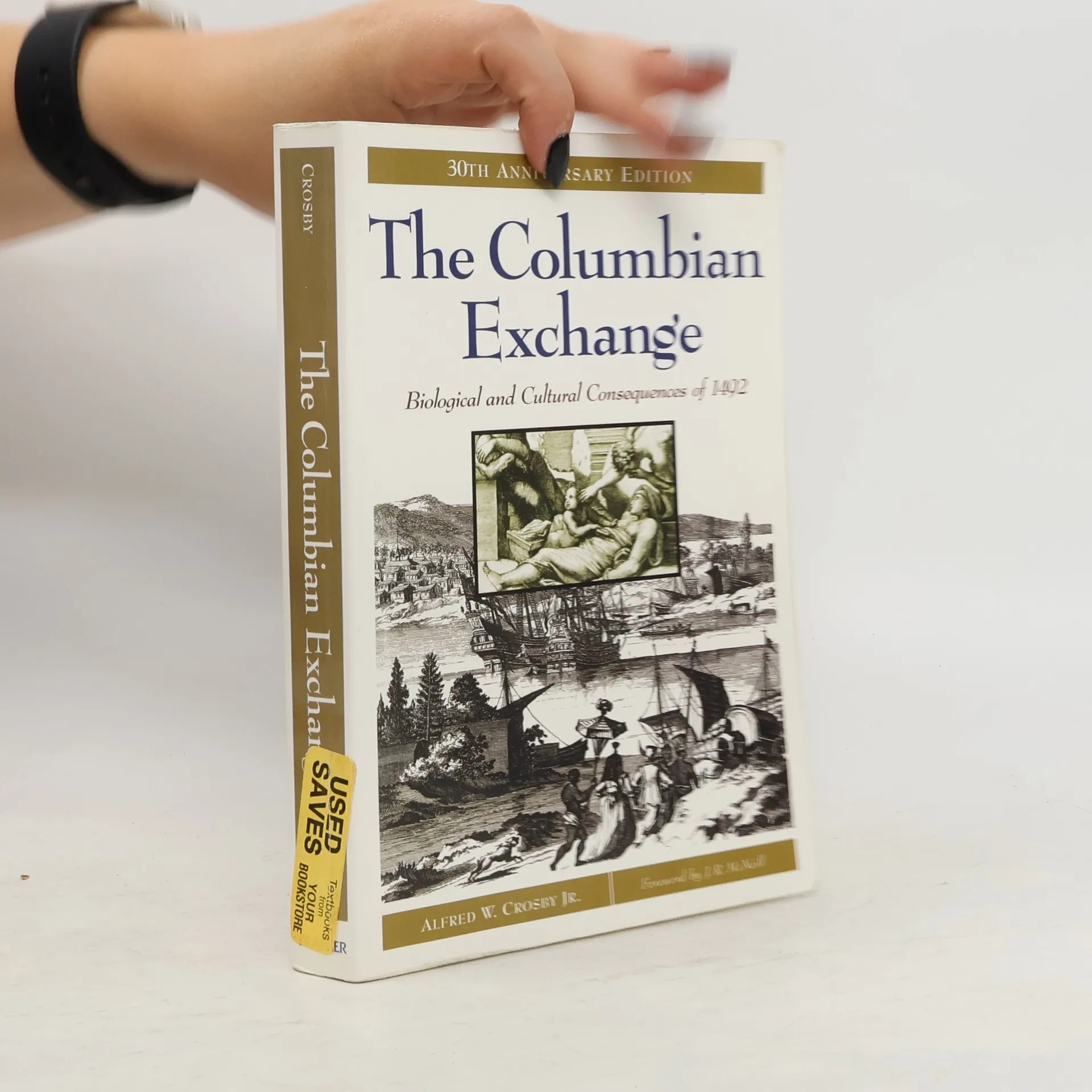
    The Columbian Exchange
    Children of the Sun
    The Columbian Exchange; Biological and Cultural Consequences of 1492. Biological and Cultural Consequences of 1492
    • Children of the Sun

      • 192bladzijden
      • 7 uur lezen
      4,2(20)Tarief

      We don't often recognize the humble activity of cooking for the revolutionary cultural adaptation that it is. But when the hearth fires started burning in the Paleolithic, humankind broadened the exploitation of food and took one of several great leaps forward.

      Children of the Sun
    • The Columbian Exchange

      Biological and Cultural Consequences of 1492

      • 320bladzijden
      • 12 uur lezen
      3,9(930)Tarief

      Thirty years ago, Alfred Crosby published a small work that stressed a simple point - that the most important changes brought on by the voyages of Columbus were not social or political, but biological in nature. This 30th anniversary edition includes a new preface from the author.

      The Columbian Exchange
    • America's Forgotten Pandemic

      The Influenza of 1918

      • 356bladzijden
      • 13 uur lezen
      3,8(474)Tarief

      The narrative explores the devastating influenza pandemic of 1918-1919, which resulted in the deaths of over 25 million people globally. It delves into the social, medical, and historical implications of the outbreak, examining how it spread and the responses from various governments and health organizations. The book highlights personal stories and the broader impact on society, offering a comprehensive look at one of the deadliest pandemics in history and its lasting effects on public health.

      America's Forgotten Pandemic
    • Throwing Fire

      • 220bladzijden
      • 8 uur lezen
      3,7(37)Tarief

      Exploring the evolution of human capabilities, this book delves into the significance of accurate throwing and fire manipulation. Historian Alfred W. Crosby examines how these skills have enabled the development of simple weapons, atomic bombs, and space exploration, highlighting their impact on human progress and innovation.

      Throwing Fire
    • This 1997 book discusses the shift from qualitative to quantitative perception which occurred in Western Europe during the late Middle Ages and Renaissance and which was to lead to western domination of science and technology.

      The Measure of Reality
    • Ecological Imperialism

      • 368bladzijden
      • 13 uur lezen
      3,5(19)Tarief

      A fascinating study of the important role of biology in European expansion, from 900 to 1900.

      Ecological Imperialism